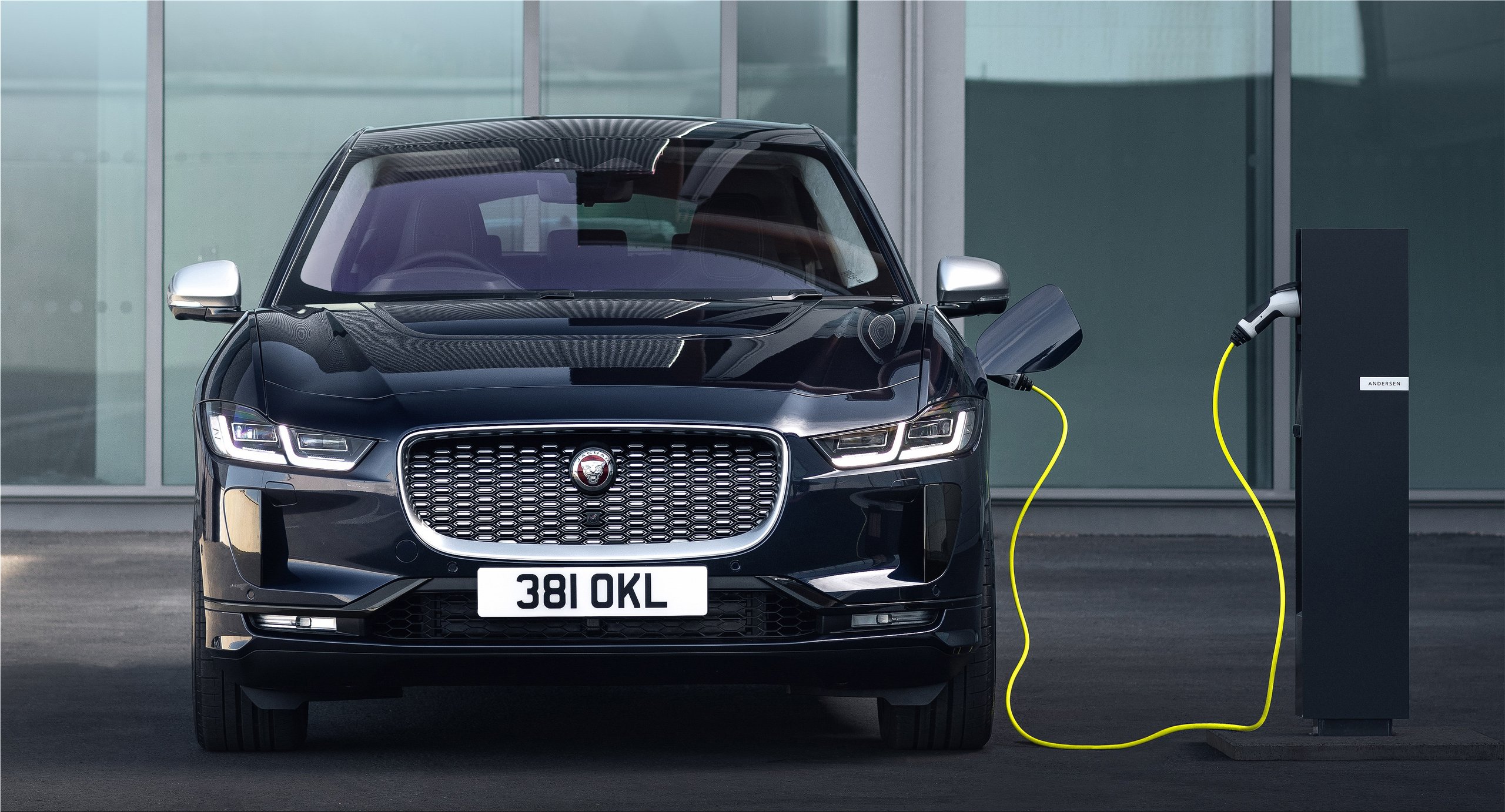
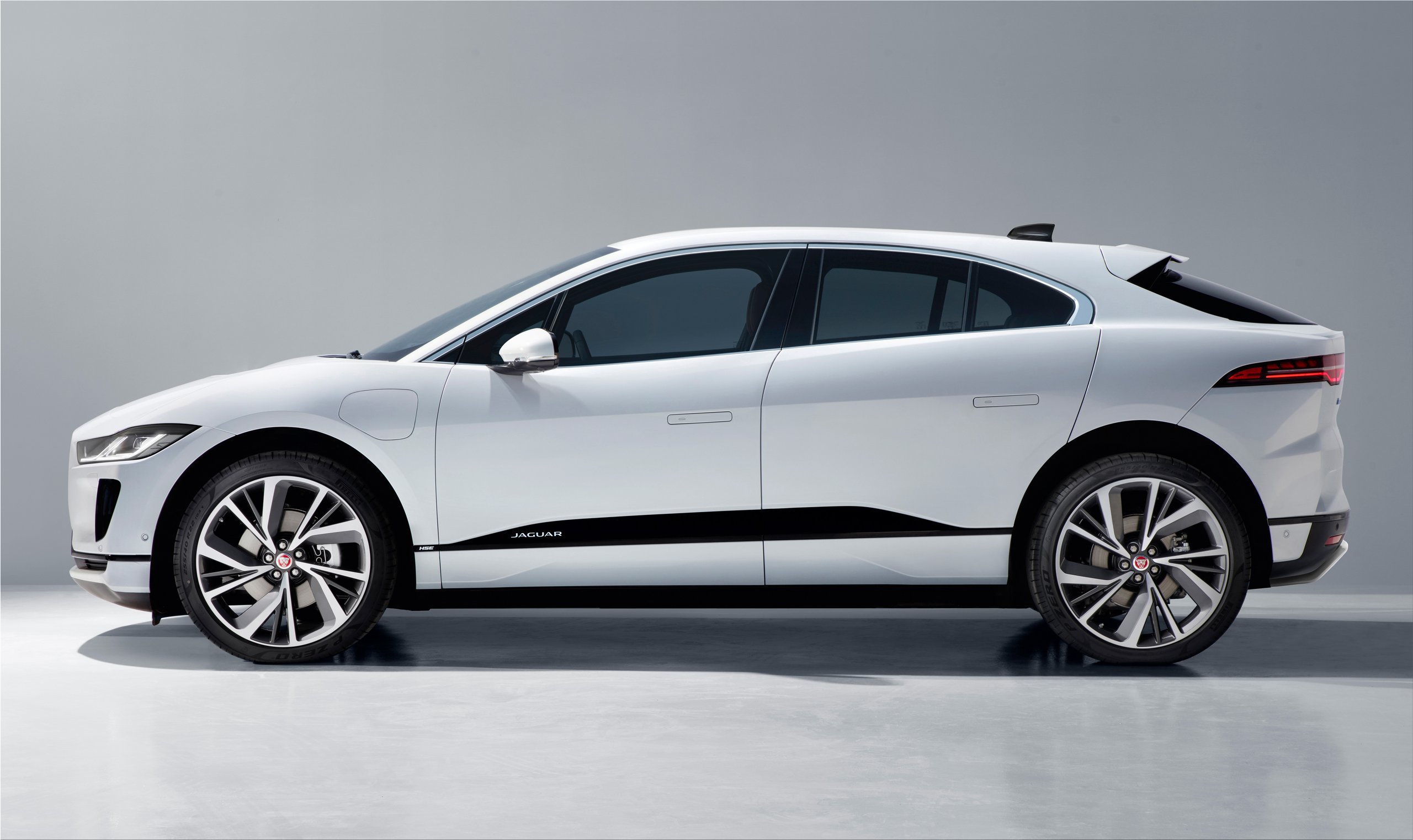
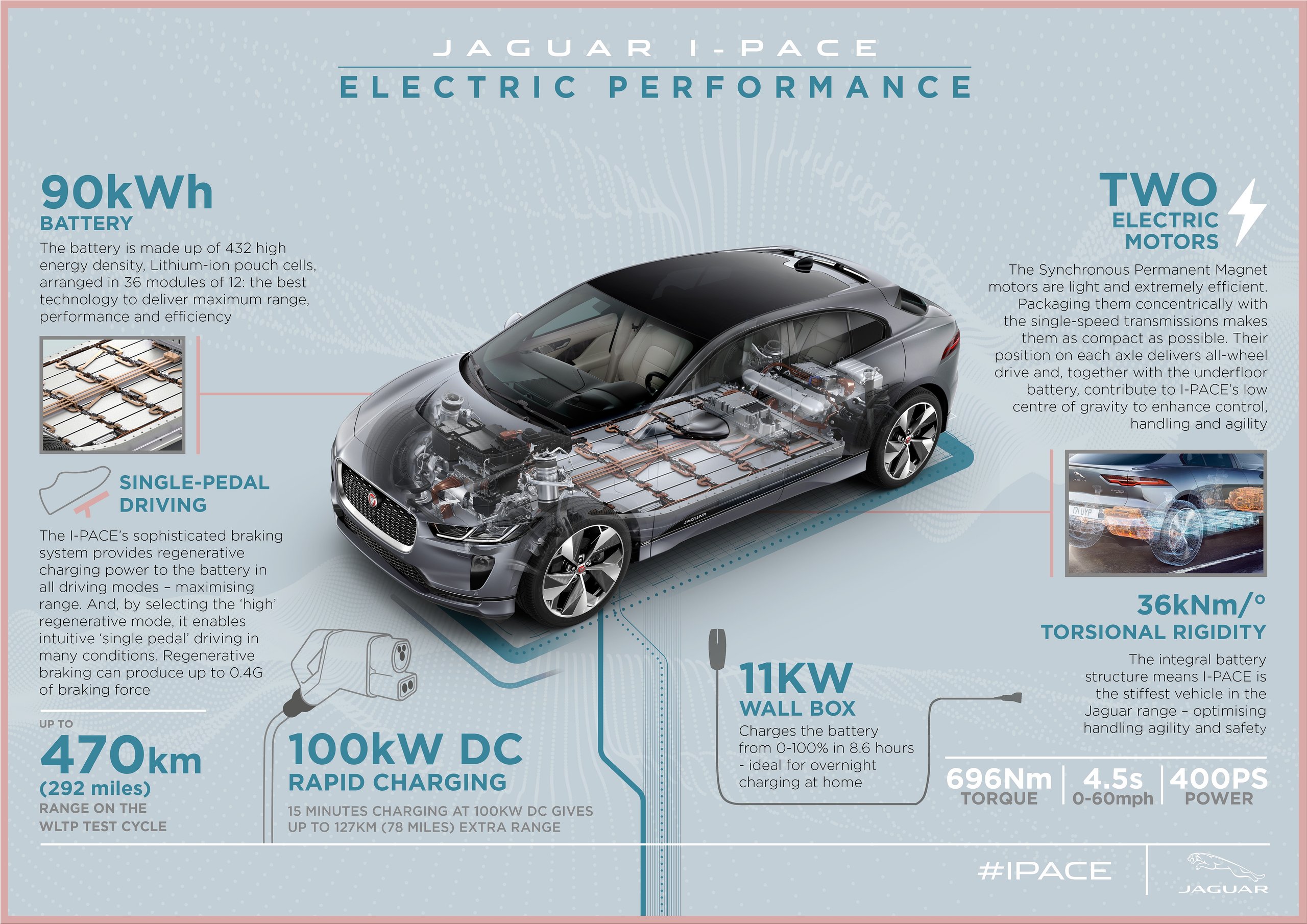
The Jaguar I-Pace receives a standard three-phase charger (significantly reduces the charging time at home). This means that the British electric car can be charged faster than before.
If you stop at a fast charger on a longer route, you can charge 63 kilometres on a 50 kW charging station in 15 minutes, and up to 127 kilometres on a 100 kW station in the same time.
When connected to an 11 kW wall charging station, 53 kilometres per hour can be charged. A full charge takes 8.6 hours. If the Jaguar I-Pace is connected to a 7 kW wall charging station, 35 kilometres per hour are possible. The full charge then takes around 13 hours.
Jaguar has not redesigned the electric drive of the I-Pace: With 294 kW (400 hp), it will continue to go from zero to one hundred in 4.8 seconds. The range that can be achieved with one charge remains at 470 kilometres (WLTP).
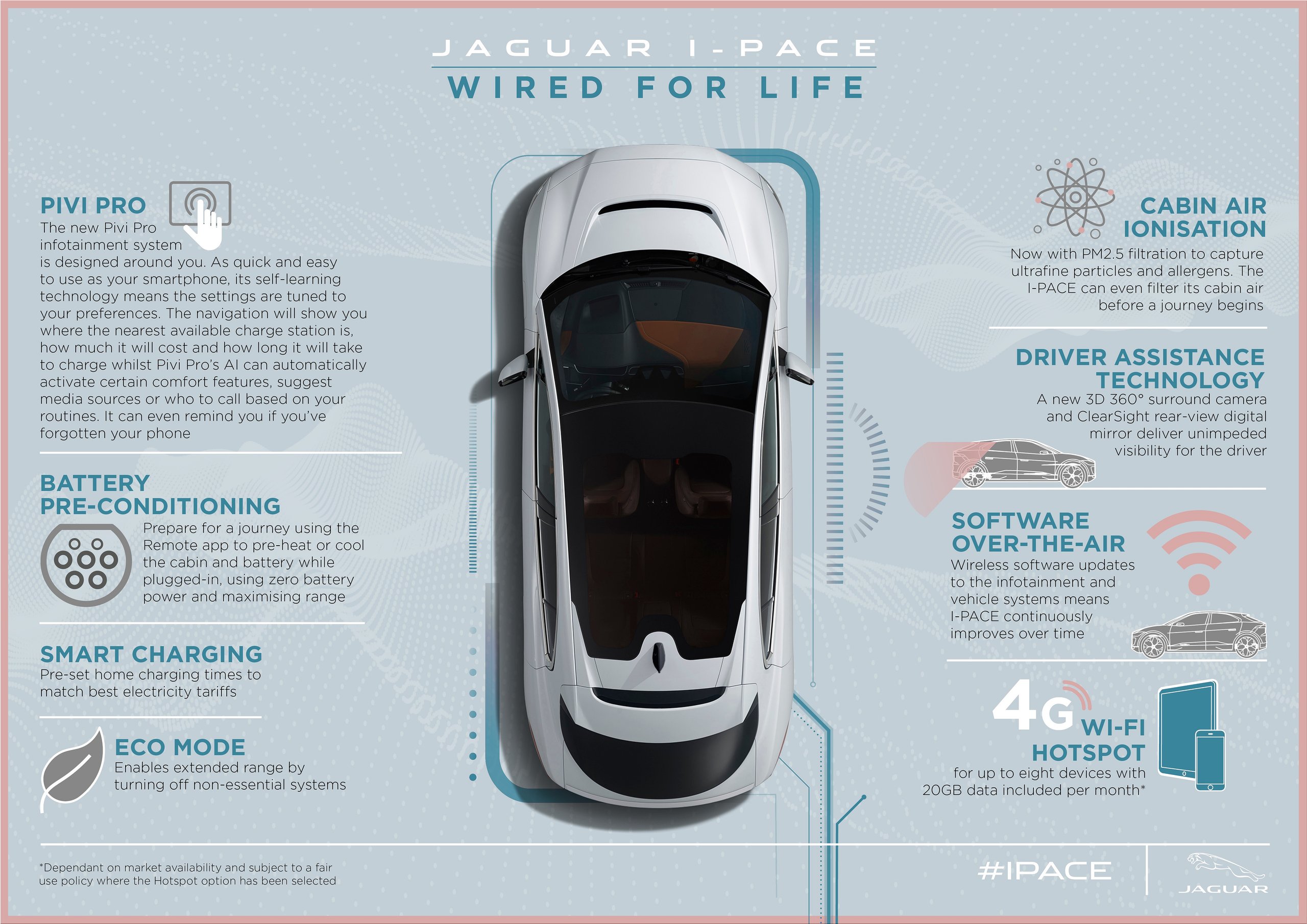
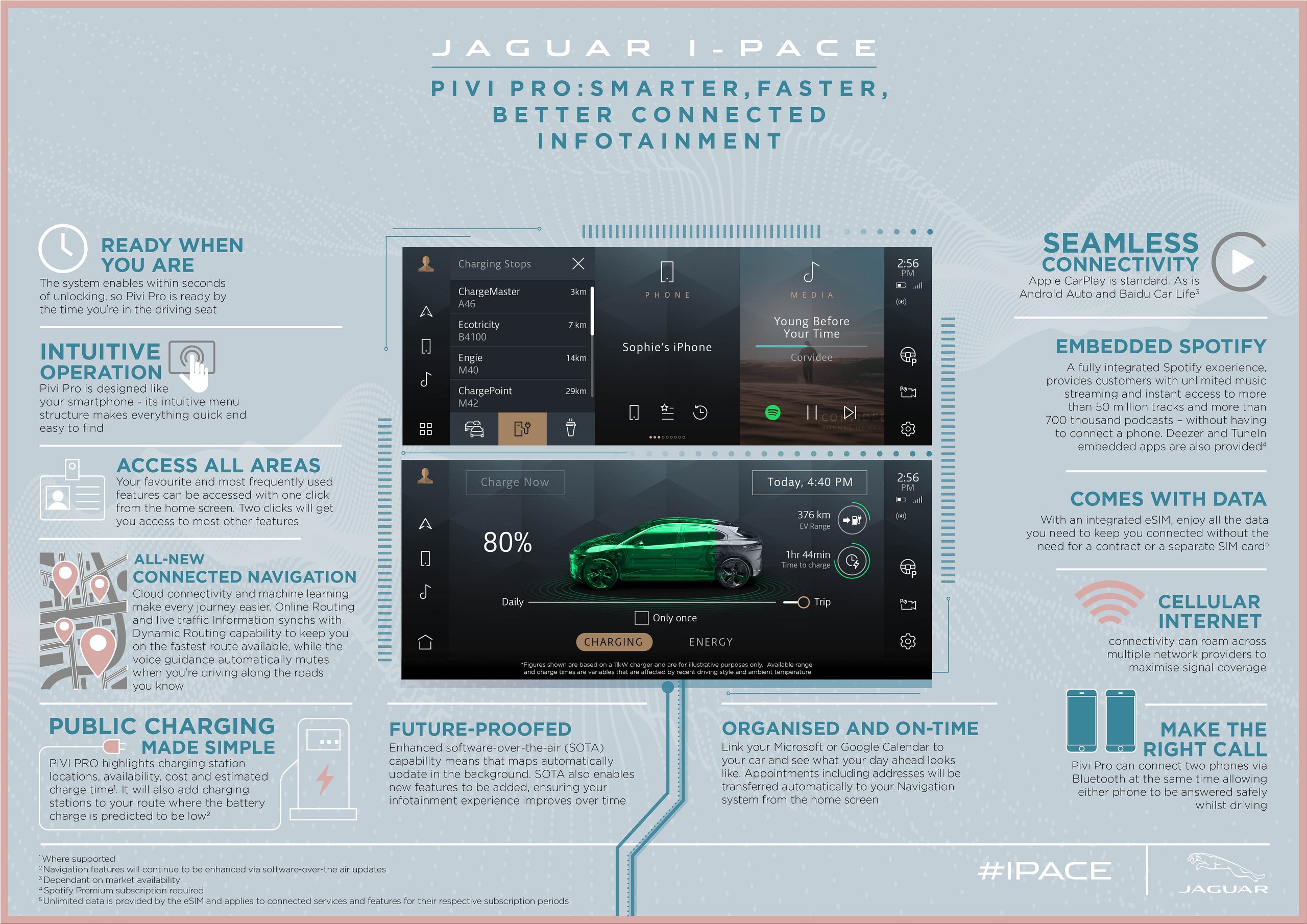
There are also a number of minor changes. For example, a new generation of Pivi Pro infotainment system is moving into the cockpit, which should be easier to use and easier to find charging stations. Pivi Pro is just as intuitive to use as a smartphone, it is operated via a 12.3-inch digital instrument cluster with touch functionality.
Thanks to the integrated 4G SIM card, software updates are now possible via radio. Signal amplification is included in inductive charging. It causes the signals from the phone to remain strong for a long time. A smartphone pack with Apple Car Play and Android Auto is installed as standard. A new sound system with 16 speakers and a subwoofer is available.
Inside of the Jaguar I-Pace electric car, the air is pre-cleaned. Thanks to a PM2.5 filter, even ultrafine particles and allergens should be able to be filtered out. This will please allergy victims in particular.
The new 3D surround camera system with a 360-degree all-round view provides more security when parking. In addition, there is the frameless interior rear-view mirror with an integrated HD display for a view of the rear area.
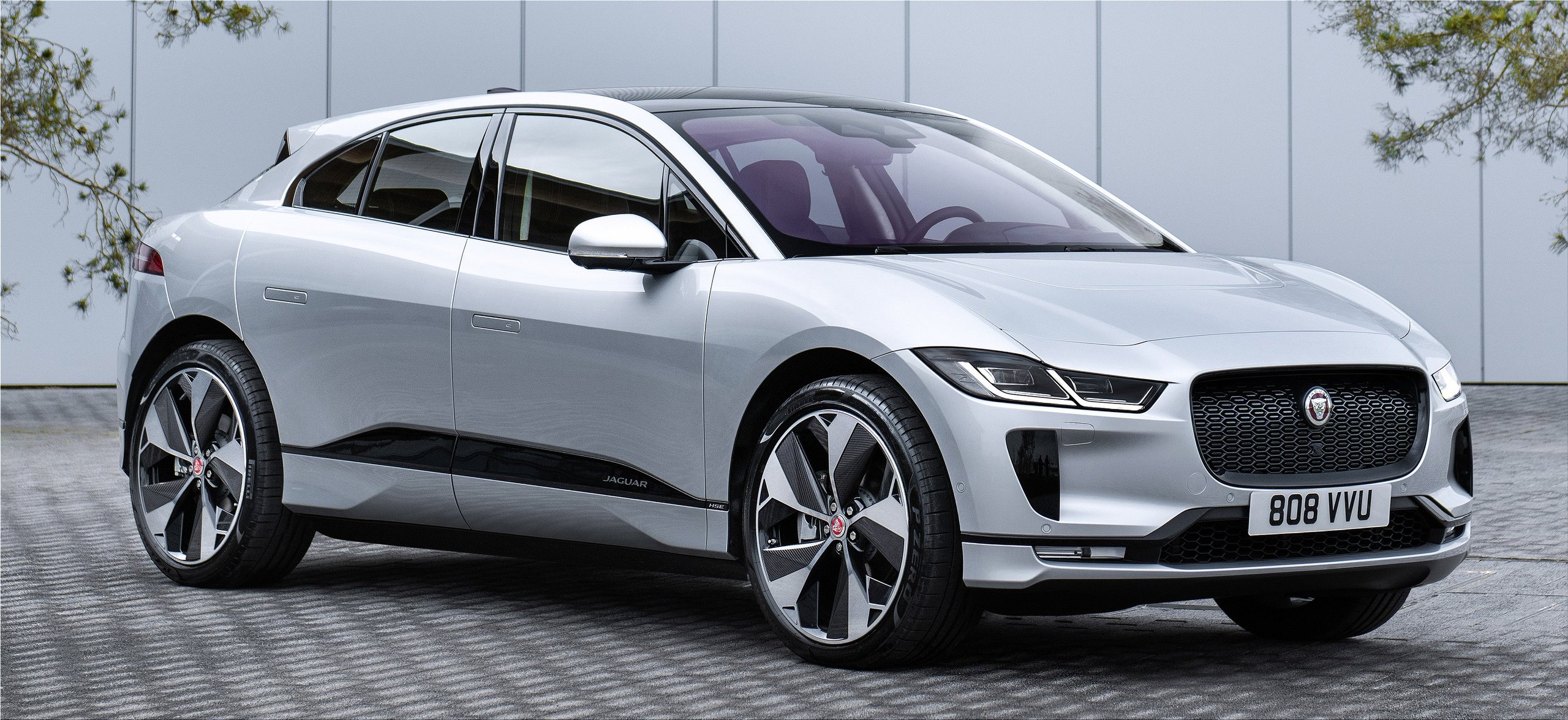
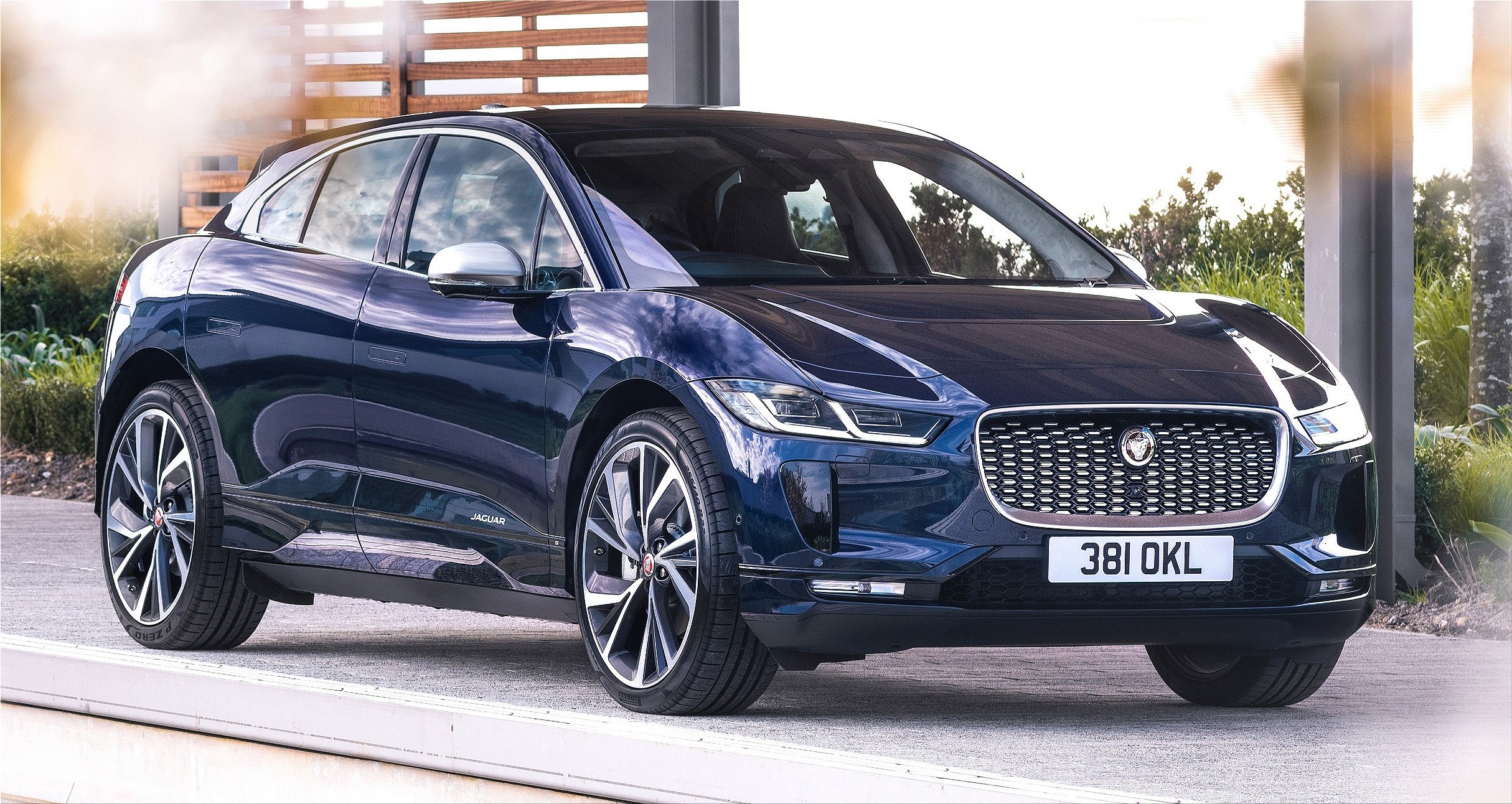
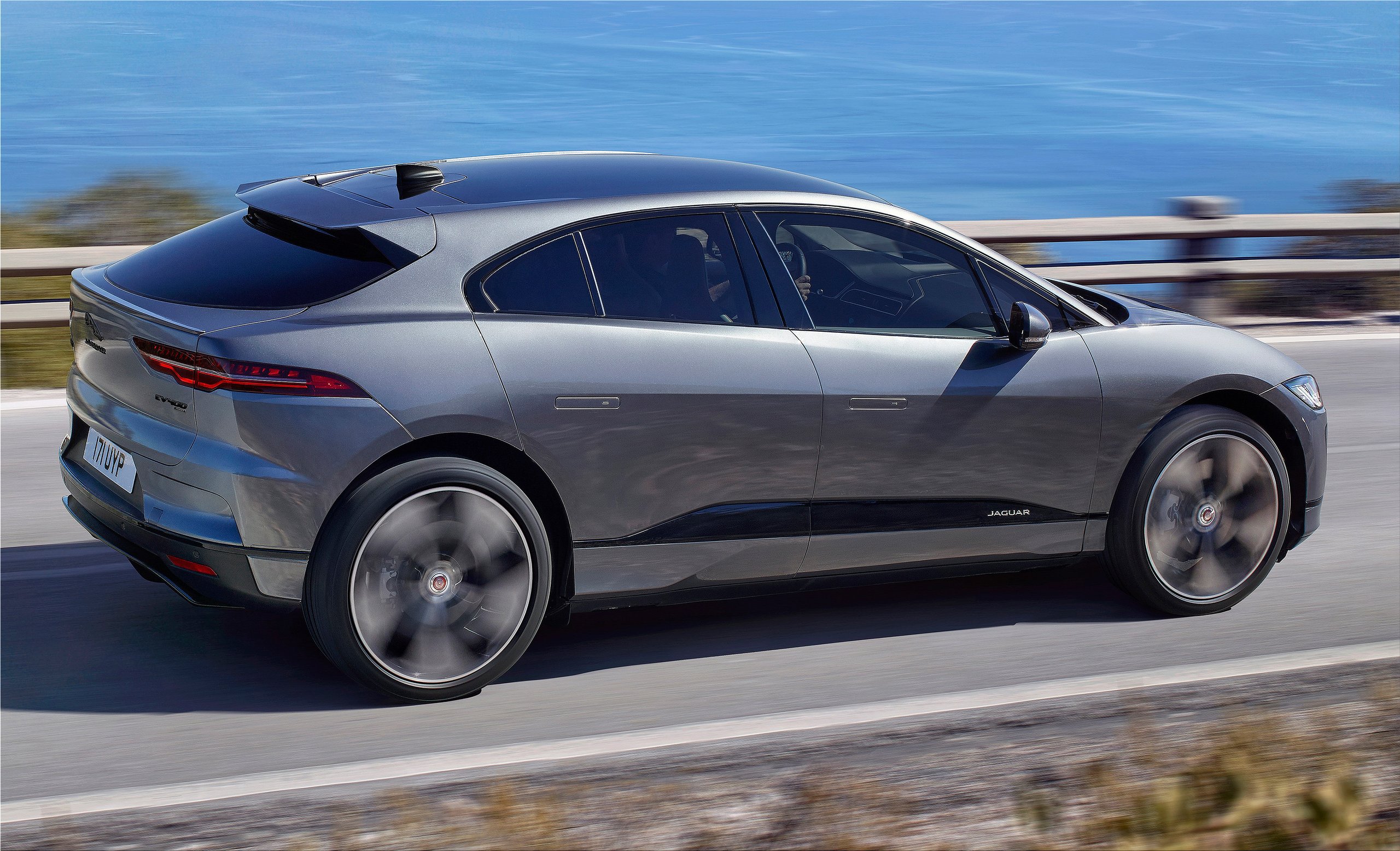
The prices of the world's first fully-electric SUV starts at 77,300 euros. This price includes all service costs for the first three years or 100,000 kilometres.
Skoda has announced the launch of a full-electric version of its Citigo. The Citigo EV will have a maximum range of 300 km (186 miles) and will be called Citigo E. First rumors about an Skoda electric city car were from a… Continue reading

Voltabox continues to grow. According to preliminary figures, the German battery system manufacturer generated sales of 66.9 million euros in 2018. For the current financial year, it expects further revenue growth of around 60-70 percent (between 105… Continue reading

Cars and motorcycles that run on gasoline or diesel will be banned in the Amsterdam, Netherlands, starting 2030. Starting next year, diesel cars older than 15 years will be banned on the A10 road around the Dutch capital. Also, buses and vans emitting exhaust… Continue reading
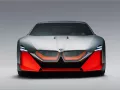
BMW presents the project for the supercar of the future. Electric, connected and sporty, these are the features of Vision M Next. BMW's electric future runs fast. The announcement comes directly from Munich, where at a conference, the… Continue reading