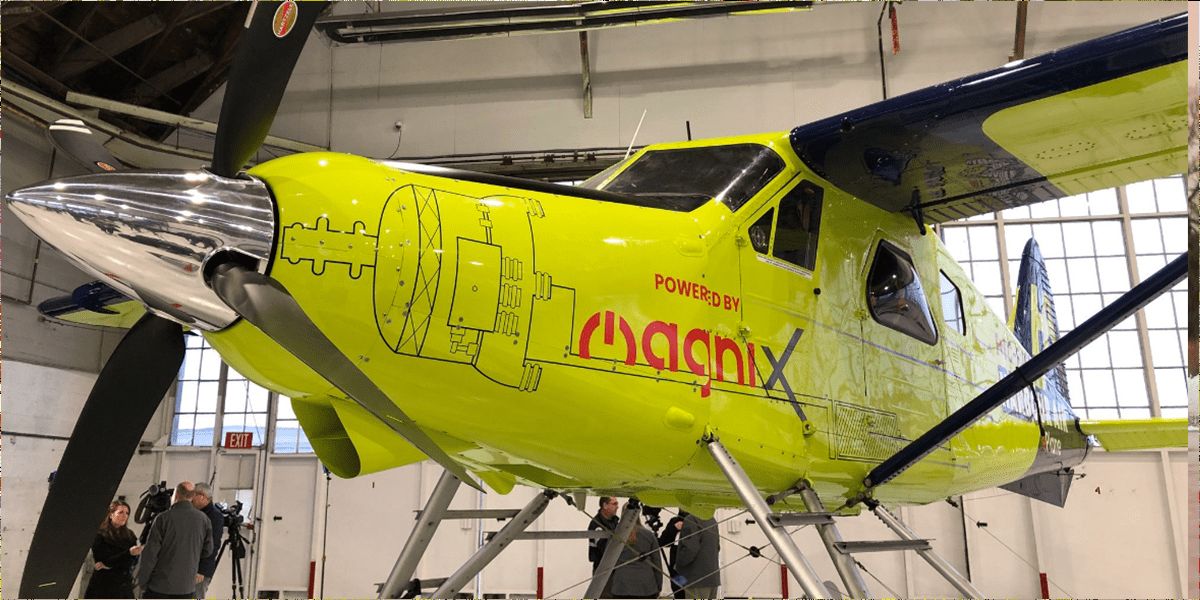
Cooperation partners MagniX and Harbor Air have announced the successful first flight of a de Havilland Canada DHC-2 Beaver seaplane converted to electric propulsion. The declared goal of the duo is to successively electrify all 42 sea airplanes from Harbor Air.
The US company MagniX, which specializes in aircraft electric propulsion, and North America's largest sea airline, based in Richmond, Canada, have been cooperating since March of this year.
For the first flight, a six-seater de Havilland Canada DHC-2 Beaver with the 560 kW electric motor magni500 took off. MagniX presented this engine for the first time at this year's Paris Air Show. With Harbor Air boss Greg McDougall in the cockpit, the converted aircraft from Harbor Air's seaplane terminal in Richmond made a lap over the Fraser River.

Theoretically, the 200 kWh battery of the e-plane should provide enough power for 30 minutes of flight time (including 30 minutes reserve). That was sufficient for about 70 percent of the 30,000 flights per year. Harbor Air connects Vancouver with British Columbia islands and crosses borders with the US city of Seattle, where MagniX is based.
Harbor Air currently serves twelve routes and, according to its own information, transports more than 500,000 passengers annually. The de Havilland Canada DHC-2 Beaver will be used throughout the route network. The partners describe the successful maiden flight as a milestone and do not save on comparisons to historical achievements in aviation history.

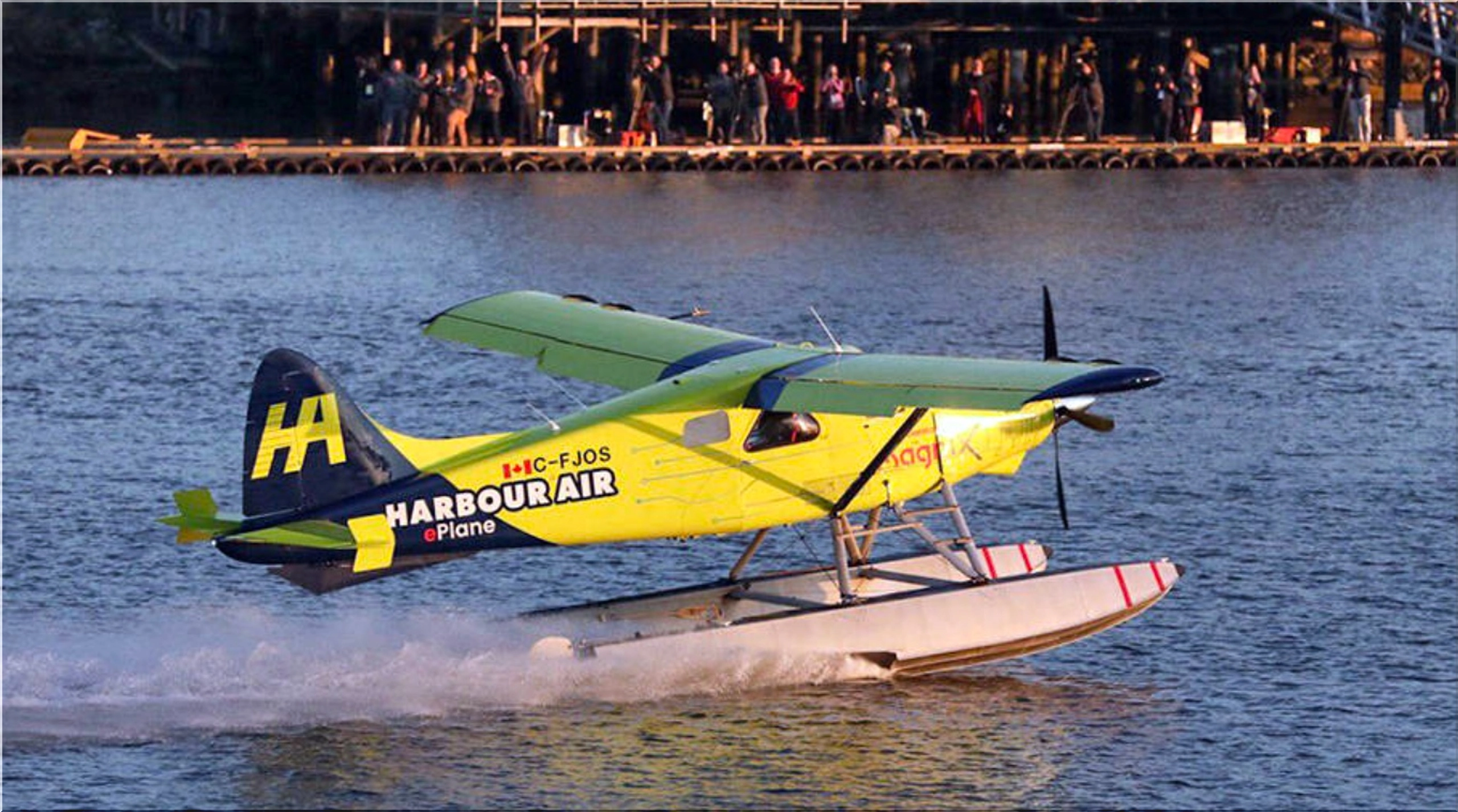
“Today, we made history,” said Greg McDougall, CEO and founder of Harbour Air Seaplanes. “I am incredibly proud of Harbour Air’s leadership role in re-defining safety and innovation in the aviation and seaplane industry. Canada has long held an iconic role in the history of aviation, and to be part of this incredible world-first milestone is something we can all be really proud of.”
“In December 1903, the Wright Brothers launched a new era of transportation—the aviation age—with the first flight of a powered aircraft. Today, 116 years later, with the first flight of an all-electric powered commercial aircraft, we launched the electric era of aviation,” said Roei Ganzarski, CEO of magniX. “The transportation industry and specifically the aviation segment that has been, for the most part, stagnant since the late 1930s, is ripe for a massive disruption. Now we are proving that low-cost, environmentally friendly, commercial electric air travel can be a reality in the very near future.” via harbourair.com

Skoda has announced the launch of a full-electric version of its Citigo. The Citigo EV will have a maximum range of 300 km (186 miles) and will be called Citigo E. First rumors about an Skoda electric city car were from a… Continue reading

Voltabox continues to grow. According to preliminary figures, the German battery system manufacturer generated sales of 66.9 million euros in 2018. For the current financial year, it expects further revenue growth of around 60-70 percent (between 105… Continue reading

Cars and motorcycles that run on gasoline or diesel will be banned in the Amsterdam, Netherlands, starting 2030. Starting next year, diesel cars older than 15 years will be banned on the A10 road around the Dutch capital. Also, buses and vans emitting exhaust… Continue reading
BMW presents the project for the supercar of the future. Electric, connected and sporty, these are the features of Vision M Next. BMW's electric future runs fast. The announcement comes directly from Munich, where at a conference, the… Continue reading