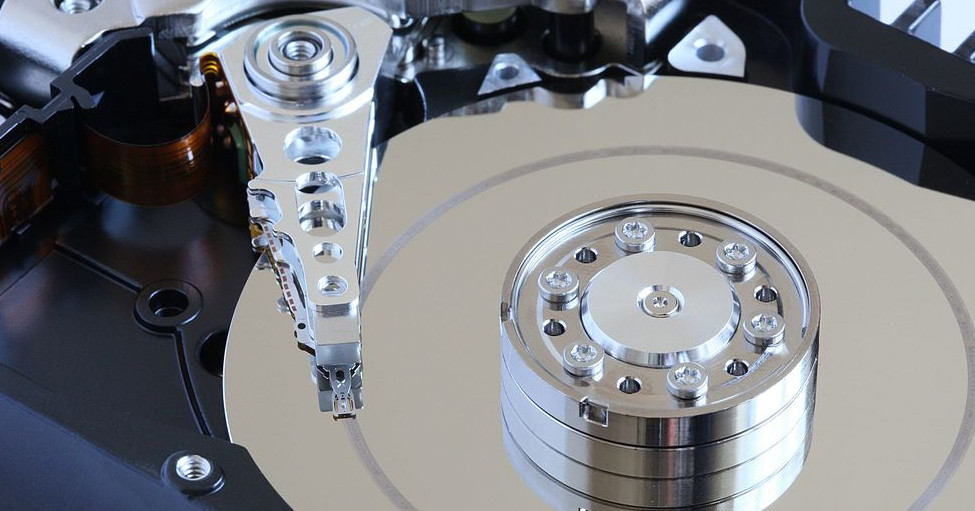
A new process patented by the Oak Ridge National Laboratory (ORNL) allows the recovery of rare elements from permanent magnets of electronic devices and reuse them to produce new magnets for electric motors equivalent to those made with new materials.
A team of researchers at the Oak Ridge National Laboratory (ORNL) has developed a process to extract rare elements from permanent discarded magnets from used hard drives and other electronic sources that use them in their composition. The patented process is capable of recovering 97% of the rare elements in the form of oxide, with a purity of 99.5%.

Rare earth elements are currently essential for synchronous electric motors of electric vehicles. Embedded in its rotor are permanent magnets formed by these elements that provide a magnetic flux when they are magnetized with another magnetic field, not losing their properties once the cause that causes the magnetism ceases. Thanks to them, no external excitation or brushes are needed to generate the magnetic field in the rotor and spin it when exposed to the externally generated field in the stator, which makes them more compact and simple.
After their industrial generalization in the 1990s, they increased their demand in the automotive industry until, in 2018, manufacturers opted, in 93% of cases, to provide their electric cars with permanent magnet motors. They are scarce, expensive, and difficult to recycle.
The new patent extends the laboratory demonstration process announced in October last year. ORNL is working with Momentum Technologies to expand production volume to offer a commercial lot that includes rare earth oxides. In 2017, the company already developed the technology to print three-dimensional magnets, and with this new development, it plans to produce the first 3D-printed magnet made from recycled materials.

The objective of the project is to recover hundreds of kilograms of rare earth oxides every month and validate, verify and certify that they can be used by manufacturers to make magnets equivalent to those made with virgin materials. Until now, no commercial process was able to recycle pure rare earth elements from electronic equipment magnets. According to the studies, 2,200 million personal computers, tablets and mobile phones worldwide are expected to be replaced in 2019.

Toyota Targets Urban Mobility With Full Hybrid Tech Toyota’s smallest crossover just made a big leap. The 2026 Toyota Aygo X Hybrid introduces full hybrid technology to the A-segment for the first time. That matters. It gives… Continue reading

A Bold Vision for the Next Generation of Electric Mobility Peugeot has unveiled the Polygon Concept, a compact electric prototype that redefines how drivers interact with vehicles. Measuring under four meters… Continue reading

MG S9 PHEV as a 2027 model is here, but the UK launch window starts in March 2026. That timing detail matters less than the product math. MG built a large 7-seat PHEV SUV with a 24.7 kWh battery, a claimed… Continue reading

The Jaguar E-Pace is a five-seat all-electric compact SUV, spacious, practical and connected all-wheel-drive vehicle. The Jaguar E-Pace exterior design is inspired by the F-Type sports car. The fluid… Continue reading