The KAMAZ-6290 hydrogen electric bus, a game-changing passenger electric vehicle, will be shown today at Moscow's COMTRANS 2021 - International Commercial Vehicle Show.
KAMAZ continues to develop its portfolio of unique passenger eco-friendly transportation options, which are becoming increasingly popular in megacities. Hydrogen electric vehicles will soon compete with diesel buses; as a result, the company's engineers have created the first hydrogen electric bus to fulfill today's needs, the KAMAZ-6290.
Andrey Savinkov, Chief Vehicle Designer of KAMAZ PTC, stated, "We drew up design documentation for the testbed hydrogen electric bus fulfilling criteria for electric buses, that is, we utilized the KAMAZ-6282 electric bus provided to Moscow as a guide." "The hydrogen electric bus has obvious advantages: it's environmentally friendly, and there's no need for a diesel heater in the passenger cabin. Furthermore, compared to a battery electric bus that can go 70 kilometers on a full charge, a hydrogen electric bus can travel 250 kilometers, making it suitable for intercity transit."
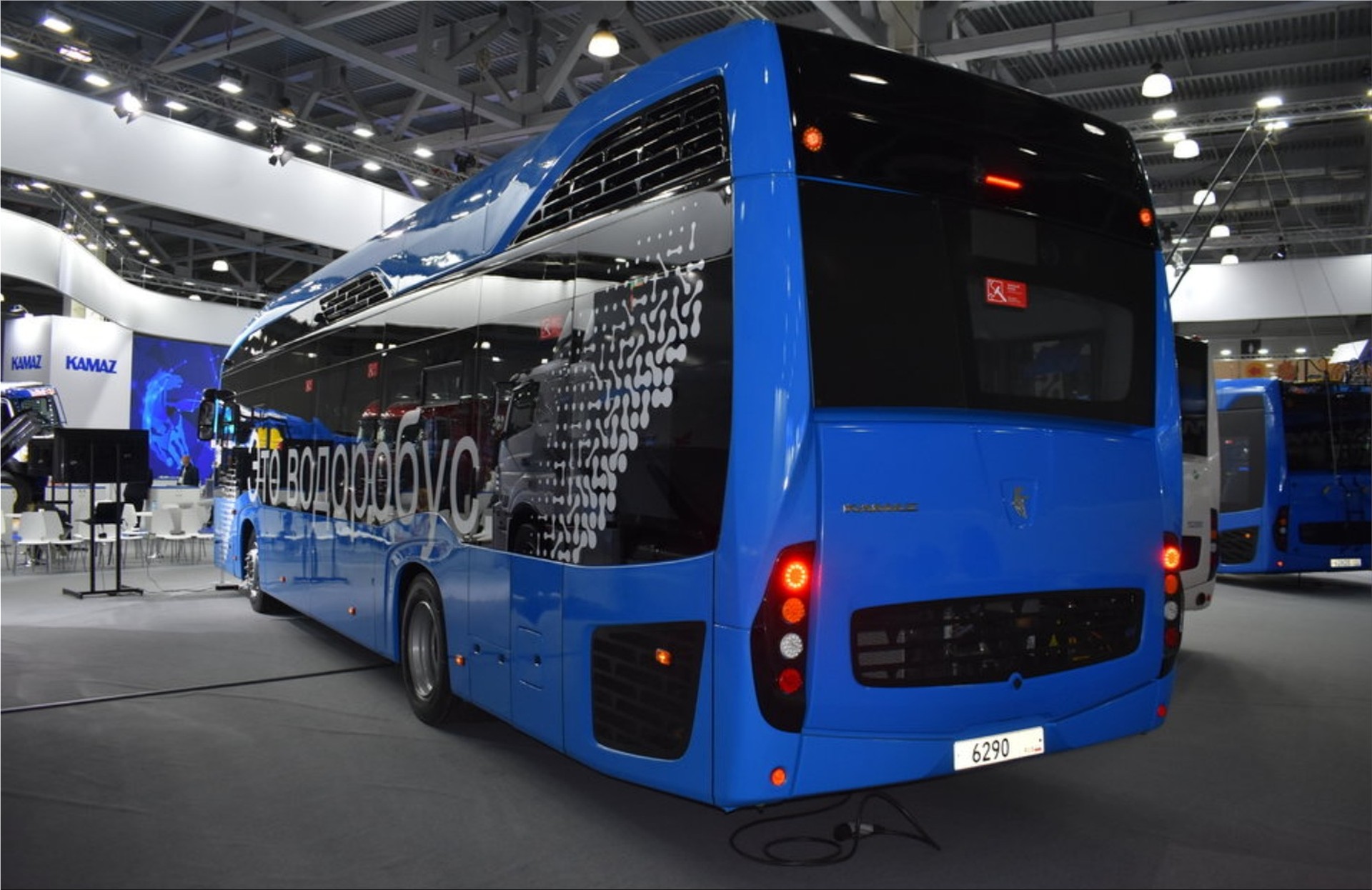
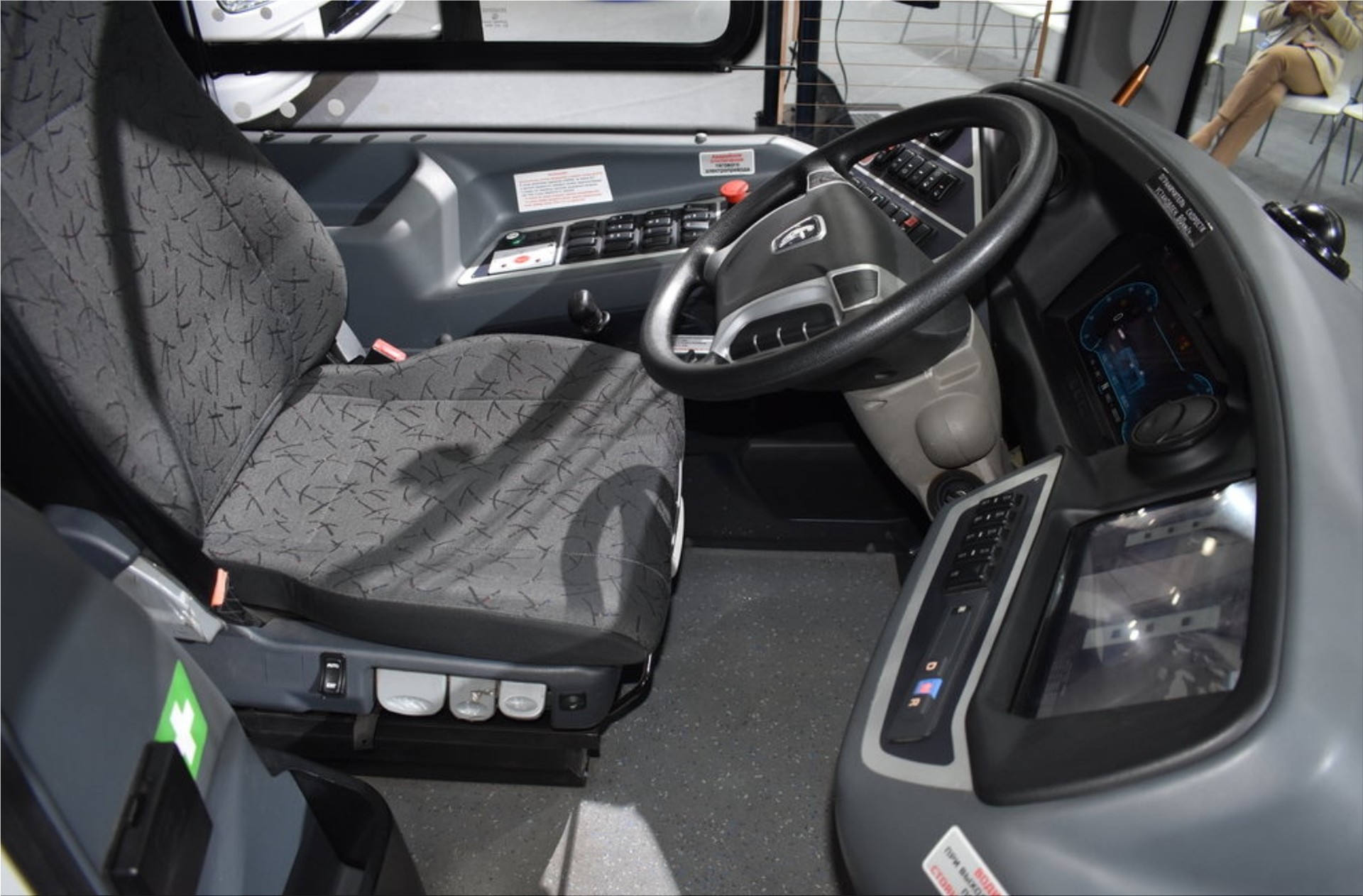
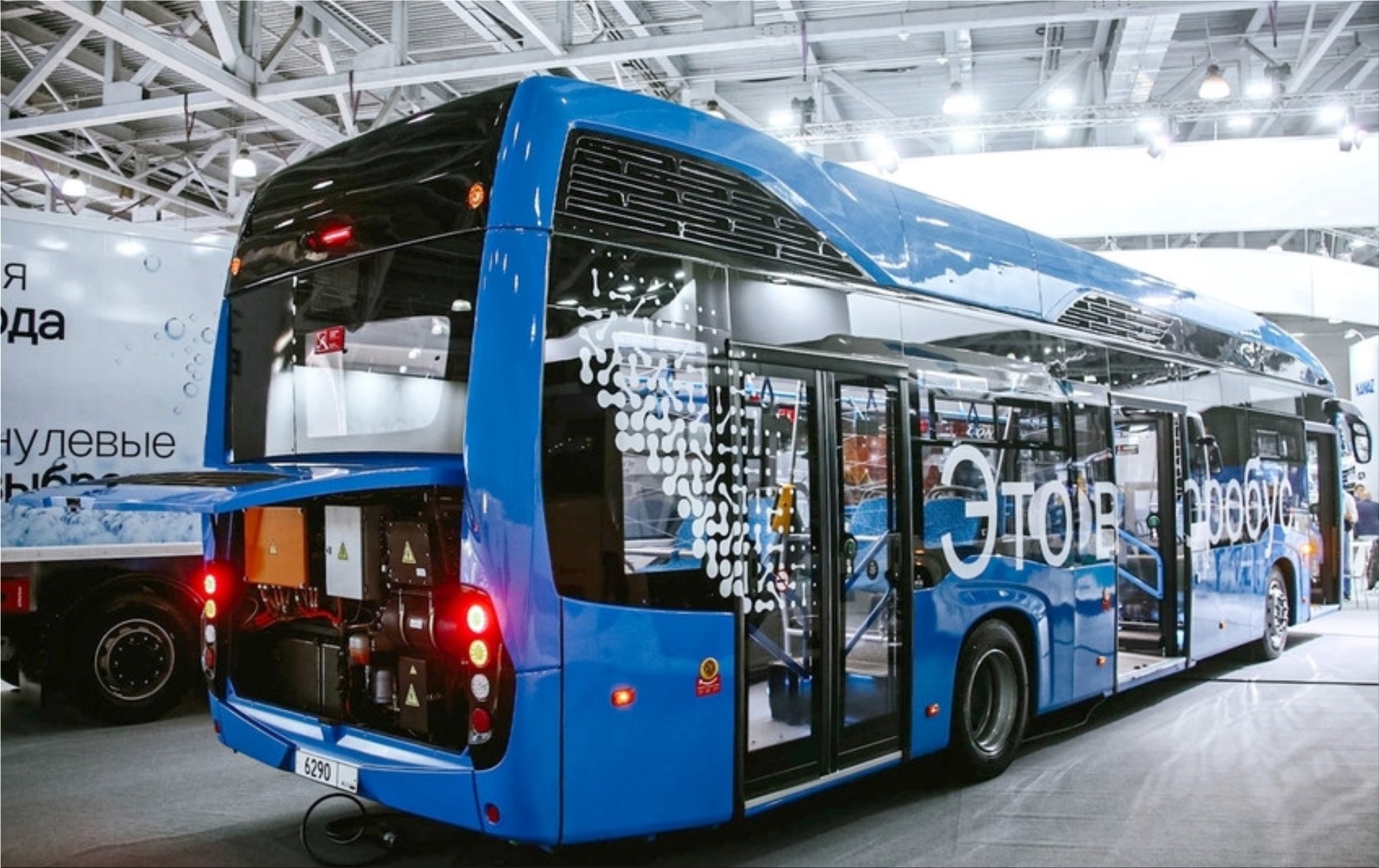
NEFAZ, a KAMAZ subsidiary headquartered in Bashkortostan, built the hydrogen electric bus' chassis and body while the KAMAZ R&D Center installed the roof equipment. As a result, the vehicle's body is composed of high-strength steel and safe plastic, making it solid and crash-resistant on the road. The KAMAZ-6282 hydrogen electric bus has a GVW of 19 tonnes and overall dimensions of 12.4x2.55x3.4 meters. The innovative product runs on hydrogen fuel cells and has six compressed hydrogen cylinders. Because the cylinders are mounted on the roof for safety reasons, hydrogen will rise rather than enter the passenger compartment if there is a leak.
The hydrogen fuel cell is reported to have a 45 kW output, but no additional details are available, nor are there any details on the buffer battery. A robust pneumatic braking system with EBS, ABS, ASR, EPB, a slope hold function, a driving lock if the door is open, and a brake pad wear sensor is included in the hydrogen electric bus. An electric motor with a recovery system allows the vehicle to brake as well. The top speed is 80 kilometers per hour, and the driving range is 250 kilometers. The bus, which has 33 seats, can accommodate up to 80 passengers. The new ecologically-friendly electric bus can operate in temperatures ranging from -40° to +40° C.
The KAMAZ R&D Center's engineers worked hard to make the hydrogen electric bus as pleasant as possible for passengers. The passenger compartment and the driver's cab include dual-zone temperature controls. The hydrogen electric bus has an automatic ramp that allows physically challenged people to enter freely. Passengers can open the doors themselves. An electronic system provides passengers with information and displays it on destination indicators and an information board in the passenger compartment.
"More work has to be done. In 2020, we aimed to test the prototype KAMAZ hydrogen electric bus on Moscow's streets under real-world conditions. Unfortunately, we can't test the hydrogen electric bus anywhere else since the only autonomous hydrogen filling station is in Chernogolovka, near Moscow. "Test drives are expected to be completed in 2023," stated Andrey Savinkov. "If Moscow is willing to build this sort of filling infrastructure and employ the new type of clean buses, we aim to complete the final assembly of hydrogen electric buses at the Sokolniki car repair and production plant in Moscow, where KAMAZ electric buses are currently being built."



It should be noted that Mikhail Mishustin, Russian Prime Minister, adopted the Hydrogen Energy Development Concept in August 2021. The document lays out the objectives, strategic ambitions, and essential steps for launching this sector in Russia. @via Kamaz.ru.
Renault could launch a new update of its Renault ZOE at the Geneva Motor Show 2018. The great novelty in this new version would be the incorporation of a new electric motor , the R110 , with 80 kW of power, although the… Continue reading
Jaguar Land Rover has expanded its range of Ingenium engines with a new six-cylinder, three-liter gasoline engine that combines with the smooth hybrid technology of 48 volts, MHEV (Mild Hybrid Electric Vehicle)… Continue reading

The US government wants to abolish state subsidies for electric cars and renewable energies. US President Trump would like to eliminate state subsidies for electric cars immediately, but now, a new bill in Congress provides for an extension of tax… Continue reading
The sale of electric cars continues to grow in Spain. Specifically, during the month of May, it grew 180% if we compare it with the same period last year. A figure that, according to all experts, will continue to increase since in 2021. In Spain, we already… Continue reading