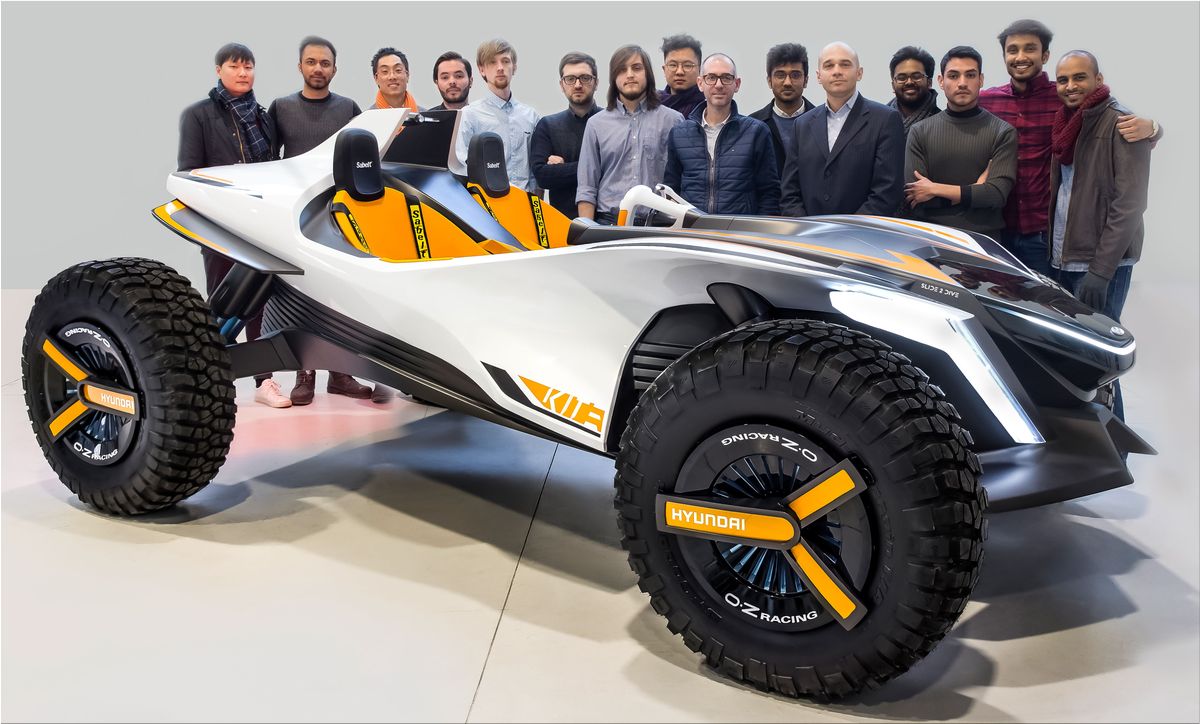
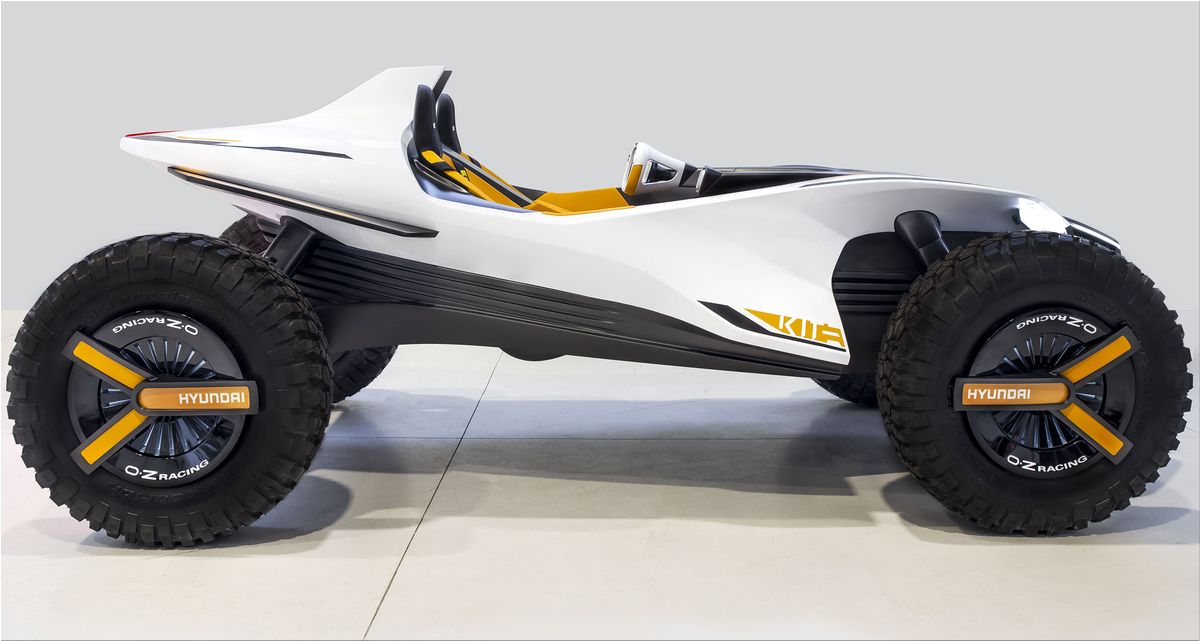
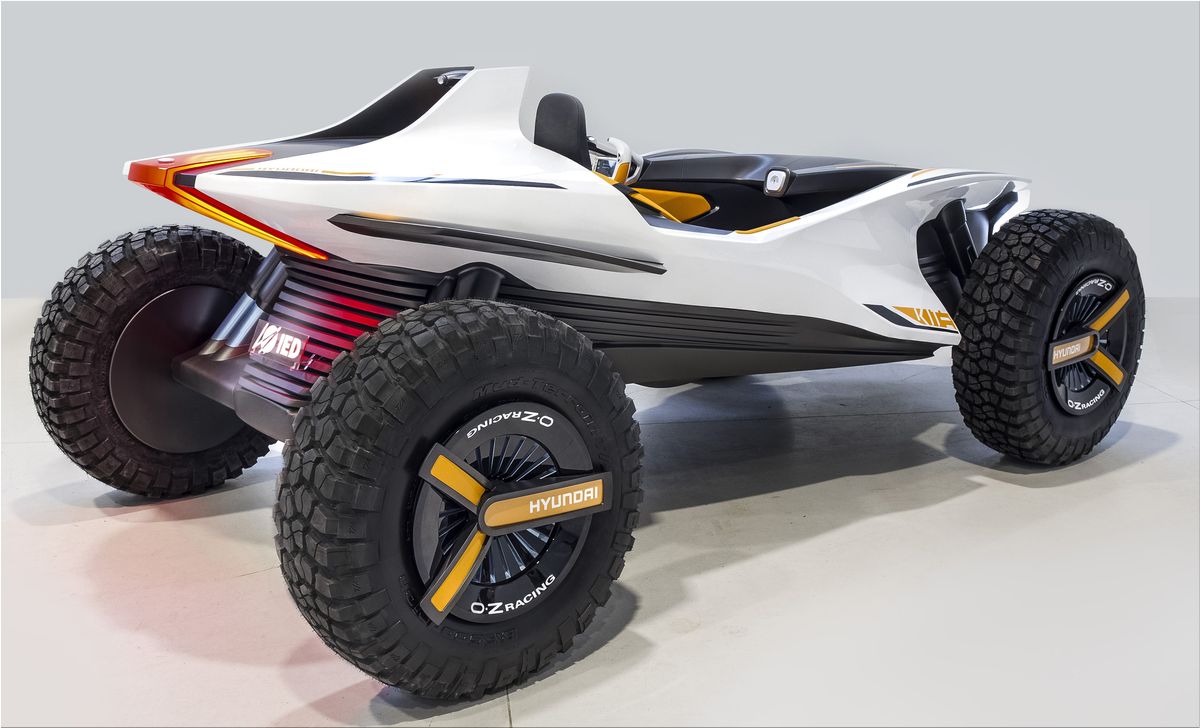
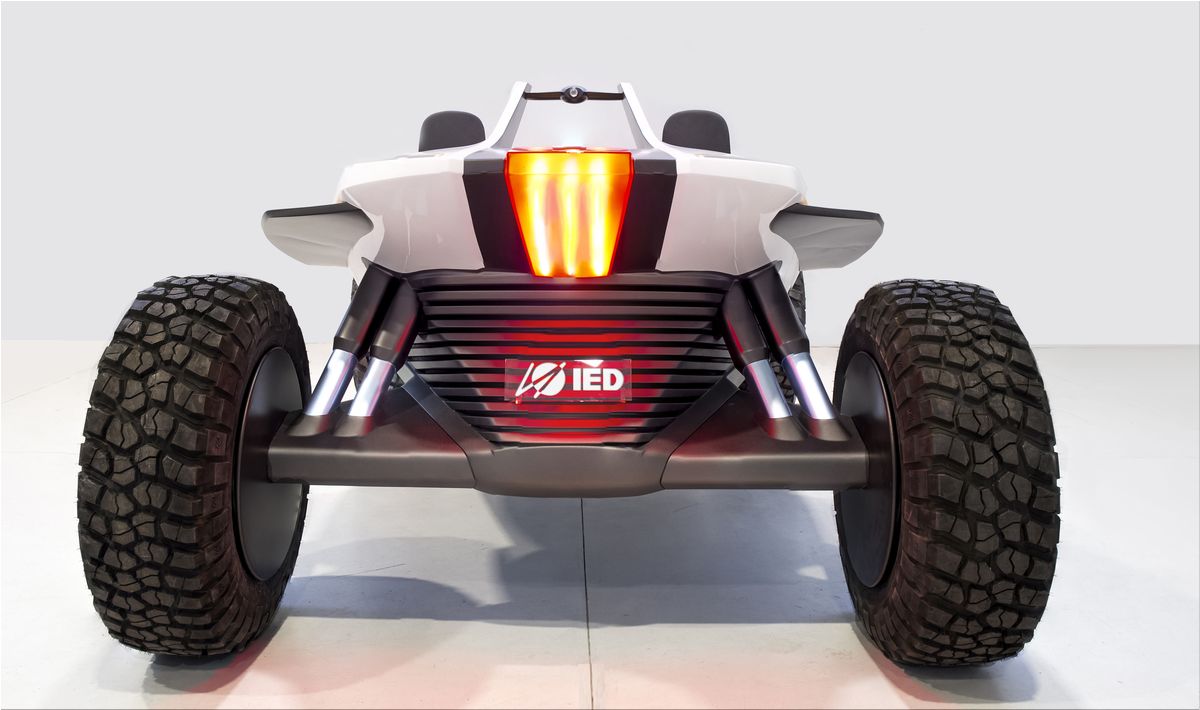
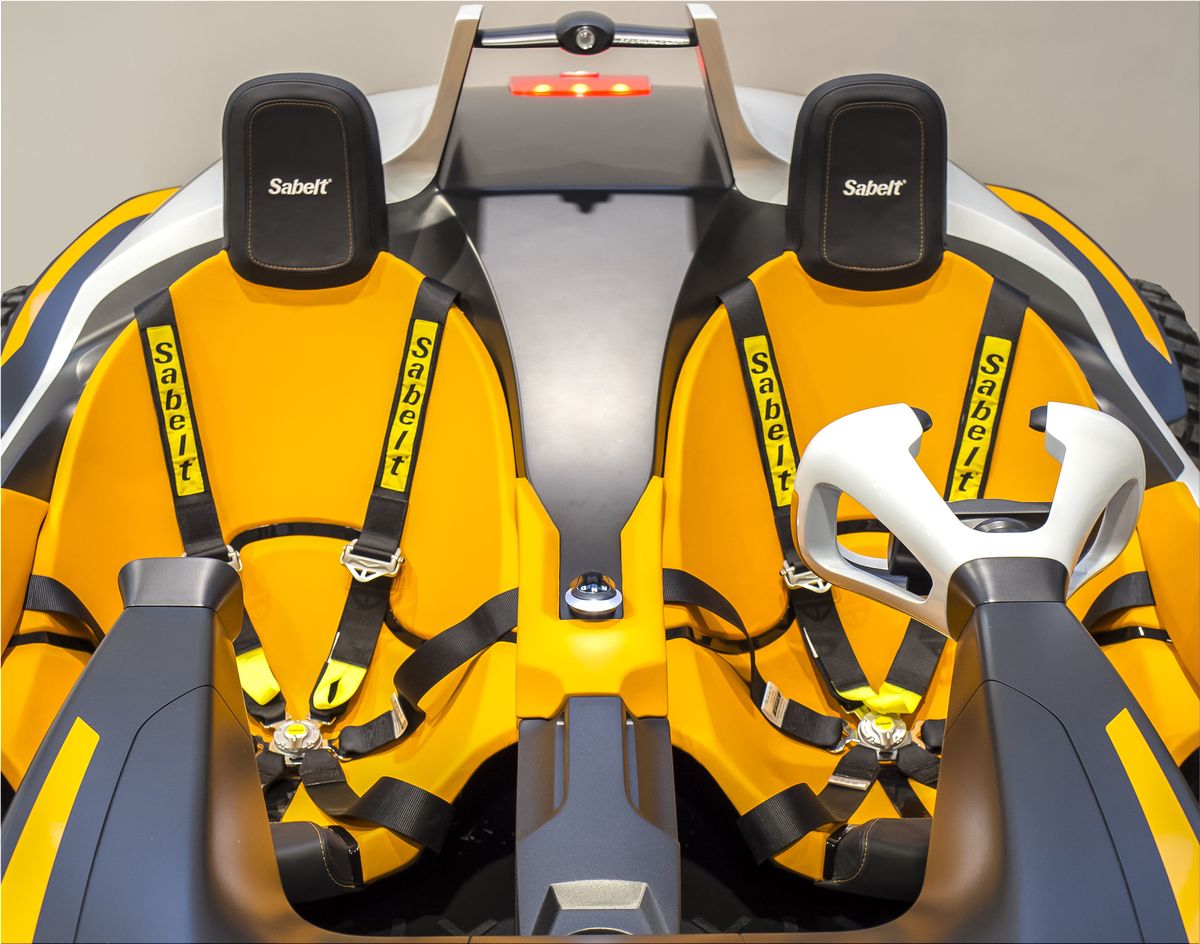
Hyundai Motor and the European Institute of Design (IED - Istituto Europeo di Design) of Turin presented at the Geneva International Motor Show the Hyundai Kite, a two-seater buggy designed for sand dunes that can transform in a single-seater jet ski for water .
The Hyundai Kite is a vehicle without doors, without roof and without windows that can run on land and on water. In both configurations, the vehicle is equipped with electric propulsion. The Kite is a fully electric vehicle measuring 3.75m long, 2.24m wide and 1.46m high. On the ground it is driven by four engines placed in the wheels and on the water, it is propelled a water jet turbine.
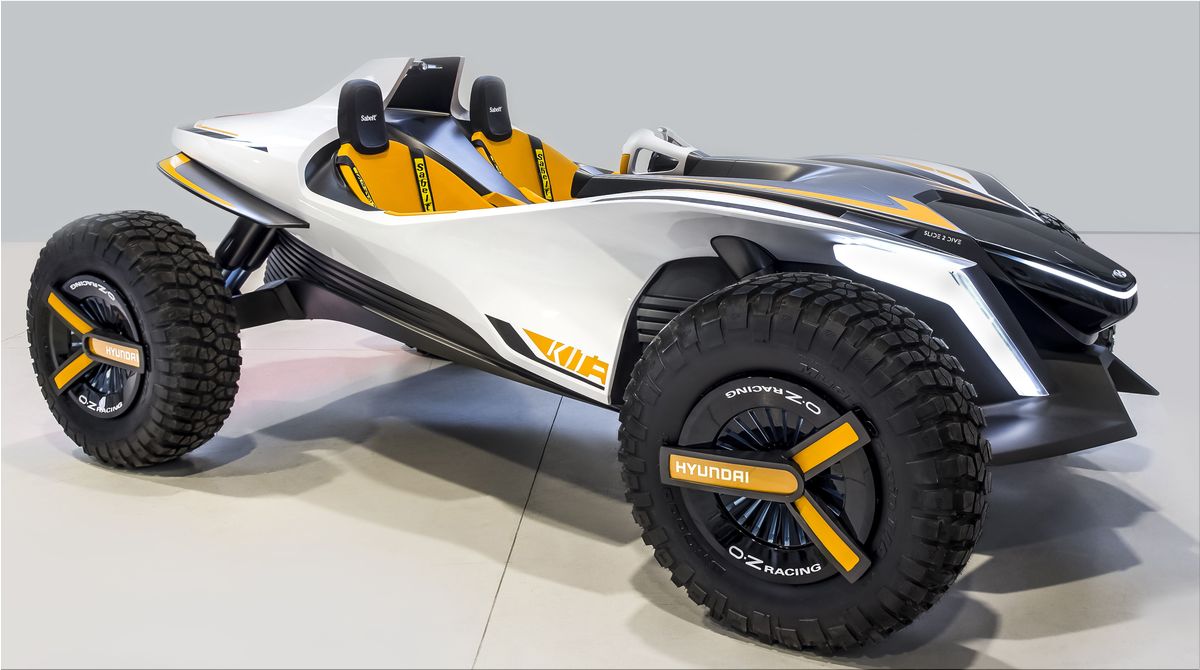
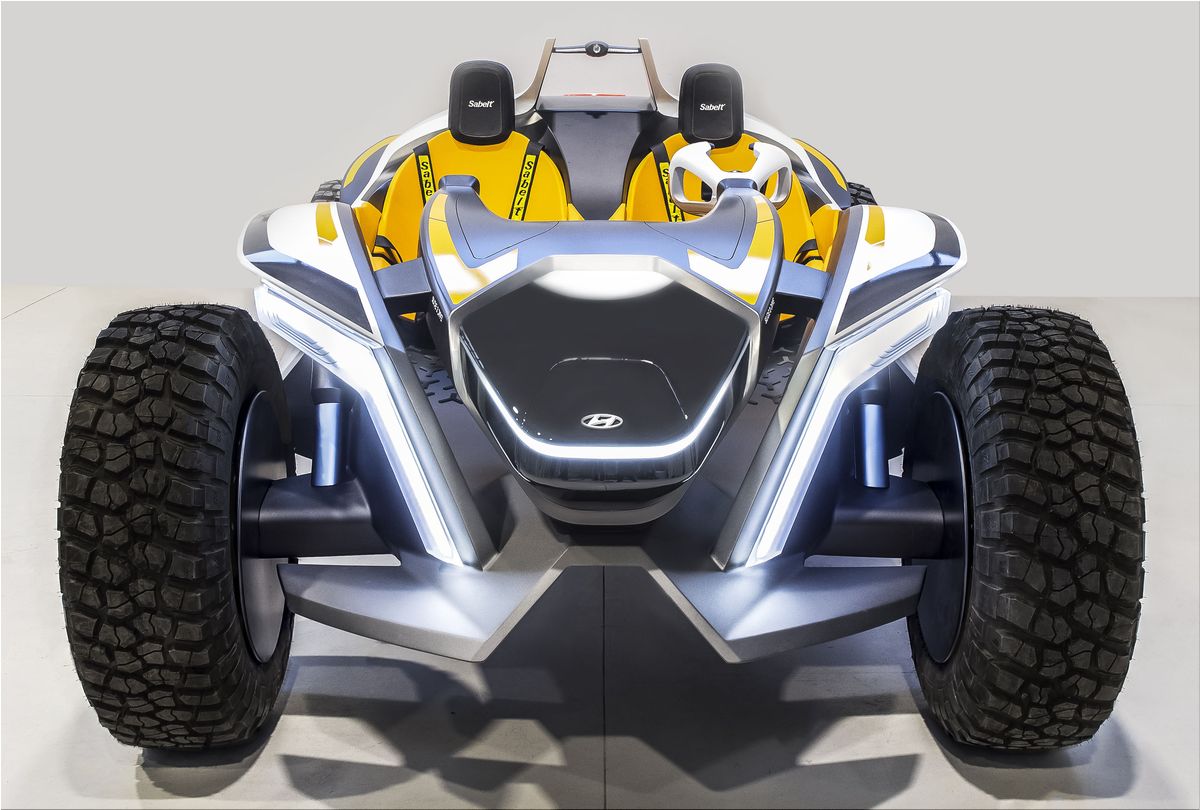
The designers tried to reduce the barriers between the exterior and the interior to create a functional and fun car. The futuristic light electric vehicle was created by 15 students and Hyundai Design Center Europe .
“Design is the number one reason why our customers in Europe choose Hyundai cars. We are always evolving our design to reflect modern lifestyle, which is our key to success,” says Thomas Bürkle, Chief Designer at Hyundai Design Centre Europe. “We are delighted to contribute to the development of young talents in Europe who will be designing the cars of the future. The Hyundai Kite is a great result of an exceptional partnership.”
It is very unlikely that the Hyundai Kite will reach the assembly line and become a model of mass production
“During these fifteen years, the Geneva audience got used to the design challenges and considerations proposed by IED”, declares Riccardo Balbo, Dean IED Italy. “The idea that drives an international network to take part to such an important venue is to give free rein to a young and uncontrolled energy, re-organise it under the direction of important partners, developing visions and train designers with good skills and a promising future.”
In recent months, the framework conditions for a quick ramp-up of electromobility have deteriorated dramatically due to a shift in interest rates, inflation, and growing costs for batteries, automobiles, and electricity. According to the… Continue reading
Hydrogen fuel cell vehicles (FCEVs) have been praised as a promising alternative to battery electric vehicles (BEVs) for long-distance transport, especially for heavy trucks that need more space and power. However, a Cambridge professor and… Continue reading
If you're a human-driving fan, you might feel left out in the current automotive landscape. With all the hype around autonomous vehicles, electric cars, and smart mobility, there's no room for the old-fashioned joy of getting behind the… Continue reading
Toyota, the world's largest automaker, has announced a massive expansion of its battery plant in North Carolina, adding $8 billion and 3,000 new jobs to its existing $5.9 billion and 2,000 jobs investment.… Continue reading