Electric Hunter

Main navigation

  • 100% EVs
  • News
  • Wheelers
  • Commercial
  • Hybrid
User account menu
  • Contact

Breadcrumb

  1. Home
  2. Commercial vehicles
  3. Mercedes-Benz eCitaro Fuel Cell Bus: A Long-Range and Zero-Emission Solution for Urban Mobility

Mercedes-Benz eCitaro Fuel Cell Bus: A Long-Range and Zero-Emission Solution for Urban Mobility

Mercedes-Benz eCitaro fuel cell bus

Mercedes-Benz is a global leader in the automotive industry, known for its innovative and high-quality products. But the company is not only focused on producing cars and trucks, it is also committed to developing solutions for the future of mobility, especially in the urban context. One of the most promising technologies that Mercedes-Benz is exploring is the eCitaro fuel cell bus, a fully electric vehicle that combines battery power with hydrogen fuel cells to achieve long ranges and zero emissions. In this article, we will take a closer look at the features, benefits, and challenges of the eCitaro fuel cell bus, and how it is being deployed in the public transport sector in Germany and beyond.

What is the eCitaro Fuel Cell Bus?

The Mercedes-Benz eCitaro fuel cell bus is a variant of the Mercedes-Benz eCitaro, an all-electric bus that Mercedes-Benz launched in 2018. The eCitaro is based on the popular Citaro low-floor bus, which has been in production since 1997 and has sold over 50,000 units worldwide. The eCitaro uses lithium-ion batteries to power its electric drive system, which consists of two electric motors mounted on the rear axle. The eCitaro can be charged either at the depot or at opportunity charging stations along the route, using a pantograph or a plug-in connector.

The eCitaro fuel cell bus adds a new component to the eCitaro’s energy system: a fuel cell. A fuel cell is a device that converts the chemical energy of hydrogen and oxygen into electricity and water. The fuel cell acts as a range extender for the eCitaro, providing additional power to the batteries when needed. The hydrogen is stored in tanks on the roof of the bus, and the fuel cell is located in the rear. The eCitaro fuel cell bus can also be charged externally, just like the eCitaro.

The eCitaro fuel cell bus is available in two versions: a solo bus with a length of 12 meters and a capacity of up to 88 passengers, and an articulated bus with a length of 18 meters and a capacity of up to 128 passengers. Both versions have a modular battery configuration, with two or three battery packs on the roof and two in the rear. The solo bus has a total battery capacity of 192 or 294 kWh, while the articulated bus has 247 or 396 kWh. The fuel cell has a maximum output of 60 kW, and the hydrogen tanks can store up to 33.3 kg of hydrogen.

What are the Benefits of the eCitaro Fuel Cell Bus?

The main benefit of the eCitaro fuel cell bus is its long range. According to Mercedes-Benz, the eCitaro fuel cell bus can achieve a range of more than 400 kilometers without intermediate charging, depending on the operating conditions and the battery configuration. This is significantly higher than the range of the eCitaro, which is around 170 kilometers with the largest battery option. The long range of the eCitaro fuel cell bus makes it suitable for demanding long-distance routes, where frequent charging is not feasible or desirable.

Another benefit of the eCitaro fuel cell bus is its zero emissions. The eCitaro fuel cell bus only emits water vapor and heat, which means it does not contribute to air pollution or greenhouse gas emissions. This is especially important for urban areas, where air quality and climate change are major challenges. The eCitaro fuel cell bus can help reduce the environmental impact of public transport and improve the quality of life for the residents and visitors. Moreover, the eCitaro fuel cell bus can use renewable hydrogen, which is produced from excess wind or solar power, making it even more sustainable.

A third benefit of the eCitaro fuel cell bus is its high performance. The eCitaro fuel cell bus has a powerful electric drive system that delivers smooth and quiet operation, as well as high torque and acceleration. The eCitaro fuel cell bus also has a sophisticated thermal management system that optimizes the energy consumption and the performance of the batteries and the fuel cell. The eCitaro fuel cell bus also features electrohydraulic steering, roll and pitch control, and various assistance systems, such as Sideguard Assist, Frontguard Assist, and Preventive Brake Assist, that enhance the safety and comfort of the driver and the passengers.

What are the Challenges of the eCitaro Fuel Cell Bus?

The eCitaro fuel cell bus is not without its challenges, however. One of the main challenges is the cost. The eCitaro fuel cell bus is more expensive than the eCitaro or the Citaro with a combustion engine, due to the high cost of the fuel cell and the hydrogen tanks. The cost of hydrogen is also higher than that of diesel or electricity, depending on the source and the availability. The eCitaro fuel cell bus also requires more maintenance and servicing than the eCitaro, due to the complexity of the fuel cell system.

Another challenge of the eCitaro fuel cell bus is the infrastructure. The eCitaro fuel cell bus needs a reliable and safe supply of hydrogen, which is not widely available in many regions. The eCitaro fuel cell bus also needs special equipment and facilities for refueling, which are not common in most bus depots. The eCitaro fuel cell bus also needs to comply with the regulations and standards for hydrogen vehicles, which may vary from country to country. The eCitaro fuel cell bus also needs to be integrated with the existing fleet management and charging systems, which may require additional software and hardware.

A third challenge of the eCitaro fuel cell bus is the acceptance. The eCitaro fuel cell bus is a relatively new and unfamiliar technology for many transport operators, drivers, and passengers. The eCitaro fuel cell bus may face some skepticism and resistance from the stakeholders, who may have concerns about the safety, reliability, and efficiency of the fuel cell system. The eCitaro fuel cell bus also needs to prove its performance and durability in real-world conditions, which may take some time and testing. The eCitaro fuel cell bus also needs to raise awareness and educate the public about the benefits and potential of hydrogen mobility, which may require some marketing and communication efforts.
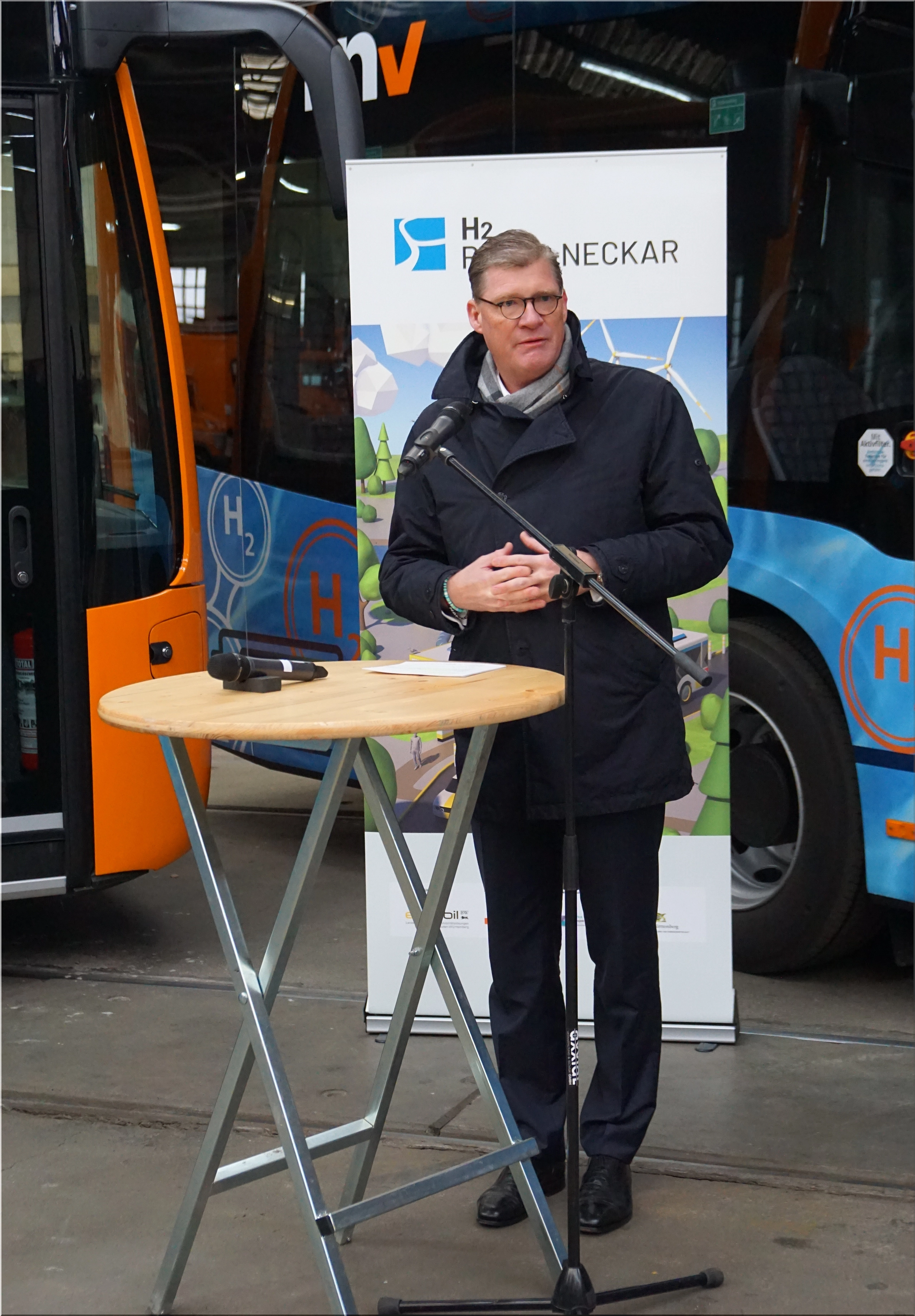
Mercedes-Benz eCitaro fuel cell bus

How is the eCitaro Fuel Cell Bus Being Deployed?

Despite the challenges, the eCitaro fuel cell bus is gaining traction and interest from the public transport sector. Mercedes-Benz has already received several orders and delivered the first units of the eCitaro fuel cell bus to various customers in Germany and Europe. Some of the examples are:

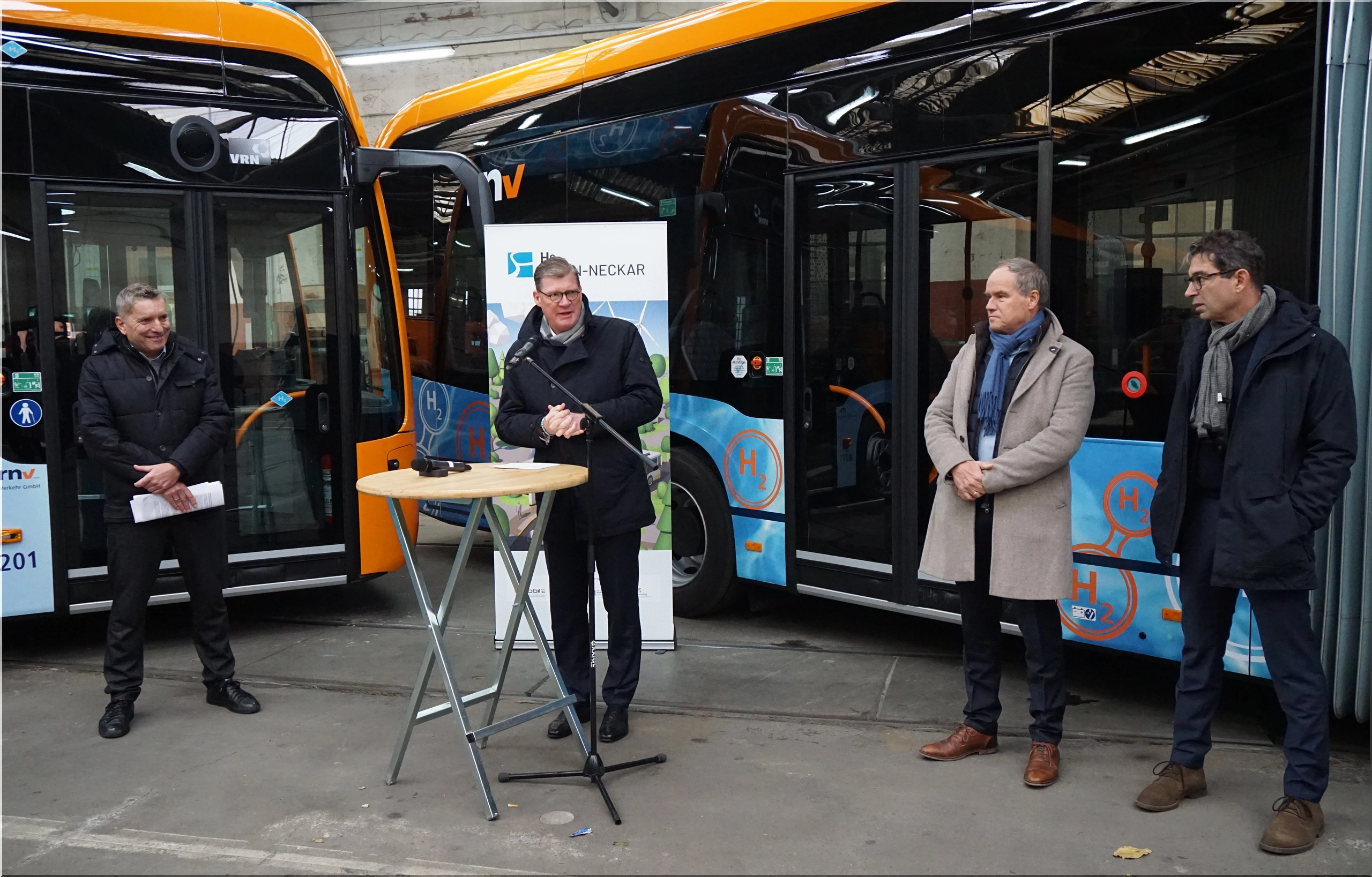
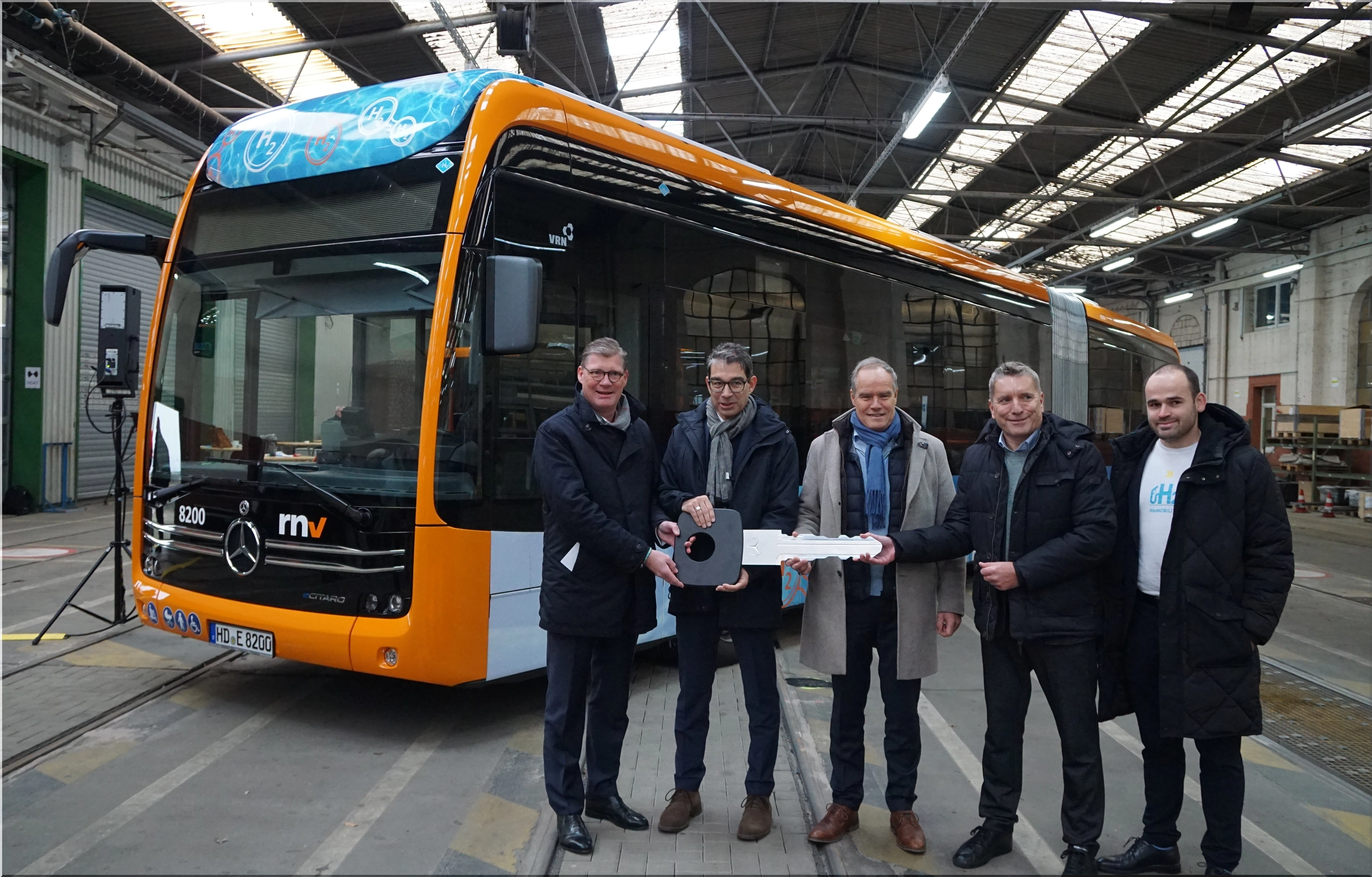
  • Rhein-Neckar-Verkehr GmbH (rnv): rnv is a public transport company that operates in the Rhine-Neckar metropolitan region in Germany. Rhein-Neckar-Verkehr ordered 15 units of the Mercedes-Benz eCitaro fuel cell bus in 2019 and received the first two units in November 2020. Rhein-Neckar-Verkehr plans to use the eCitaro fuel cell bus on its route 63, which connects the cities of Mannheim, Heidelberg, and Weinheim. rnv also built a hydrogen refueling station at its bus depot in Mannheim, which can refuel up to 30 buses per day.
  • Hamburger Hochbahn AG: Hamburger Hochbahn is a public transport company that operates in the city of Hamburg in Germany. Hamburger Hochbahn ordered 15 units of the Mercedes-Benz eCitaro fuel cell bus in 2019, and received the first three units in December 2020. Hamburger Hochbahn plans to use the eCitaro fuel cell bus on its route 109, which connects the city center with the airport. Hamburger Hochbahn also has a hydrogen refueling station at its bus depot in Hummelsbüttel, which can refuel up to 20 buses per day.
  • Transdev GmbH: Transdev is a public transport company that operates in several regions in Germany. Transdev ordered 10 units of the eCitaro fuel cell bus in 2020, and expects to receive them in 2021. Transdev plans to use the eCitaro fuel cell bus on its route 100, which connects the city of Augsburg with the district of Aichach-Friedberg. Transdev also plans to build a hydrogen refueling station at its bus depot in Augsburg, which can refuel up to 14 buses per day.

Other customers of the eCitaro fuel cell bus include ÖPNV Osnabrück in Germany, Connexxion in the Netherlands, and Tüke Busz in Hungary. Mercedes-Benz expects to deliver more units of the eCitaro fuel cell bus in the coming years, as the demand for sustainable and efficient mobility solutions grows.
Image gallery:
Mercedes-Benz eCitaro fuel cell bus

Conclusion

The eCitaro fuel cell bus is a groundbreaking innovation from Mercedes-Benz that combines battery and hydrogen technology to offer a long-range and zero-emission solution for public transport. The eCitaro fuel cell bus has many benefits, such as high performance, low environmental impact, and high passenger capacity, but it also faces some challenges, such as high cost, limited infrastructure, and low acceptance. The eCitaro fuel cell bus is already being deployed in several regions in Germany and Europe and is expected to expand to other markets in the future. The eCitaro fuel cell bus is a clear example of how Mercedes-Benz is driving the future.
Category

  • Commercial vehicles

Brand

  • Mercedes-Benz

Tags

  • Mercedes-Benz eCitaro
  • Mercedes-Benz eCitaro Fuel Cell Bus
  • Public transport
  • Sustainable mobility solutions
  • Hydrogen technology
  • zero emissions
  • Add new comment
  • 245 views
Profile picture for user electric cars
By electric cars, 18 December, 2023

Similar news

Audi e-tron electric SUV

The first all-electric Audi is available to pre-order

Audi e-tron electric SUV
  • Audi

  • Audi e-tron

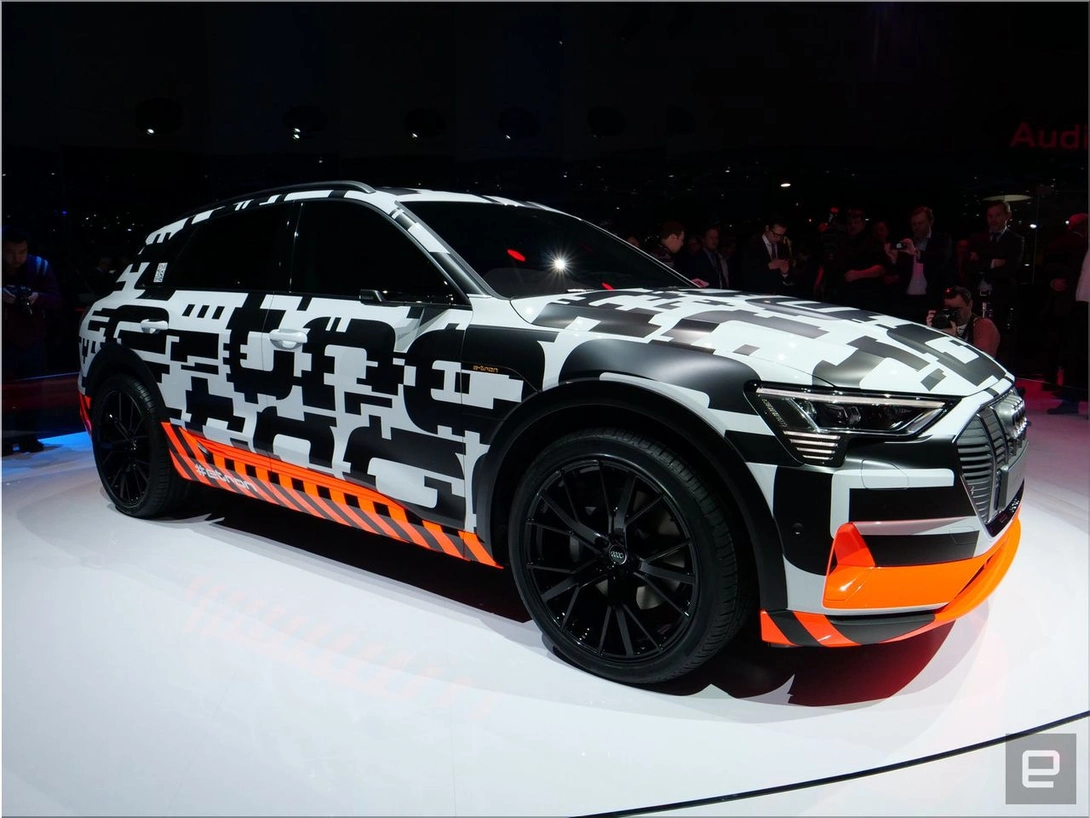
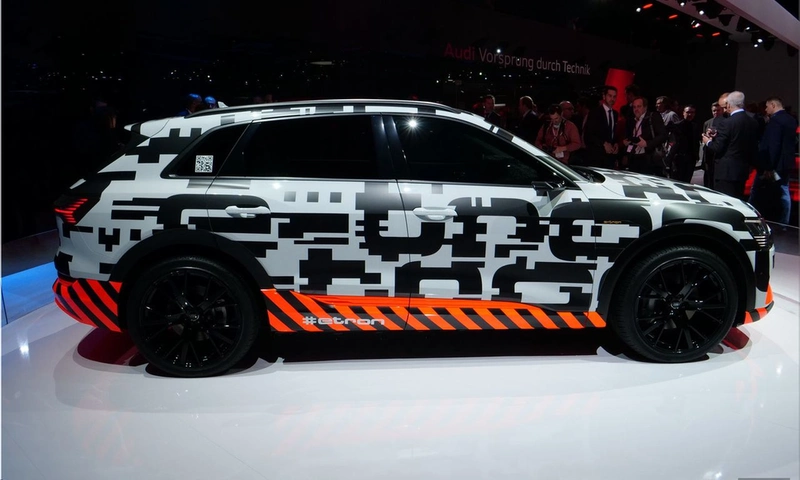
Audi has opened the registrations for its first 100% electric car, a sports SUV that will be between Q5 and Q7 and whose launch will take place later this year. The new Audi e-tron electric SUV can now be pre-ordered in Spain. Audi has...

Innovative fuel cell solves the problem of energy storage

Innovative fuel cell solves the problem of energy storage

battery storage
  • fuel cells

The major problem of switching to renewable energy sources is the lack of available technologies for converting electricity derived from solar and wind energy into chemical fuel for long-term storage and in the opposite direction. ...

New Cadillac Optiq-V EV SUV Launches With 275-Mile Range and Super Cruise

New Cadillac Optiq-V EV SUV Launches With 275-Mile Range and Super Cruise

Cadillac Optiq-V
  • Cadillac

  • Cadillac Optiq-V

The 2026 Cadillac Optiq-V enters the EV space as the brand’s first compact electric SUV to wear the V-Series badge. It's also the first GM vehicle to offer a native Tesla NACS charging port, putting it in direct...

Polestar 4 and Google Maps

Google Maps Live Lane Guidance Debuts in Polestar 4: What Drivers Must Know

Polestar 4 and Google Maps
  • Polestar

  • Polestar 4

Polestar pushes real-time navigation forward

Polestar has become the first automaker to integrate Google Maps’ new Live Lane Guidance directly into a production vehicle. The feature debuts in the ...

VW ID.3 Neo

VW ID.3 Neo Brings One-Pedal Driving and V2L Power

VW ID.3 Neo
  • Volkswagen

  • Volkswagen ID.3 Neo

Volkswagen has finally put a name on the ID.3 successor. It will be called the Volkswagen ID.3 Neo, and that name matters because this is not a light facelift dressed up as a press event. VW is using the...

New Polestar 4 Keeps Price Steady

New Polestar 4 Keeps Price Steady, Gains Key Hardware Tweaks

2027 Polestar 4
  • Polestar

  • Polestar 4

The 2027 Polestar 4 keeps its Australian entry price while adding chassis changes, clearer trim logic, and optional 22 kW AC charging. Polestar did not touch the motors or battery. Instead, it attacked ride control, steering precision,...

Lexus UX hybrid crossover in images

Lexus UX hybrid crossover in images

Lexus UX
  • Lexus

  • Lexus UX

Lexus unveils a first image and a video of the final version of the UX, its new compact crossover. Inspired by the UX concept presented in 2016 at the Paris Motor Show, the Lexus UX marks the arrival of the Japanese brand in the compact...

Jaguar Land Rover

New hybrid engine from Jaguar Land Rover

  • Jaguar

  • Mild Hybrid Electric Vehicle

Jaguar Land Rover has expanded its range of Ingenium engines with a new six-cylinder, three-liter gasoline engine that combines with the smooth hybrid technology of 48 volts, MHEV (Mild Hybrid Electric...

VinFast VF6

New VinFast VF6: Can a $30K EV from Vietnam Compete with Tesla and Hyundai?

VinFast VF6
  • VinFast

  • VinFast VF6

VinFast, the automotive arm of Vietnam’s Vingroup conglomerate, is positioning itself as a global EV competitor. With bold ambitions, it has opened showrooms in the U.S., Canada, and Europe. The 2025 VinFast VF6 targets the entry-...

GM California Corvette

GM California Corvette Concept Hints at Electric Hypercar Future

GM California Corvette
  • GMC

  • Chevy California Corvette

GM pushes Corvette into an electric future

General Motors has unveiled the California Corvette Concept, a one-off electric hypercar created by its Advanced Design studio in Pasadena. The concept reflects Southern California's...

2026 Mercedes-Benz GLB

New Mercedes GLB Debuts With 631-km Range and New MBUX Tech

Mercedes-Benz GLB
  • Mercedes-Benz

  • Mercedes-Benz GLB
A Compact SUV Built for Practical Results

Mercedes-Benz pushes its compact SUV line with the 2026 GLB. The company focuses on three outcomes: more range, more space, and more ...

Hyundai IONIQ 9 Black Ink Brings Dark Luxury To Three-Row EVs

Hyundai IONIQ 9 Black Ink Brings Dark Luxury To Three-Row EVs

Hyundai IONIQ 9 Black Ink
  • Hyundai

  • Hyundai IONIQ 9 Black Ink

The 2027 Hyundai IONIQ 9 AWD Performance Calligraphy Black Ink takes Hyundai's three-row electric SUV and pushes it into a darker, richer, more premium lane. It adds Abyss Black Pearl paint, black chrome trim, exclusive 21-inch wheels, a...

2027 Dacia Spring

2027 Dacia Spring Packs 155-Mile Range Under $23,300

2027 Dacia Spring
  • Dacia

  • 2027 Dacia Spring

The 2027 Dacia Spring replaces its low-cost predecessor with a European-built platform, an 80-hp motor, a 27.5-kWh LFP battery, and up to 155 miles of WLTP range. Every version will cost less than about $23,300 in Europe, but Dacia has...

Nissan e-NV200

Nissan e-NV200 - new battery, greater autonomy, zero emissions

Nissan e-NV200
  • Nissan

  • Nissan e-NV200

New battery, greater autonomy, zero emissions: these are the main features of the new Nissan e-NV200. The new 40 kWh battery provides an autonomy that can go up to 280 km on the NEDC cycle and a little less in the city, making it the ideal...

MetaFly flying robotic insect

MetaFly, a Unique Flying Biomimetic Controllable Insect

Metafly
  • remote control

Five years ago, Edwin Van Ruimbeke, an engineer from France, successfully raised funds for his ornithopter, a remote-controlled model capable of flying, flapping its wings, just like a real bird. Now he, inspired by the study of flying insects, he presents...

Mercedes-Benz eActros 600 Electric Truck

Mercedes-Benz eActros 600 Electric Truck Gets 4x2 and 6x2 Chassis Options

Mercedes-Benz eActros 600 Electric Truck
  • Mercedes-Benz

  • Mercedes-Benz eActros

Mercedes-Benz Doubles Down on Electric Freight With eActros 600 Rigid Variants

Mercedes-Benz Trucks, a division of Daimler Truck AG, is significantly expanding its battery-electric truck portfolio by...

Mercedes-Benz eIntouro: 500 km Electric Intercity Bus Debuts

Mercedes-Benz eIntouro: 500 km Electric Intercity Bus Debuts

Mercedes-Benz eIntouro
  • Mercedes-Benz

  • Daimler Buses

  • Mercedes-Benz eIntouro

A New Chapter for Battery-Electric Public Transport

Daimler Buses has taken a major step in commercial electrification with the launch of the Mercedes-Benz eIntouro, its first battery-electric...

BAIC Beijing Off-road ELMT Max Reveals the Future of Modular Off-Road SUVs

BAIC Beijing Off-road ELMT Max Reveals the Future of Modular Off-Road SUVs

BAIC Beijing Off-road ELMT Max
  • BAIC

  • BAIC ELMT Max

The BAIC Beijing Off-Road ELMT Max Concept communicates intent with unusual clarity. This vehicle does not exist to tease paint colors or future trim names. It exists to show how BAIC plans to compete in the global off-road segment...

New BMW i7 Price

New BMW i7 Price Jumps Into Six-Figure Flagship Territory With 452 Miles of Range

2027 BMW i7
  • BMW

  • BMW i7

How Much Does The 2027 BMW i7 Cost?

The refreshed 2027 BMW i7 starts at about $154,228 in Sweden, with the stronger BMW i7 60 xDrive converting to about $186,697 and the...

Volvo FL Electric truck

Volvo FL Electric truck will go on sale next year

Volvo FL Electric truck
  • Volvo

  • Electric trucks

Volvo Trucks introduced its first fully electric truck for commercial use. The truck is called FL Electric and is intended for use by urban services, in particular in the field of waste disposal, local delivery of goods...

Like us!

ElectricHunter.com

Friends

»Spare Wheel  »Panorica  »Contact Us
RSS feed
Powered by Drupal