A New Chapter for Battery-Electric Public Transport
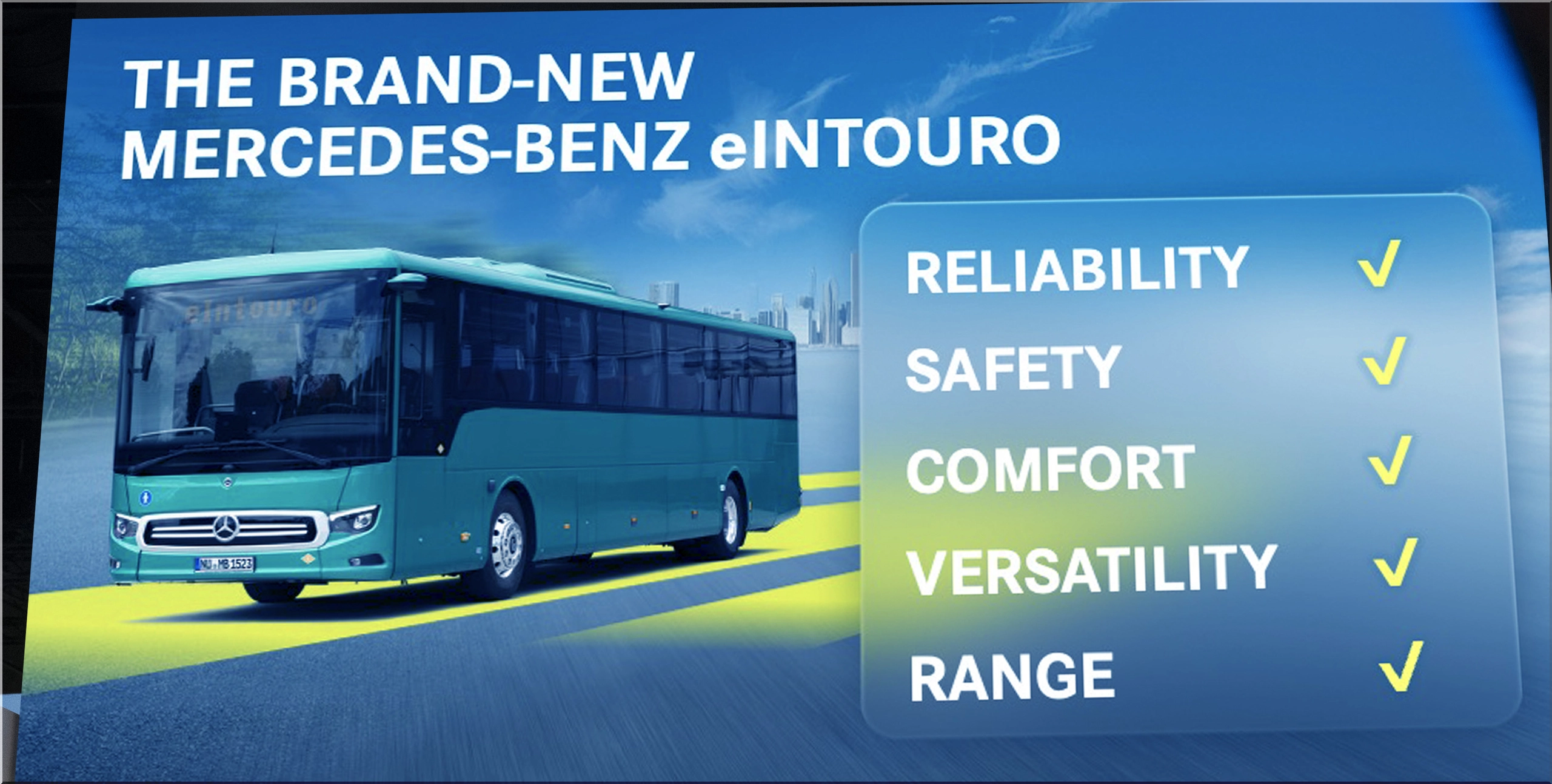
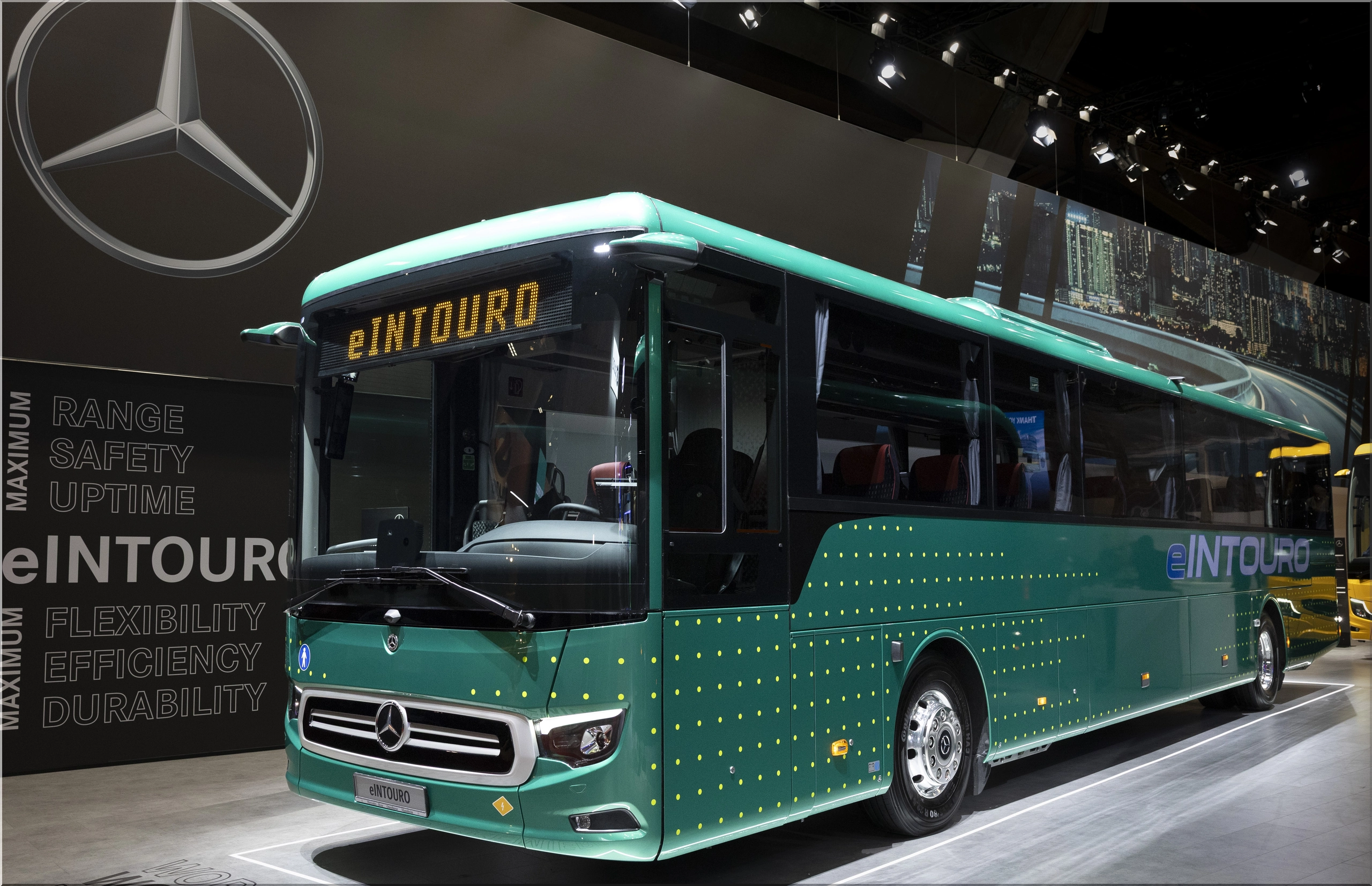
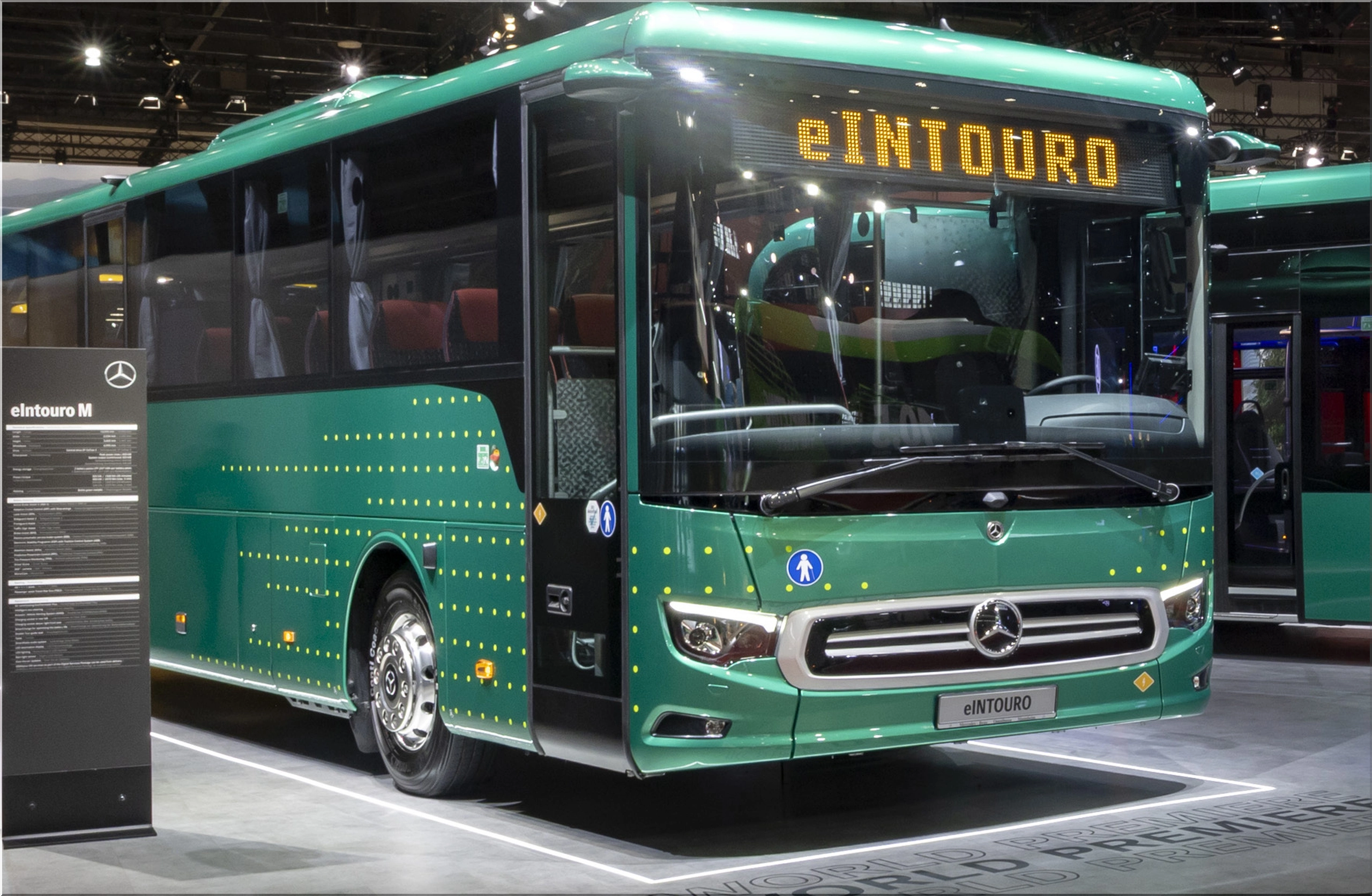
Daimler Buses has taken a major step in commercial electrification with the launch of the Mercedes-Benz eIntouro, its first battery-electric intercity bus. Revealed at Busworld Europe 2025 in Brussels, the eIntouro is designed for school routes, regional transport, company shuttles, and excursion services, combining electric power with practical range and cost efficiency.
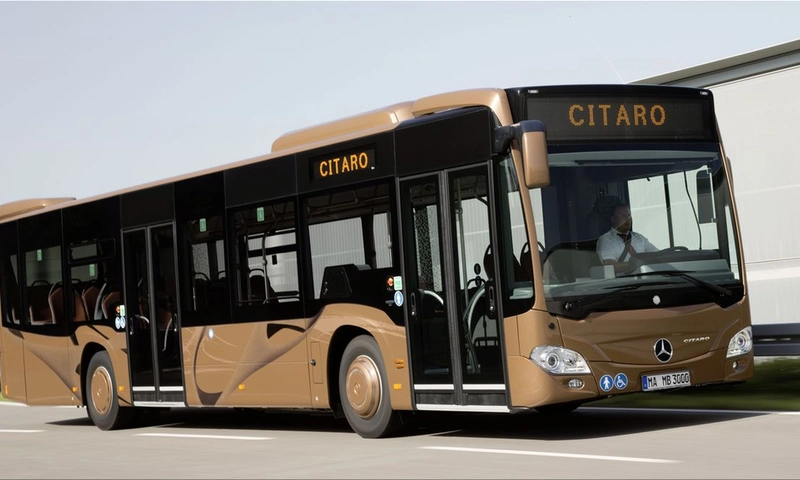
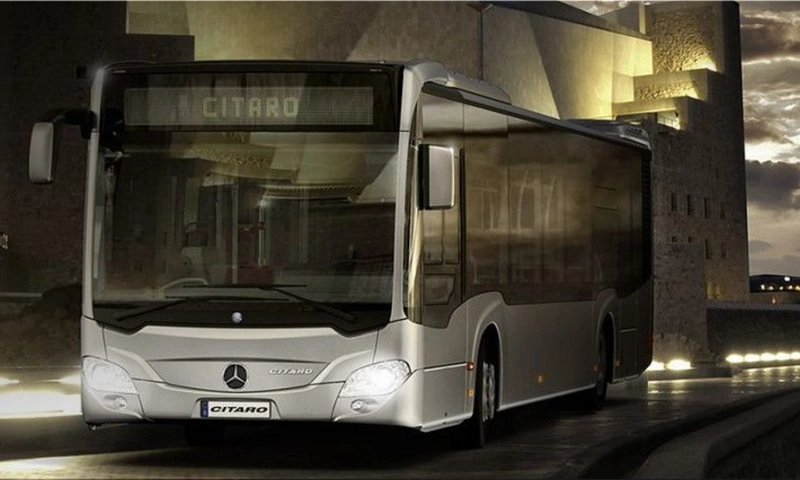
Available for order in spring 2025 with deliveries expected by late 2026, the eIntouro extends Daimler's e-mobility strategy that began with the eCitaro city bus in 2018. CEO Till Oberwörder summarized the company’s approach: Daimler aims to offer the right product at the right time — once the infrastructure is ready to support it.
Designed for Real-World Transport Needs
The eIntouro is based on the proven Intouro diesel bus platform but replaces the combustion drivetrain with a battery-electric system. Two configurations are available:
- eIntouro: 12.18 m long
- eIntouro M: 13.09 m long
Seating capacity ranges from 50 to 63 passengers, depending on the chosen layout. These dimensions and capacities match the needs of municipal and private fleet operators looking for zero-emission alternatives without sacrificing utility.
Strong Range and Battery Performance
Daimler equips the eIntouro with one or two LFP (lithium iron phosphate) battery packs, each with 207 kWh. When fitted with both, the total capacity reaches 414 kWh, delivering:
- Up to 500 km (310 miles) range per charge, depending on driving style and terrain.
- 15-year service life for the batteries, thanks to durable LFP chemistry.
- 95% usable capacity, improving operational efficiency.
The battery placement — behind the front axle and in the rear engine bay — optimizes weight distribution and passenger space. The bus can be charged using a CCS Type 2 connector with:
- Up to 400 kW charging power (two packs)
- Up to 225 kW (one pack)
This means fast charging sessions and shorter downtime between shifts.
Electric Drivetrain and Performance
The eIntouro uses a central electric motor with:
- 320 kW continuous output
- 400 kW peak output
This powertrain ensures strong acceleration and smooth operation, even with a full passenger load. It also enables operators to maintain regular timetables without range anxiety or performance compromise.
OTA-Ready: The First of Its Kind in Europe
One of the eIntouro’s most significant technical advantages is its new electronics architecture, which supports over-the-air (OTA) updates — a first for any European bus.
OTA capability allows operators to:
- Receive software and security updates remotely via mobile networks.
- Update vehicle settings and add features without workshop visits.
- Maintain fleets more efficiently, reducing downtime and operating costs.
All updates are managed through the Omniplus On portal, Daimler’s cloud-based fleet management platform.
Safety Systems Focused on Real-World Scenarios
Safety remains a key focus in public transport, and Daimler has equipped the eIntouro with advanced assistance systems as standard or optional features:
| System | Function |
|---|---|
| Active Brake Assist 6 (ABA 6) | Automatic emergency braking for cyclists and pedestrians. |
| Sideguard Assist 2 | Monitors both sides and acts as a lane-change assistant above 40 km/h. |
| Frontguard Assist | Detects obstacles or pedestrians ahead when starting. |
| Traffic Sign Assist | Reads speed limits and provides warnings. |
| Tyre Pressure Monitoring (TPM) | Ensures optimal tire performance and safety. |
| Attention Assist (AtAs) | Detects driver fatigue and alerts them. |
| Alcohol Tester Interface | Prevents operation if the driver fails a sobriety test. |
| 360° Camera System (optional) | Offers full-surround visibility when reversing. |
| MirrorCam (optional) | Replaces side mirrors with digital cameras for better aerodynamics and visibility. |
These systems meet or exceed European safety standards and support operators in reducing accident risks and insurance costs.
Real-World Testing Under Extreme Conditions
Before launch, the eIntouro underwent extensive validation in harsh conditions:
- Winter testing near the Arctic Circle ensured performance in freezing temperatures.
- Summer testing in Spain validated reliability in temperatures above 113°F (45°C).
The successful completion of these trials means operators can expect consistent performance across diverse climates and terrains.
Ready for Tomorrow’s Infrastructure
Daimler Buses is pairing vehicle deployment with an expansion of public charging infrastructure. The company plans to install chargers at tourist destinations across Europe, enabling electric buses to handle longer routes and remote excursions.
The eIntouro also supports Daimler’s broader product roadmap. The company plans to introduce battery-electric touring coaches by the end of the decade and fuel cell coaches in the following phase. This dual approach addresses range limitations and positions Daimler for the next decade of sustainable transport.
Customer-Centric Features and Passenger Comfort
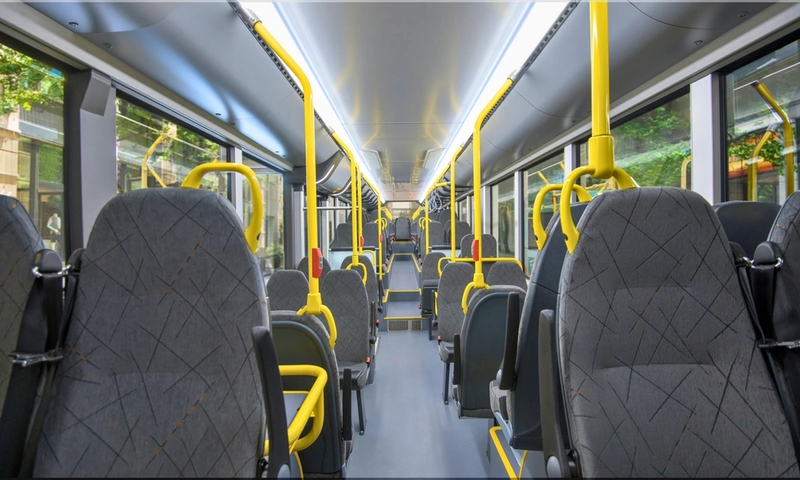
While the focus is on operational efficiency and performance, Daimler has not neglected passenger comfort. The eIntouro’s interior can be configured for:
- Daily intercity routes
- Corporate shuttle services
- Excursion and tourist operations
The flexible layout options and high-capacity seating make it an attractive solution for public transit authorities and private fleet operators alike.
Future-Proof Investment for Operators
For fleet managers, the eIntouro’s economic case is strong. Key advantages include:
- Lower total cost of ownership (TCO): Electric drivetrains reduce fuel and maintenance costs.
- Regulatory compliance: Zero tailpipe emissions help meet EU climate targets and qualify for government incentives.
- Operational flexibility: Range and charging performance allow multi-shift use without significant infrastructure investment.
Additionally, OTA updates, long battery life, and advanced safety features extend the vehicle’s operational lifespan and reduce unplanned maintenance costs.
Hands-On Experience at Busworld Europe
Visitors at Busworld Europe 2025 had the chance to test drive the eIntouro and experience its handling firsthand. Both the standard-length and extended eIntouro M were available for evaluation, highlighting the bus’s performance, interior design, and driver interface.
Daimler Buses’ Next Steps
The eIntouro is a significant milestone, but it’s part of a larger electrification strategy. Daimler’s roadmap includes:
- Expanding the eCitaro range with fuel-cell range extenders.
- Launching battery-electric coaches by the end of the decade.
- Introducing hydrogen-powered coaches in subsequent product cycles.
This phased approach reflects Daimler’s belief that infrastructure, not technology, will determine the pace of electrification adoption.
Image gallery:

Final Thoughts
The Mercedes-Benz eIntouro brings zero-emission transport to the intercity segment with a focus on range, efficiency, safety, and digital readiness. Its combination of 500 km range, OTA capabilities, and comprehensive driver-assistance systems make it a future-ready solution for public and private transport operators alike.
With production starting in 2026 and infrastructure investments underway, Daimler is positioning the eIntouro as a key player in Europe’s transition to sustainable transport — practical, cost-effective, and engineered for the demands of real-world operation.
- Add new comment
- 316 views