Geotab has prepared a joint study with AEGFA, Spanish Association of Fleet Managers and Mobility (Asociación Española de Gestores de Flotas de Automóviles), to analyze the state of electrification of fleets in Spain. The study is based on a survey of more than 90 managers of medium and large fleets in Spain and among its main conclusions highlights that the vast majority is planning to increase the adoption of electric vehicles.
In fact, only 1% of companies surveyed maintain that no change would encourage them to electrify their fleet. In addition, 24% believe that electric vehicles will have a dominant role in their fleet between the next 1 and 5 years and 43% within 5 and 10 years. This implies that electric vehicles will be dominant for 67% of Spanish fleets before 10 years. In this regard, we must bear in mind that, currently, 3 out of 4 fleets are composed of diesel vehicles and restrictions on this category such as the announcement of the ban on fossil fuel vehicles in 2050 are an incentive for the adoption of 0 emission vehicles.
However, the survey also reveals that fleet managers face barriers that hinder the adoption of electric vehicles. Among the most mentioned are the low autonomy of vehicles (mentioned by 66% of the managers), the high cost of rent or acquisition (62%) and the lack of public recharging infrastructure (41%). In addition, these barriers coincide exactly with the main reasons that would encourage them to electrify their fleet: improvements in autonomy (main reason for 27% of respondents), improvement of the recharging infrastructure (22%) and improvement of the acquisition price (19%).
In any case, the managers, in general, recognize the benefits that the electrification would bring to their fleets.
Now this study by Geotab and AEGFA also proves that companies want to bet on the benefits of sustainability, efficiency, and savings that electric vehicles can bring for their organizations.
E-VIA FLEX-E is a project co-funded by the European Commission that aims to install ultra-fast charging stations for electric cars in southern Europe. And more specifically, in Spain, France and Italy. The first phase of this… Continue reading

Irish Post is planning to buy 750 electric vehicles by 2022, of which 200 will hit the streets later this year. In addition to delivery vans, pedelecs (pedal electric cycle) are also on the shopping list. The background to this is that… Continue reading
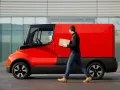
Renault presents the experimental vehicle of a light commercial electric vehicle for urban traffic delivery: Renault EZ-FLEX. The EZ-FLEX comes with a purely electric drive and full network integration. A dozen models will soon go out to… Continue reading

The silence of electric cars bothers the European Union. The EU fears that risks may arise for the safety of those on the road, especially pedestrians, who might find themselves distracting or crossing the road when an electric car arrives. Therefore,… Continue reading