CATL’s Move Signals Shift in European EV Refueling
Contemporary Amperex Technology Co. Limited (CATL) plans to launch its Evogo battery swap technology in Europe. Known as the world's largest EV battery manufacturer, CATL holds over 36% of the global EV battery market by installed capacity.
This is a strategic expansion aimed at solving a clear problem in Europe: long EV charging times and grid congestion. Battery swapping sidesteps both.
Why Battery Swapping Now?
Most electric vehicles in Europe rely on plug-in charging, ranging from 30 minutes with DC fast chargers to overnight with Level 2 units. But fast charging strains infrastructure. CATL’s battery swapping model replaces a drained battery with a fully charged one in under five minutes.
Key traits of the battery swapping approach:
- No wait time for charging.
- Lower impact on the grid.
- Standardized modular battery packs fit multiple vehicles.
- Ideal for fleets: high uptime, no range anxiety.
CATL’s Evogo System in Detail
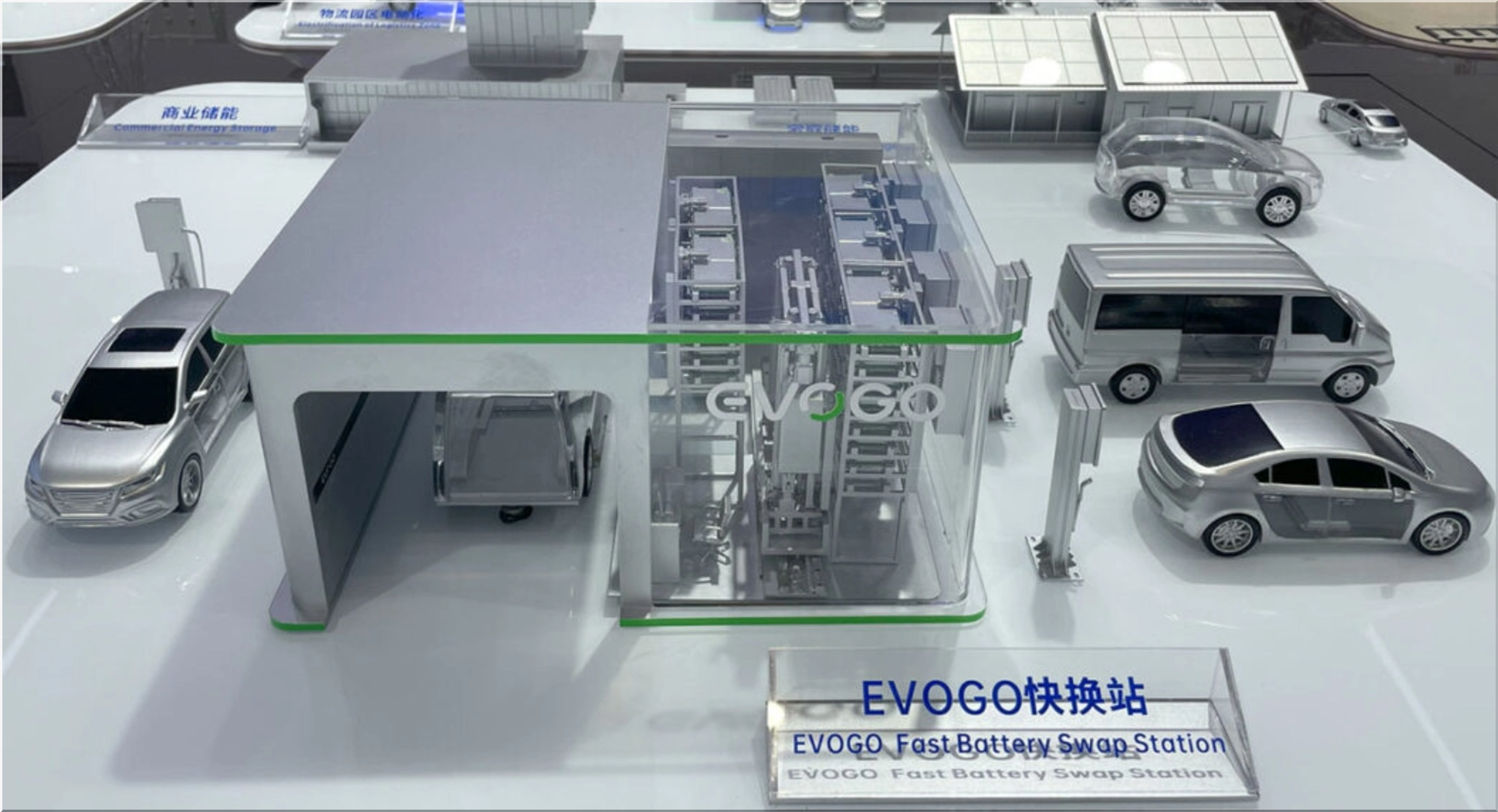
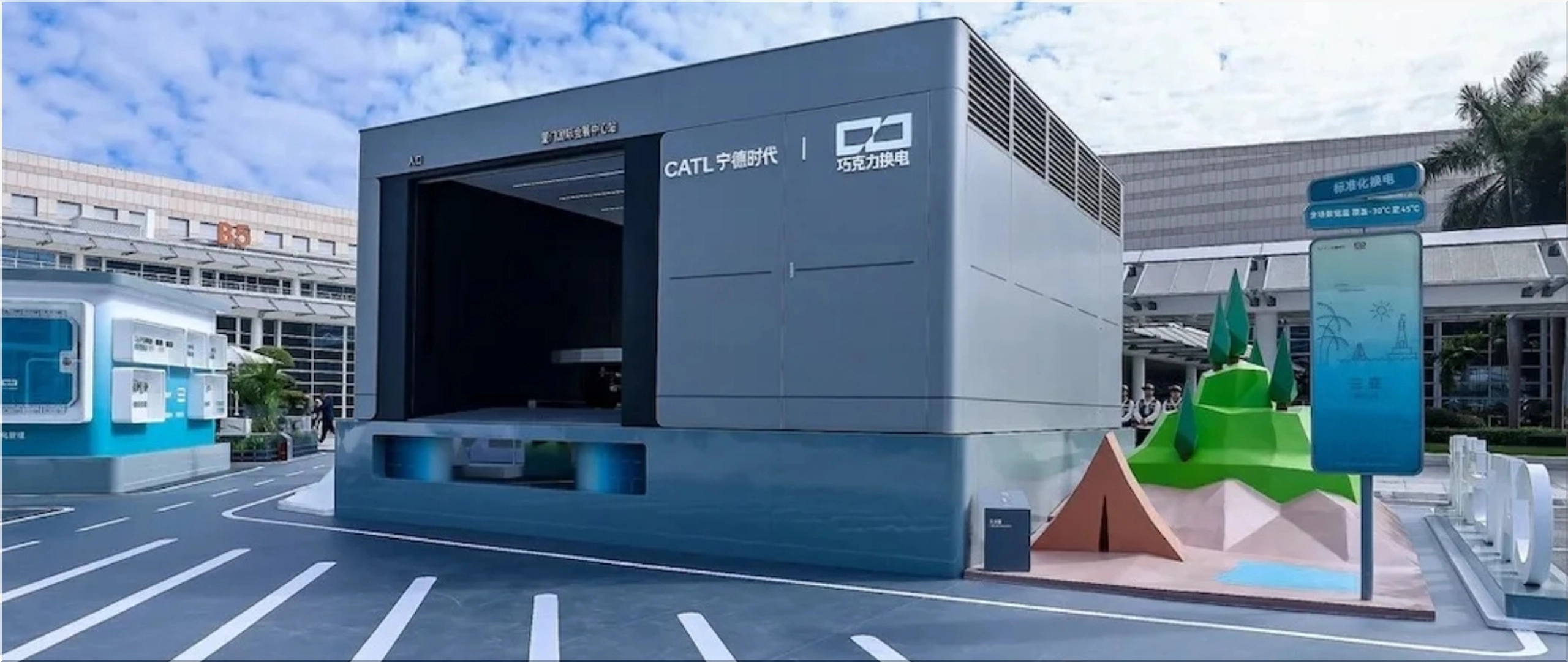
CATL’s battery swap brand, Evogo, uses a modular battery pack called “Choco-SEB” (Swapping Electric Block). This pack is:
- Compact and energy-dense.
- Compatible across various vehicle models.
- Managed via backend cloud software.
Each Evogo station:
- Takes up only 3 standard parking spots.
- Supports 50 swaps per day.
- Operates with a swap time of ~4.5 minutes per vehicle.
China Deployment: Proof of Concept
CATL has already deployed over 500 Evogo battery swap stations in China across 20+ cities. The concept has proven successful with:
- Ride-hailing platforms.
- Urban logistics operators.
- Automakers like FAW, BAIC, and Chery.
CATL now wants to bring that operational success to Europe—starting with Germany, France, and the Netherlands.
Why Europe Is the Next Battleground
European EV adoption has exceeded 30% of new car sales in several markets. But infrastructure growth has stalled:
- Public fast chargers are unevenly distributed.
- Charging queues are growing in urban centers.
- Grid upgrades lag behind EV growth rates.
CATL sees an opening. Instead of more plug-in chargers, it's offering decentralized battery swap hubs. Fleet operators are the first targets.
Fleet Focus: The Core of CATL's European Strategy
Fleet operators—taxis, delivery vans, car-sharing services—lose money every minute their EVs are off the road. For these users:
- Refueling speed is more valuable than charger location.
- Battery ownership isn’t necessary; uptime is.
- Centralized maintenance lowers fleet operating costs.
CATL’s model supports Battery-as-a-Service (BaaS), where vehicles lease batteries instead of owning them. This lowers acquisition costs and simplifies upgrades.
Charging vs. Swapping: Key Differences
| Feature | Battery Swapping | Traditional Charging |
|---|---|---|
| Refueling Time | ~3–5 minutes | 30 minutes to 12 hours |
| Grid Load Impact | Low (off-peak station charging) | High (on-demand usage) |
| Battery Ownership | Optional via BaaS | Required |
| Maintenance Control | Centralized | Driver-dependent |
| Battery Upgrade Path | Easy (swapped out) | Complicated |
For fleets, the economics of uptime favor swapping.
Risks and Challenges Ahead
CATL’s expansion into Europe faces major hurdles:
- Standardization: There’s no pan-European regulation or design standard for swappable batteries.
- Automaker Buy-In: Legacy OEMs must build cars compatible with CATL’s modular packs.
- Capital Costs: Each Evogo swap station costs up to $500,000 USD to install.
- User Behavior: European EV drivers are used to plug-in charging, not battery leasing.
To succeed, CATL must prove its model to fleet and commercial clients first, then scale consumer adoption later.

Europe’s Previous Swapping Failures
The concept isn’t new. Better Place failed in 2013 due to high costs, lack of EVs, and poor execution. The difference now?
- Europe has more EVs.
- Swappable batteries are smaller and standardized.
- Fleets are more electrified.
Also, NIO is building a small but growing swap network in Germany, Norway, and the Netherlands, proving there's demand—if the model works.
What CATL Controls That Others Don’t
CATL’s vertical integration gives it a competitive edge:
- Supplies raw materials, assembles cells, builds packs, and installs swap infrastructure.
- Offers turnkey solutions for fleets and mobility providers.
- Already works with European brands (e.g., BMW, Tesla’s LFP packs).
This allows end-to-end cost control and rapid deployment—if local regulations permit.
Strategic Numbers to Watch
| Metric | Value |
|---|---|
| Global EV Battery Market Share | 36.8% (Q1 2025, by installed GWh) |
| Evogo Swap Stations (China) | 500+ |
| Battery Swap Time per Vehicle | 3–5 minutes |
| Evogo Station Deployment Cost | ~$500,000 USD |
| European Market Entry Timeline | Late 2025 to early 2026 |
| Primary Target Customers | Fleets (taxis, delivery, car share) |
What Automakers Might Do Next
European automakers focus on ultra-fast charging (800V architecture). Swappable packs require platform redesigns. That’s unlikely unless:
- CATL proves strong fleet economics.
- Battery swap demand increases.
- Regulations favor battery leasing.
Startups and ride-hailing EV platforms might adopt faster than traditional brands.
Bigger Picture: Infrastructure Competition
If CATL succeeds, Europe’s charging network players—like Ionity, TotalEnergies, and Shell Recharge—may face pressure to improve:
- Swap stations could outpace chargers in urban areas.
- Lower grid impact appeals to regulators.
- Fleet operators will follow total cost of ownership (TCO), not charging preference.
Image gallery:


Conclusion: Swap Stations Are Coming—Watch the Fleets
CATL isn’t aiming at the average EV driver yet. The real target is commercial fleets that value speed and simplicity over tradition.
Key signals of success will be:
- First Evogo deployments in Europe by early 2026.
- Confirmed fleet partners (ride-hailing, last-mile delivery).
- Automaker cooperation on modular platforms.
If the numbers work, battery swapping will scale—starting with fleets and pushing into mainstream only if adoption economics prove solid.
This isn’t a tech gamble. It’s an infrastructure play backed by China’s most dominant battery company, moving with speed, volume, and control.
- Add new comment
- 412 views