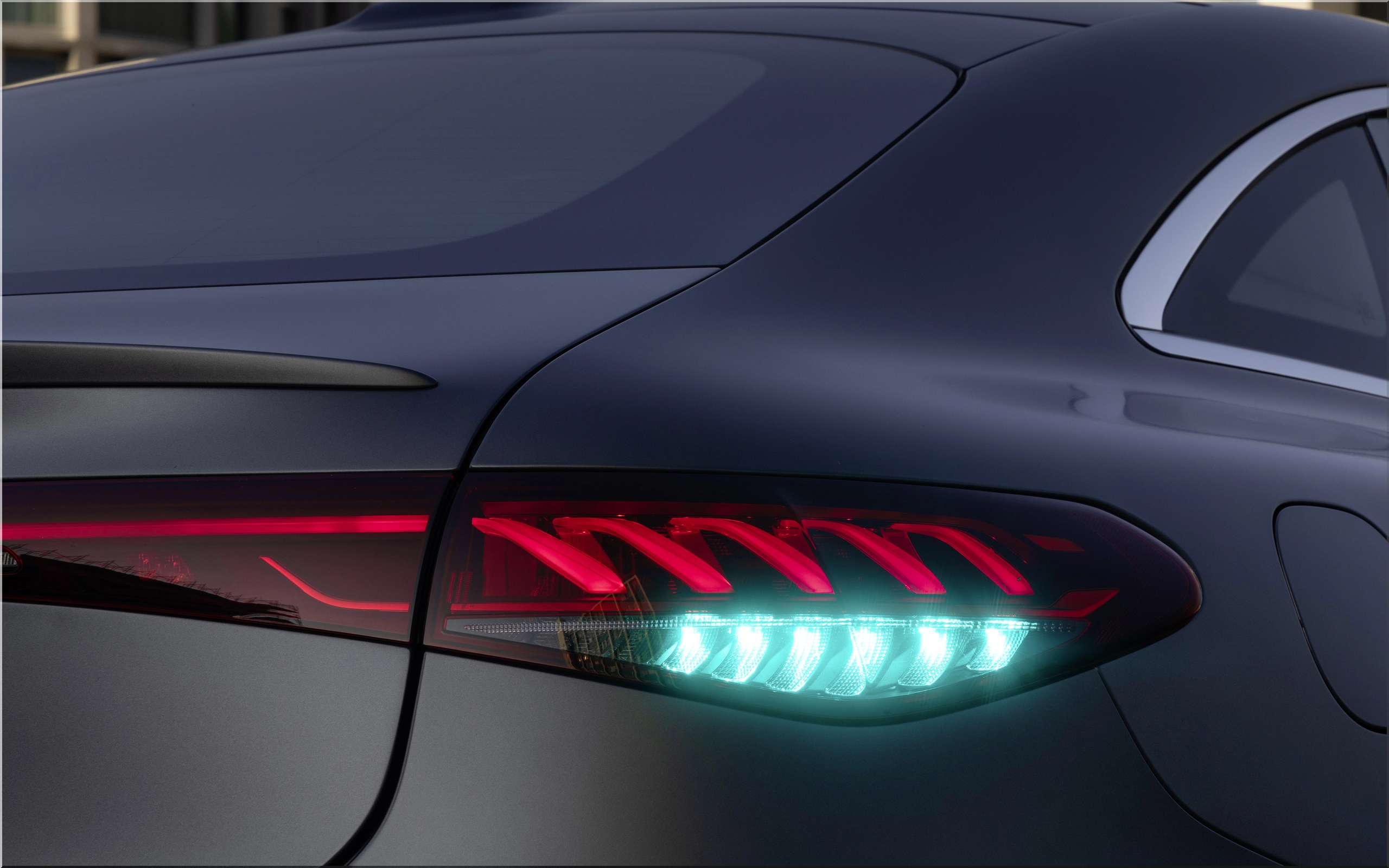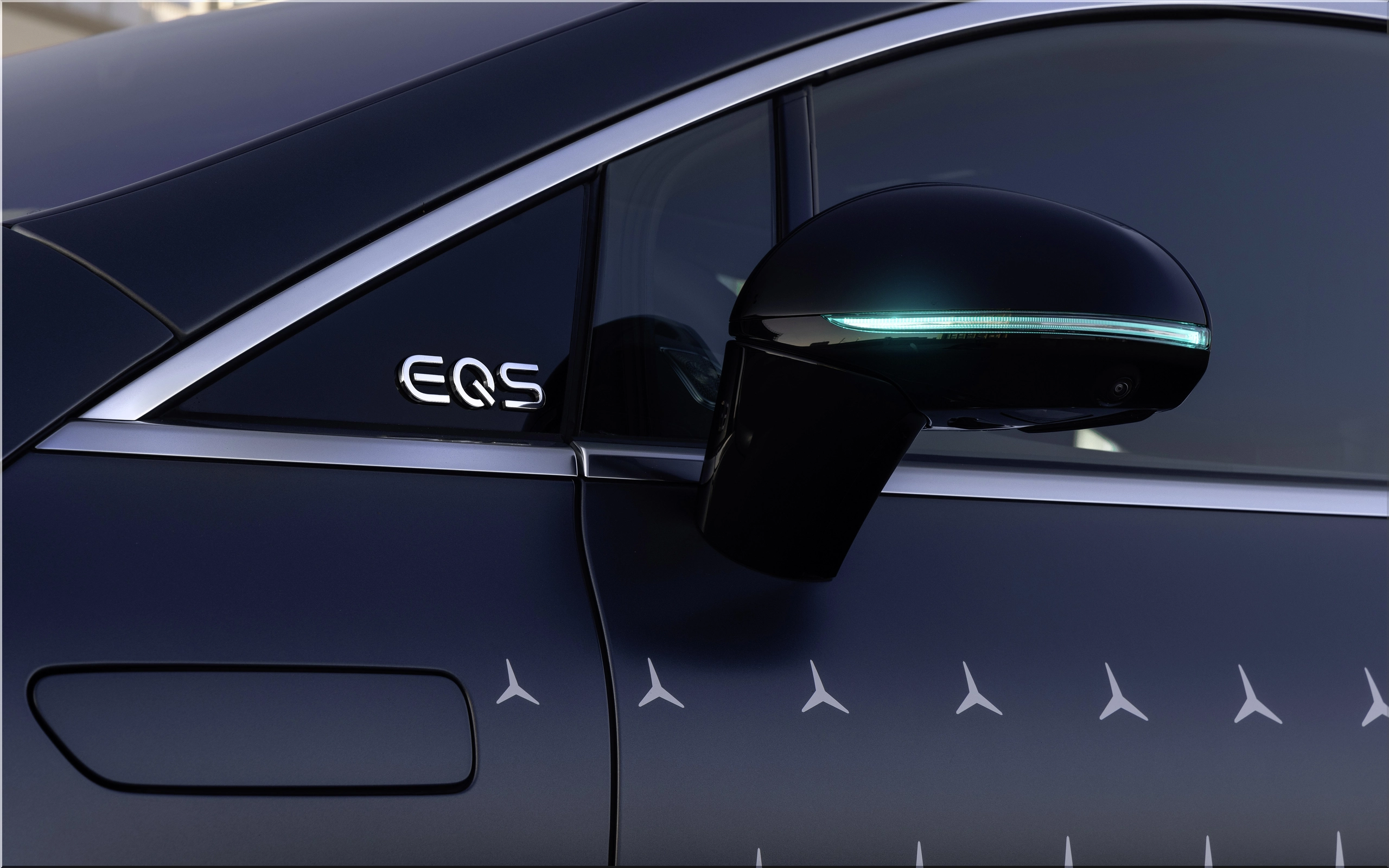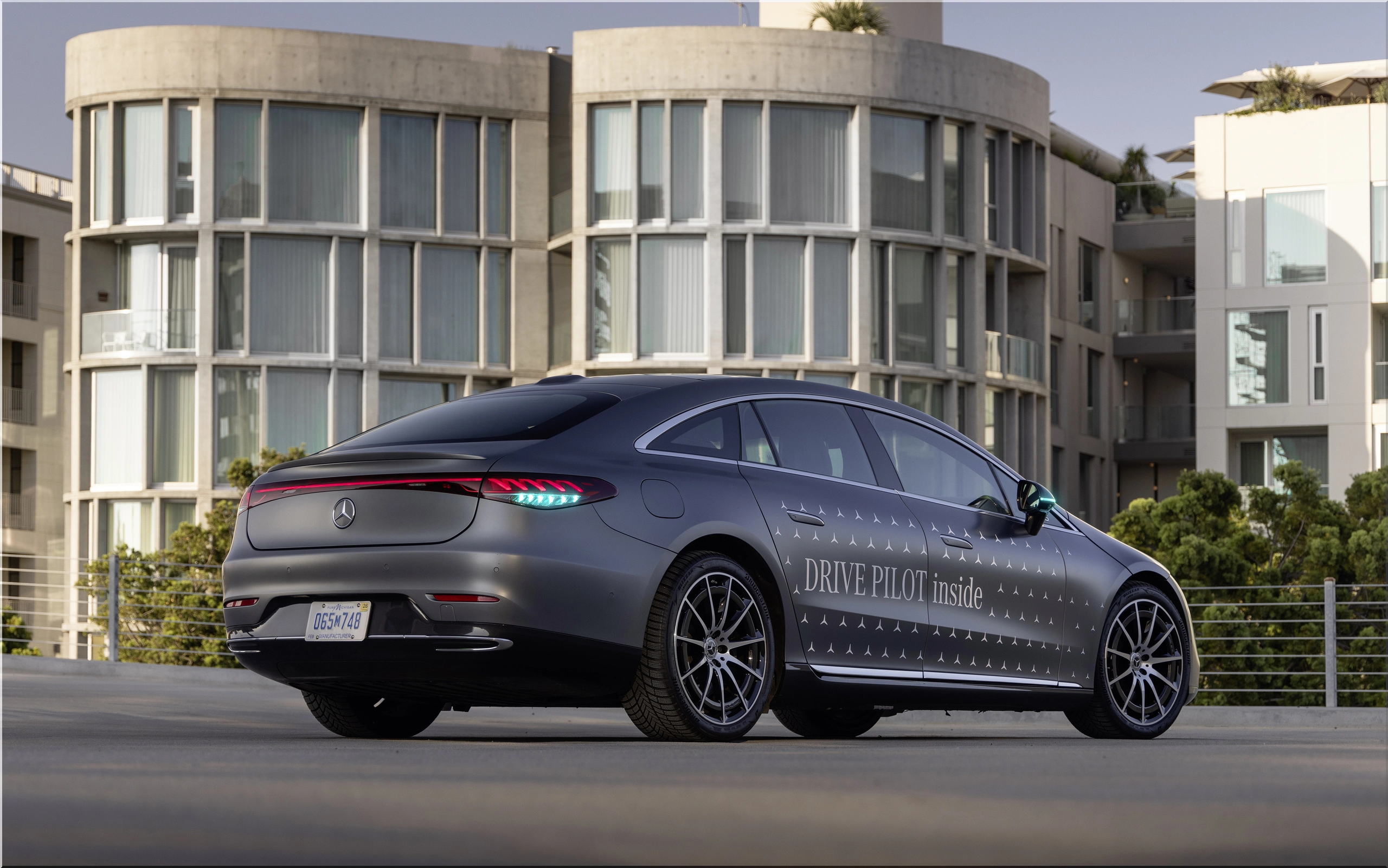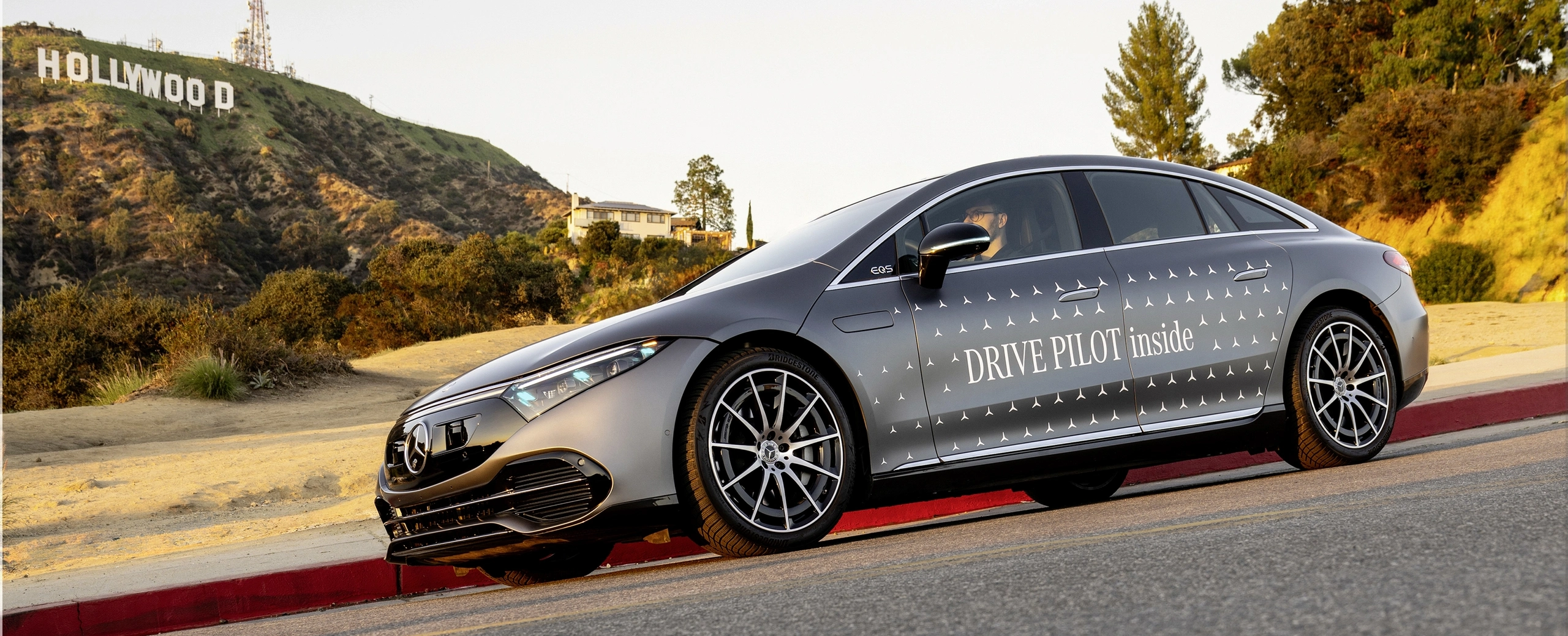
Mercedes-Benz is the first automaker to receive approval for its DRIVE PILOT system, a Level 3 autonomous driving technology that allows drivers to take their eyes off the road in certain conditions. The system features turquoise-colored marker lights that indicate when the car is driving itself and when the driver needs to take over. The system has been authorized for use on designated highways in California and Nevada, two of the most progressive states in terms of self-driving regulations.
What is DRIVE PILOT and how does it work?
DRIVE PILOT is a conditional automated driving system that can take over the steering, braking, and acceleration of the car on highways where the traffic flow is predictable and the lanes are clearly marked. The system uses a combination of cameras, radar, lidar, and GPS to monitor the road and the surroundings and communicates with the driver through a human-machine interface (HMI) that includes visual, auditory, and haptic feedback.
The system can be activated by pressing a button on the steering wheel, and the driver can then relax and enjoy the ride. The system will display a turquoise light on the dashboard and on the exterior of the car, signaling to other road users that the car is in automated mode. The driver can also use the infotainment system or make phone calls without being distracted.
However, the driver is still required to remain alert and ready to resume control of the car when needed. The system will alert the driver through the HMI when the conditions are no longer suitable for automated driving, such as when the highway ends when the traffic becomes too complex, or when the weather deteriorates. The driver will then have to take over the steering wheel within a few seconds, or the system will bring the car to a safe stop on the shoulder.