The US government wants to abolish state subsidies for electric cars and renewable energies. US President Trump would like to eliminate state subsidies for electric cars immediately, but now, a new bill in Congress provides for an extension of tax rebates and an increase in the limit on the number of subsidized vehicles per manufacturer. Electric cars do not seem to be very popular with US President Donald Trump.
Trump had promised during the election campaign to bring back industrial jobs to the US and make America "strong again". Now he is confronted with the fact that GM wants to eliminate up to 15,000 jobs and close several plants.

The bill called "Driving America Forward Act" was introduced by senators of both parties, ie both Democrats and Republicans. Specifically, the bill plans to increase the current limit of 200,000 subsidized electric cars per manufacturer by an additional 400,000 vehicles. Tesla and GM have already exceeded the current limit of 200,000 subsidized electric cars. Since the beginning of the year, Tesla has only received half the tax credit. The funding expires on January 1 of next year. At GM, it will be halved for the first time on April 1 of this year and will end on April 1, 2020.
As of today, buyers of an electric car or a plug-in hybrid vehicle, receive a tax credit: entitled are vehicles with a battery capacity of more than 5-kilowatt hours. There are 2,500 US dollars. For each additional kilowatt hour, the credit increases by 471 US dollars. The maximum is $ 7,500.
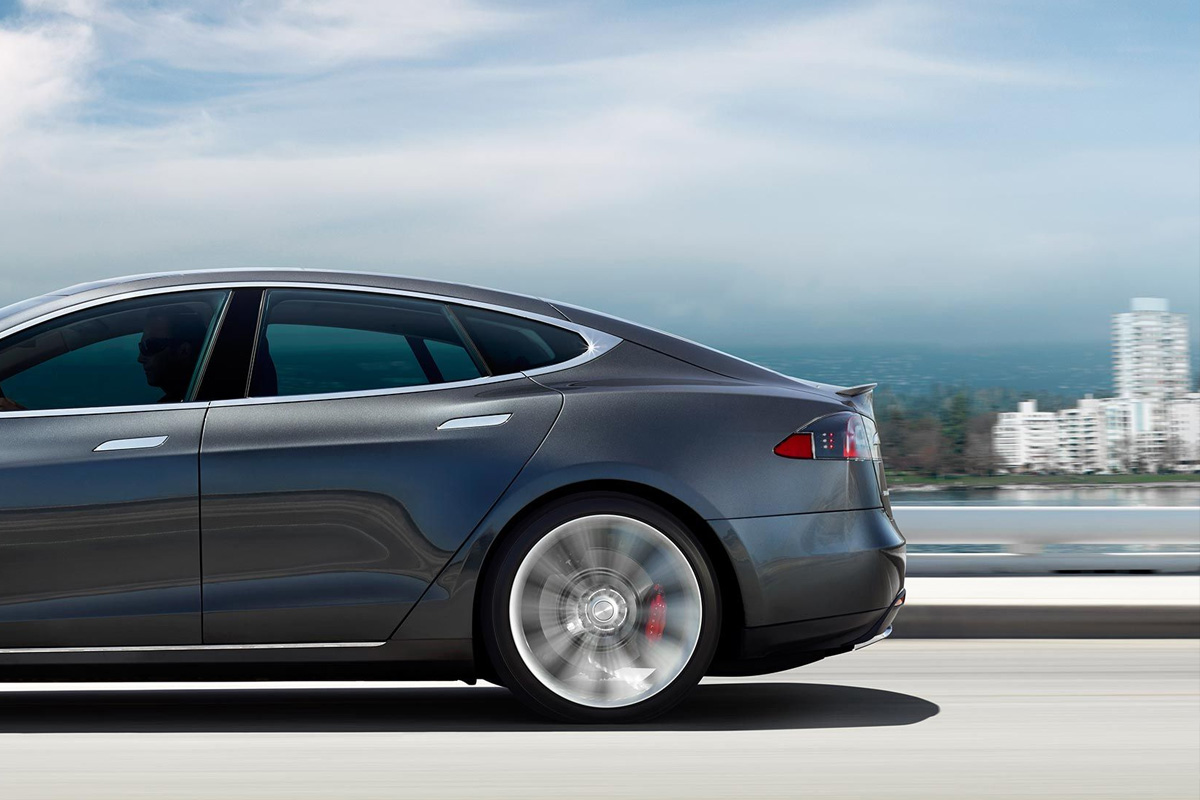
The bill also provides for subsidies for fuel cell vehicles to be extended until 2028. How big the chances are, that he will become law, is currently difficult to estimate. However, stock prices of Tesla and GM have already increased in response to the publication of the draft.
The White House, meanwhile, suggested just last month to completely cancel the tax credit for e-cars. A move that, according to the US government, would result in savings of $ 2.5 billion within a decade.

Polestar has published the full carbon footprint of the Polestar 5, and the big story sits in the data. The company's new life cycle assessment pegs the Polestar 5 carbon footprint at… Continue reading
The 2026 Hyundai IONIQ 5 N now starts at $59,900, or $61,500 after its $1,600 destination charge. Hyundai cut MSRP by $6,300 while retaining 641 horsepower, 221 miles of EPA-estimated range, and its full track hardware package. It also adds… Continue reading

Nissan has presented at the Beijing Motor Show a new electric car. The Nissan Sylphy ZE looks like a Sentra, a popular model in China, but it is built on the Leaf platform (second generation). The electric car market in China is one… Continue reading

On October 16, Volvo introduced the XC40 Recharge - the first full-fledged electric car of the Swedish brand. As expected, the crossover SUV received an all-wheel-drive transmission, providing a range of 400 km on a single charge… Continue reading