If you want to extend the life of your brake pads, there are several ways to maintain your car's brakes. Avoid 'two-footing,' check brake lines, and replace worn rotors and pads. These tips will help you save money on gas and brake wear. Read on to find out more about maintaining your car's brakes. And make sure you don't 'two-foot' on the road!
Avoid 'two-footing'
Many drivers mistake 'two-footing' the brake pedal when accelerating or decelerating. While this may seem logical, it can lead to accidents, and premature brake pads wear. Drivers who 'two-foot' their car brakes typically apply more pressure on the brake pedal while accelerating, which causes them to tap the brakes more frequently. To prevent this habit, you should coast and pay attention to traffic flow when accelerating and braking.
When reapplying brakes, do so gradually and in small increments. The sooner you start this practice, the better. Doing so will make it easier to spot a faulty pad. Besides reducing your chances of an accident, you'll also save gas money. And finally, avoid 'two-footing' when maintaining car brakes.
Bleed brake lines
A complete bleeding kit will contain the tools you need to bleed your car's brake lines properly. This is necessary if you're not planning to replace your brake fluid regularly according to brake repair Edmonds, WA. Bleeding your brakes will make your brake pedal feel stiffer and your braking system more responsive. In most cases, bleeding your car's brakes will take two people, but if you cannot do the task independently, you should buy a complete DIY kit.
Start with the brake assembly furthest from the master cylinder when bleeding your car's brake lines. Depending on the make and model of your vehicle, you might have to do this in a different order. Once you've located the bleeder screw, loosen it using a wrench or penetrating oil. Once the bleeder is loose, cover the opening with plastic tubing. This is the perfect size and shapes for this purpose.
Inspect brake pads
You should also inspect the brake pads when maintaining your car's brakes. Brake pads are foam-like parts that help prevent the calipers from scraping against the rotors. If they're too thin, they'll never function properly. They should also be replaced immediately, as thin ones can damage the brake discs. Fortunately, replacing your brake pads is easy and inexpensive.
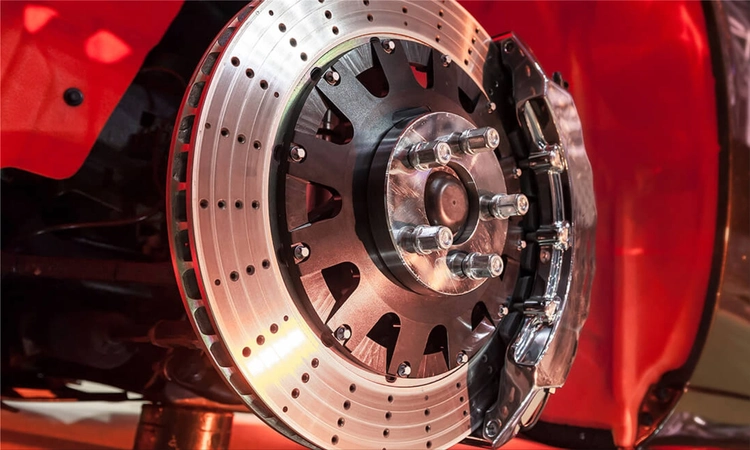
To inspect your car's brake pads, remove the wheel. You can see the brake pads inside the caliper, which is located inside the wheel. Look for a wear indicator in the center of the pad. The wear indicator indicates the thickness of the brake pad. If the indicator shows any wear, replace the pads. Taking your car in for regular maintenance will ensure your car's safety and performance.
Replace rotors
While many assume that rotor replacement is required only when they notice a slow pulsing sound, this is not the case. The rotor is the most important part of your car's brake system and should be checked frequently. Its performance and lifespan are compromised when the rotors are not maintained correctly. Luckily, there are many ways to keep the rotors and avoid needing replacement.
Firstly, remove the old rotors and lug nuts. Make sure the rotor is free from any dirt or debris. Secondly, remove the old pads. If there is no space between the new pads and the rotor, you can use a hammer to loosen them. Apply some grease and anti-seize to the new pads. The rotors and caliper brackets should then be installed properly. Make sure the lug nuts and caliper bolts are appropriately tightened as well.
Reduce frequency of stops
One of the most frustrating aspects of driving is the frequent car brake stops. Several different factors can cause this. First, a car must brake within a specified distance at all stops. Second, cars must make at least one stop within the prescribed distance. The following formulas are used to determine stopping distance: S is the maximum distance in meters, and V is the test speed in kilometers per hour.
Check brake fluid
When your car is experiencing difficulties braking, you may want to check the brake fluid level. Your car's brake fluid reservoir has a series of markings on the exterior and inside, with a mark on the top that indicates full fluid and a mark on the bottom that indicates low fluid. A full reservoir will be darker than a low one, so clean the fluid reservoir before taking a reading.
A good auto mechanic can tell you whether your fluid is low enough to drive safely. If you're concerned about safety, you should visit a certified ASE brake technician to replace the brake fluid. Whether your car uses conventional or hydraulic fluid, the brake fluid is a critical component of your brake system. It translates pedal braking pressure into movement in the brake assemblies and makes the entire system work as a unit. Brake fluid must withstand extreme temperatures, control moisture, and lubricate components.



Toyota presented at the auto show in New York for the first time the fifth generation of its RAV4 SUV model, which is offered also as a hybrid version. The market launch for the conventional RAV4 in the US is at the end of 2018, to Europe in early 2019. The… Continue reading

The iconic MG, an acronym for Morris Garage, has been given a second life since it passed into Chinese hands. Since its official launch last July 17, MG has received 1,000 reservations for the new MG ZS EV. One of the main reasons for its… Continue reading

The start of sales of the BYD Han electric car in China is scheduled for the end of June this year. For Europe, precise dates are still unknown, but preliminary prices are mentioned. A BYD Han electric car can be bought by paying from 45,000 to 55,000… Continue reading

Announced almost a year ago and after an intense teasing campaign, Audi has officially launched the Q4 e-tron and Q4 e-tron Sportback electric SUVs. The drive portfolio for the Audi Q4 e-tron and Audi Q4 e-tron Sportback includes two… Continue reading