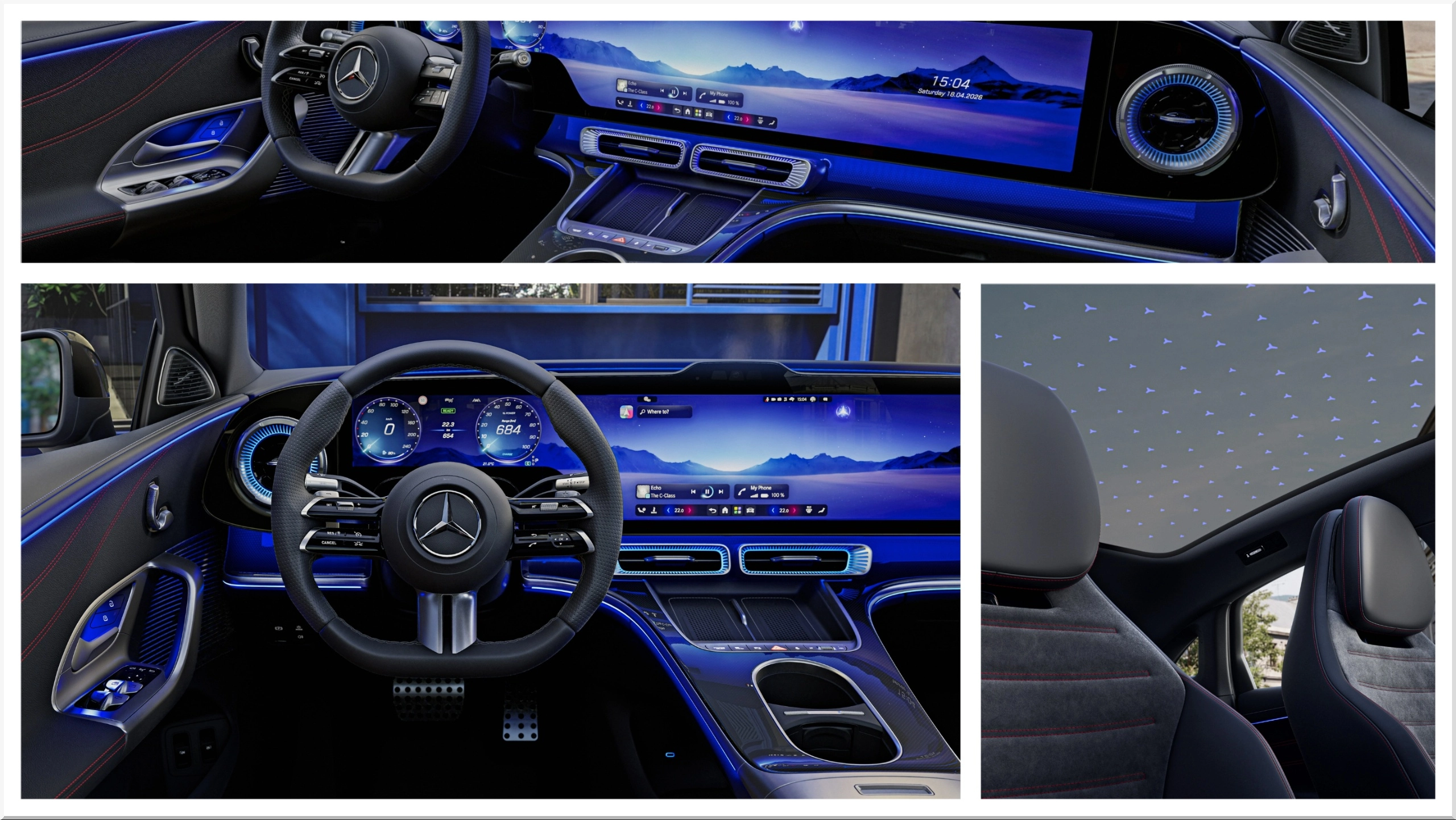
For Mercedes-Benz, the electric Mercedes-Benz C-Class has one interior job to do: defend the brand's highest-volume sedan with better packaging, better digital hardware, and less compromise. It does that with a cabin that pushes hard on space, silence, and screen tech.
That matters.
The current C-Class already plays in a crowded premium field, but the new battery-electric model changes the math. By moving to an 800-volt EV architecture and dropping the packaging penalties that come with an engine bay, transmission tunnel, and exhaust routing, Mercedes frees up more usable interior volume and builds the cabin around the people inside it, not around the hardware under the sheetmetal.
Why the electric C-Class cabin matters
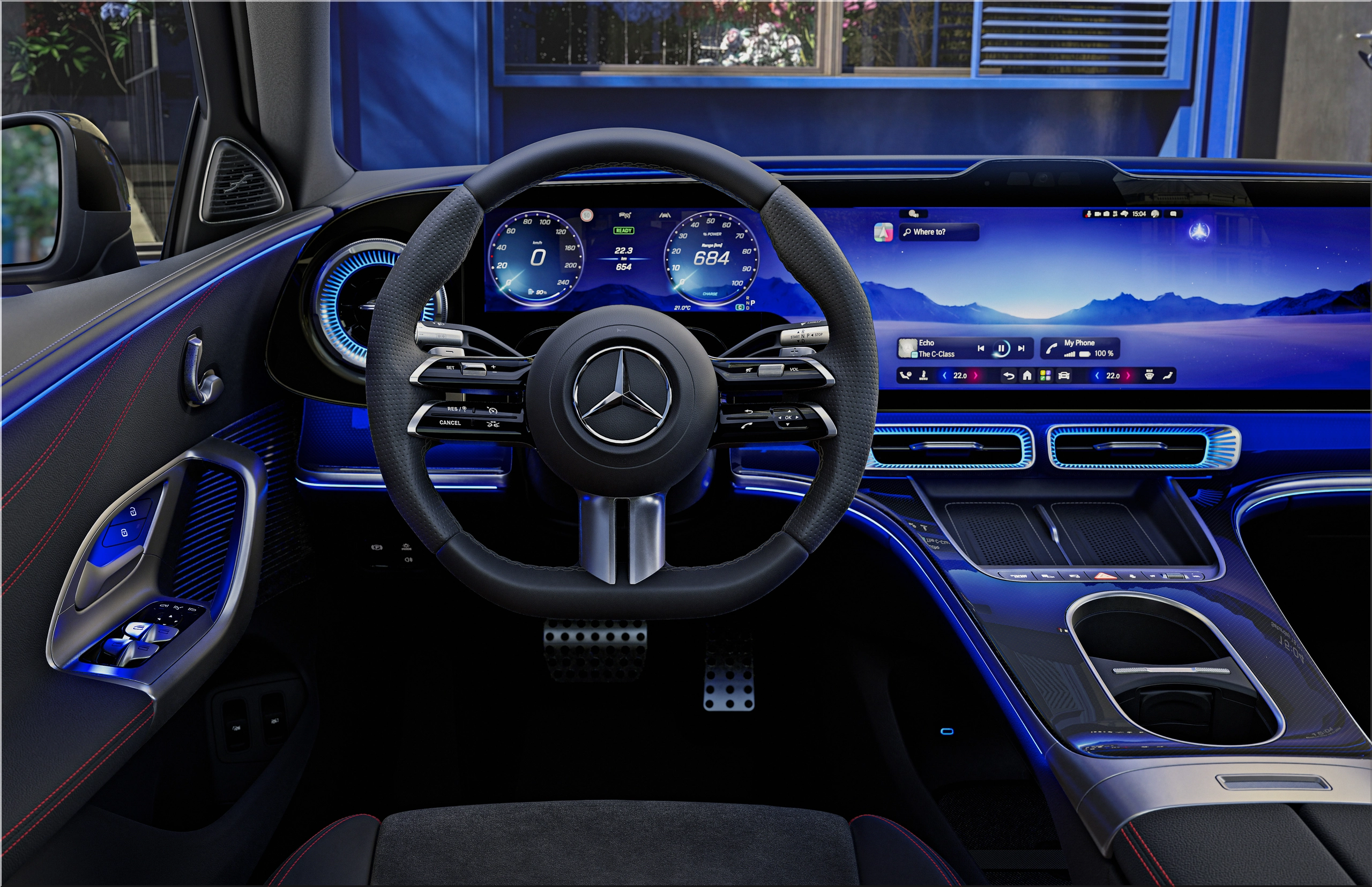
Mercedes calls the new interior a sanctuary. The marketing line sounds soft, but the engineering logic is hard-edged. A dedicated EV layout gives the all-new electric Mercedes-Benz C-Class interior a flatter floor, a more open center section, and better opportunities to stretch wheelbase and seating geometry without forcing the car into a larger footprint.
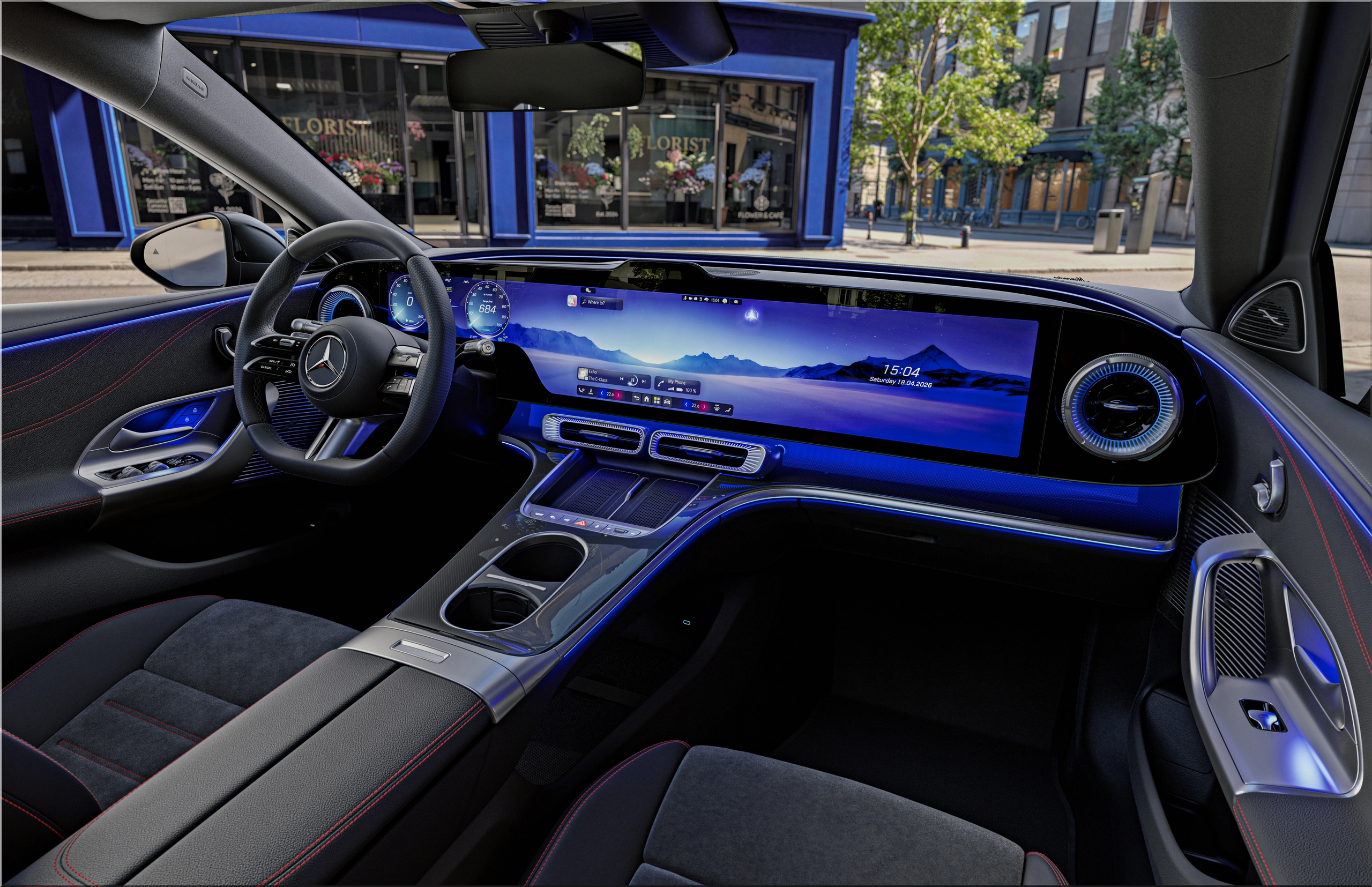
Looking at the data, the most visible change sits right on the dash. The optional MBUX Superscreen spans 39.1 inches across the front, pulling the driver display, central touchscreen, and passenger-side display into one continuous visual band. Lower trims reportedly split that layout into separate displays, while entry versions use a 14.5-inch center touchscreen with a 10.25-inch driver display.
That tiering matters for buyers because Mercedes no longer forces every customer into the biggest-screen spec. It also gives the lineup a cleaner step-up path from core luxury sedan to tech-heavy executive lounge.
The cabin hardware Mercedes is betting on
Mercedes packed the electric C-Class with the same themes already seen in its latest EV launches: richer material choices, heavier software integration, and a deliberate move to reduce friction in everyday use.
Key interior upgrades
- 39.1-inch MBUX Superscreen on upper trims
- 14.5-inch central display and 10.25-inch driver display on lower trims
- Dual wireless phone chargers in the center console
- New seats with electro-pneumatic lumbar support
- Available heating, ventilation, and massage functions
- Available Burmester 4D Surround Sound with seat-mounted transducers
- Laminated side windows for lower cabin noise
- Material mix that includes Nappa leather and vegan leather
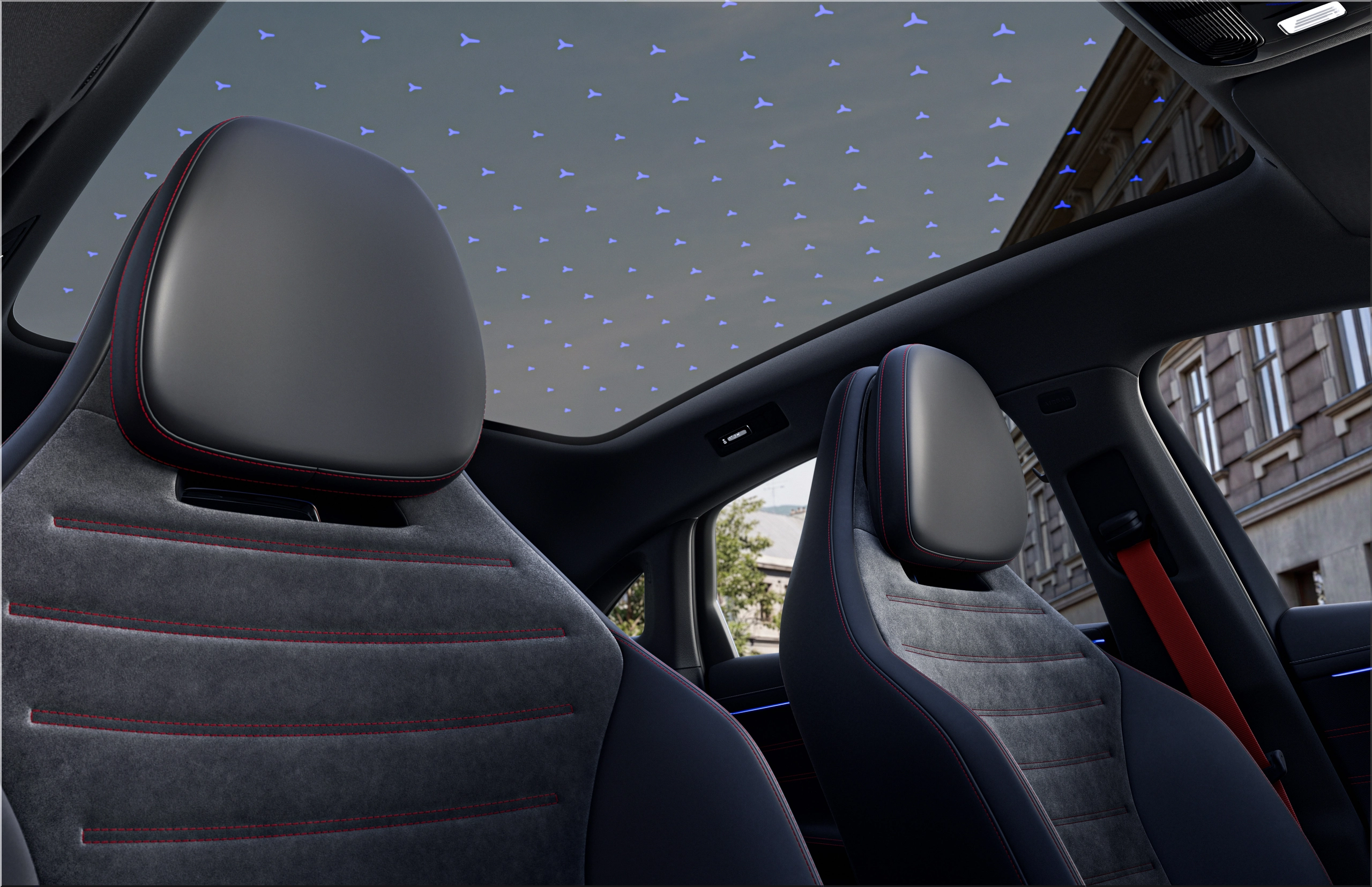
From an expert perspective, the seat story matters as much as the screen story. Mercedes says the new front seats use electro-pneumatic lumbar adjustment to shape the backrest around the spine's natural curve. That is a functional upgrade, not trim-package fluff, because EV sedans with longer real-world cruising range push buyers into longer stints between stops.
Electric C-Class interior tech at a glance
| Feature | Electric C-Class |
|---|---|
| Optional full-width display | 39.1 in |
| Base center touchscreen | 14.5 in |
| Base driver display | 10.25 in |
| Phone charging pads | 2 |
| Seat comfort functions | Heat, ventilation, massage |
| Audio upgrade | Burmester 4D |
| Side glass acoustic treatment | Laminated |
Space, silence, and the premium-sedan formula
Mercedes appears to understand the core risk with any electric C-Class. Buyers in this segment do not want a tech demo. They want a calm, expensive-feeling sedan that makes daily driving easier.
Consequently, Mercedes attacked acoustic comfort from several angles. The company points to laminated side windows, refined electric drive units, a new climate-control setup, a rigid body shell, and aerodynamic optimization as contributors to a quieter cabin. That layered approach makes sense because EV buyers notice secondary noise faster once combustion noise disappears. Wind rush, road slap, compressor whine, and tire roar all move up the priority list.
By comparison, the gasoline C-Class has to divide engineering effort between ride isolation and powertrain packaging. The EV gets a cleaner brief.
What the electric layout changes inside
| Interior Priority | Gas-Powered Sedan Constraint | Electric C-Class Advantage |
|---|---|---|
| Floor packaging | Tunnel and driveline packaging | Flatter floor, cleaner footwell packaging |
| Dash integration | More hardware compromise | Better screen packaging and storage design |
| Acoustic tuning | Engine and exhaust mask some sounds | More pressure to reduce wind and road noise |
| Front-seat ergonomics | Firewall and engine-bay tradeoffs | More freedom in seating position and cabin proportions |
| Premium feel | Material-led | Material-led plus software-led |
Materials and user experience
Mercedes claims this will be the most spacious and most intelligent C-Class ever. The intelligence angle comes from the display stack, but the quality pitch rests on trim, touchpoints, and how the car manages human fatigue over distance.
Specifically, the mix of metal accents, upscale upholstery, and a more lounge-like seat design tells you Mercedes wants this car to feel expensive before it even moves. In addition, the available vegan leather gives the brand another route for buyers who want the premium look without traditional hides. That also broadens the spec sheet without forcing the interior into a one-material identity.
The optional Burmester 4D system follows the same playbook. Seat-integrated transducers transmit low-frequency energy through the chair, so occupants feel bass rather than only hearing it. In a quiet EV cabin, that sensory layering plays well because the vehicle gives the audio system a cleaner stage.
Pro-Tips for buyers
- Choose the Superscreen only if you will actually use the passenger display and expanded interface daily.
- Prioritize the seat package over cosmetic trim if you drive long highway miles.
- Put laminated glass and acoustic upgrades high on the option list if cabin quiet ranks above raw gadget count.
- Test the lower-screen layout before paying for the biggest display setup. The smaller configuration may age better and reduce glare.
What now?
If you are shopping the premium EV sedan class, the new C-Class interior makes its strongest case on comfort engineering, not on spectacle alone. The big screens will grab the clicks. The quieter cabin, improved seat architecture, and smarter packaging will decide whether this car wins repeat buyers.
That is the right priority.
Mercedes did not simply bolt a giant display into a familiar sedan shell. It used the EV transition to rethink the Mercedes-Benz C-Class interior around driver comfort, passenger space, and digital usability. If the production car backs up the early claims on range, charging, and ride quality, this cabin could become the car's biggest sales tool.
NIO has surprised observers with the new NIO ET9. The electric sedan grabbed attention with its design, power, and technology. Priced at 112,000 USD, it found 999 buyers in a matter of hours.… Continue reading

The electric vehicle (EV) industry is a battleground of innovation, with established automakers and tech giants vying for dominance. In a surprising move, Polestar, a Swedish electric performance car brand affiliated with Volvo Cars, has thrown a curveball –… Continue reading
A recent software glitch has prompted Tesla to recall a whopping 1.85 million vehicles globally. The affected models include Tesla Model 3, Tesla Model S, and Tesla Model X vehicles produced from 2021 to 2024, along with Model Y… Continue reading

The 2025 Polestar 3 Long Range Single Motor (RWD) variant represents a significant milestone for the brand, offering both affordability and impressive range. Starting at $67,500, this electric luxury SUV is now the most… Continue reading