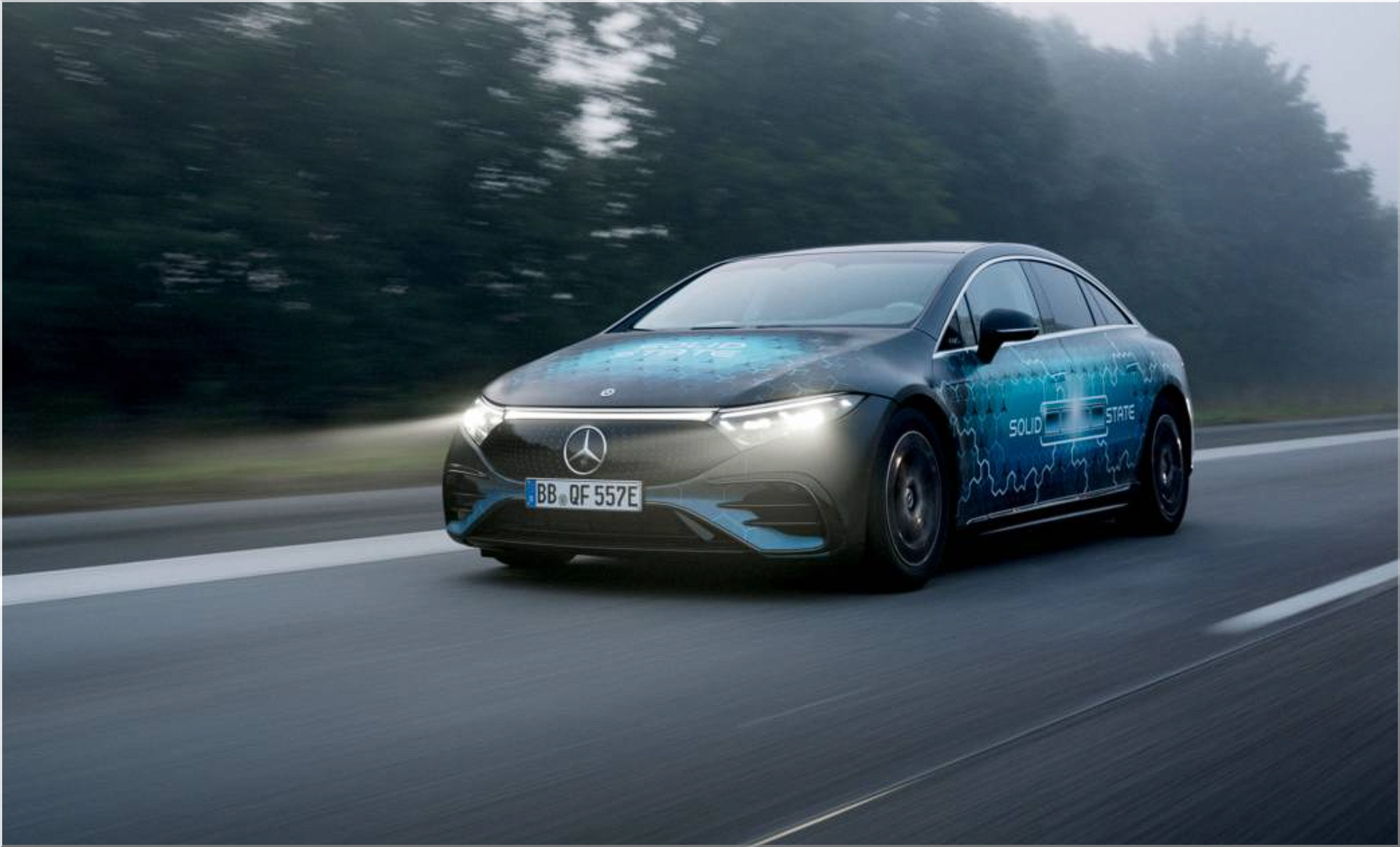
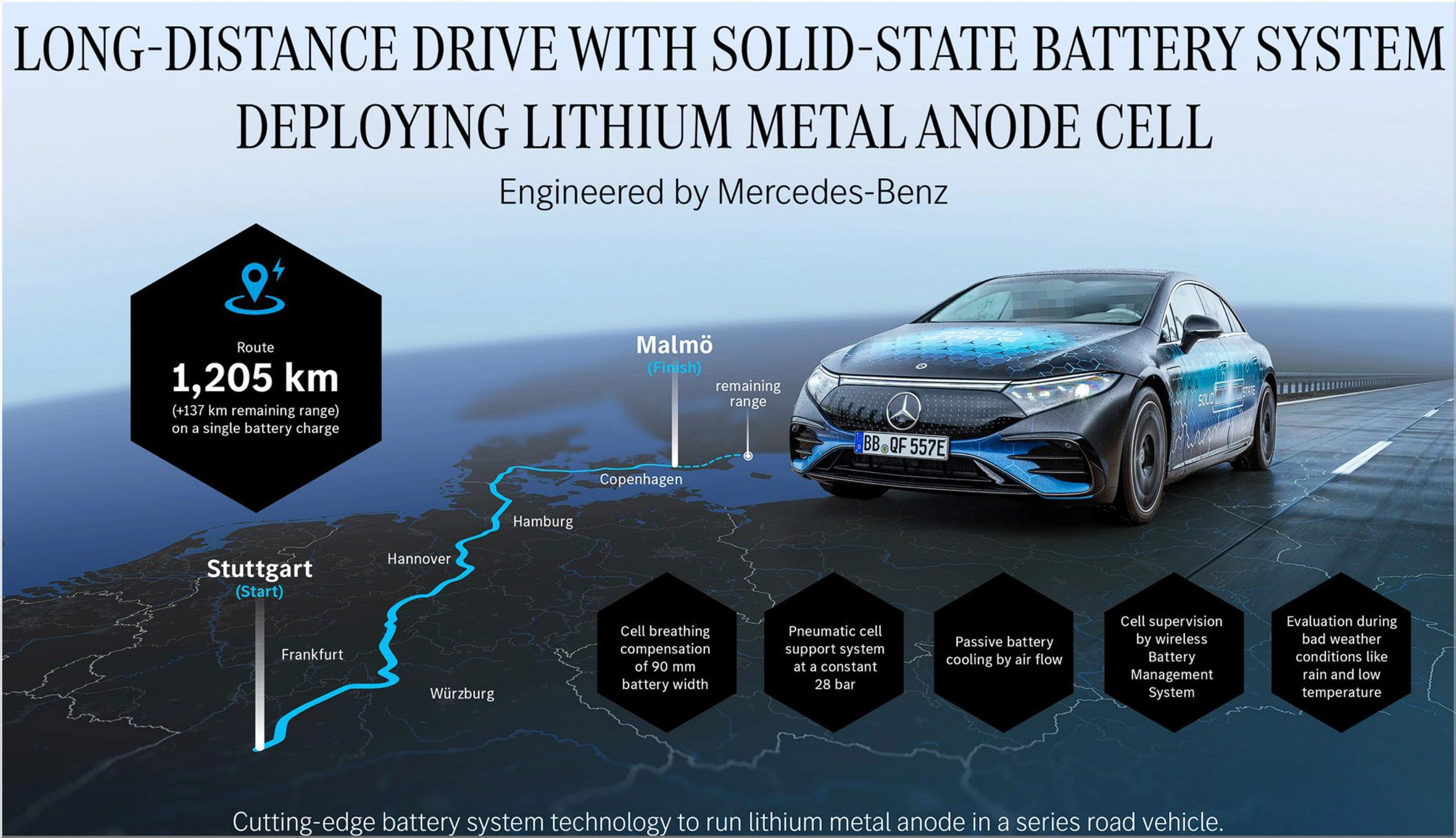
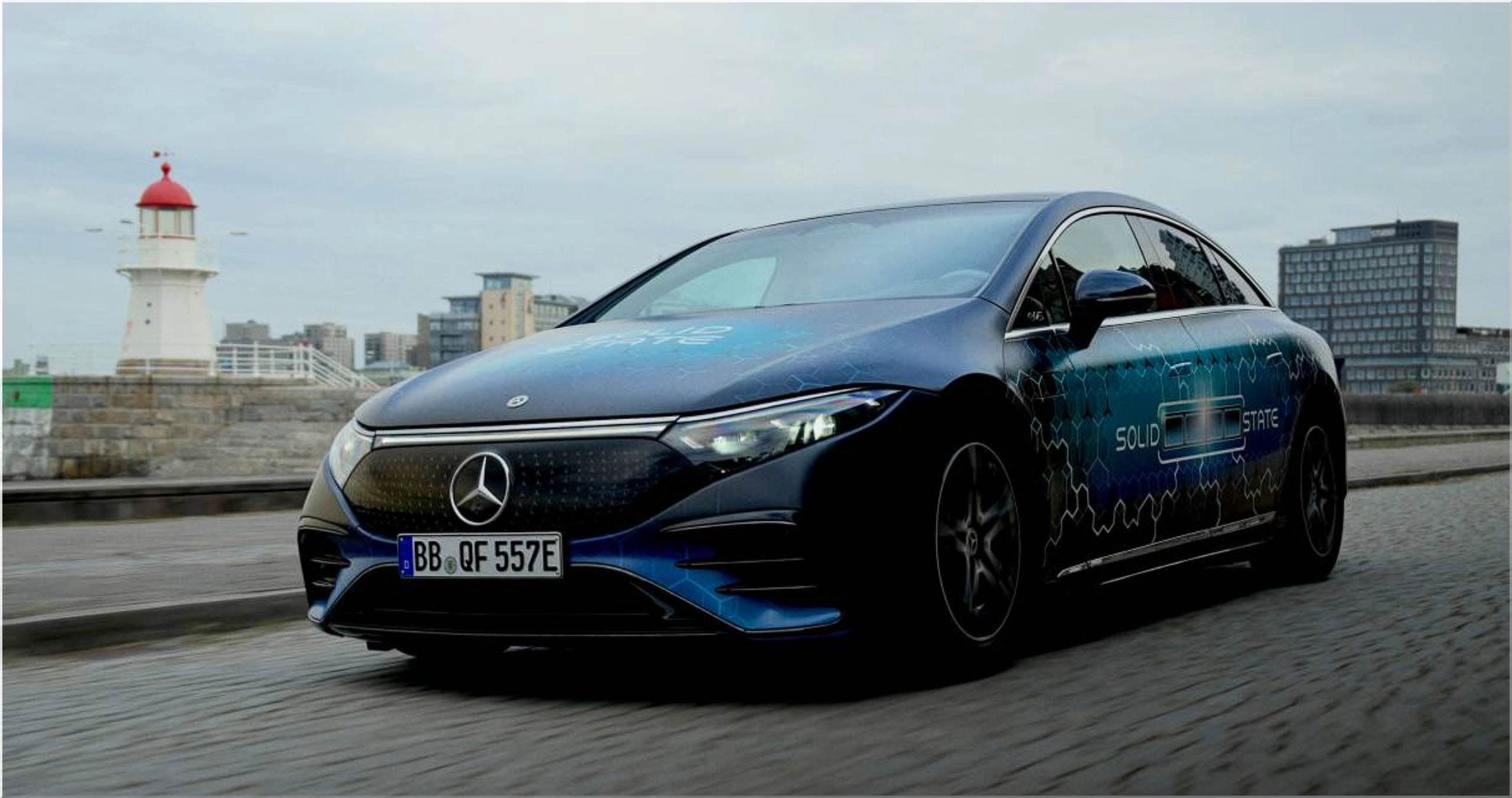
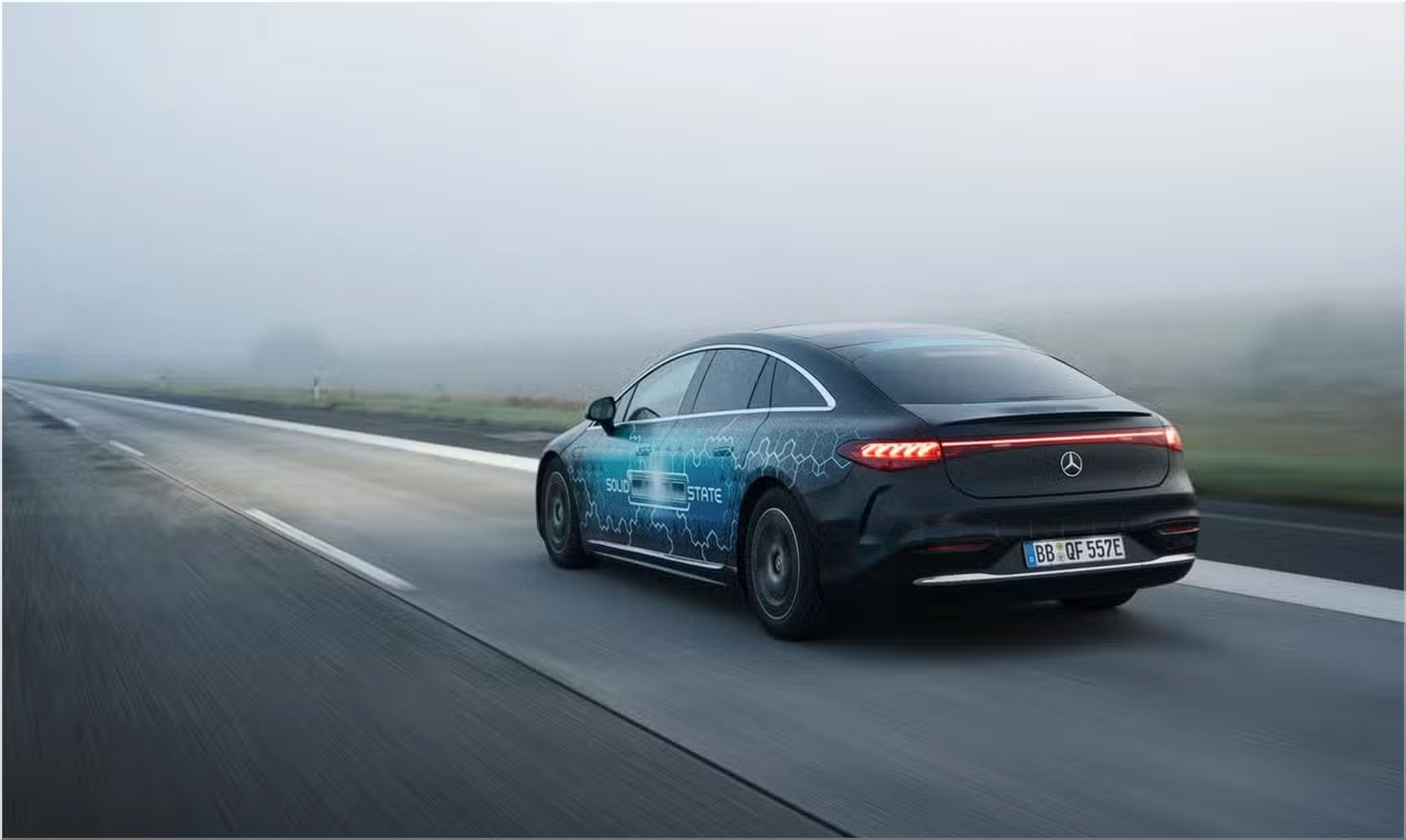
Mercedes-Benz just changed the electric vehicle range discussion. A prototype Mercedes-Benz EQS solid-state battery sedan covered roughly 750 miles on a single charge, or about 1,205 kilometers, during a real-world long-distance test. That figure places the EQS well ahead of any production EV sold today and shifts attention from charging speed to total usable distance.
This test did not happen in a lab. Engineers ran the car on public roads across multiple countries. Traffic, weather, and elevation all factored in. The result matters because it proves solid-state batteries can perform outside controlled conditions.
Why the 750-Mile EQS Test Matters
Current long-range EVs top out around 400 to 520 miles under ideal cycles. Drivers still plan routes around charging stops. A 750-mile EV range changes how people use electric cars.
Key implications:
- One full day of highway driving without charging
- Fewer fast-charging stops on long routes
- Lower battery stress due to less frequent charging
- Better fit for fleet and executive travel use
For Mercedes-Benz, this test also signals technical leadership in solid-state battery development. Several automakers promise the tech. Few show proof on open roads.
What Makes a Solid-State Battery Different
Definition: Solid-State Battery
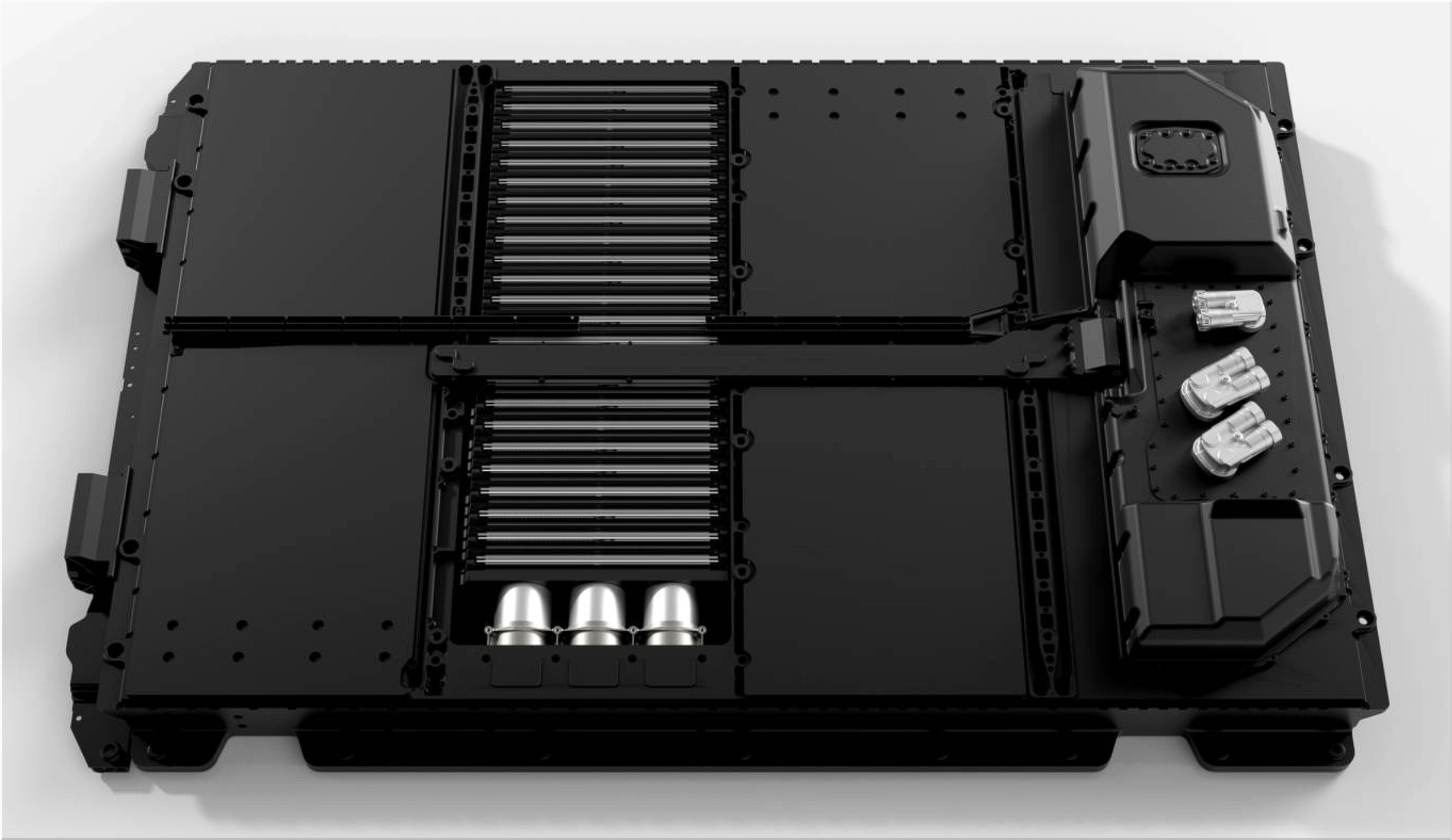
A solid-state battery replaces the liquid electrolyte found in lithium-ion cells with a solid material. That change improves energy density, safety, and thermal stability.
In the EQS prototype, Mercedes-Benz paired a lithium-metal anode with a solid electrolyte. This setup stores more energy in the same physical space.
Key Technical Gains
- Higher energy density: Roughly 25 percent more usable energy than current EQS battery packs
- Lower weight: Better range without increasing vehicle mass
- Improved safety: Reduced fire risk due to the absence of liquid electrolytes
- Stable performance: Better tolerance for temperature swings
Mercedes-Benz sourced the cell technology through a partnership with Factorial Energy and refined it using Formula 1-derived battery management methods.

How Mercedes-Benz Ran the Test
The test route started in Stuttgart, Germany, and ended in Malmo, Sweden. The EQS crossed highways, city traffic, and varying climates. Engineers avoided mid-route charging. The car finished with a reserve range remaining.
Important test parameters:
- Single full charge
- Public roads only
- Production-based EQS platform
- Prototype solid-state battery pack
- Standard climate control active
This approach adds credibility. Range figures from closed tracks or simulated cycles often fail to translate to real ownership.
How This EQS Compares to Current Long-Range EVs
Below is a market comparison using EPA-style range equivalents and approximate pricing in USD.
| Vehicle | Battery Type | Max Range (Miles) | Approx Price (USD) |
|---|---|---|---|
| Mercedes-Benz EQS Solid-State Prototype | Solid-state | ~750 | Prototype only |
| Lucid Air Grand Touring | Lithium-ion | ~516 | ~$140,000 |
| Tesla Model S Long Range | Lithium-ion | ~405 | ~$75,000 |
| BMW i7 xDrive60 | Lithium-ion | ~321 | ~$120,000 |
| Porsche Taycan 4S | Lithium-ion | ~287 | ~$125,000 |
The gap stands out. The EQS solid-state prototype delivers over 230 miles more range than the closest production rival.
Cost and Production Reality
Mercedes-Benz has not announced pricing for a solid-state EQS. Expect early versions to cost well above current EQS models, which start near $105,000 USD.
Solid-state batteries still face scale challenges:
- Cell manufacturing complexity
- Material sourcing limits
- Yield consistency at volume
- Cost per kilowatt-hour
Mercedes-Benz targets limited production later this decade. Initial rollout will likely focus on flagship sedans and low-volume models.

What This Means for EV Buyers
This technology will not reach dealer lots tomorrow. Still, it shapes buying decisions today.
Short-term effects:
- Current EVs will keep improving lithium-ion efficiency
- Charging infrastructure remains critical
- Solid-state remains premium-only
Mid-term effects:
- 700-mile EV range becomes a benchmark
- Battery size shrinks while range grows
- Luxury EV buyers gain true long-haul capability
Long-term effects:
- Solid-state batteries replace lithium-ion in premium segments
- Charging frequency drops across the market
- EV adoption accelerates among hesitant buyers
Pro-Tip: Range Versus Charging Speed
Many EV buyers focus on fast charging times. Range often matters more.
A car that drives 750 miles between charges reduces dependency on peak-rate chargers. That lowers running costs and planning friction. Solid-state batteries support this shift.
Strategic Impact on the Auto Industry
Mercedes-Benz now holds a visible lead in solid-state EV validation. Rivals like Toyota, BMW, and Volkswagen continue development but have not released comparable real-world results.
This test also pressures regulators and infrastructure planners. Longer-range EVs may reduce demand for dense fast-charging networks along highways.
What Happens Next
Mercedes-Benz will expand testing under harsher conditions. Expect winter range validation and high-speed autobahn runs. Engineers will focus on durability, cycle life, and charging behavior.
For buyers, this development signals patience. The next real leap in EV capability will come from batteries, not motors or software.
Actionable takeaway: If long-distance EV use matters, watch solid-state timelines before committing to high-end models. Lithium-ion still works. Solid-state will reset expectations.
Electric and hybrid cars are destined to undermine petrol cars within a few years. This is stated by the Cambridge Econometrics, whose study "Fuelling Europe's Future" was commissioned by the European Climate Foundation. According to British… Continue reading
Marketed since March 2013, the Renault Zoe can boast of being number one electric model sales in France and number two in Europe right behind the Nissan Leaf. Continue reading
Until a few months ago, Rivian was unknown to the general public. Headquartered in Michigan, the Michigan-based company was first established in 2009 but was not acknowledged until last November's Los Angeles Motor Show, when it introduced the… Continue reading

Xiaomi has formalized a revised and corrected version of its Mi Electric Scooter: the Pro version, officially presented today. Aesthetically, it has no significant differences compared to the non-Pro model: the design is minimalist,… Continue reading