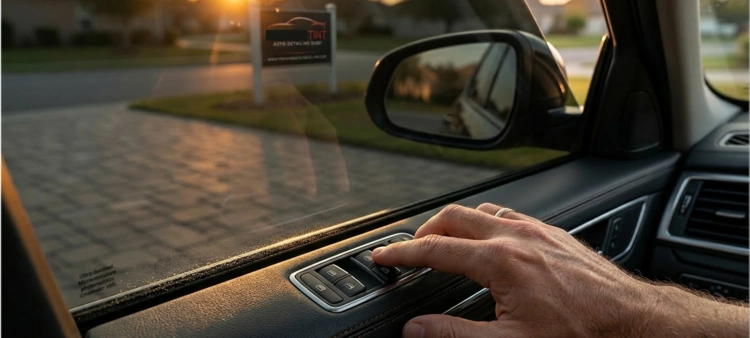
You’ve just driven away from the shop with a fresh, sleek look. The glare is gone, the privacy is up, and your car looks like a million bucks. But as you approach the toll booth or a drive-thru, you hesitate. Can I roll this down yet?
It is the most common question in the industry, and for good reason. Doing it too early can ruin your investment in seconds. In 2026, with the advancement of high-performance films, the answer depends on more than just "patience"—it’s about understanding the curing process.
The Standard Rule: 3 to 5 Days
The short answer is that you should wait 3 to 5 days before rolling down your windows.
Window tint is applied using a water-based adhesive. When the film is first squeegeed onto the glass, a microscopic layer of moisture remains trapped between the film and the window. Until that moisture evaporates, the bond is not fully secure. If you roll the window down too early, the friction from the window seals can grab the top edge of the film, causing it to peel, bubble, or shift out of place.
Factors That Change the Timeline
While "3 to 5 days" is the gold standard, your specific environment in Los Angeles plays a major role:
- The "Sunlight" Advantage: If you park in direct sunlight during a typical 85°F SoCal day, the heat accelerates evaporation. You might be safe on day three.
- The Humidity Factor: On rare "June Gloom" days or during humid spells, that moisture takes longer to escape. In these cases, we recommend waiting the full five days.
- Film Type: High-end ceramic window tint often features thicker, more durable layers that may require an extra 24 hours to fully "set" compared to basic dyed films.
Why the Wait is Non-Negotiable
If you rush it, you risk three major issues:
- Edge Peeling: Once an edge lifts, it collects dust and debris, making it impossible to re-stick perfectly.
- Bubbling: Friction can create air pockets that become permanent as the adhesive dries.
- Scratches: If the film hasn't hardened, the window gaskets can leave deep vertical scratches in the soft urethane.
Beyond the Tint: Caring for Your Total Protection
If you’ve gone for the "Full Protection Package"—adding Paint Protection Film or PPF or a clear bra to your exterior—the rules for patience are similar. Just as you shouldn't roll down the windows, you should wait at least 48 to 72 hours before your first car wash. This allows the edges of the PPF to "lock" into place around your fenders and hood.
The Post-Cure Maintenance Routine
Once the waiting period is over, your maintenance strategy determines how long that "new car" look lasts. The biggest threat to your film—both interior and exterior—is abrasive cleaning.
Avoid automatic car washes with spinning brushes at all costs. Instead, utilizing a professional Mobile Detailing service ensures that your tint is cleaned with ammonia-free solutions and your PPF is treated with pH-neutral soaps. A specialist will use high-grade microfiber towels to ensure no swirl marks are left behind, preserving the "self-healing" properties of your films for years to come.
The Bottom Line
Patience is the final step of a professional install. By waiting those few extra days, you ensure the adhesive bonds perfectly to the glass, giving you a lifetime of heat rejection and style. When in doubt, let it sit out in the sun—and keep your finger off the window switch!

Skoda launches the Superb PHEV (plug-in hybrid) in 2019. The propulsion system will be taken over from the Volkswagen Passat GTE and it will offer 218 horsepower. Skoda Superb plug-in hybrid autonomy would be up to 70 kilometers, about 20… Continue reading

Expected in autumn 2019, according to an article in "The Slovak Spectator", the first copy of Peugeot e-208 left the production line of the PSA plant in Trnava on Wednesday, March 27, 2019. Peugeot officially unveiled the new 208 in late… Continue reading

Citroën presents at the Geneva Motor Show a new and interesting electric vehicle: AMI, a 100% electric compact car accessible to all. With only 2.40 meters in length and two seats, the Ami will not need a driving license as it is… Continue reading

Dacia opens a new chapter in its history, with the presentation of its first electric car: Dacia Spring. The cheapest electric car on the market offers a record interior space for its segment, a simple and reliable electric motor… Continue reading