The competition to develop more competitive batteries is fierce. The latest research from Stanford University and the National Accelerator Laboratory (SLAC) has presented a major discovery that will allow increased energy density and lithium battery safety.
The works have focused their efforts on the redesign of the current collector. A component that currently has been tried to solve with a thinner or porous design, something that means reducing weight but at the cost of increasing the risk of fire, which has led many manufacturers to add more electrolytic material.

Lithium batteries have a pair of current collectors, one at the anode and one at the cathode, which works with the device's two electrodes to distribute current flow in either direction. Today's current collectors are typically made of copper foil or aluminium foil, making them one of the heaviest components in the battery, sometimes accounting for up to 50% of the total weight of the device.
According to Yi Cui, a professor at SLAC and Stanford, "The current collector has always been considered dead weight, and until now it hasn’t been successfully exploited to increase battery performance. But in our study, making the collector 80% lighter increased the energy density of lithium-ion batteries—how much energy they can store in a given weight—by 16-26%. That’s a big jump compared to the average 3% increase achieved in recent years.".
The Stanford University team have been experimenting with a lightweight polymer called polyimide. This was integrated with a fire retardant called triphenyl phosphate. One of the great advantages of this approach according to its developers is that the new collector should be easy to manufacture and also cheaper, by replacing some of the copper with an inexpensive polymer.
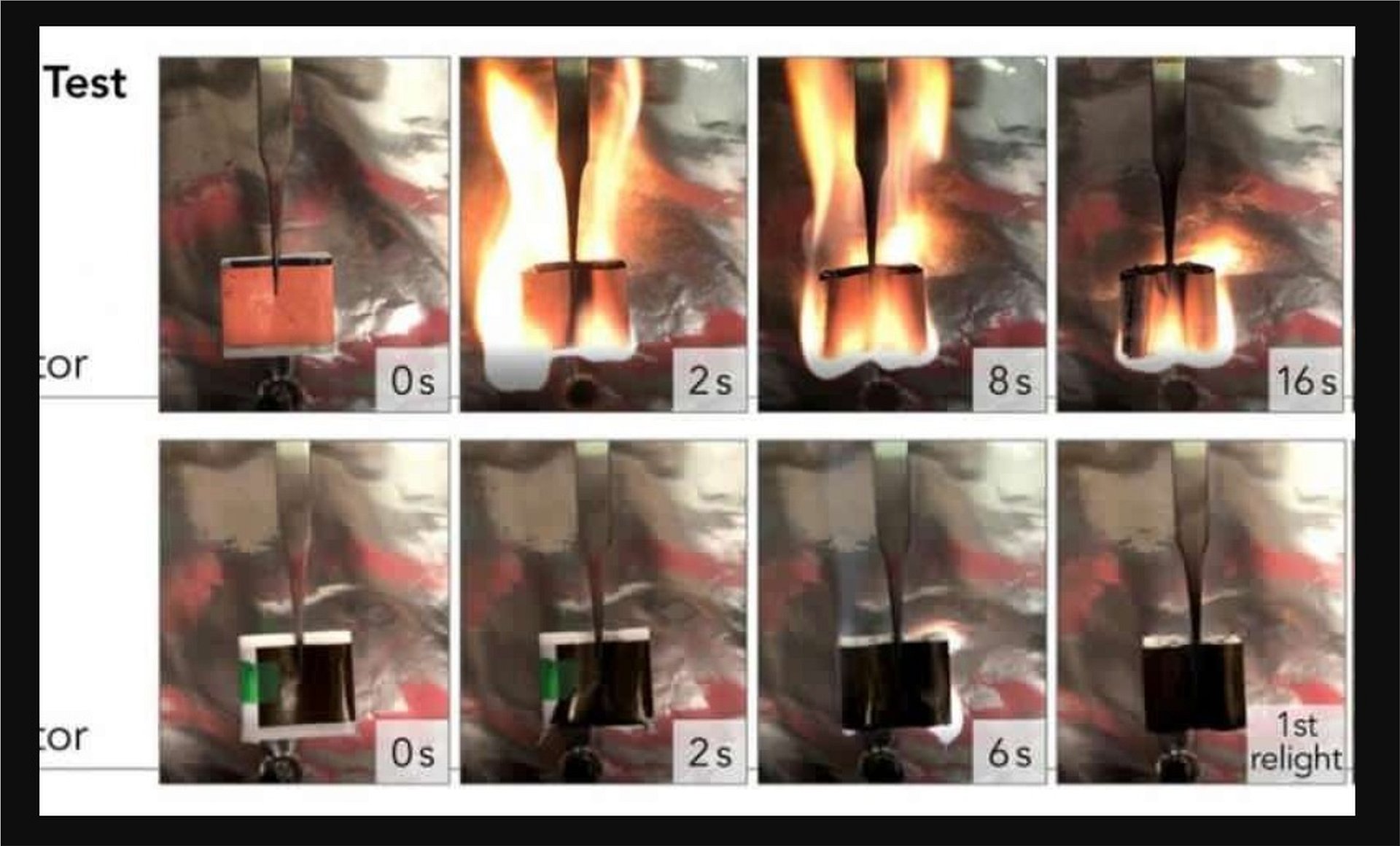
Some achievements have already been patented, and they have even been sent to different battery manufacturers to begin exploring the possibilities of this exciting advance that will help increase the energy densities of batteries, improve safety, and even reduce their costs. via nature.com.

The National Transportation Safety Board (NTSB) is investigating what could be the second fatal accident of a Tesla with the Autopilot mode connected. On March 23, a Tesla Model X car crashed into a freeway… Continue reading

The Federal Ministry for the Environment in Germany is providing an additional 180 million euros for the purchase of electric buses in urban public transport. As a result of the extension, the ministry now intends to pay around € 300 million on the… Continue reading

One of the noisiest, biggest and dirtiest vehicles that have been created is undergoing a hopeful transformation. And is that more and more companies are aiming to develop electric garbage trucks, and even autonomous as Volvo has done. Mack Trucks, part of… Continue reading

For the 20th anniversary of the VW subsidiary in California, the German carmaker has shown the legendary Type 2 T1 as an electric minibus. The VW Type 20 is just a concept. Type 20 is an electric minibus based on the iconic Volkswagen Type 2 T1 that in… Continue reading