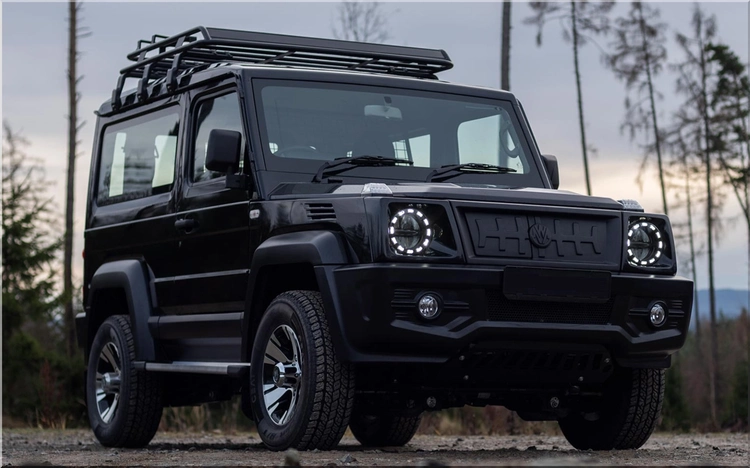
Building your own project car right inside a home garage is a big dream for many DIY mechanics, engineers, and off-road lovers. For a very long time, this hobby was all about fixing old V8 engines, cleaning carburetors, and making exhaust systems sound louder. But now, the automotive world is changing fast toward clean energy, and DIY builders are leading this change. Today, a major growing trend in cars and technology is the electric vehicle (EV) conversion—especially changing old classic trucks into electric machines. For these difficult structural changes, working with precision experts like FRDM Fabs helps builders change rough, classic buggies into high-torque electric off-road cars safely.
Converting a normal gas truck into an electric off-roader sounds very nice on paper. You get immediate torque to climb big rocks, quiet driving in nature, and no emissions at all. But when you actually go to the garage to start working, reality becomes difficult. An EV swap is not just joining some wires together and connecting a motor. It is a huge challenge for structural engineering.
When you remove the engine, transmission, and gas tank, you get an empty frame. Putting heavy battery packs, big electric motors, inverter units, and complicated cooling systems into a chassis that was never made for them needs heavy structural modifications. Because of this, normal parts from standard catalogs do not work, and custom metal fabrication becomes the true backbone of your whole project.
1. The Weight and Structural Balance Challenge
The first big problem in any electric off-road build is managing the heavy weight and where it goes. A normal internal combustion engine is heavy, but it stays in one small place, usually under the hood. Electric drivetrains are different. Tesla-style battery packs or custom lithium batteries are extremely heavy, so you must spread them across the vehicle to keep the center of gravity low and the balance right.
For an off-road car that will go through deep mud, jumps, and rocks, you cannot just leave these batteries loose in the frame. They need very strong, reinforced battery boxes. These enclosures must be tough enough to stop rocks hitting them from below, waterproof for mud and crossing rivers, and sized perfectly so the internal cells do not shake.
Making a strong box that protects high-voltage batteries and mounts tightly to a 4x4 frame is not possible with simple garage tools. You cannot get the right strength by just bending thick metal sheets over a basic backyard table. It needs exact math calculations, perfect CNC bending, and professional welding so the box does not break when the chassis twists during rough off-road driving.
2. High-Torque Motor Mounts and Alignment
Another very important area where custom metalwork is absolutely necessary is the electric motor mount. Electric motors give 100% of their torque instantly. Gas engines build up power slowly as the RPM goes up, but an electric motor turns the driveshaft with huge power the exact microsecond you push the pedal.
If your motor mounts have even a little bit of play or weakness, this instant torque will literally pull the motor out of line. This will break your driveshafts, gears, and axles very quickly. You must make the mounts from high-grade structural steel or thick aluminum, add gussets for extra strength, and line them up perfectly with the transfer case or differential.
When you align a drivetrain, your measurements need to be correct down to less than a millimeter. Normal hand tools like angle grinders and drills cannot give this exact precision. Home builders often spend days trying to align things by hand, but during the first test drive, they feel the drivetrain shaking badly because of a tiny misalignment.
3. Integrating Tech: Cooling Loops and High-Voltage Routing
An electric off-roader is basically a strong computer on wheels, working in the worst possible conditions. High-performance electric motors, inverters, and battery management systems (BMS) make a lot of heat when working hard, like climbing a steep mountain or driving in deep sand.
To stop these systems from getting too hot and shutting off, EV builders must add separate liquid cooling loops with radiators, electric pumps, and hoses. To find space for these parts, you have to make custom brackets, metal covers, and mounting plates to fit them neatly inside the engine bay or along the frame rails.
Also, the orange high-voltage cables must run safely from the batteries to the inverter and motor. You cannot leave these cables touching sharp metal edges, flying rocks, or moving suspension parts. Making custom metal tubes, shield covers, and safe mounting tabs along the frame is a strict safety rule to avoid dangerous electrical short circuits far out in the wild.
4. Bridging the Gap Between DIY and Professional Production
Many home mechanics have very good welding skills and know car mechanics well. But, almost no home garage has industrial machines like CNC fiber lasers, heavy hydraulic press brakes, or digital tube benders. Trying to make complicated 3D brackets, suspension tabs, or skid plates purely by hand takes too much energy and makes too many mistakes.
This is exactly why smart builders change their plans. Instead of spending weeks trying to cut and weld metal pieces together manually, they take measurements of their chassis, draw their ideas, and find professional engineering help. For those complicated project parts that need perfect accuracy, outsourcing the heavy cutting lets DIYers get clean, laser-cut parts, custom suspension tabs, and professional structural pieces that fit the vehicle perfectly on the first try. This combined method saves hundreds of hours of stress and makes the build look like it came from a professional race shop.
5. Designing for Off-Road Durability
When you design custom metal parts for an EV swap, you always have to plan for the worst situations. Off-roading gives the car non-stop vibrations, hard impacts, and bad weather like mud, water, and rust.
Here are some quick tips to design your custom metal parts:
- Use Gussets: Never trust a single flat weld for a bracket that takes a lot of stress. Always weld triangular metal pieces (gussets) to spread the weight over a bigger area.
- Watch Material Thickness: Saving weight is good for driving range, but battery skid plates should never be thinner than 3/16-inch steel or 1/4-inch aluminum. This stops rocks from breaking the battery cells.
- Think About Maintenance: Do not weld your battery boxes permanently to the frame. Make strong interlocking brackets with bolts so you can take the pieces out easily if you ever need to fix a battery cell.
Conclusion
An electric off-road conversion is one of the most exciting engineering projects a home mechanic can do. It mixes classic mechanical work with new clean energy technology perfectly. The electric wiring and software are very important, but the actual physical base of the car depends completely on how strong the metal is.
By understanding the special needs of heavy batteries, instant torque, and perfect alignment—and by using professional custom fabrication shops when you need exact precision—you can build a tough, high-performance EV that is ready to cross any trail safely.

The Fiat brand returns to the CES (Consumer Electronics Show) in Las Vegas, the most important high-tech event in the world, with two crucial exhibits featuring the new Fiat 500 electric car, which is at the center of the brand's… Continue reading

The Jeep Wrangler Magneto 3.0 concept is a testament to the brand's commitment to innovation and sustainable mobility. With each iteration, the Jeep Magneto has pushed the boundaries of what is possible with electrification technology in off… Continue reading

If you know me, you know I love cars. I love driving them, racing them, and writing about them. I love the thrill of speed, the sound of the engine, and the feeling of freedom. But I also love motorcycles. And scooters. And anything that can get me from point… Continue reading

The Toyota Prius has long been the poster child for hybrid cars but was never known for being exciting or stylish. That changed with the 2023 model year, when the Prius and its plug-in hybrid variant, the Prius Prime, underwent a… Continue reading