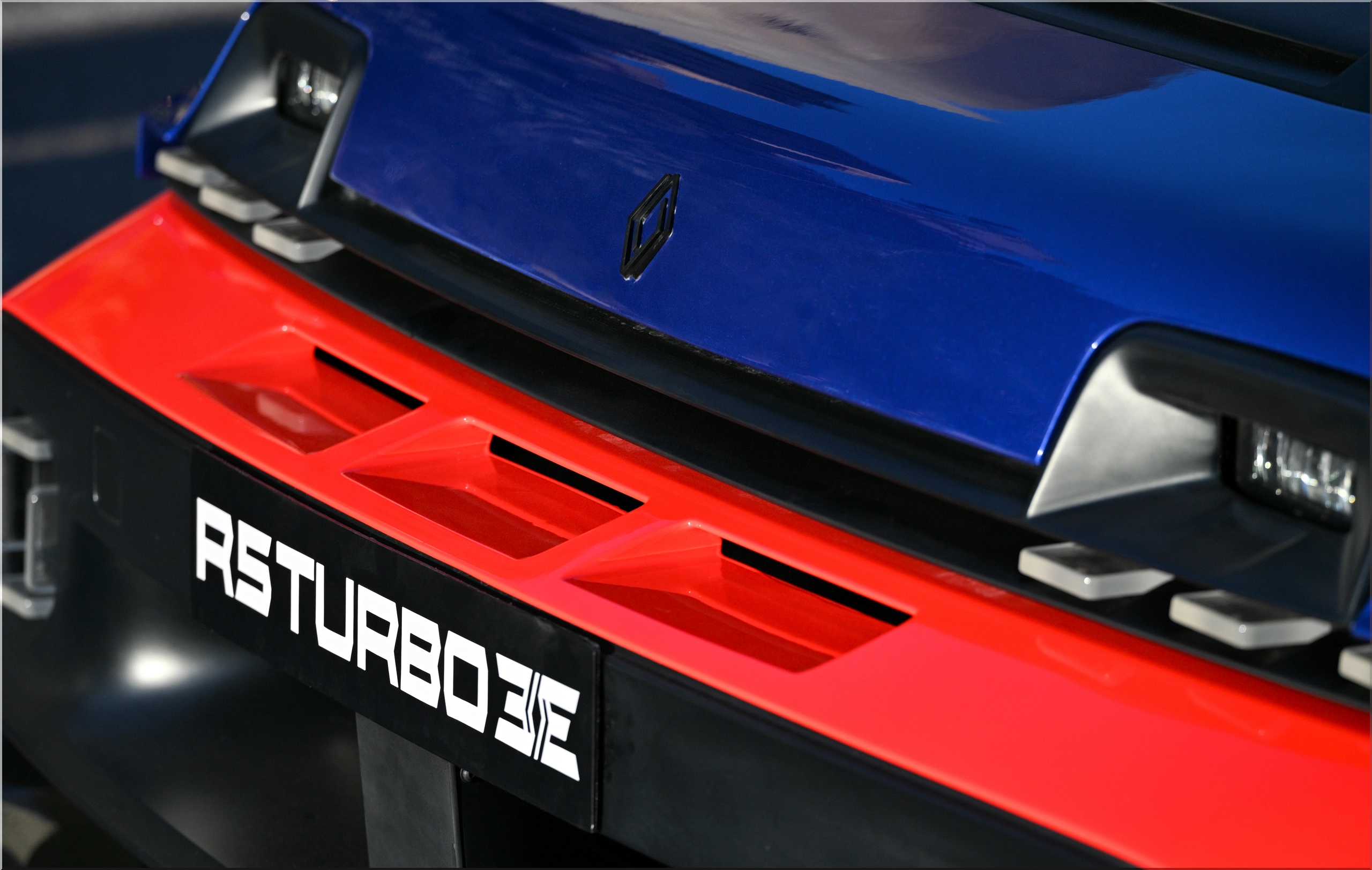
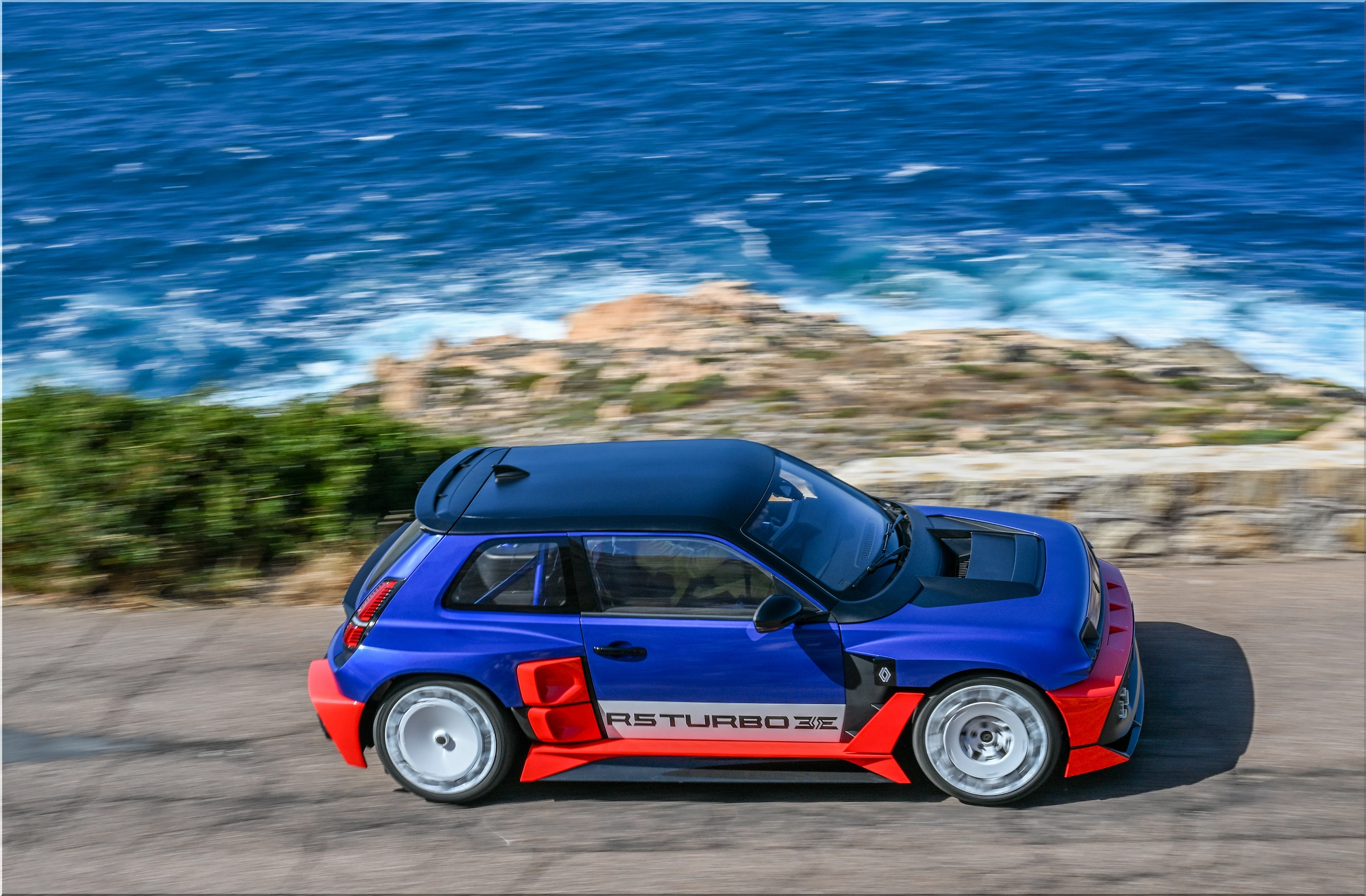
The Renault 5 Turbo 3E has stepped out of the concept stage and onto the tarmac of the Historic Tour de Corse Rally. This modern reinterpretation of Renault’s 1980s rally icon delivers 555 horsepower, 4,800 Nm of torque, and a reminder that electric performance can still ignite emotion without a drop of fuel.
A Historic Return to Corsica
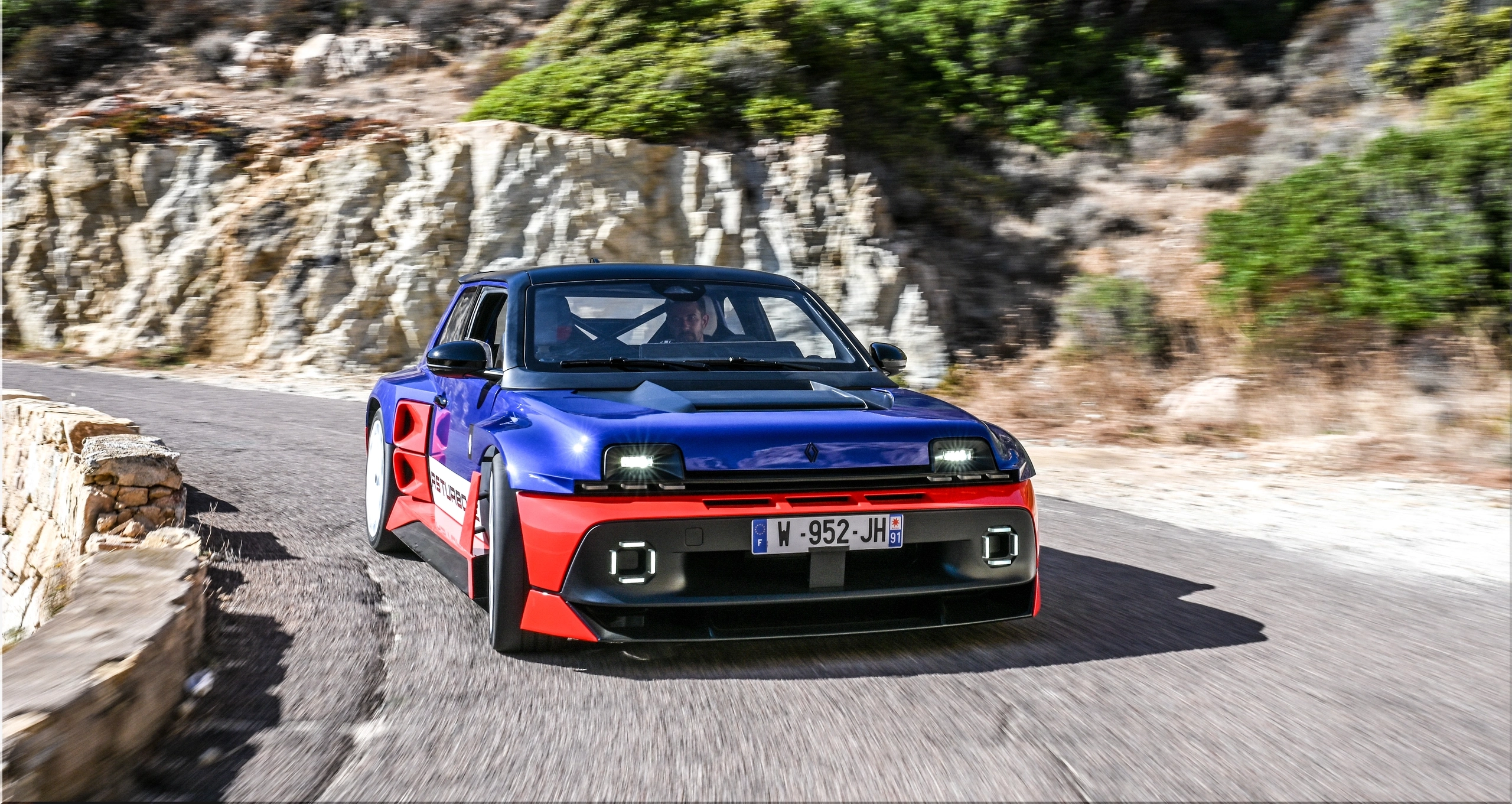
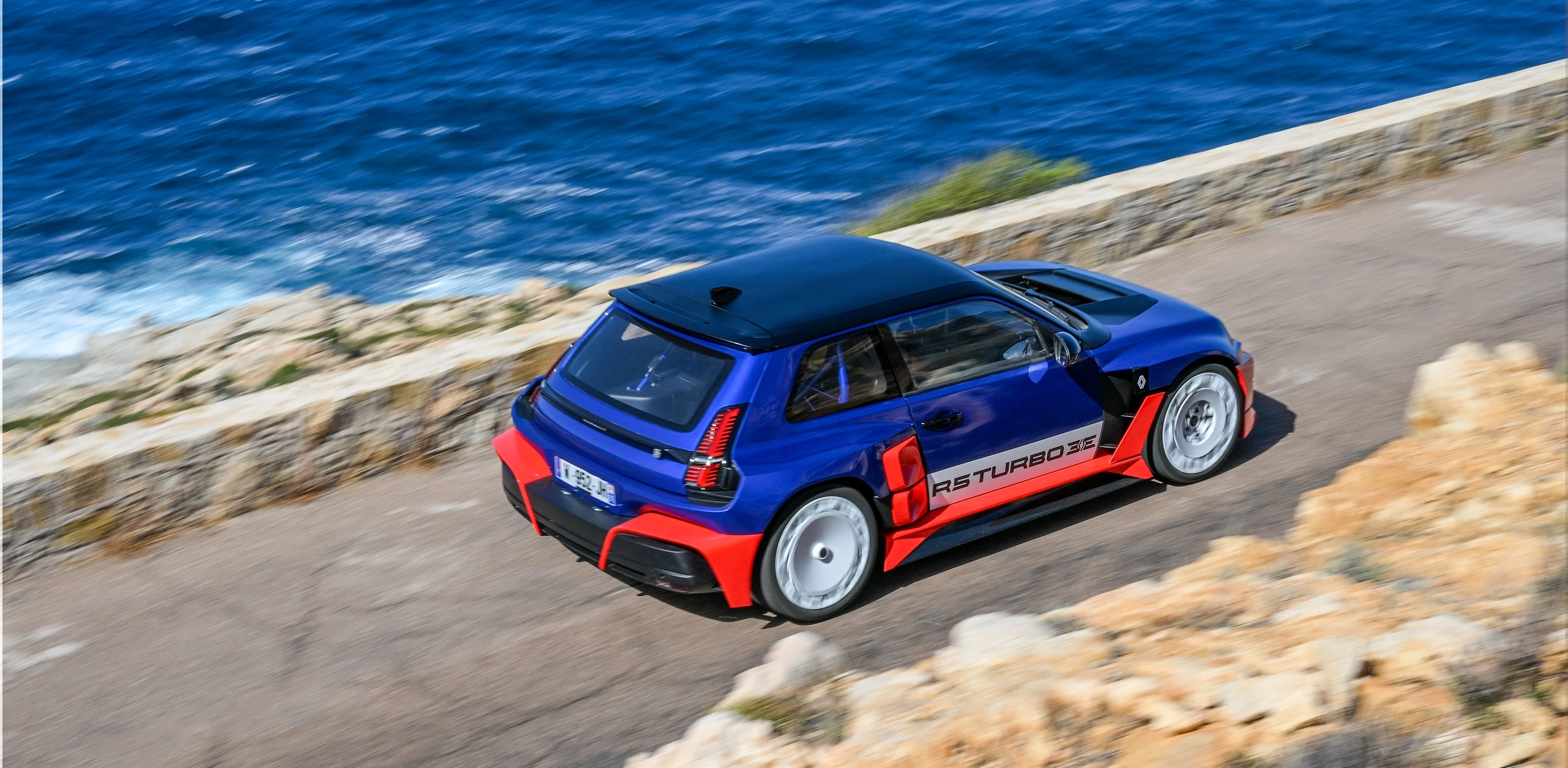
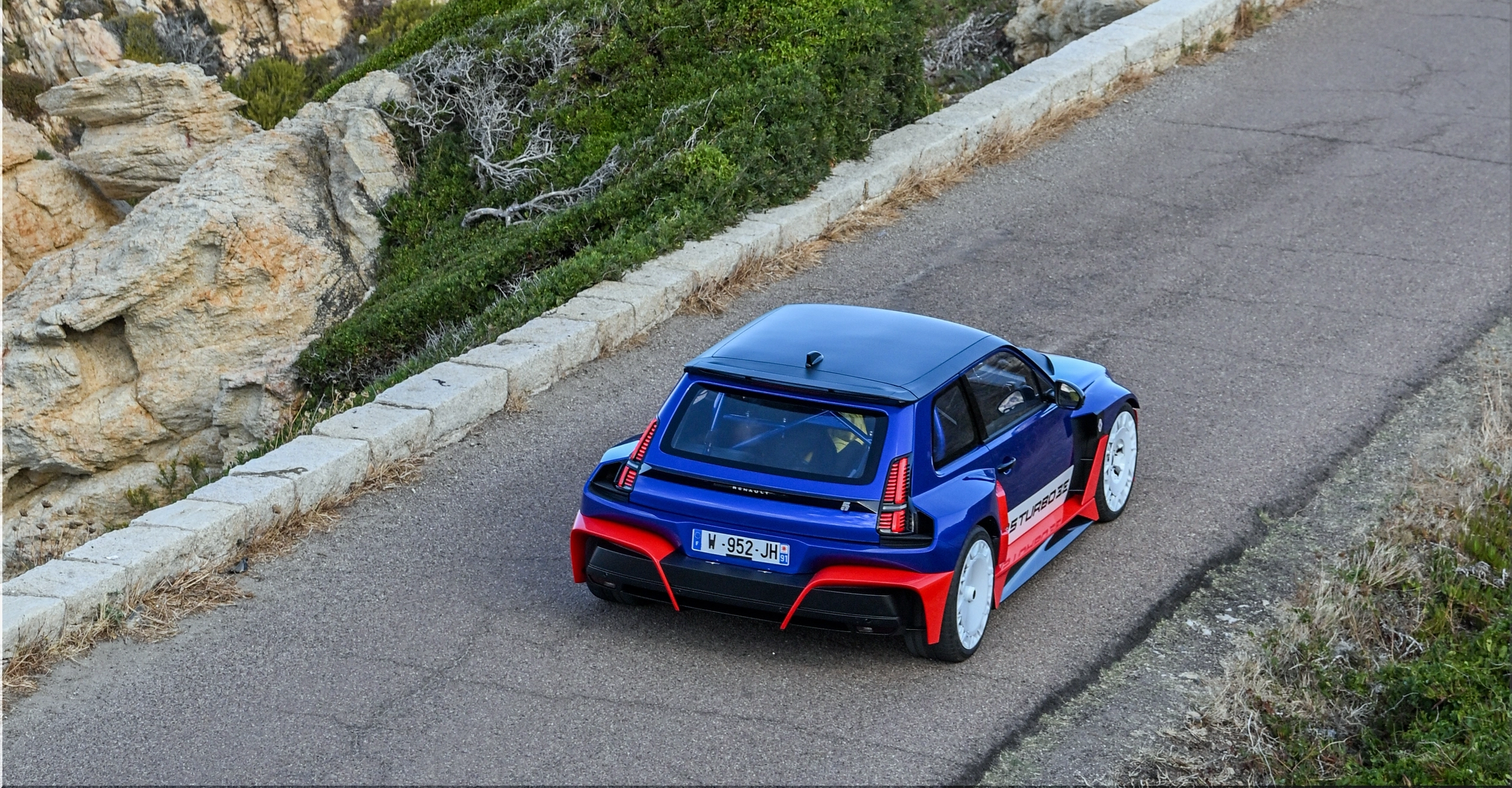
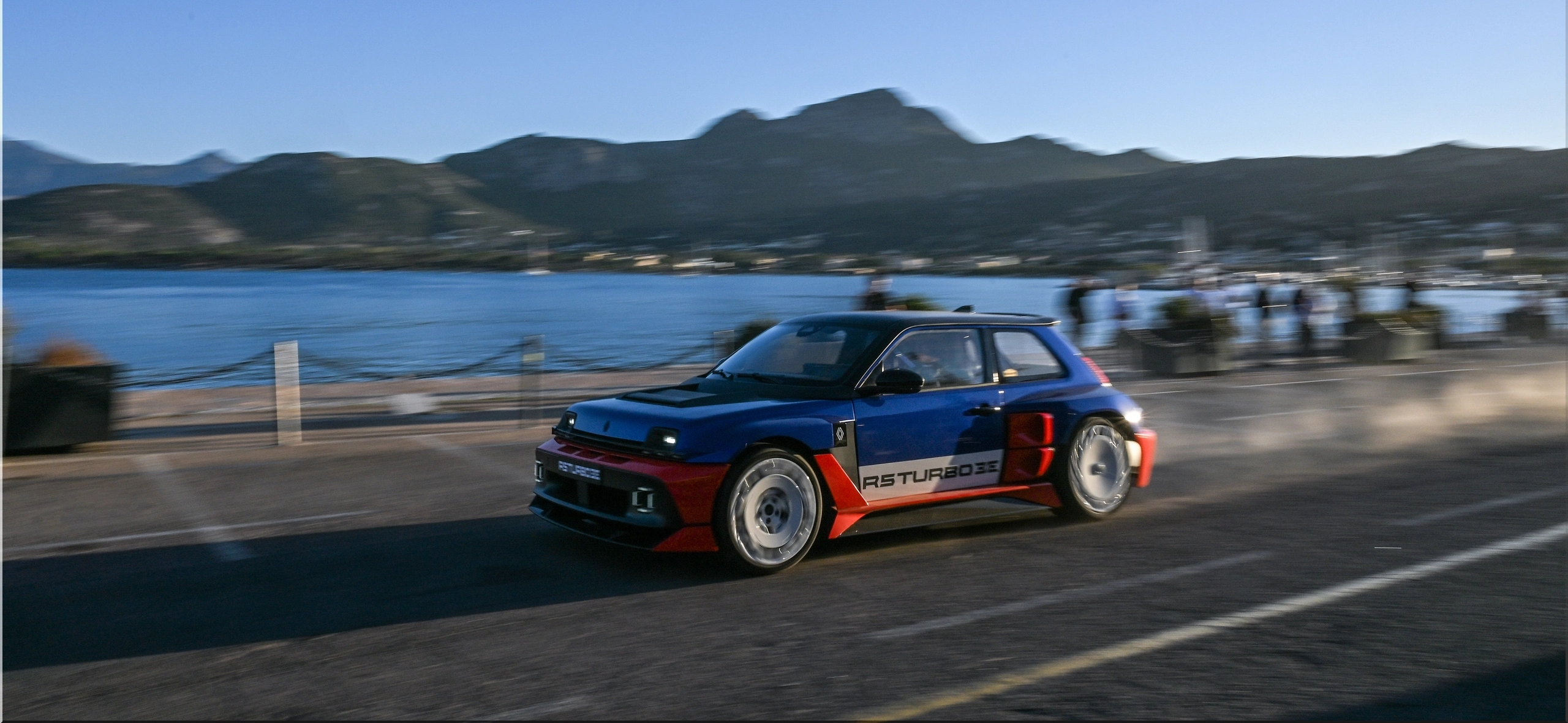
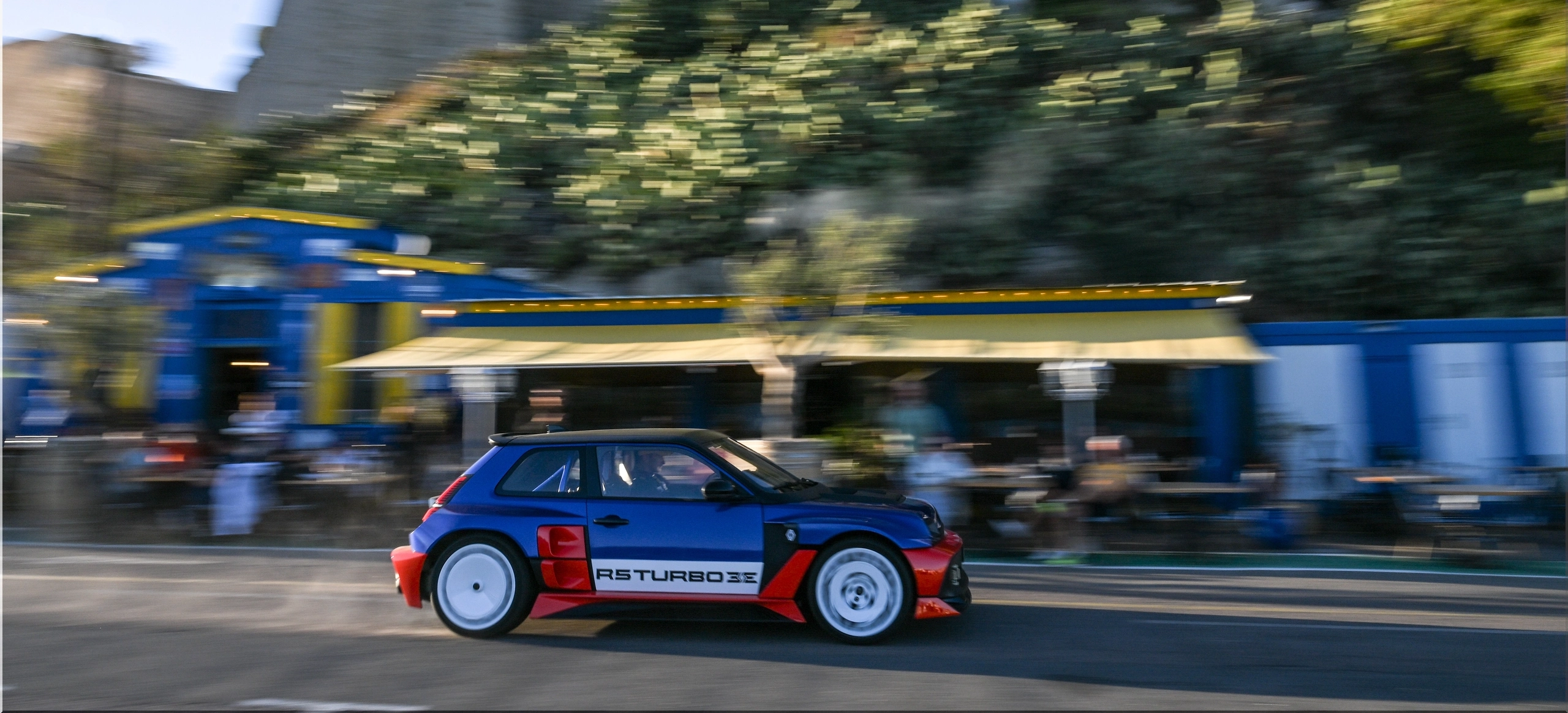
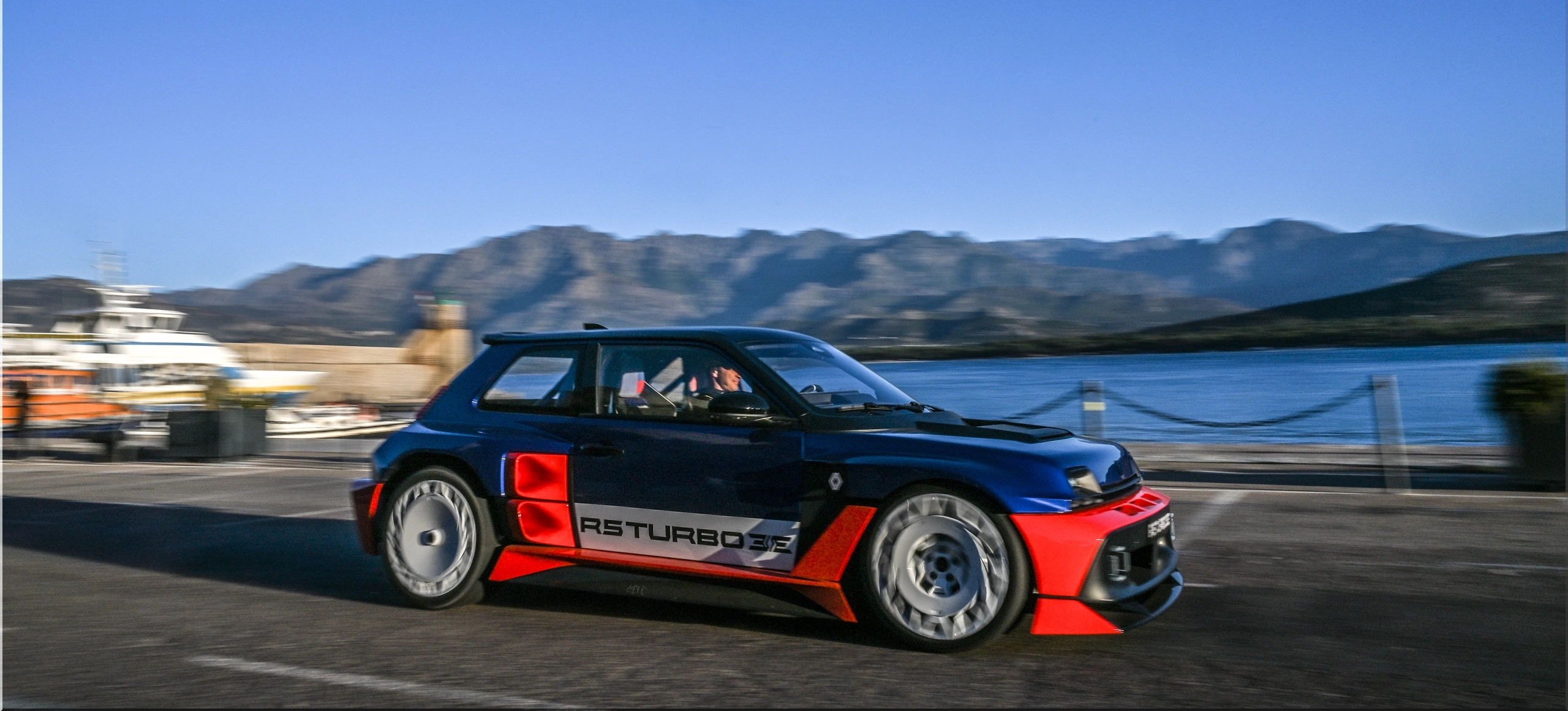
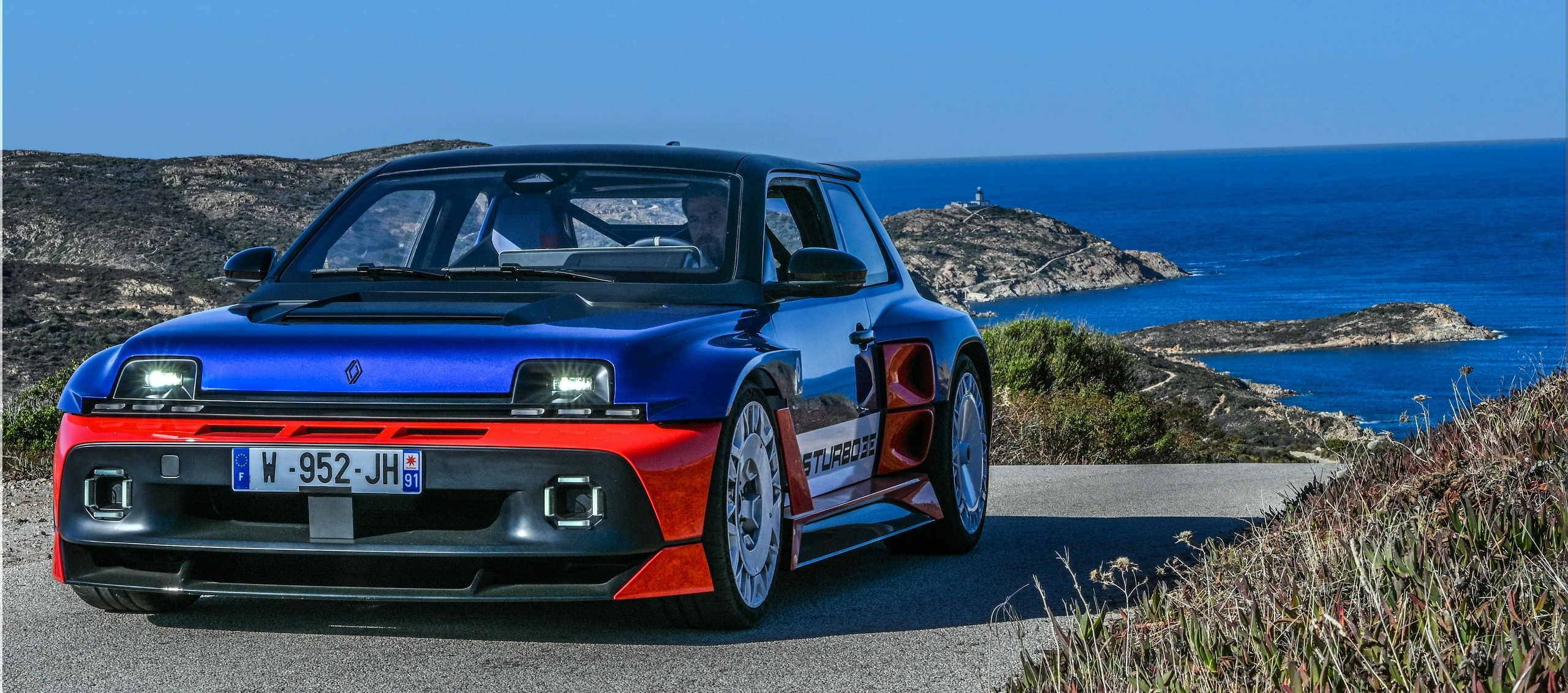
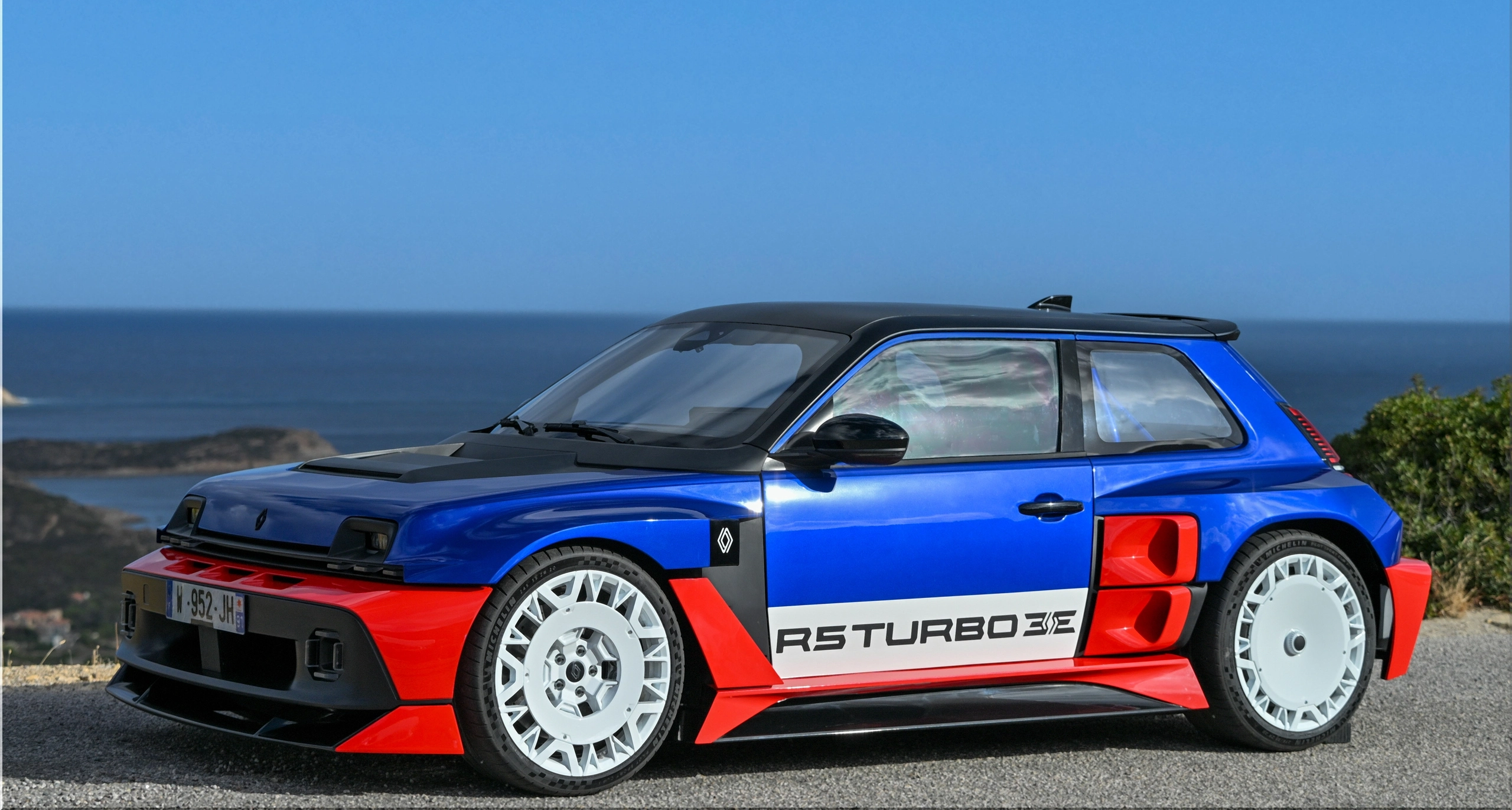
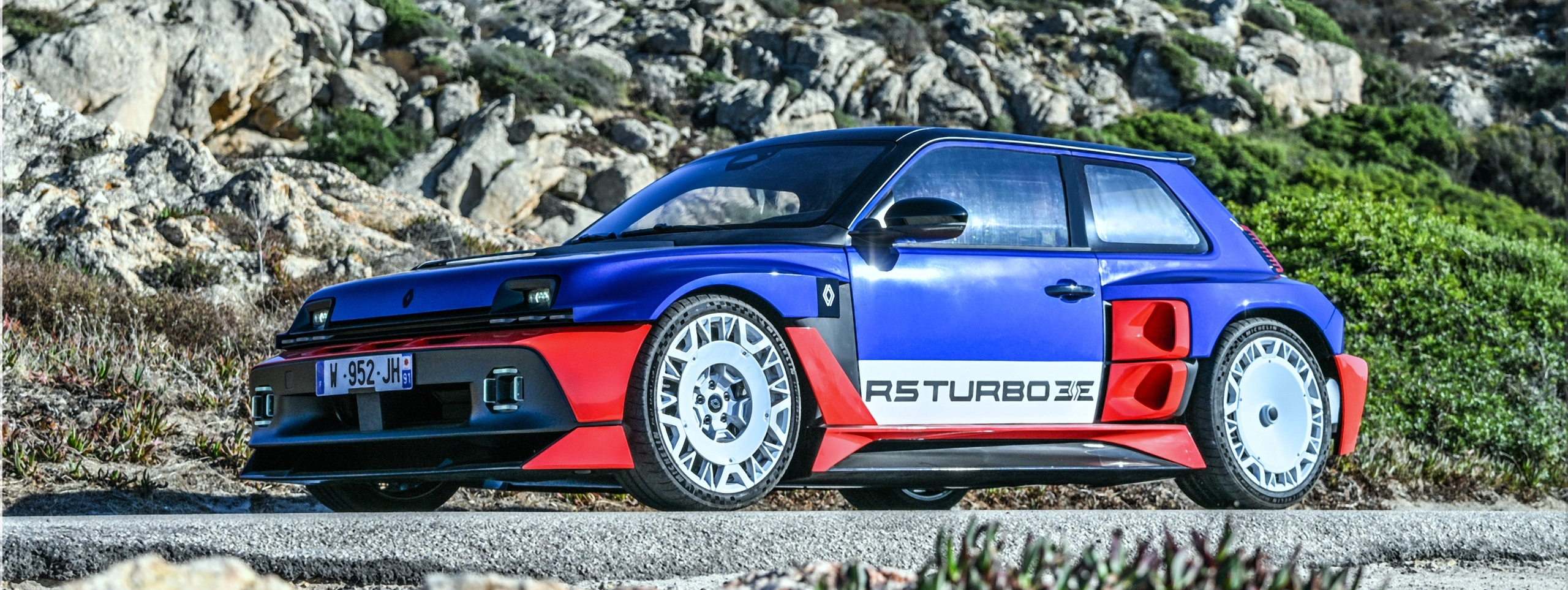
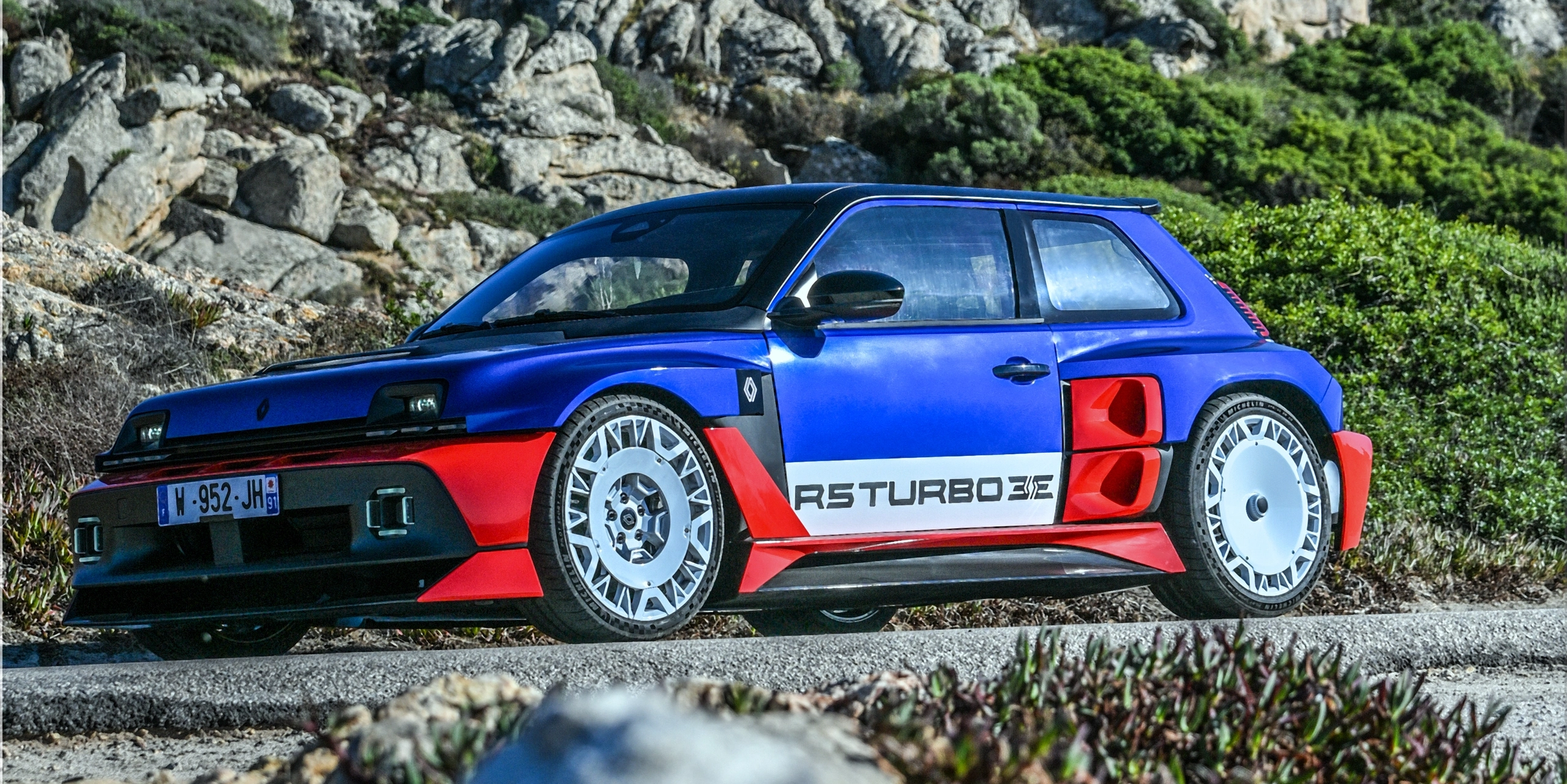
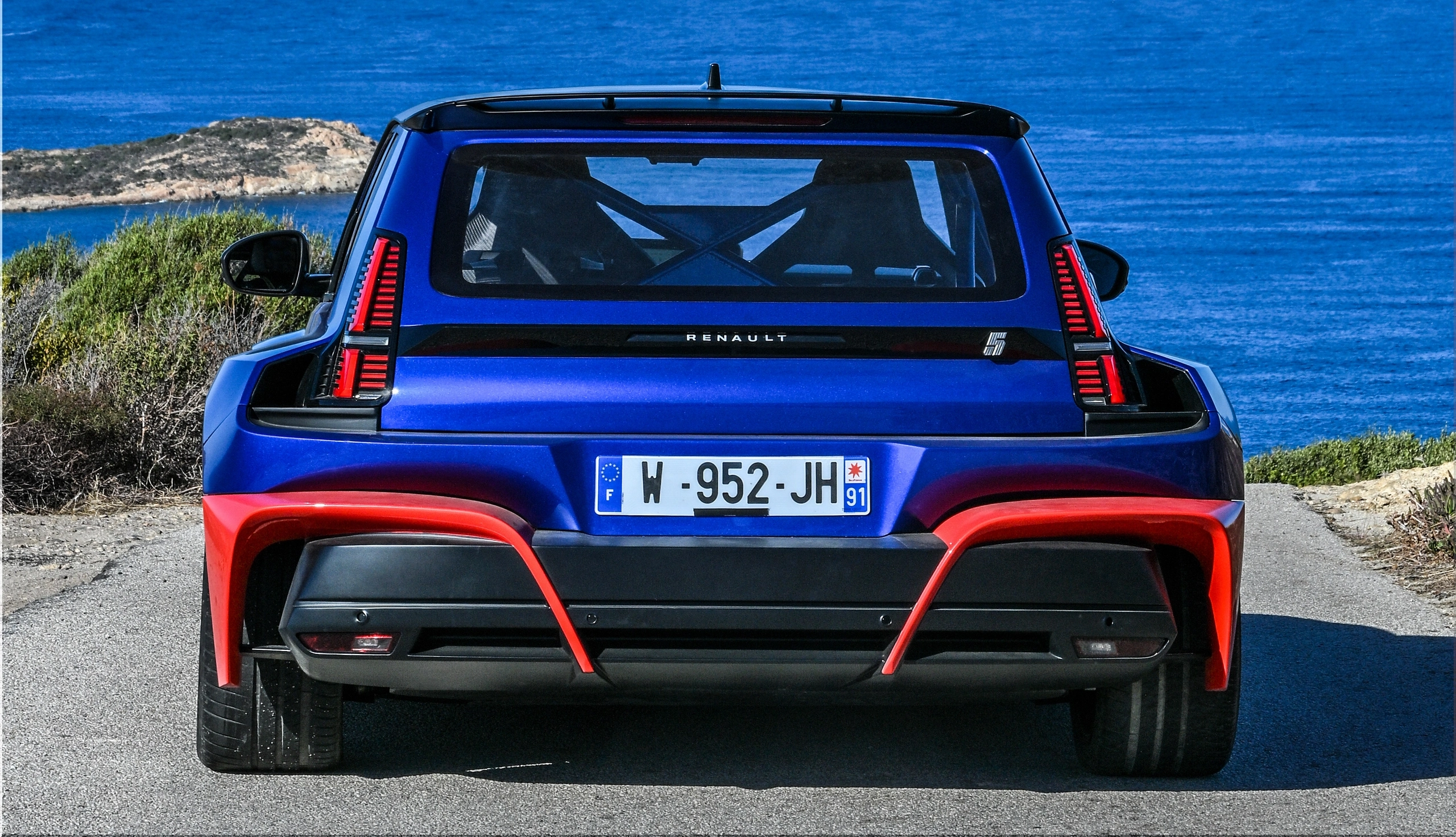
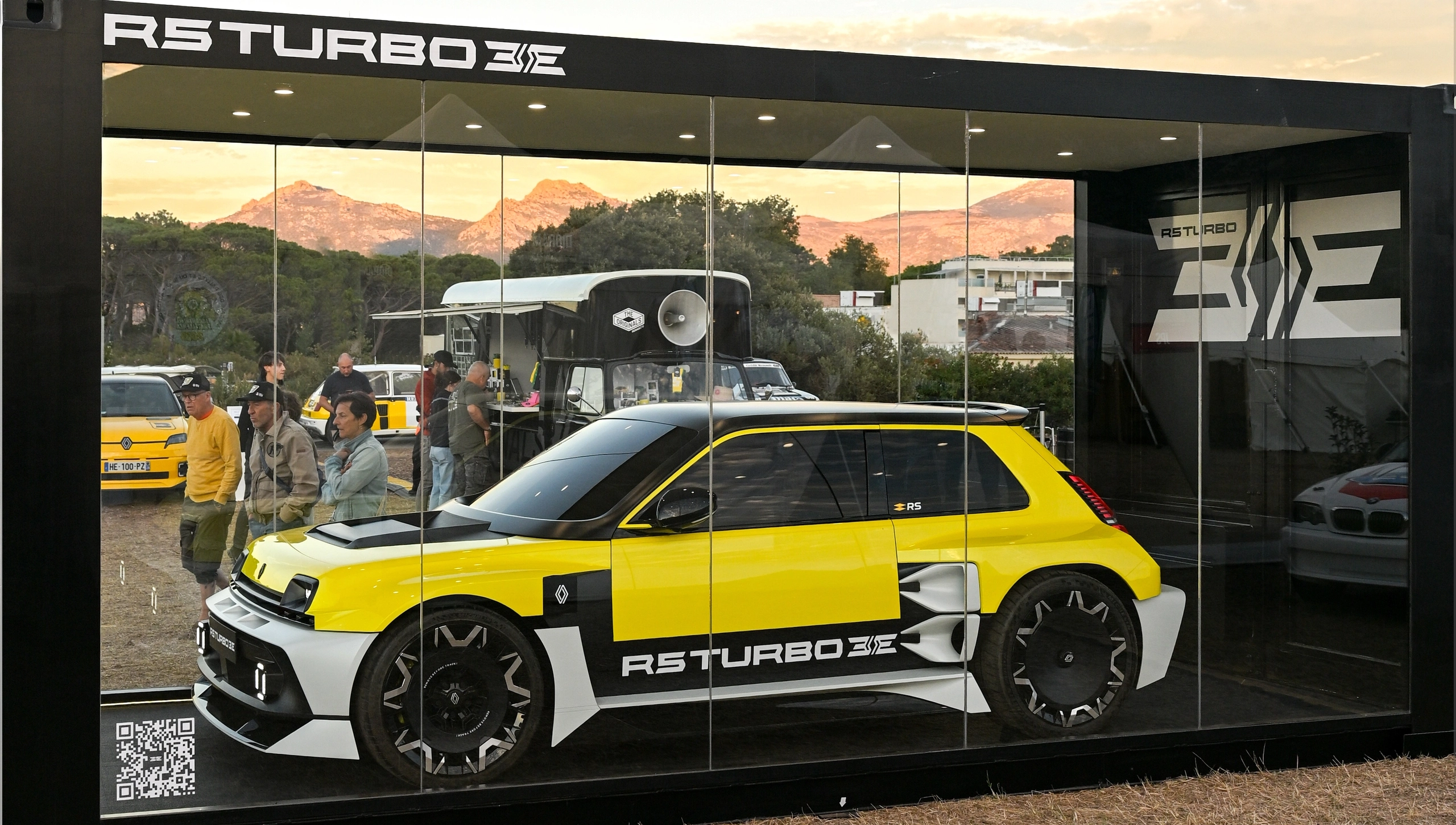
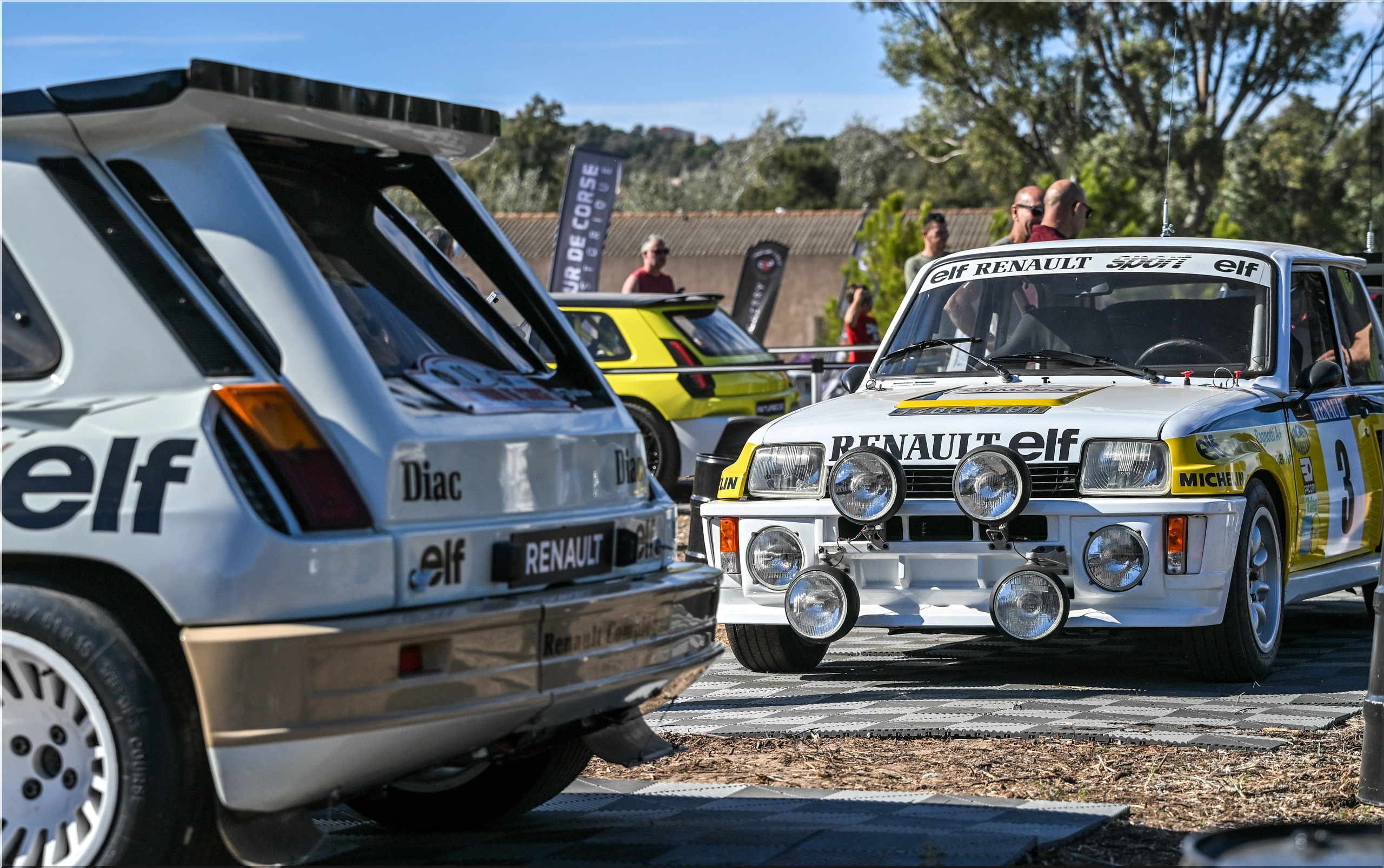
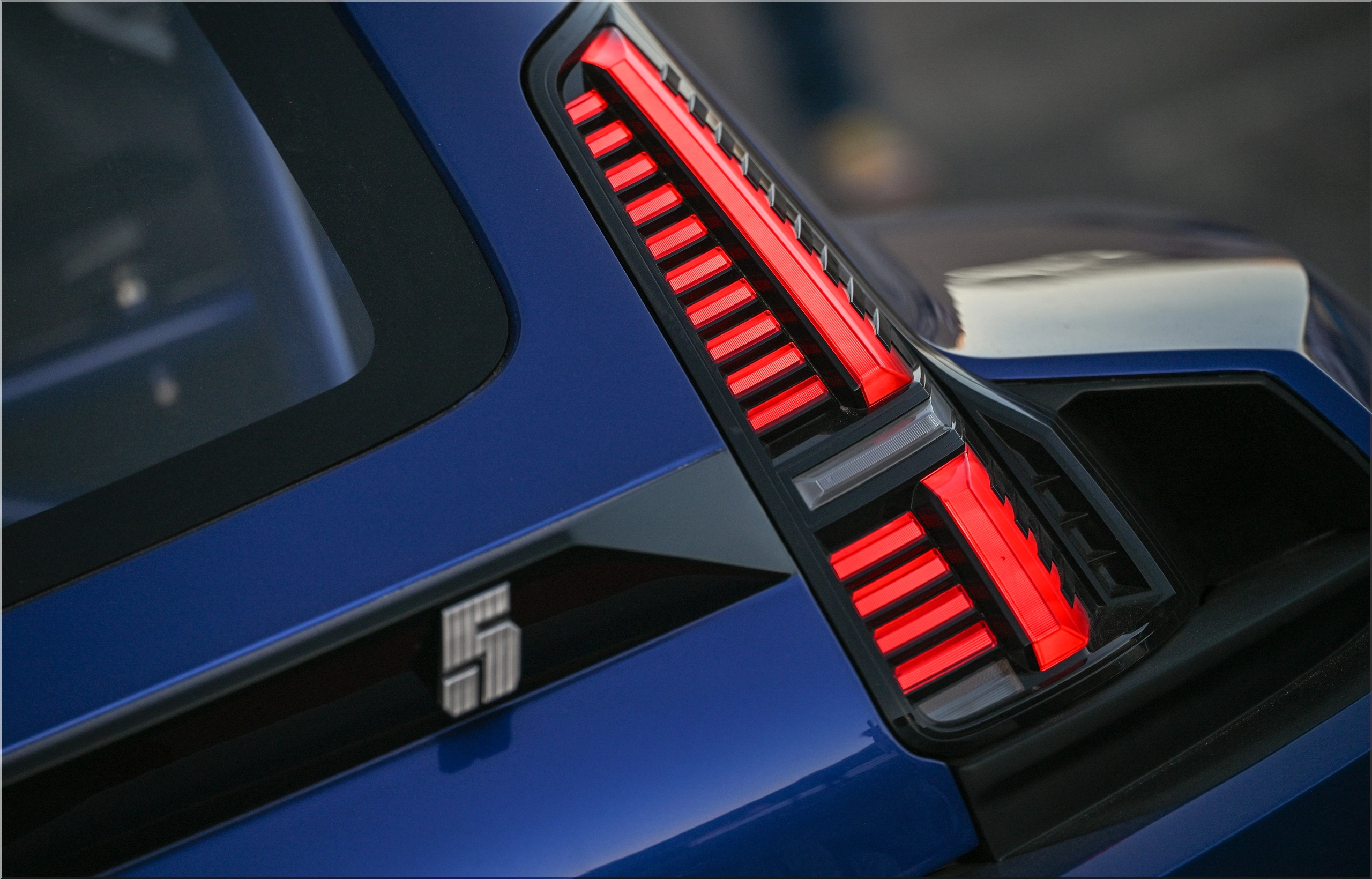
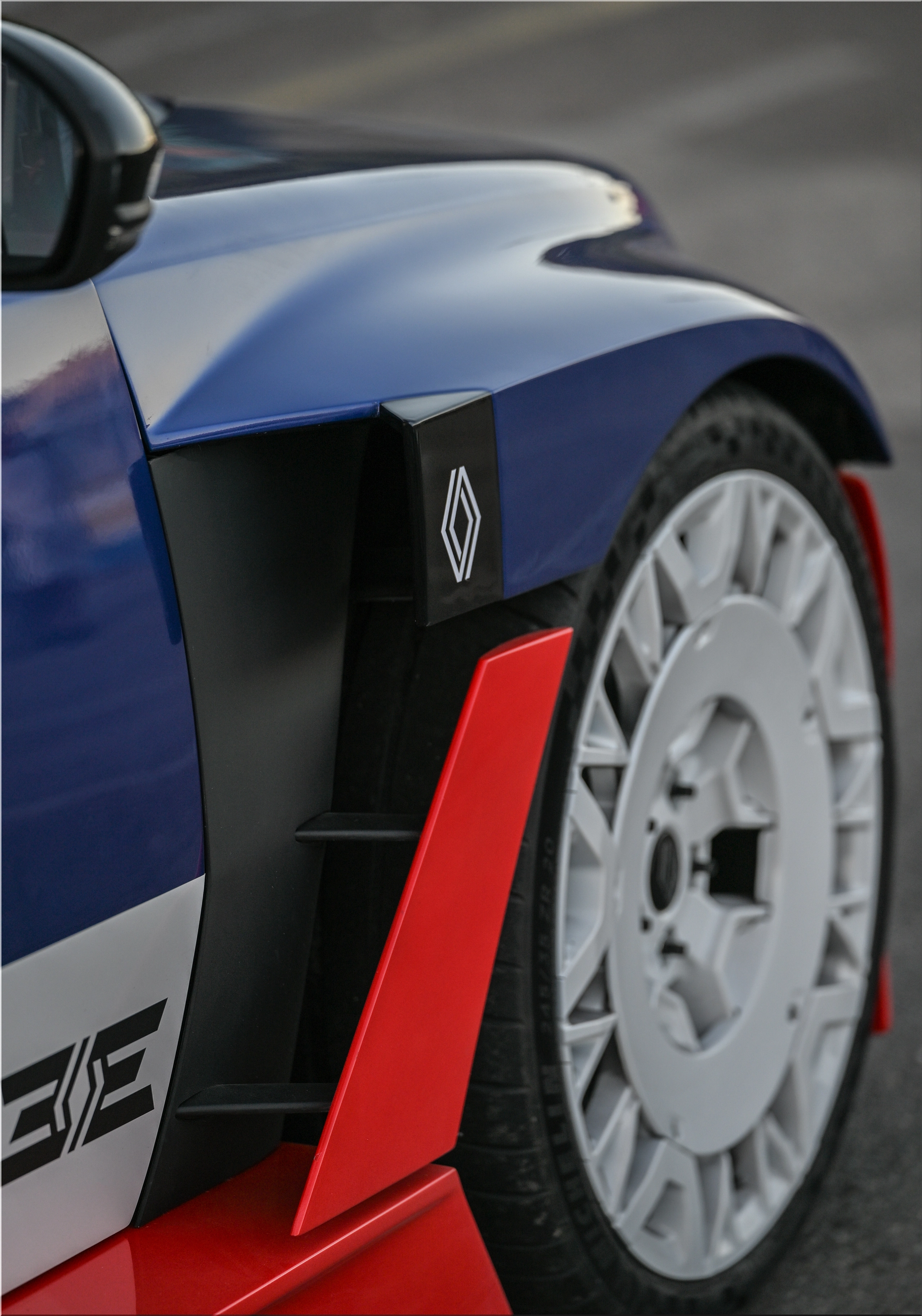
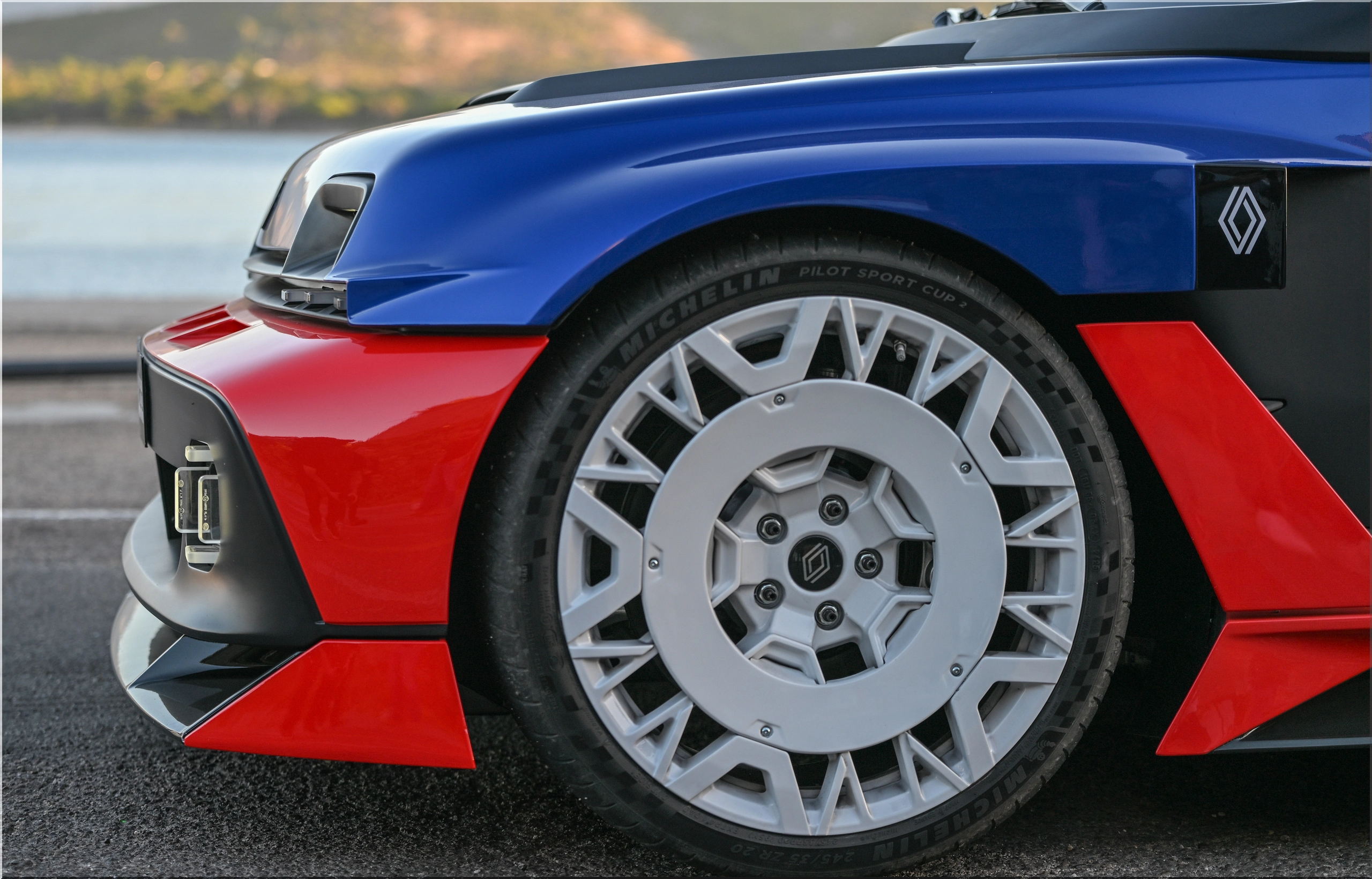
Renault chose Calvi, Corsica, for the car’s first public outing—an intentional nod to its 1985 Tour de Corse victory with rally legend Jean Ragnotti. To mark that milestone, the car appeared in both black-yellow-white and red-blue-white liveries inspired by Ragnotti’s Maxi 5 Turbo.
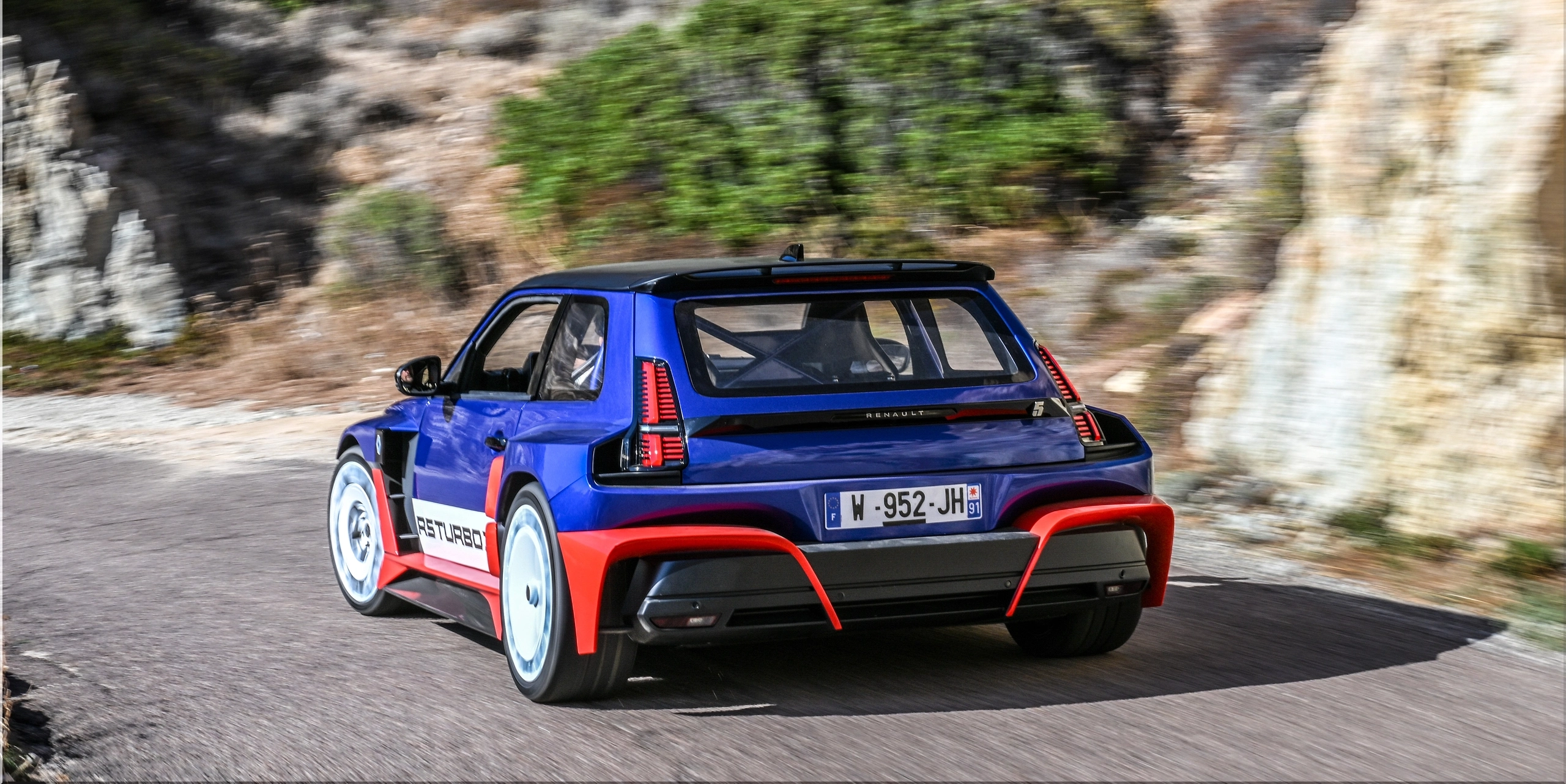
Behind the wheel, Renault ambassador Julien Saunier delivered a show of speed and precision across the famous Notre Dame de la Serra and Montegrosso stages. Spectators witnessed the electric prototype slide and drift through hairpins, its dual-motor setup delivering instant power at each wheel.
Technical Architecture
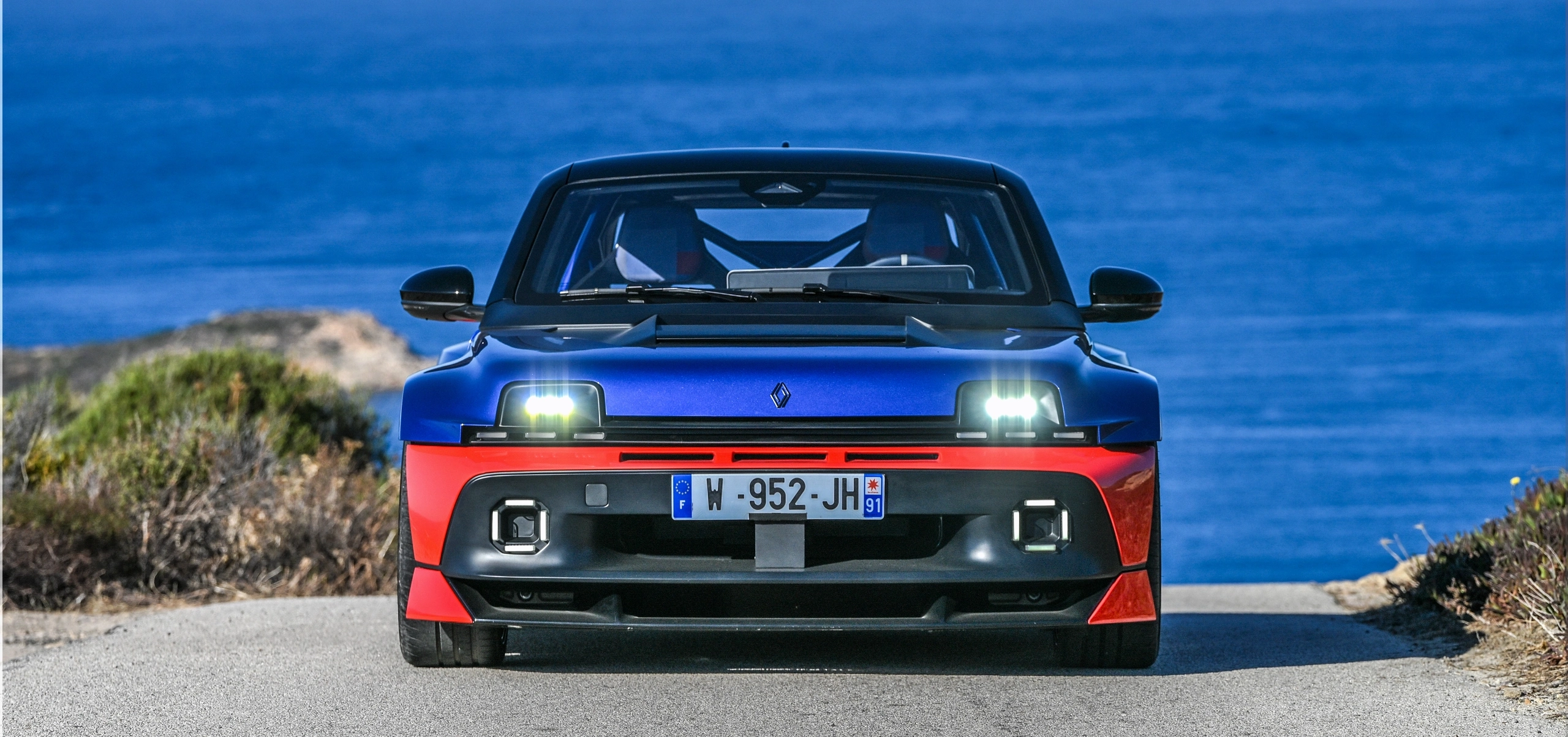
The Renault 5 Turbo 3E represents a new category Renault calls a “mini-supercar.” Compact and low-slung, it measures 4.08 meters long and 2.03 meters wide, giving it a near-square stance that supports agility and traction.
Key specifications:
| Specification | Detail |
|---|---|
| Powertrain | Dual rear in-wheel electric motors |
| Total Output | 555 hp (2 x 204 kW) |
| Torque | 4,800 Nm |
| Weight | ~1,450 kg |
| Power-to-Weight Ratio | 2.5 |
| 0–100 km/h | < 3.5 seconds |
| Battery Capacity | 70 kWh |
| Charging Architecture | 800V |
| DC Fast Charging | Up to 330 kW |
| Charging Time (15–80%) | ~15 minutes |
| WLTP Range | Over 400 km |
| Structure | Aluminum chassis with carbon-fiber superstructure |
The carbon fiber top and aluminum platform combine stiffness with low mass. The double wishbone suspension at both ends keeps the wheels firmly planted, while individual motor control enhances cornering agility. This control allows the car to vector torque between the two rear wheels, tightening turns and enabling smooth, controlled drifts.
Designed by Alpine Engineers
The Turbo 3E was developed by Alpine engineers, Renault’s high-performance division. Philippe Varet, Director of Innovations, Concepts & Projects, called it “a machine built for thrills.” He noted the tight deadlines and new technologies that came together: a new aluminum/carbon platform, lightweight carbon bodywork, and dual in-wheel motors that redefine rear-wheel-drive dynamics.
Rally Spirit Reborn Electrically
Saunier described the car’s response as “a true rallying beast.” Acceleration remained relentless even at higher speeds, while braking was described as “ultra-powerful yet easy to modulate.”
This isn’t nostalgia dressed up in carbon fiber; it’s a functional prototype tuned for performance. Renault’s goal was to translate the visceral, oversteering charm of the 1980s Turbo into an electric experience—without the lag or noise but with all the control.
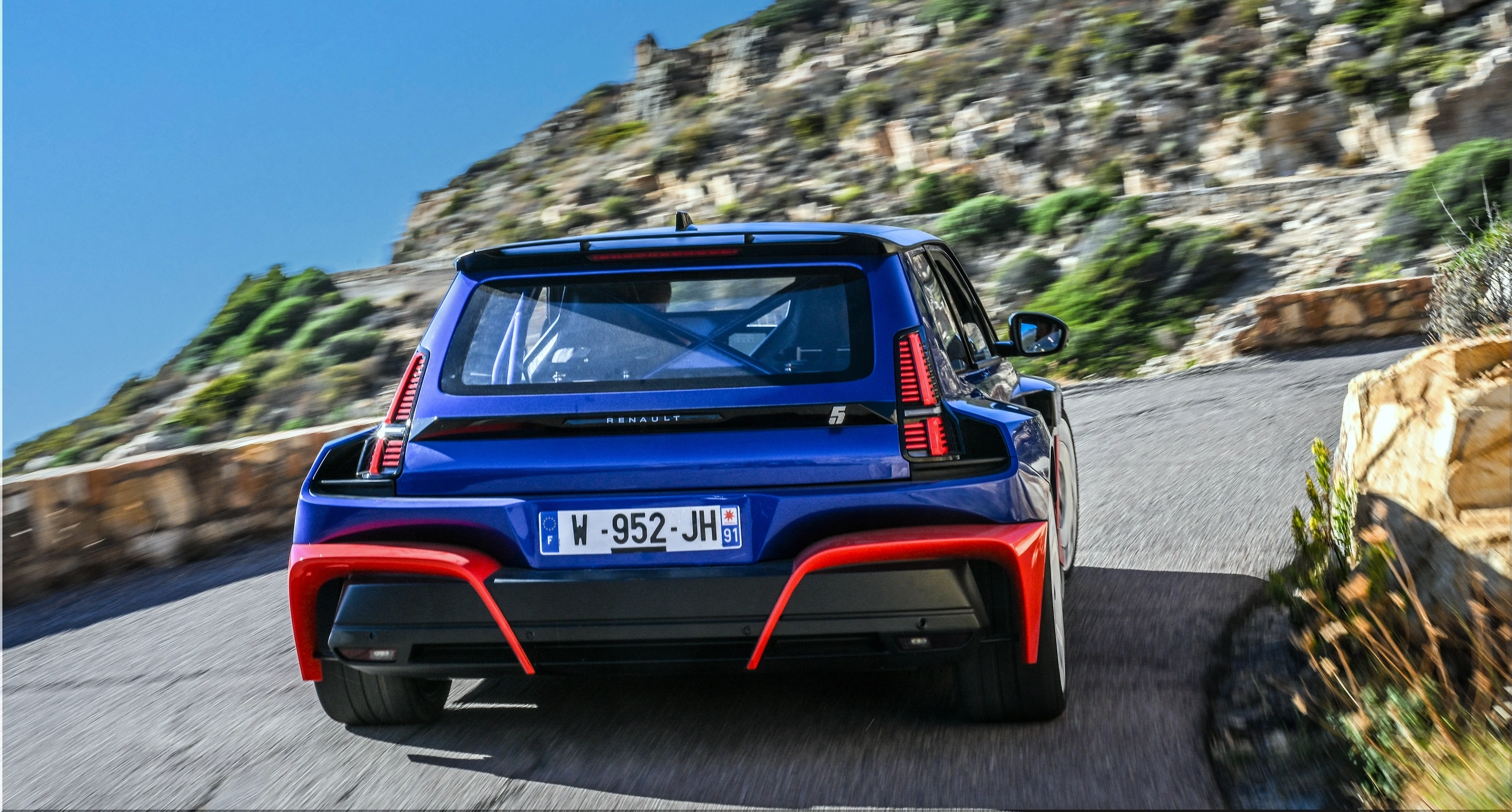
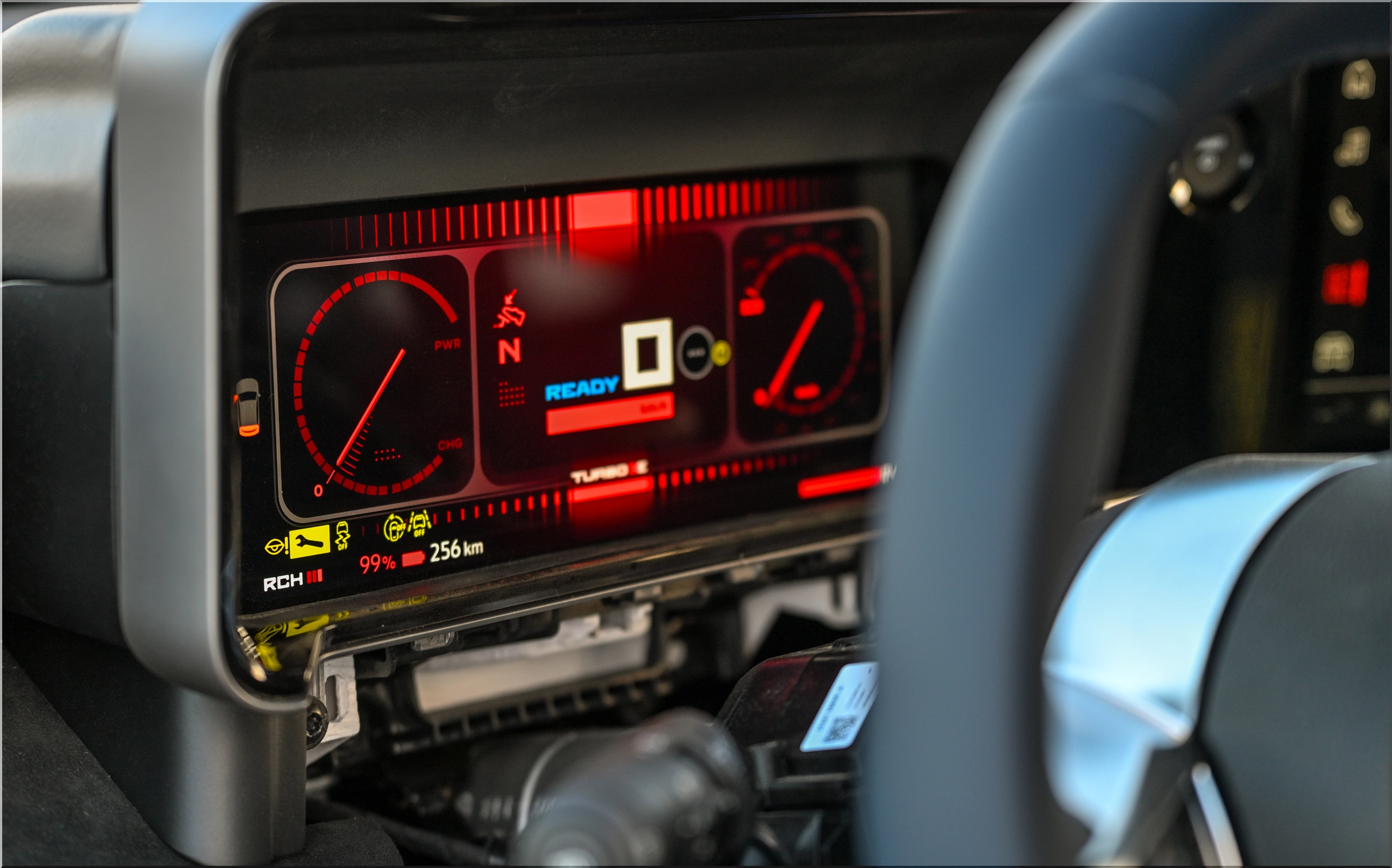
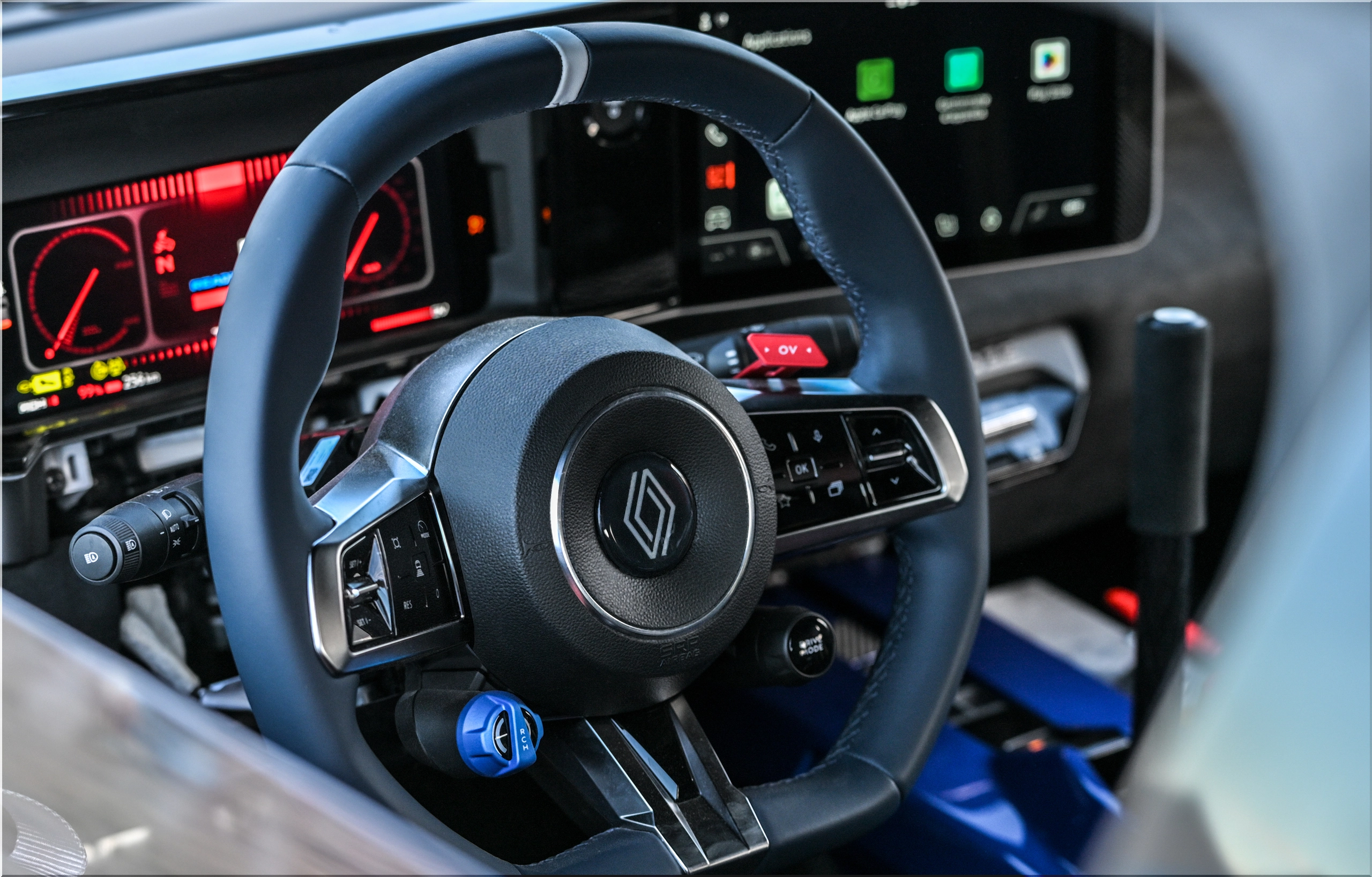
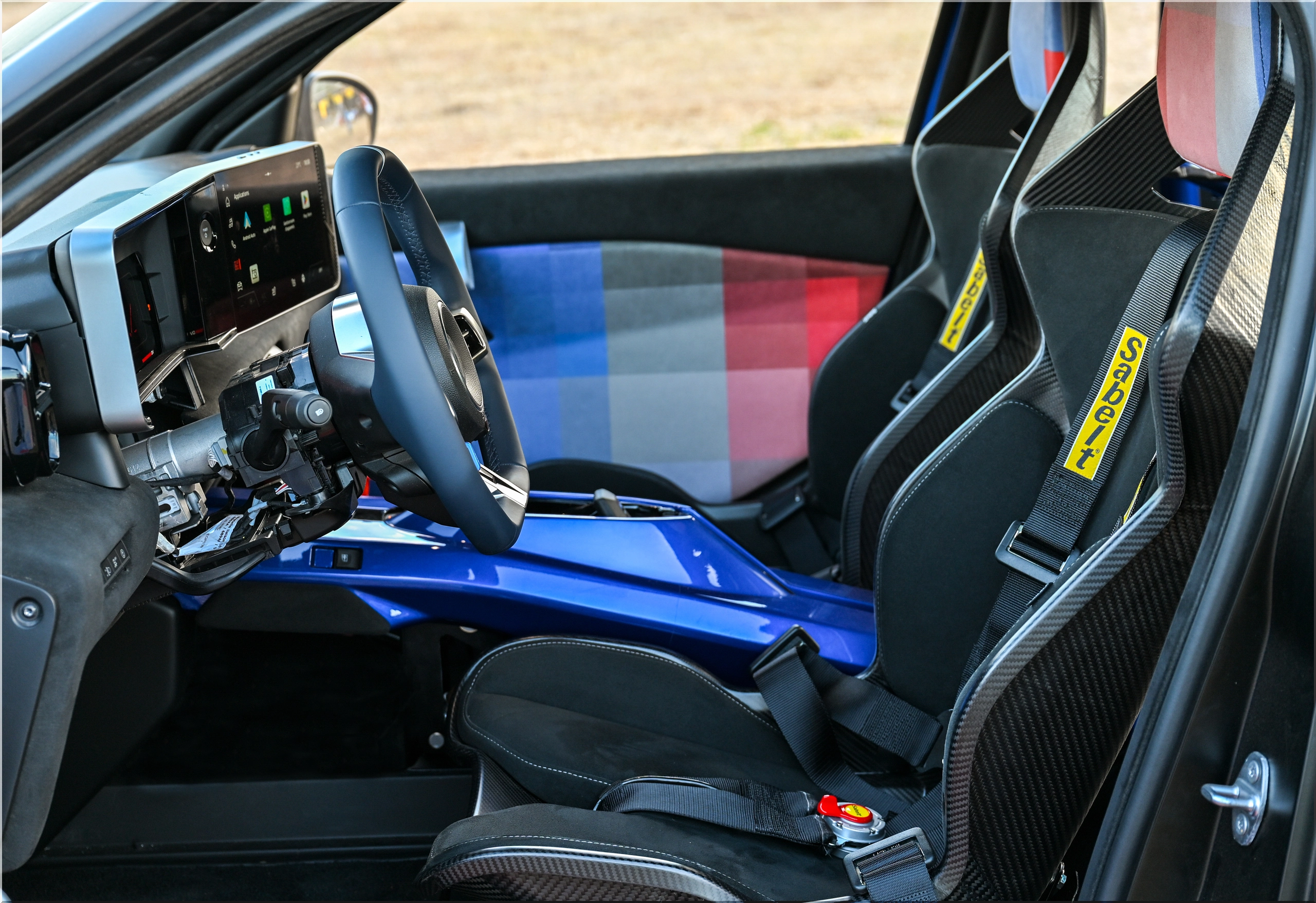
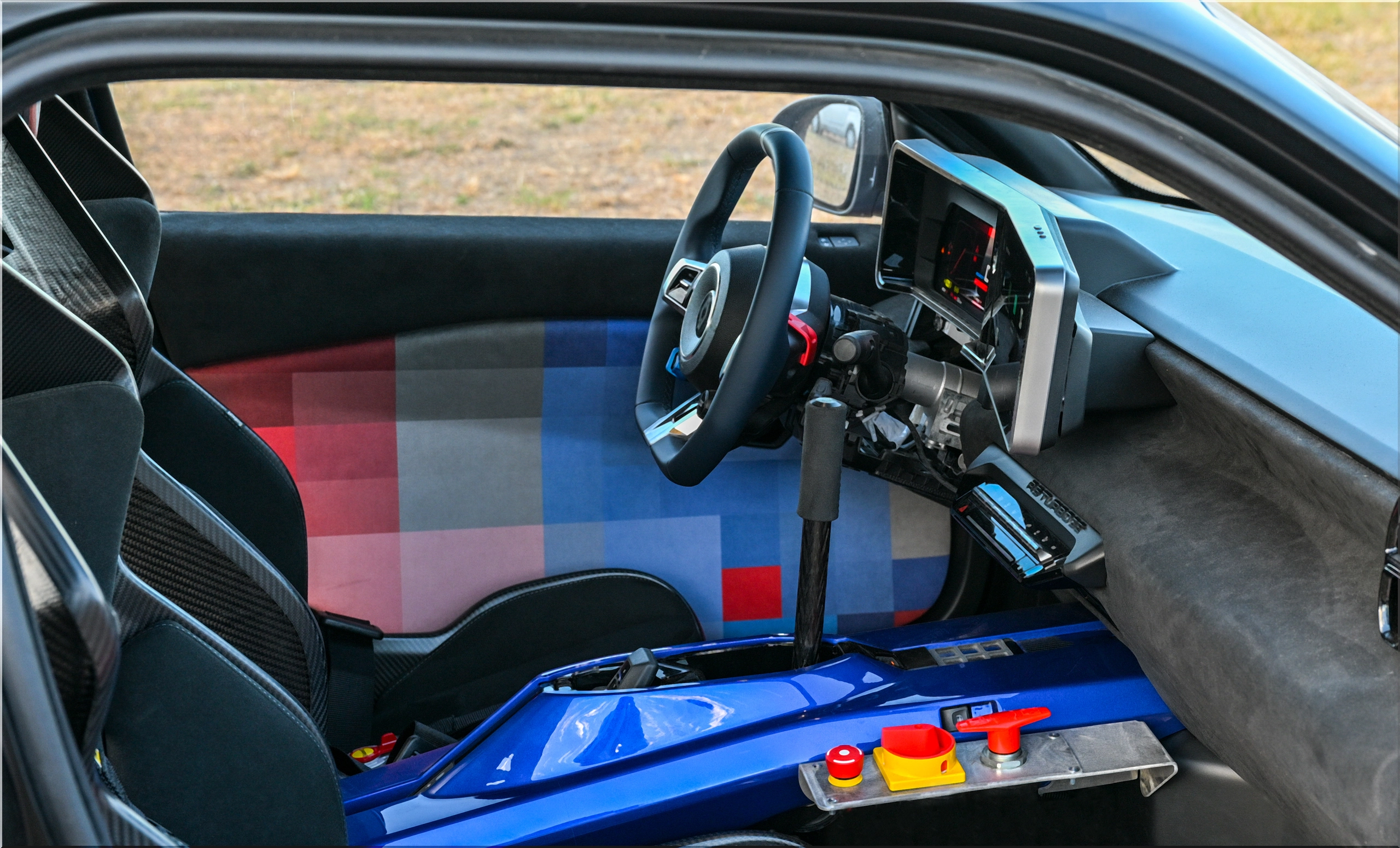
The car’s wide stance and short overhangs give it a muscular rally-ready profile. Inside, expect the same stripped-down functionality that prioritizes driving feel over luxury—though customization options promise more flexibility for production versions.
Limited Production and Pricing
Renault plans to produce 1,980 units, a tribute to the 1980 launch year of the original Renault 5 Turbo. The starting price is €160,000 (approximately $170,000 USD), with reservations requiring a €50,000 (~$53,000 USD) deposit.
Each customer will be invited to select a unique vehicle number (optional, paid feature) during the reservation process. The model will be available in Europe, the Middle East, Japan, and Australia.
The homologation process is already underway, with deliveries scheduled for 2027 following customer configuration sessions planned for early 2026.
Personalization Program
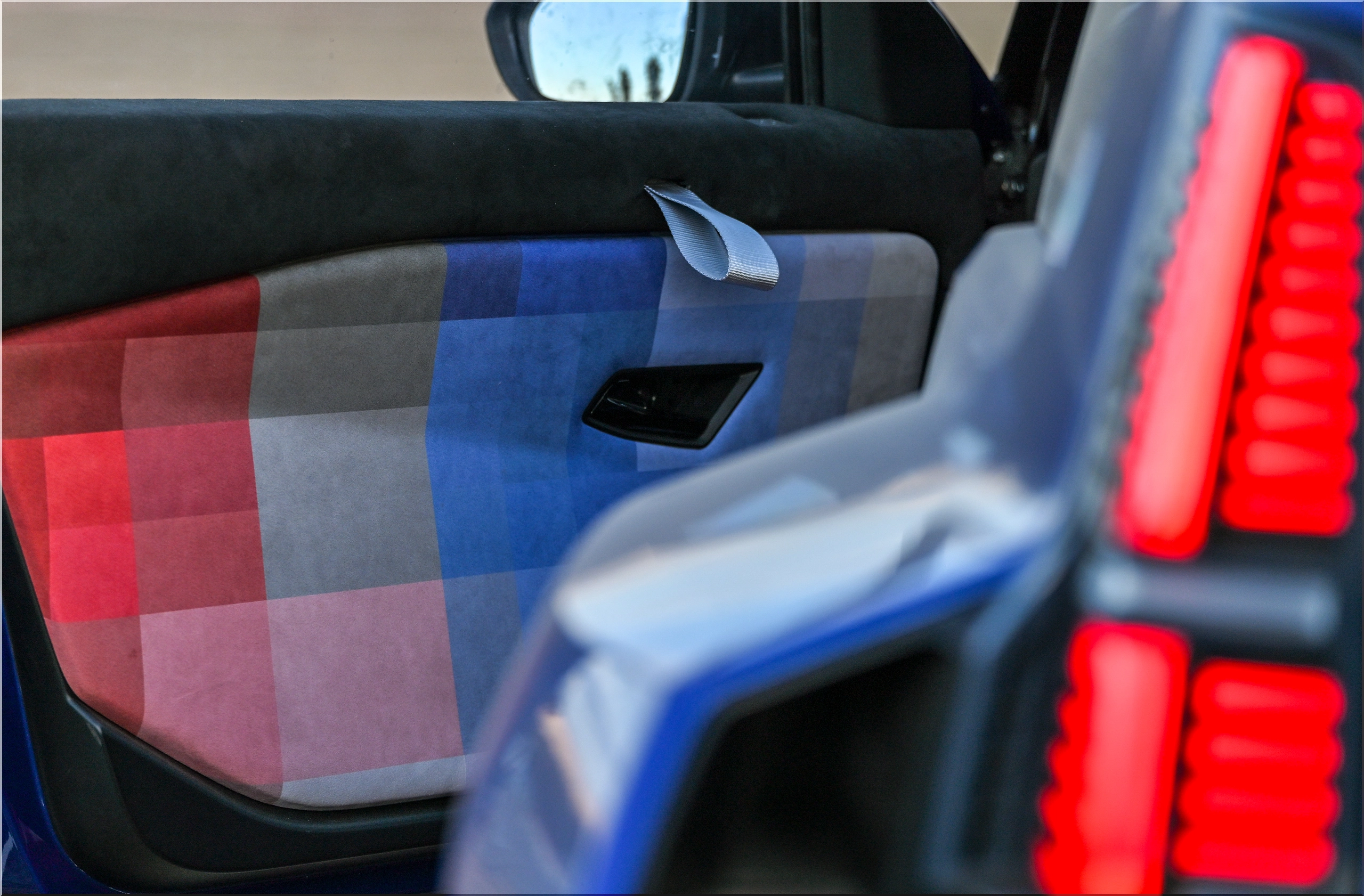
Renault plans a customization program allowing buyers to design the car’s colors and interior finishes. Options will include heritage liveries like:
- Rouge Grenade, inspired by early Turbo 2 colors
- Yellow/white/black, matching the 1982 Tour de Corse car
- Gentleman driver look, offering bespoke combinations for a subtle aesthetic
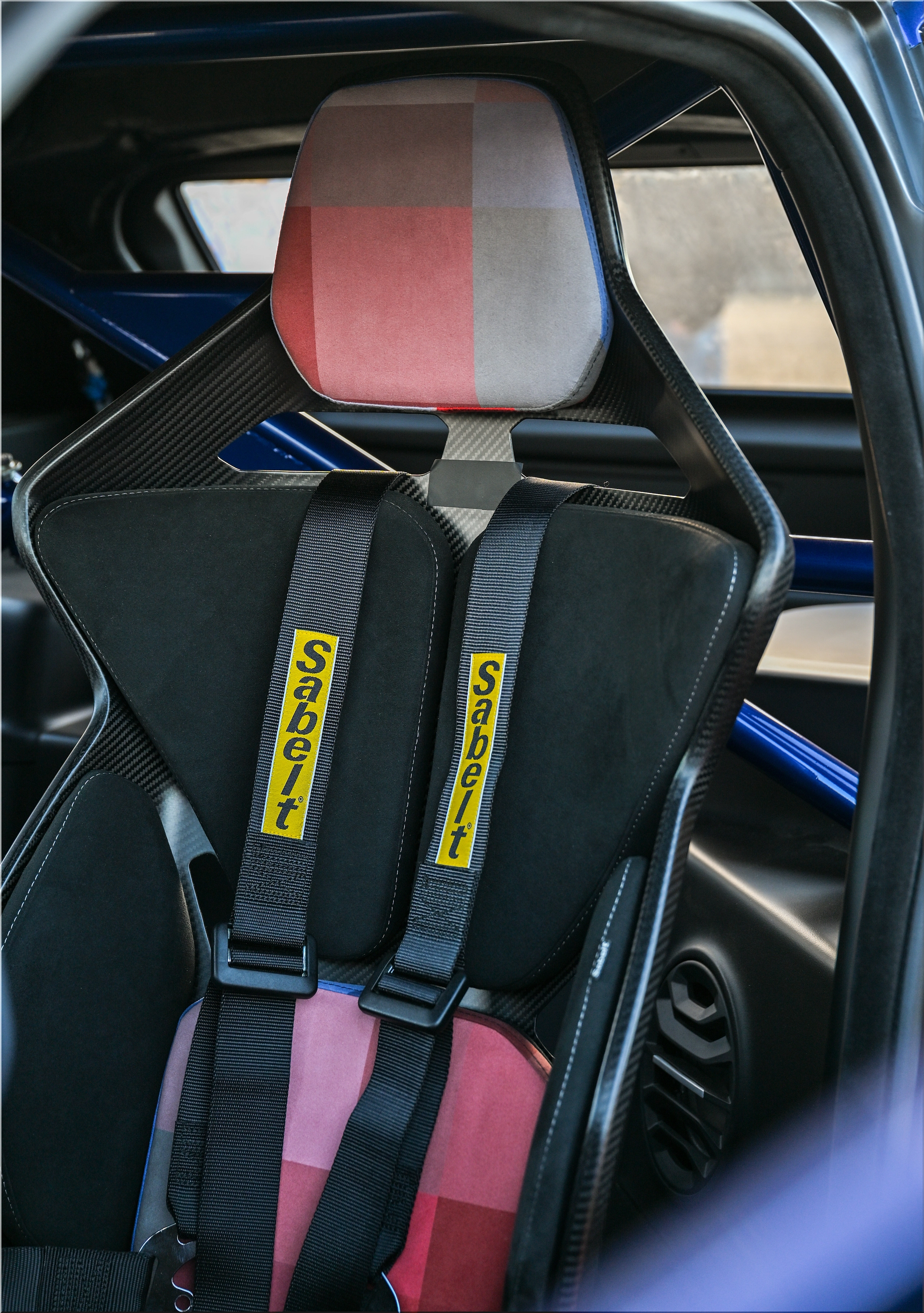
Customers will collaborate directly with Renault’s design team to personalize materials across the seats, dashboard, and door panels, turning each Turbo 3E into a one-of-a-kind electric rally tribute.
Charging and Range Capabilities
The 800V electrical system allows for high-speed charging—an increasingly standard feature among performance EVs. The 70 kWh battery can recover from 15% to 80% in just 15 minutes at compatible 330 kW fast chargers. While range will depend on driving style, the official WLTP estimate exceeds 400 km, a respectable figure for a high-output two-seater.
These numbers place the Turbo 3E alongside Porsche Taycan GTS and Audi e-tron GT in charging performance, though its rear-motor-only layout and compact size make it far more playful than grand touring.
Market Position: The Electric Mini-Supercar
The Renault 5 Turbo 3E doesn’t fit neatly into an existing market segment. Its performance puts it between high-end hot hatches and electric sports cars, but its compact rally-inspired proportions make it stand out. Renault is effectively creating a new niche for electric “mini-supercars,” vehicles designed around driving enjoyment rather than long-range commuting.
At around $170,000 USD, the Turbo 3E undercuts exotic EVs like the Lotus Evija or Pininfarina Battista by a wide margin, while delivering similar agility and instant torque at a fraction of the weight and cost.
Tribute to a Rally Icon
The timing of the public runs coincided with the 40th anniversary of Jean Ragnotti’s Tour de Corse victory in the Maxi 5 Turbo. Renault’s engineers and drivers describe the 3E as both a tribute and a technological statement—a nod to the past, reimagined for an electric future.
The event also mirrored another anniversary: the 1978 press reveal of the original Renault 5 Turbo, which took place just before the Paris Motor Show. In many ways, the 3E’s Corsican debut followed that same formula—showing the car first in action, before the showroom.
Customer Response
Interest has already exceeded Renault’s expectations. Project manager Michael Grosjean confirmed that 500 reservations were received within three days of the opening. That enthusiasm validates Renault’s decision to combine heritage with electrification—a risky but increasingly effective strategy for automakers with deep motorsport roots.
Grosjean emphasized that the next phase will showcase the personalization lineup, a detailed selection of finishes that will allow owners to mirror historic rally styles or create new interpretations of the Turbo legacy.
A Milestone for Renault’s Electric Strategy
The Turbo 3E arrives as part of Renault’s “Renaulution” plan, the company’s strategy to produce more value-driven electric vehicles while maintaining profitability. This electric rally car acts as both a technological test bed and a brand-building statement.
By fusing nostalgia with innovation, Renault positions itself alongside competitors like Fiat’s 500e Abarth and Mini’s upcoming Cooper SE JCW, though the Turbo 3E’s track focus places it in a category of its own.
Outlook: Electric Thrills with Historic DNA
Renault’s experiment shows that electric powertrains can deliver the emotion, control, and noise-free ferocity once exclusive to internal combustion rally cars. The Turbo 3E’s rear-mounted dual motors reproduce the unpredictable balance that made the original Turbo famous, now enhanced by software precision and zero-lag response.
When deliveries start in 2027, buyers won’t be getting a nostalgic showpiece. They’ll be getting a functional, high-performance electric sports car designed to drift, sprint, and remind the world that Renault can still make enthusiasts smile—this time, silently.
The 2025 Alpine A390 is a sharp turn away from typical European EVs. It’s not just compact and sporty—it’s designed to deliver repeatable, track-ready acceleration, a 5-seat layout, and a three-motor AWD setup tuned for control, not just… Continue reading
General Motors has presented at the 2018 Beijing Motor Show a new concept of electric vehicle with futuristic technology: the new Buick Enspire Concept. The Buick Enspire crossover is equipped with an eMotion… Continue reading
Honda has surprised at the Tokyo Motorcycle Show with the presentation of its first electric motorcycle prototype for motocross. This is the Honda CR Electric, a motorcycle designed for motocross that maintains the renowned name of CR, the… Continue reading
Skai Flying Car is the mobility solution from BMW and Alaka'i Technologies that differs from the rest of flying cars that we have seen to date by one feature: it is powered by hydrogen fuel cells . It is an aircraft equipped with six… Continue reading