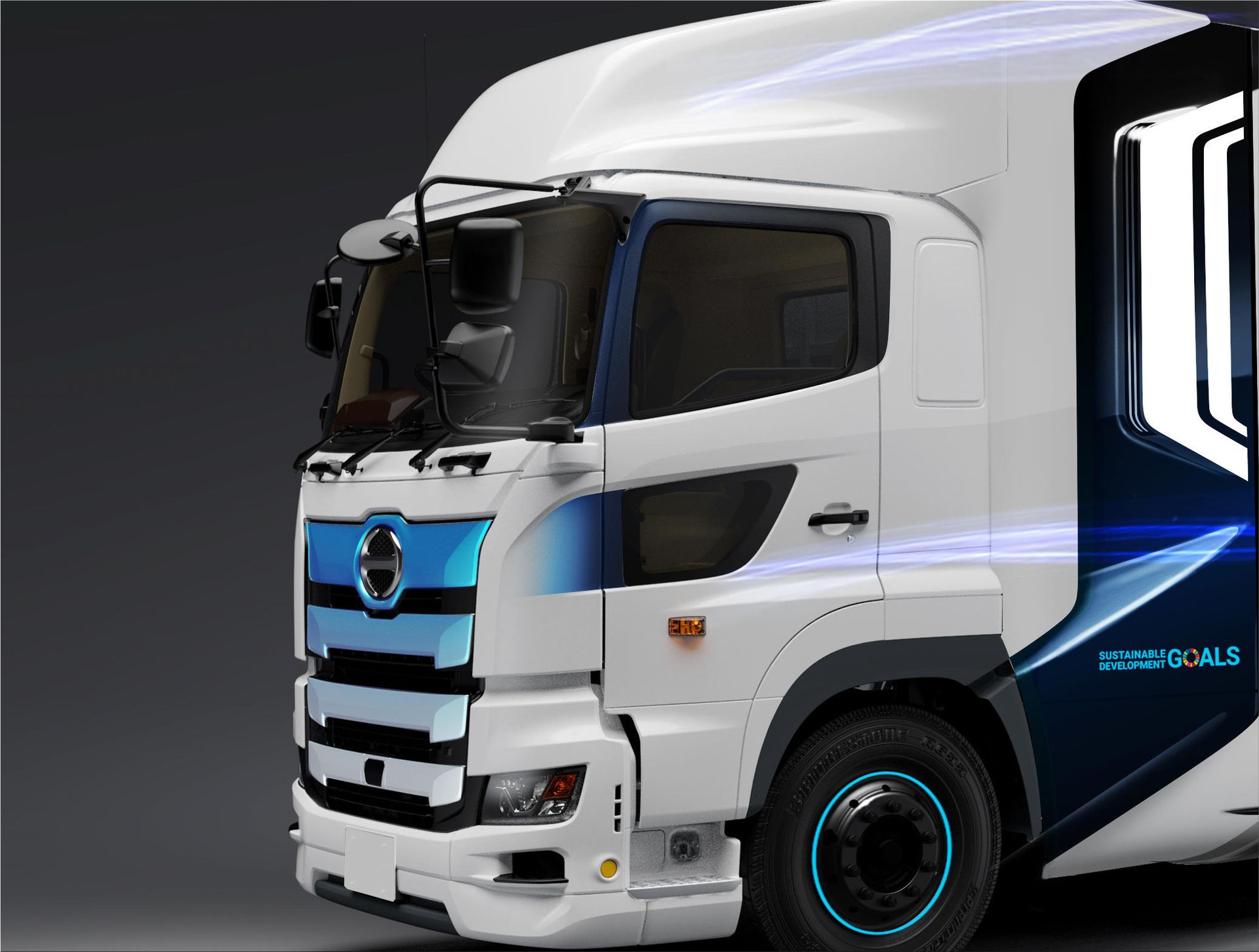
Japanese carmaker Toyota and its commercial vehicle subsidiary Hino Motors is developing a fuel cell truck based on the Hino Profia. It uses technology that Toyota has developed for the next generation of the Mirai.
According to a Toyota announcement, the chassis of the Profia was specially adapted for use as a fuel cell vehicle. The almost 12-meter long Profia truck is said to have a total weight of 25 tons.
With two fuel cell stacks that have already been developed for the next generation of the Toyota Mirai, the range is expected to exceed 600 kilometres without CO 2 and pollutant emissions. So far, Toyota has not given any information on the performance of the FC drive, nor has there been any information on the size and position of the hydrogen tank.

Electrification is particularly important in heavy goods traffic: In Japan alone, heavy trucks are responsible for around 60 per cent of CO 2 emissions from commercial vehicles. However, the economy, sustainability and practical benefits must be reconciled. The trucks, which are often used on longer journeys, have to offer sufficient range and loading capacity, and at the same time, long fuel stops cannot be made. For this reason, Toyota and Hino rely on the fuel cell drive and the high energy density of hydrogen.
Toyota and Hino are taking the next step: Both companies have been researching fuel cell technology for more than 15 years and see hydrogen as an important energy source of the future. As early as 2003, Toyota and Hino jointly developed and tested a fuel cell bus. In the future, both companies will further deepen their partnership and accelerate their efforts to create a hydrogen community.
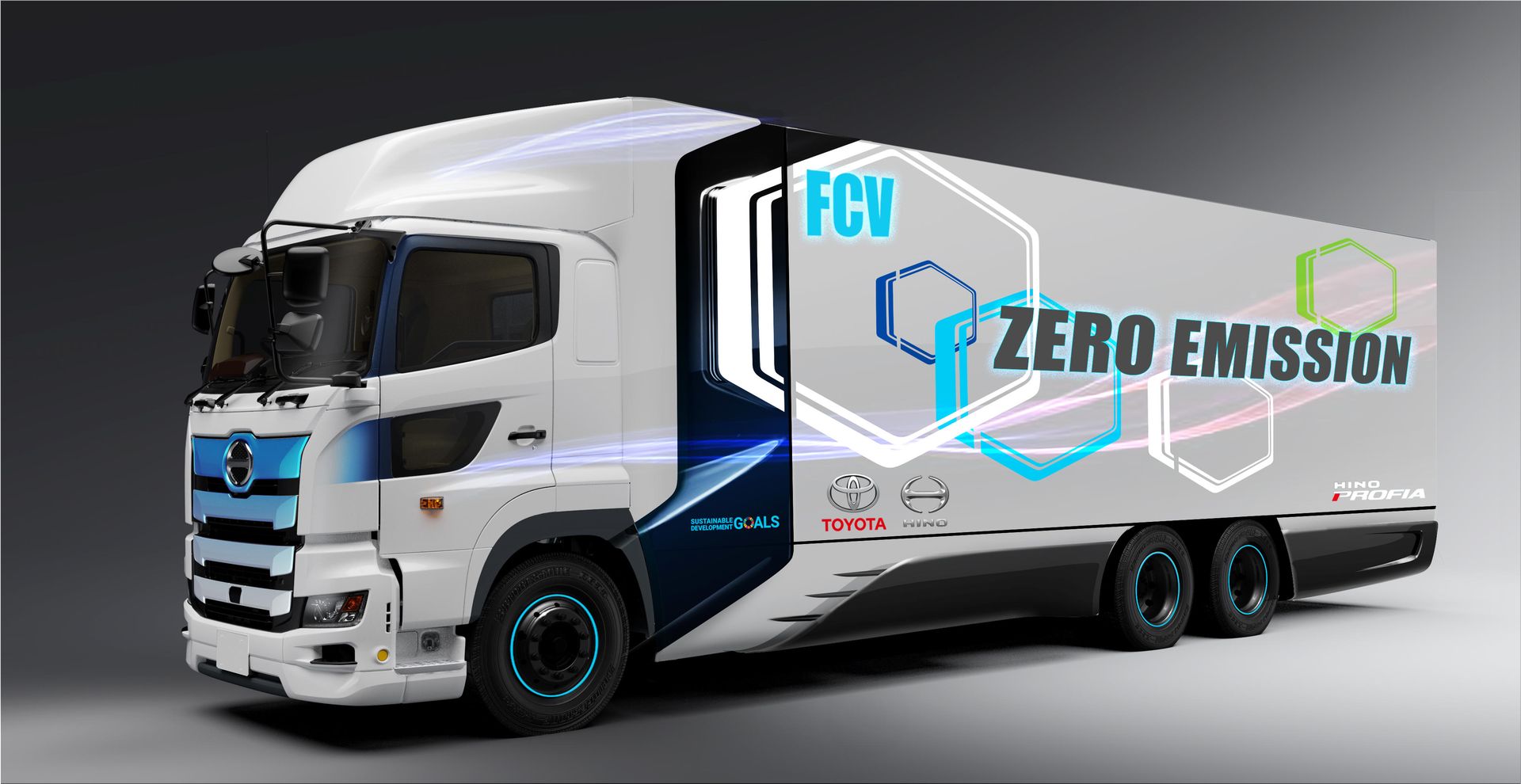
Fuel cell technology and its introduction in freight transport make an important contribution to the company's ambitious sustainability goals: As part of the Toyota Environmental Challenge 2050, the Japanese mobility group wants to significantly reduce its CO 2 emissions.

Daimler Truck is building a new future for freight. At the center of that push is the Mercedes-Benz GenH2 Truck, a hydrogen-powered fuel cell truck targeting 1,000 kilometers (620 miles) of range… Continue reading
The 2018 Nissan Leaf model was introduced in early September, 2017. The electric car underwent serious changes, both stylistic and technical. From the consumer point of view, the main achievement was an increased power reserve.… Continue reading
Electric vehicles are increasingly present in the automotive landscape. It seems that, now, generalist and premium brands have launched into the adventure of putting real options on the market for real use. In the next Frankfurt Motor Show, which will open… Continue reading
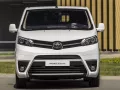
The new Toyota PROACE Electric van will be launched in European markets from the fall of 2020. The range includes three body lengths and two different battery sizes, with up to 330 kilometres range. Its clever design… Continue reading