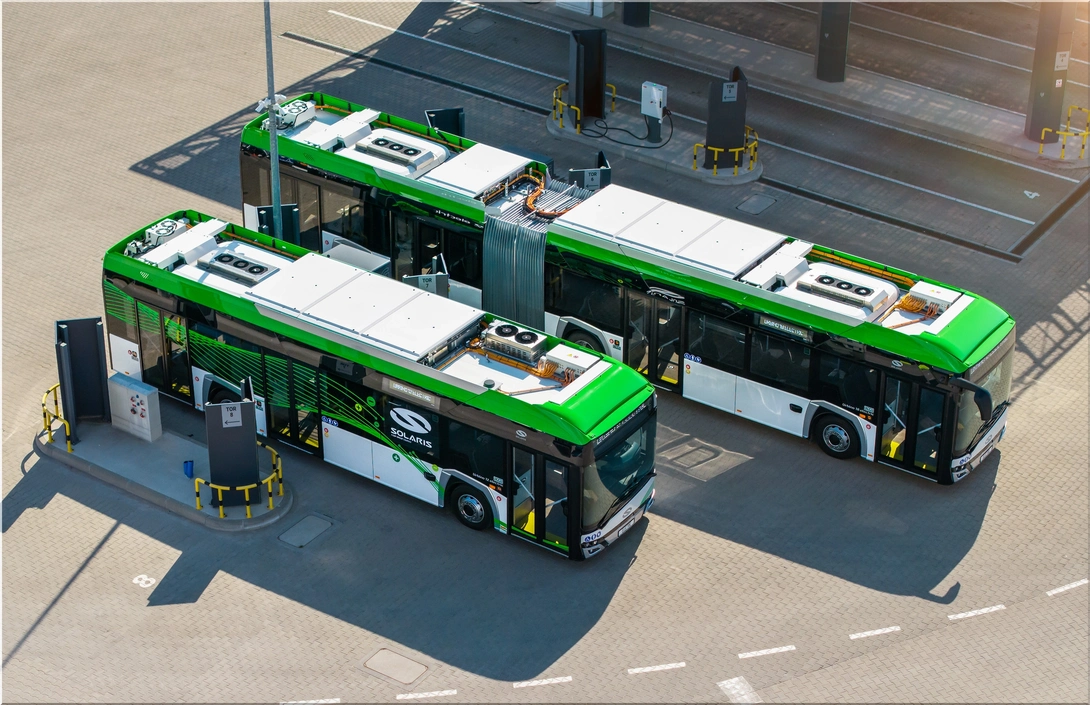
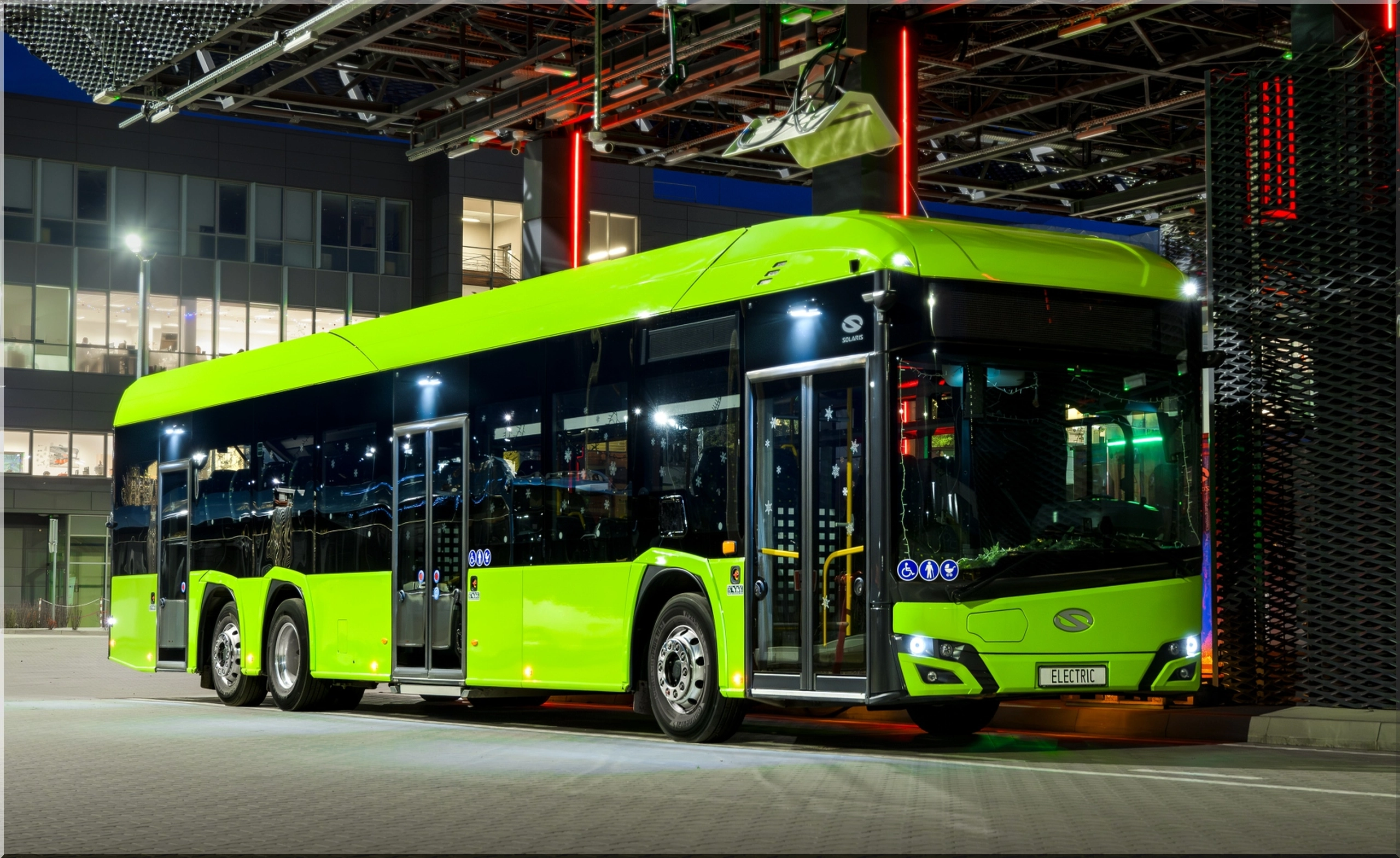
The Solaris Urbino 15 LE electric brought high-capacity battery transport to FIAA Madrid 2026, held September. Its display specification pairs a 500 kWh battery with room for 77 passengers. Solaris also advertises larger configurations and more than 600 km of eSORT range, but buyers must separate those claims from the exhibition vehicle.
What specifications does the Madrid bus actually offer?
The three-axle low-entry electric bus measures 14,890 mm long and delivers 280 kW of peak motor power. Its Madrid configuration provides 51 fixed seats plus two folding seats. The Solaris Urbino 15's optional battery and passenger-capacity ceilings describe configuration choices; they do not establish one vehicle's simultaneous specification.
| Specification | FIAA display bus | Comparison or configuration ceiling |
|---|---|---|
| Battery energy | 500 kWh | Up to 700 kWh; 40% more capacity |
| Passenger capacity | 77 total | Up to 100, depending on configuration |
| Seating | 51 fixed + 2 folding | Up to 65 seats |
| Motor output | 240 kW nominal | 280 kW peak, approximately 375 hp |
| Motor torque | 2,100 Nm | Approximately 1,549 lb-ft |
| Length / width / height | 14,890 / 2,550 / 3,465 mm | 586.2 / 100.4 / 136.4 inches |
| Axle spacing | 7,000 / 1,690 mm | 275.6 / 66.5 inches |
| Gross vehicle weight rating | 25,700 kg | Approximately 56,658 lb |
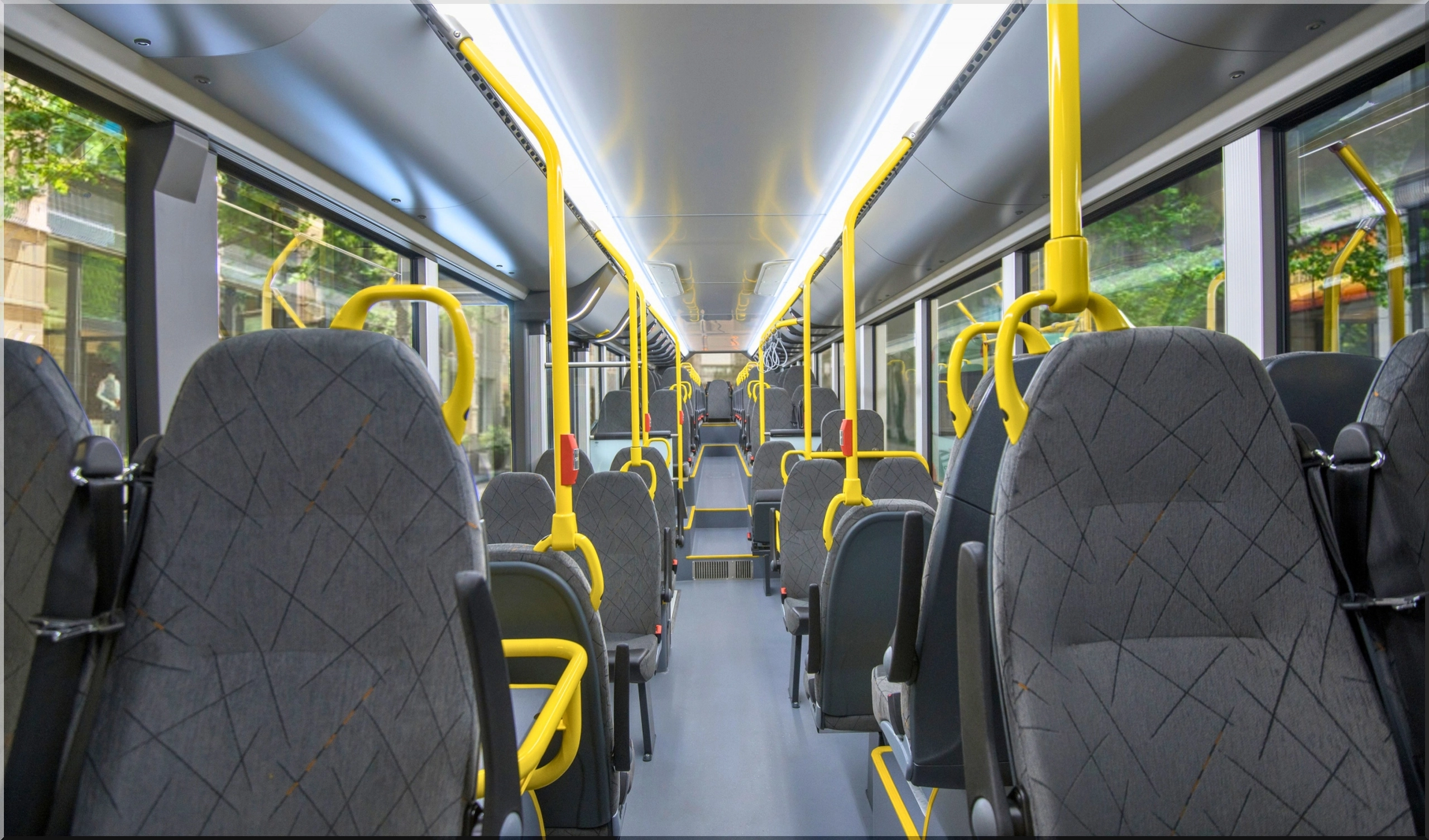
A steering tag axle helps this long chassis turn. Specifically, the low-entry front supports quicker boarding, while the rear prioritizes seated travel on longer routes. The display bus also carries an electric wheelchair ramp.
Does the 600-plus-km range claim cover a full shift?
Solaris reports more than 600 km of eSORT range, equivalent to over 373 miles, depending on specification and operating conditions. Its announcement does not assign that result specifically to the display bus's 500 kWh battery. Operators need route-specific energy data before using the figure to schedule service.
The CCS2 charging specification lists two 125 A connections plus a four-contact pantograph. Amperage alone does not establish charging power: voltage also determines kilowatts. Solaris supplies no charging-time figure in the FIAA technical sheet.
For procurement, request:
- Usable battery energy and consumption with full passenger loads and heating or cooling.
- Sustained charging power, charge limits and simultaneous-charging capability.
- Warranty terms, battery-aging assumptions and reserve energy at shift end.
Image gallery:
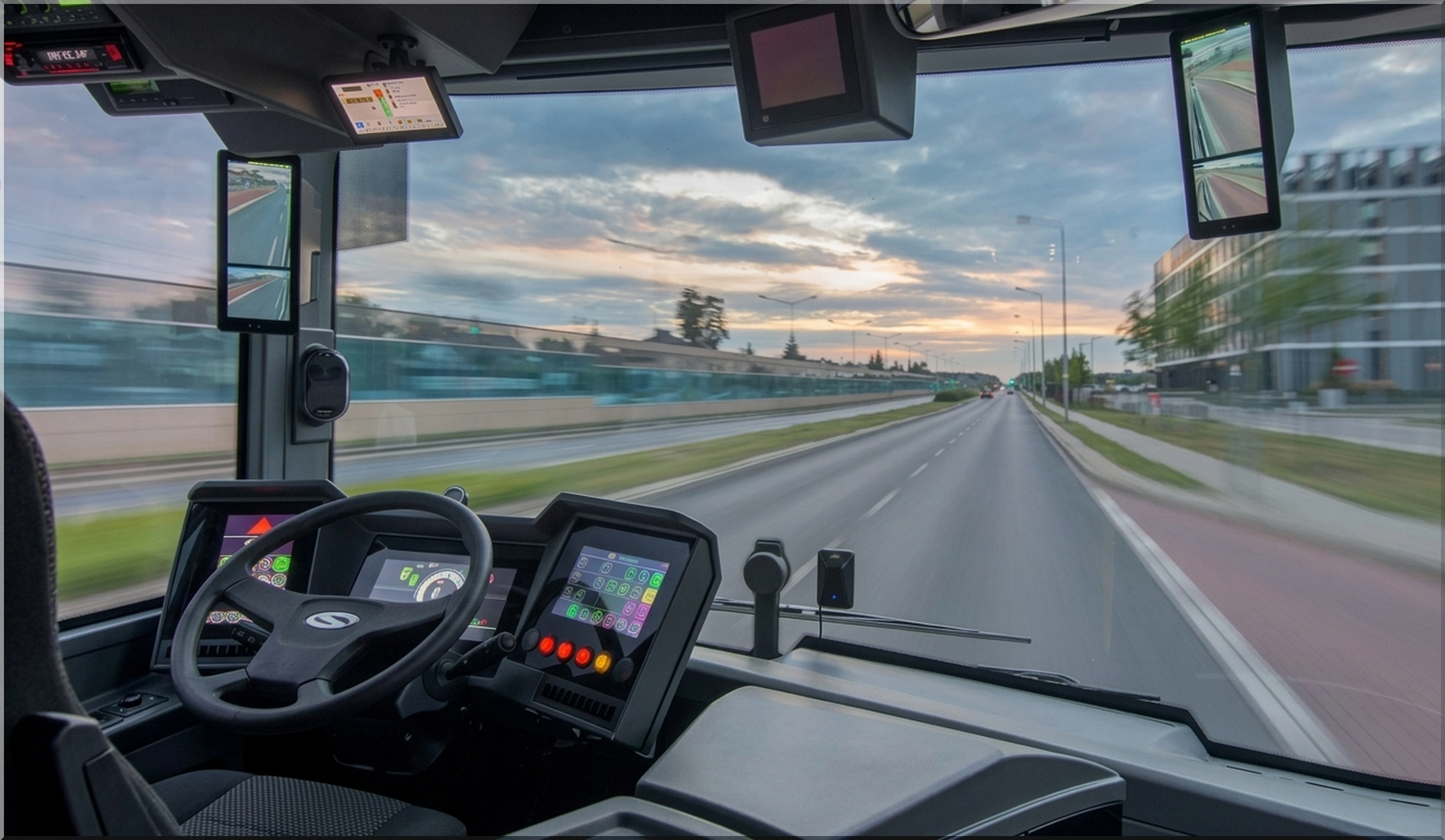
What should fleet buyers weigh before ordering?
My procurement take: evaluate cost per passenger-mile against the actual timetable. A larger battery adds energy capacity, but the business case also depends on purchase price, electricity tariffs, depot upgrades, maintenance and financing. Solaris supplies no purchase price in these materials, so any firm payback claim would outrun the evidence.
| Area | Pros | Cons or checks |
|---|---|---|
| Capacity | Model offers up to 100 passengers or 65 seats | Confirm the contracted layout; maximum figures describe different choices |
| Charging | Plug-in and pantograph options support different schedules | Verify site power and infrastructure costs |
| Fleet oversight | eSConnect supports telemetry and predictive diagnostics | Request access terms and actionable maintenance reports |
| Operating record | Solaris reports around 370 deliveries and over 600 contracted vehicles | These totals do not prove a specific route's energy consumption |
Pro-Tip: Require a loaded demonstration on your hardest scheduled route. Include depot travel, HVAC demand and an agreed end-of-shift reserve in the acceptance criteria. Buy against that result.
- Add new comment
- 4 views