Audi has started Audi A2 e-tron production in Ingolstadt, Germany, pairing a 21-month-shorter development cycle with the lowest energy consumption Audi has claimed for a series-production vehicle. The compact EV offers four power outputs, three battery sizes, rear-wheel drive, up to 401 miles of WLTP range, and a German starting price near $44,275.
Why does Audi A2 e-tron production carry more weight than a routine factory launch?
Audi needs the A2 e-tron to fix two problems at once: its lack of an attainable electric entry model and the high industrial cost of building EVs in Germany. The car attacks the first issue with compact dimensions and usable range. Audi attacks the second by cutting parts, factory space, equipment spending, and development time.
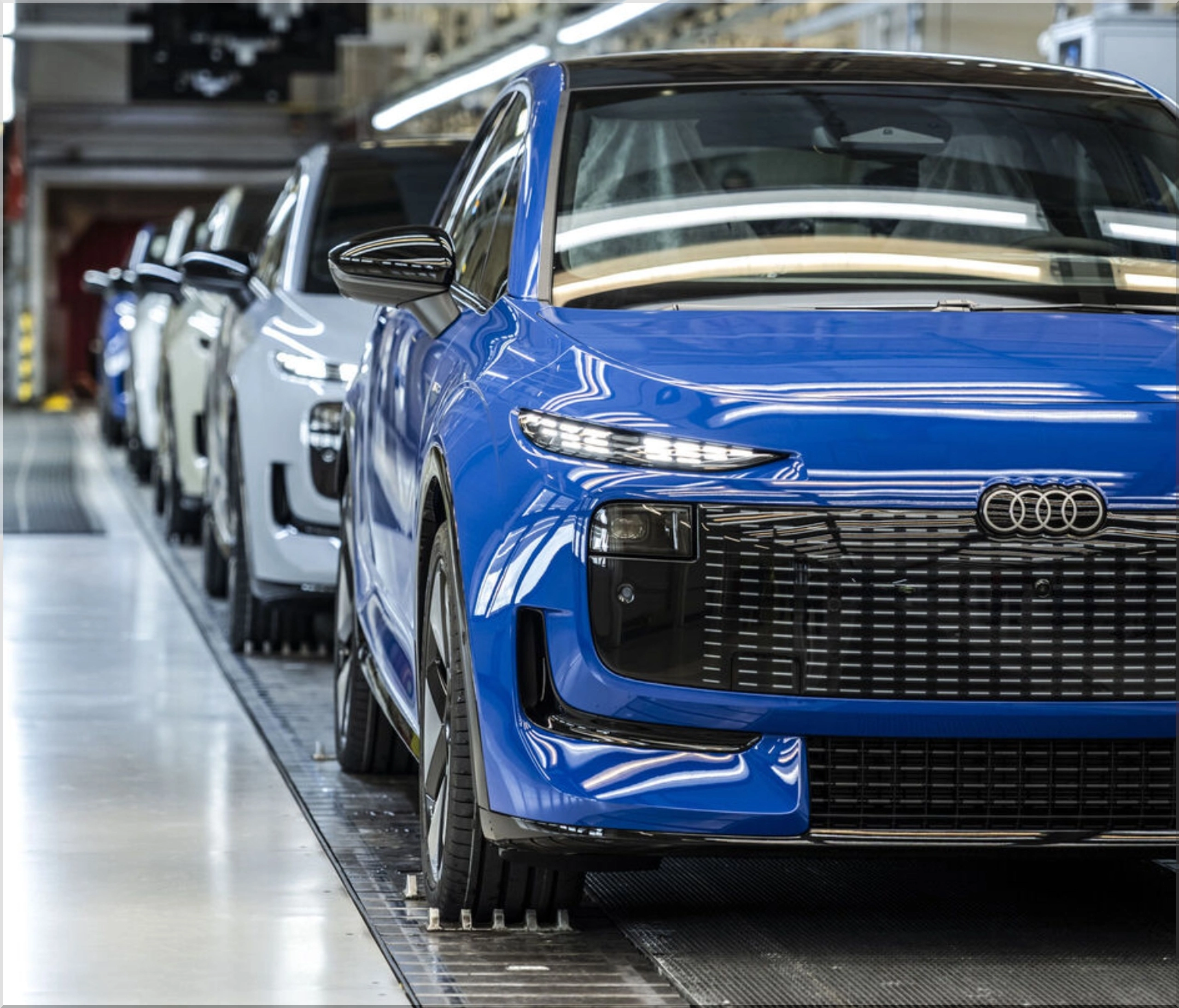
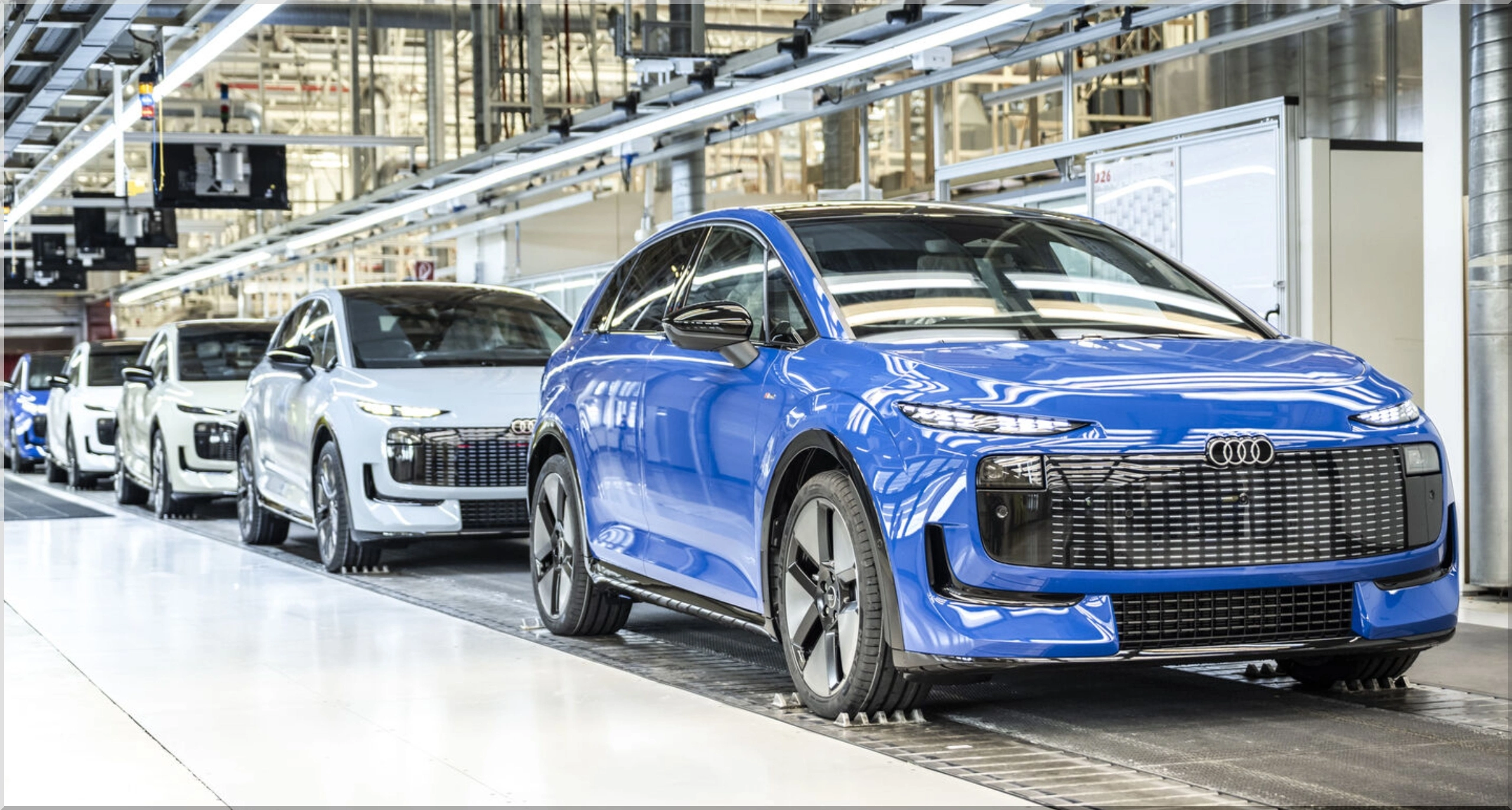
The first customer cars now roll down the Ingolstadt line beside A3 bodies. Audi retained more than 1,200 existing production components, including welding equipment, and reassigned about 250 robots from earlier programs. That choice lowers capital spending and avoids the delay that comes with commissioning a dedicated plant.
Specifically, Audi froze each customer's build sequence six days before assembly under its 'string-of-pearls' system. Suppliers can pack parts in line order, while fewer part numbers shrink storage, sequencing work, factory space, and error risk.
- Fully automated stations install the wheels instead of semi-automated bolting units.
- Camera-guided robots pick loose sheet-metal pieces from unsorted bins.
- Cloud-based testing and operator guidance replace more than 450 industrial PCs.
- Digital and hands-on training prepared line workers for high-voltage assembly.
What specifications define the 2027 Audi A2 e-tron?
The 2027 Audi A2 e-tron spans commuter, long-range, and high-output roles without adding front-drive hardware. Every version uses a rear-mounted permanent-magnet motor, while outputs run from 168 hp to 322 hp. Battery capacity rises from 52 to 84 kWh, and claimed WLTP range stretches from 263 to 401 miles.
| Version | Power | Torque | Battery, gross | WLTP consumption | WLTP range | 0-62 mph | Top speed | Peak DC rate | 10-80% time |
|---|---|---|---|---|---|---|---|---|---|
| A2 e-tron 125 kW | 168 hp | 258 lb-ft | 52 kWh | 13.7 kWh/100 km | 263 miles | 8.8 sec | 99 mph | 100 kW | 24 min |
| A2 e-tron 140 kW | 188 hp | 258 lb-ft | 61 kWh | 12.8 kWh/100 km | 320 miles | 7.9 sec | 99 mph | 105 kW | 26 min |
| A2 e-tron 170 kW | 228 hp | 258 lb-ft | 84 kWh | 13.9 kWh/100 km | 401 miles | 7.0 sec | 99 mph | 183 kW | 29 min |
| A2 e-tron 240 kW | 322 hp | 402 lb-ft | 84 kWh | 14.2 kWh/100 km | 391 miles | 5.7 sec | 124 mph | 183 kW | 29 min |
Audi fits 52-kWh and 61-kWh packs with lithium iron phosphate cells and a cell-to-pack structure. LFP chemistry supports strong cycle life and reduces reliance on nickel and cobalt. In addition, the 84-kWh pack uses nickel-manganese-cobalt chemistry, while silicon-carbide power electronics, low-friction bearings, and low-viscosity oil trim energy losses.
How efficient is the Audi A2 e-tron in practical terms?
The efficiency leader uses 12.8 kWh per 100 kilometers, equal to about 4.85 miles per kWh under WLTP testing. At that rate, a driver would use roughly 38.4 kWh across 300 kilometers, or 186 miles. Real highway speed, winter temperatures, wheel choice, cabin heat, and charging losses will push actual energy use higher.
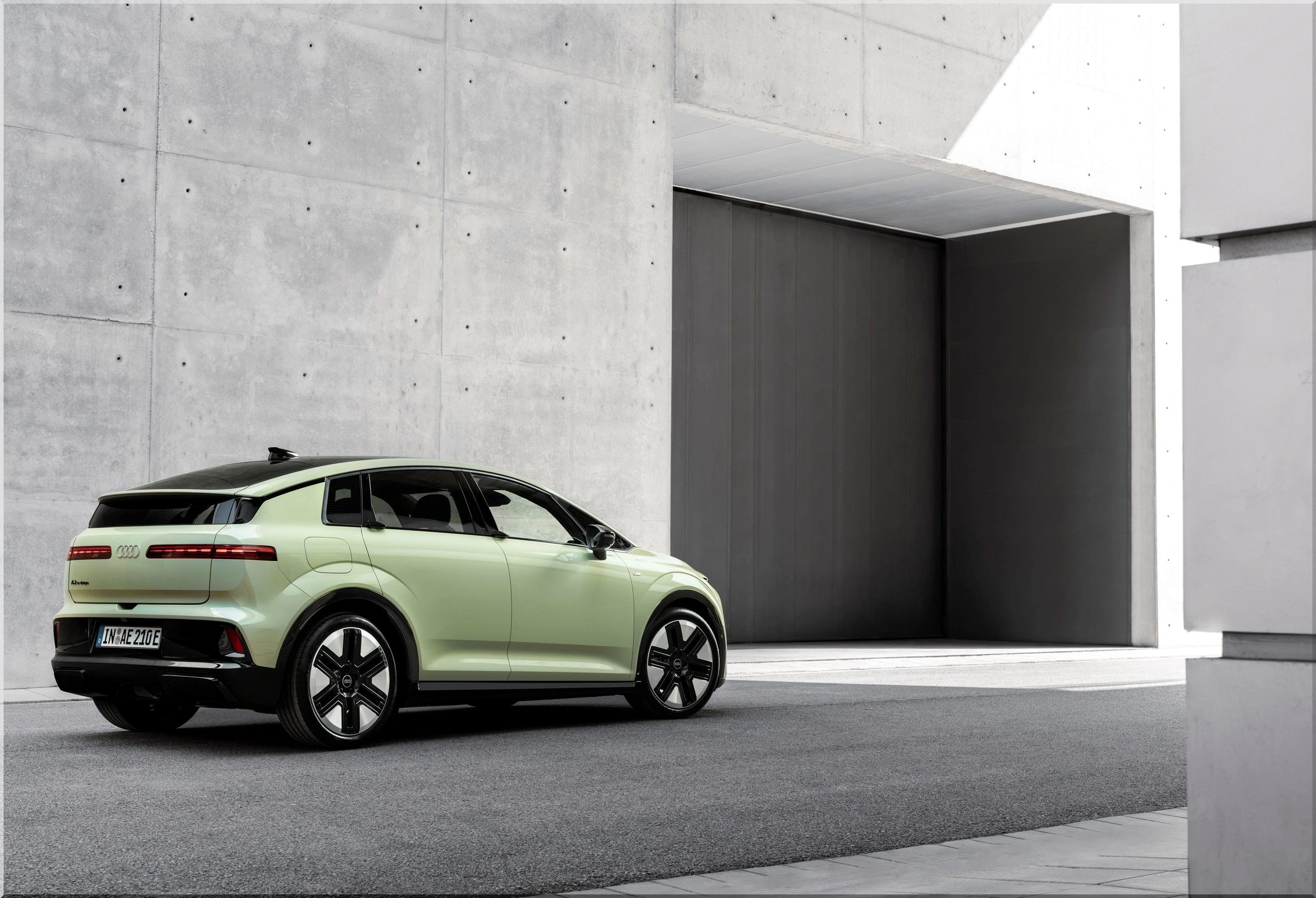
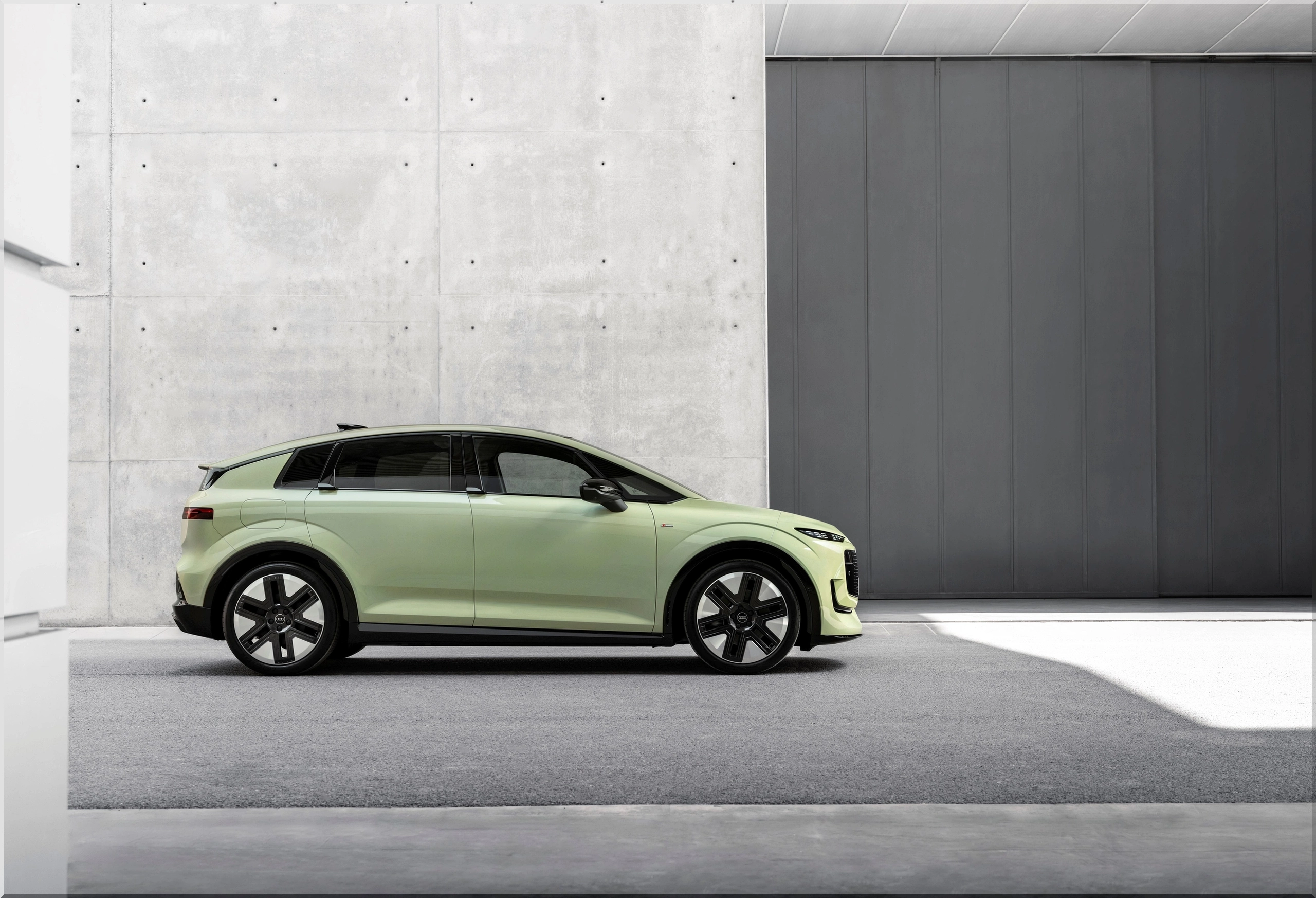
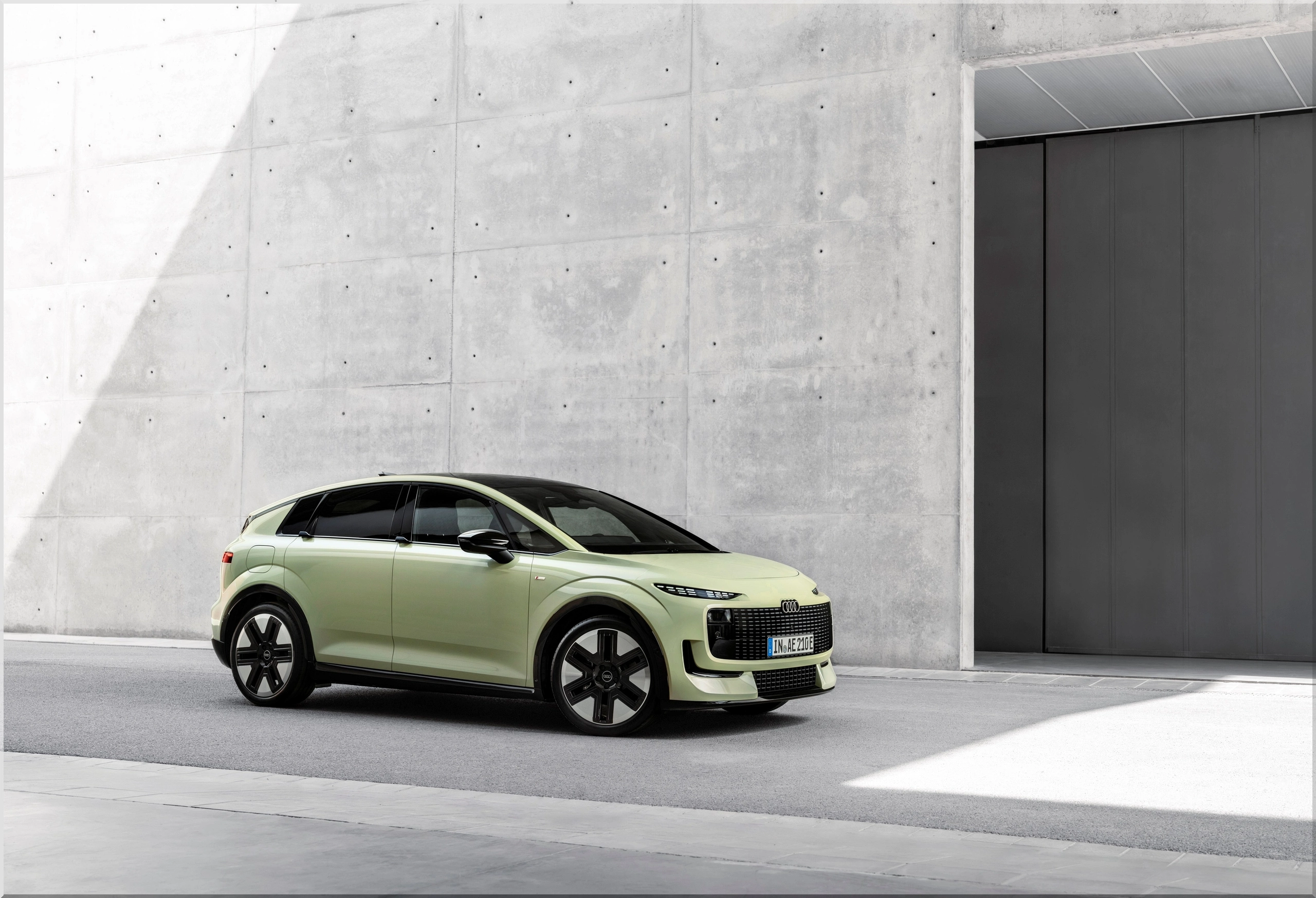
The Audi A2 electric car posts a 0.24 drag coefficient through disciplined airflow control. A closed underbody, active cooling inlet, tapered roof, wheel-arch gap reducers, pressure-relief vents, and smooth aero wheels reduce turbulence. Aerodynamic drag rises with the square of speed, so these details return their largest range benefit on faster roads.
Pro-Tip: Which A2 e-tron version offers the strongest value?
From an expert perspective, start with the 140-kW car if daily efficiency and purchase cost lead your decision. Choose the 170-kW version when frequent long trips justify the 84-kWh battery and 183-kW charging. The 240-kW model gains 94 hp but loses 10 miles of claimed range, so performance rather than transportation value drives that upgrade.
Does its charging hardware match the range claim?
The 84-kWh versions peak at 183 kW and complete a 10-to-80-percent session in 29 minutes. That rate looks adequate, not class-leading, for a late-2026 premium EV. The smaller LFP packs peak at only 100 or 105 kW, yet their reduced capacity holds charging time to 24 or 26 minutes.
Peak power never tells the full story. The 170-kW model adds as much as 124 miles of WLTP range in 10 minutes under favorable conditions, while Audi's route planner preconditions the battery before a planned stop.
Optional Vehicle-to-Load charging can power tools, laptops, or e-bikes through the trunk outlet or a charge-port adapter. Vehicle-to-Home support also lets compatible DC hardware feed stored energy into a house in Germany, Austria, and Switzerland. Audi restricts routine discharge to a 20-to-80-percent state-of-charge window, protecting trip range and limiting battery wear.
How does the A2 e-tron compare with other compact EVs?
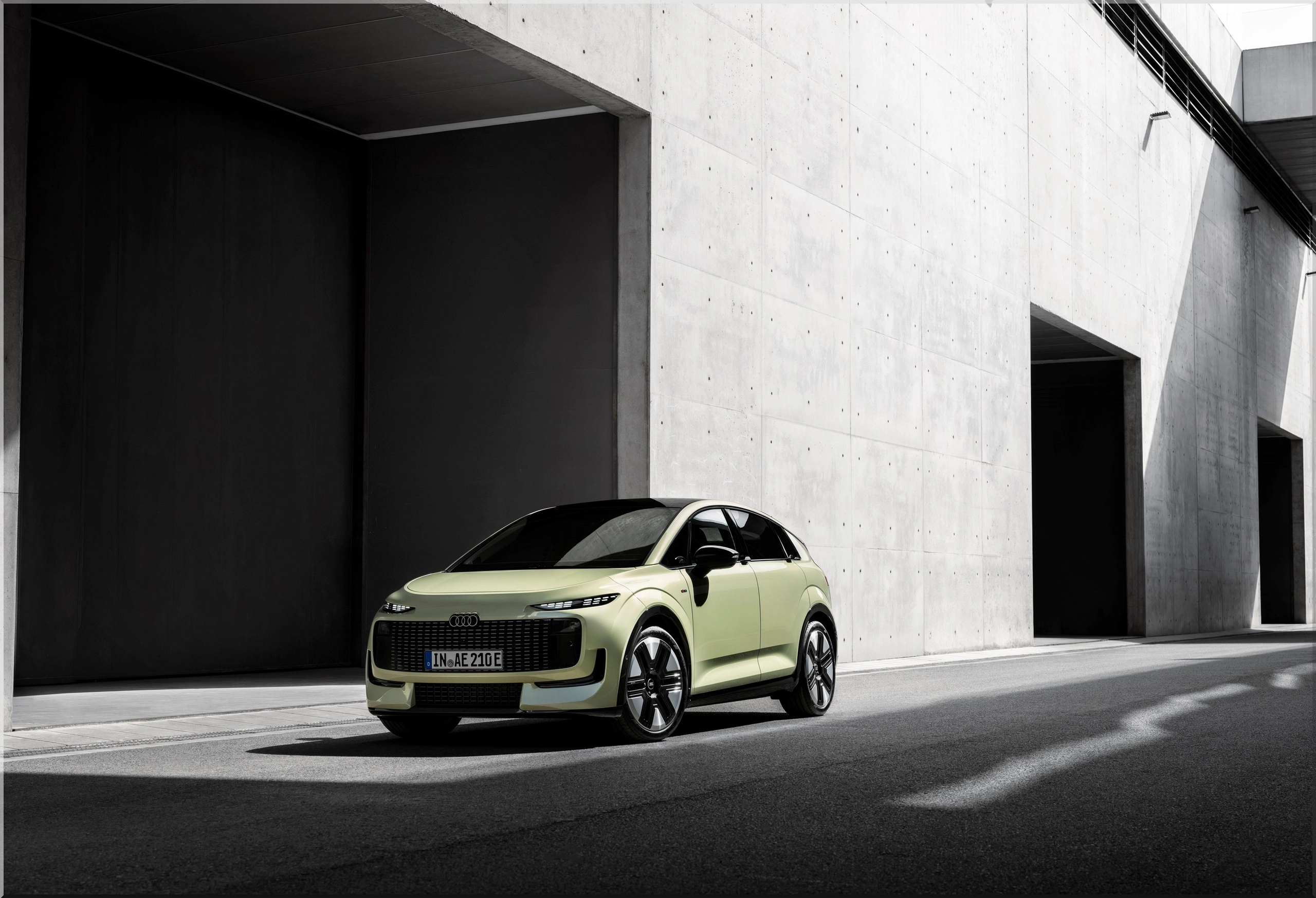
The A2 e-tron wins on quoted efficiency and maximum WLTP range, but it does not dominate every metric. Kia provides more trunk volume, while Volvo completes its quoted fast-charge session sooner. Audi's edge comes from pairing range with a premium cabin.
| Long-range specification | Audi A2 e-tron 170 kW | Kia EV3 Long Range | Volvo EX30 Extended Range | VW ID.3 Pro S |
|---|---|---|---|---|
| Maximum WLTP range | 401 miles | 375 miles | 296 miles | 347 miles |
| Peak DC charging | 183 kW | 128 kW | 153 kW | 175 kW |
| 10-80% claim | 29 min | 31 min | 26.5 min | About 26 min |
| Rear trunk volume | 396 liters | 460 liters | 318 liters | 385 liters |
| Drive layout | Rear-wheel drive | Front-wheel drive | Rear-wheel drive | Rear-wheel drive |
Looking at the data, Audi's 401-mile figure gives it a 26-mile advantage over the EV3 and a 54-mile lead over the VW ID.3 Pro S on the European cycle. Yet the A2 carries less cargo than the Kia EV3 Long Range, and its 13-liter frunk appears only on the two 84-kWh versions. Buyers should compare the exact battery and equipment grade, since model-family maximums can describe different cars.
Does the compact body deliver useful passenger and cargo space?
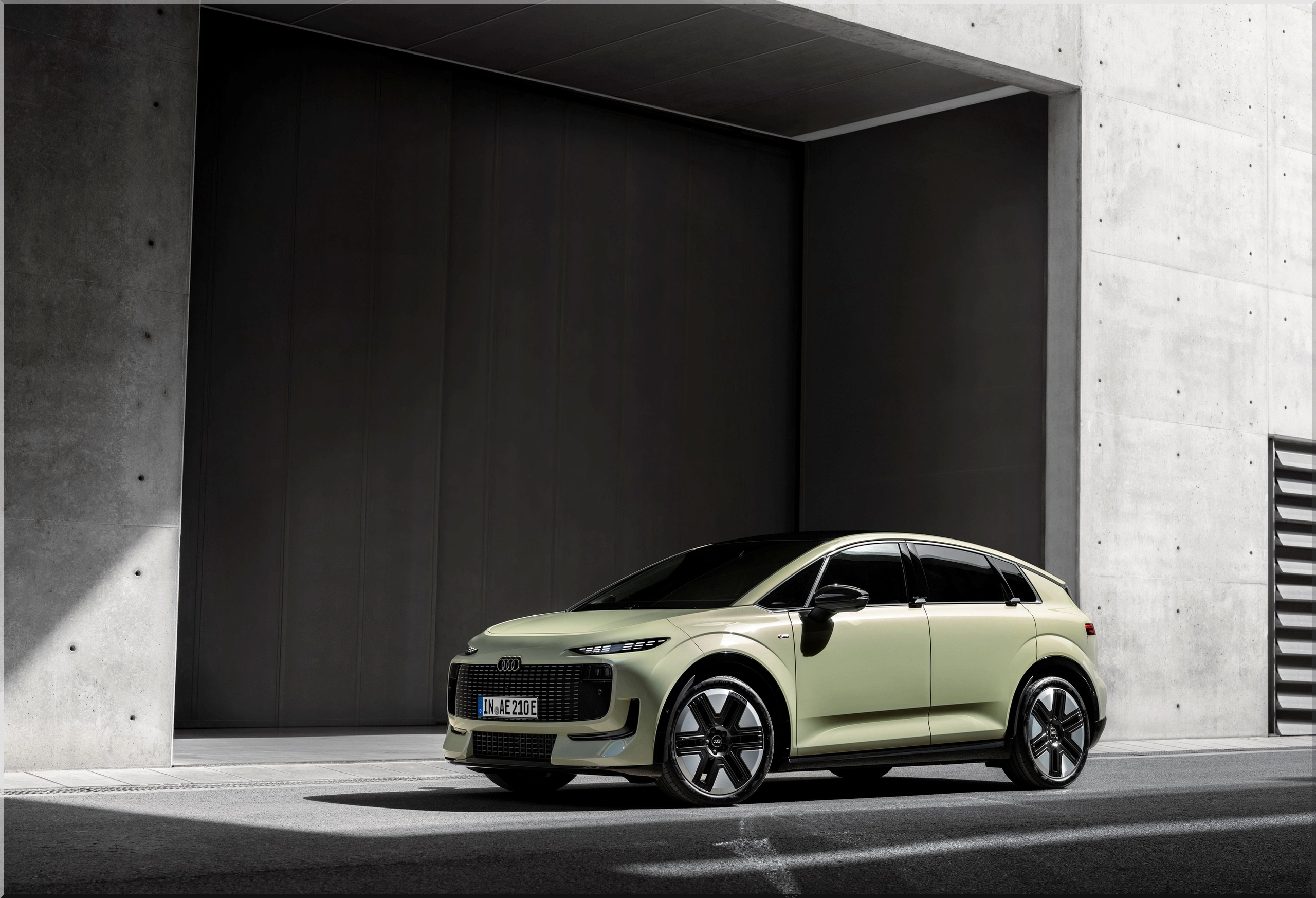
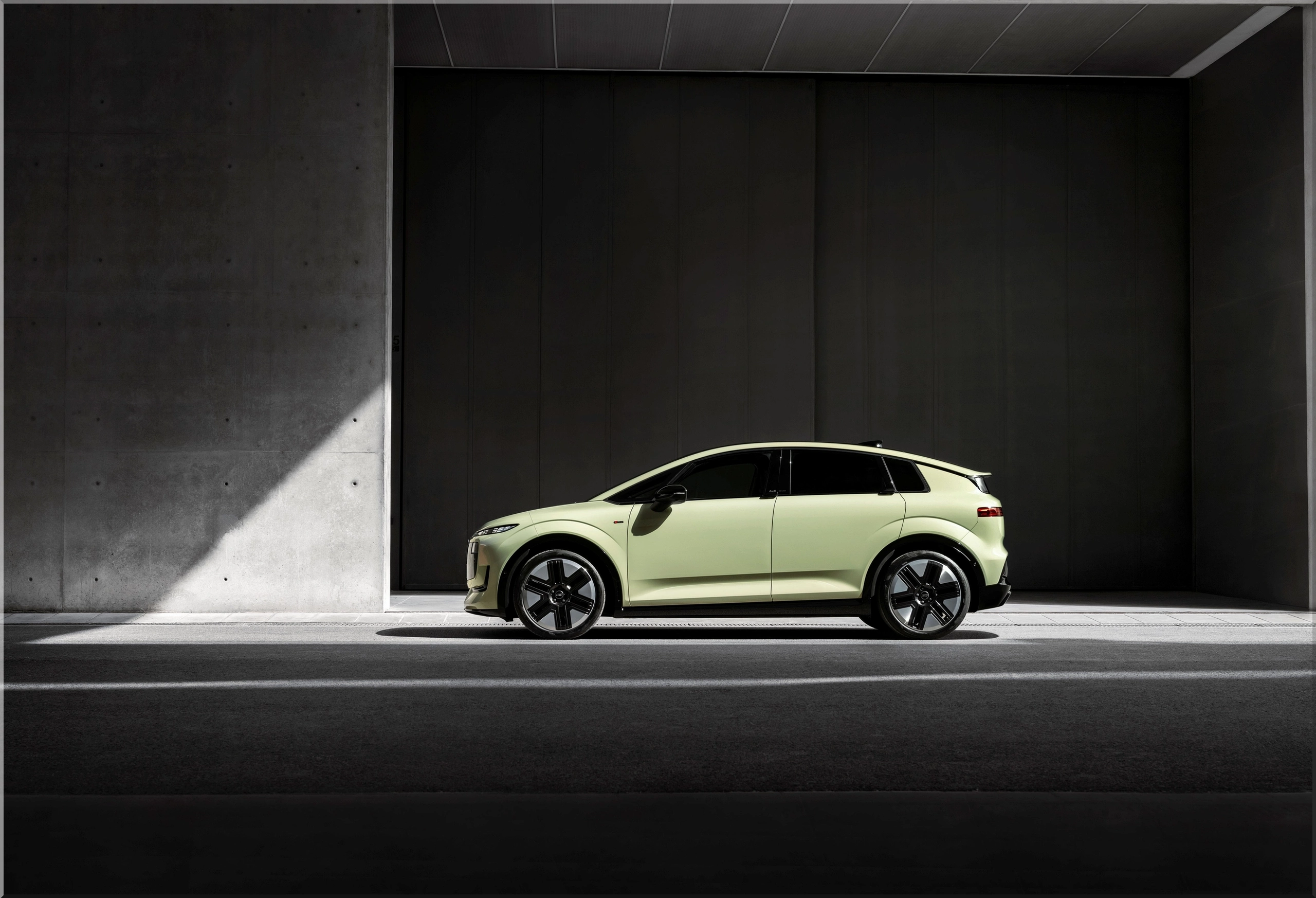
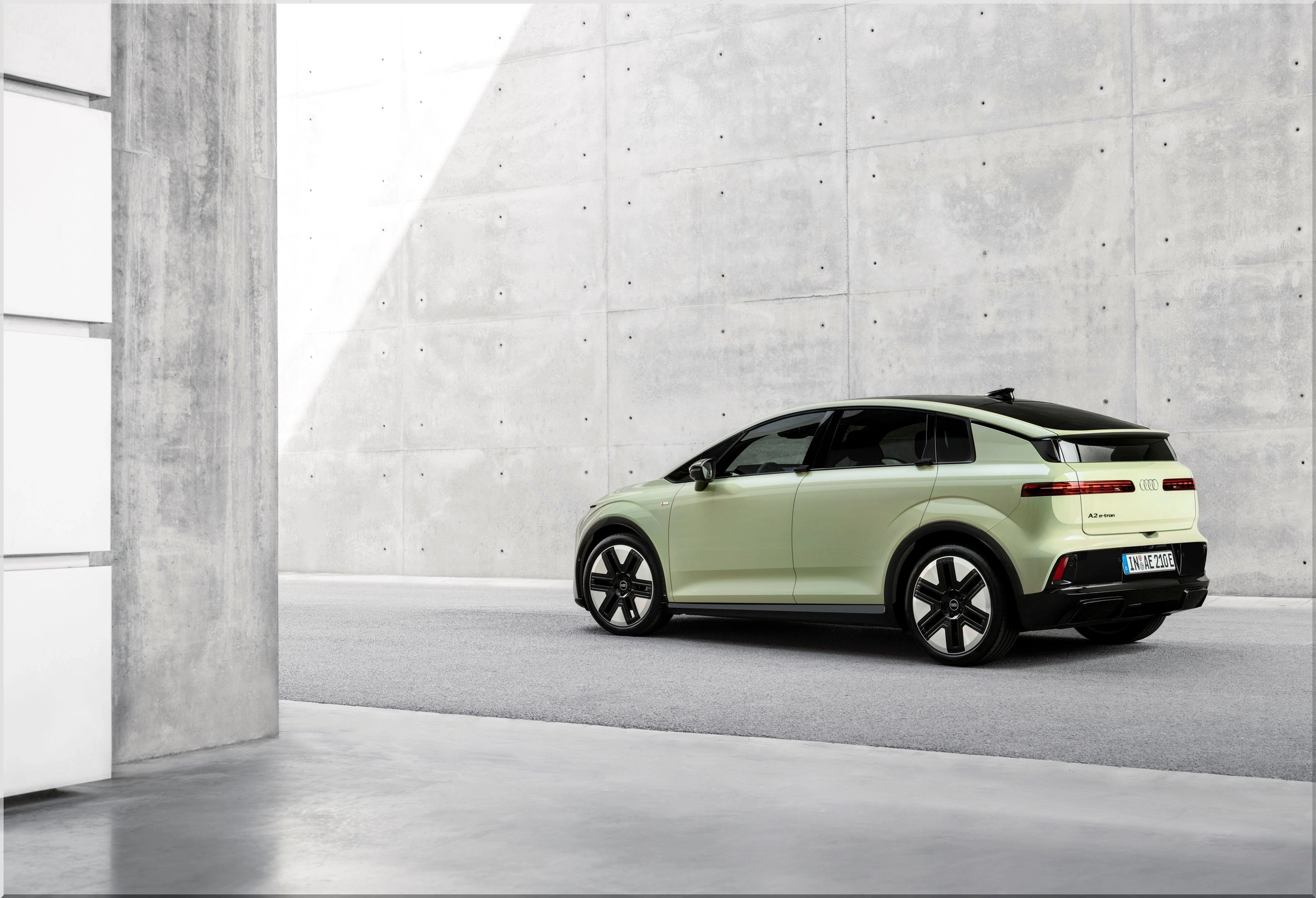
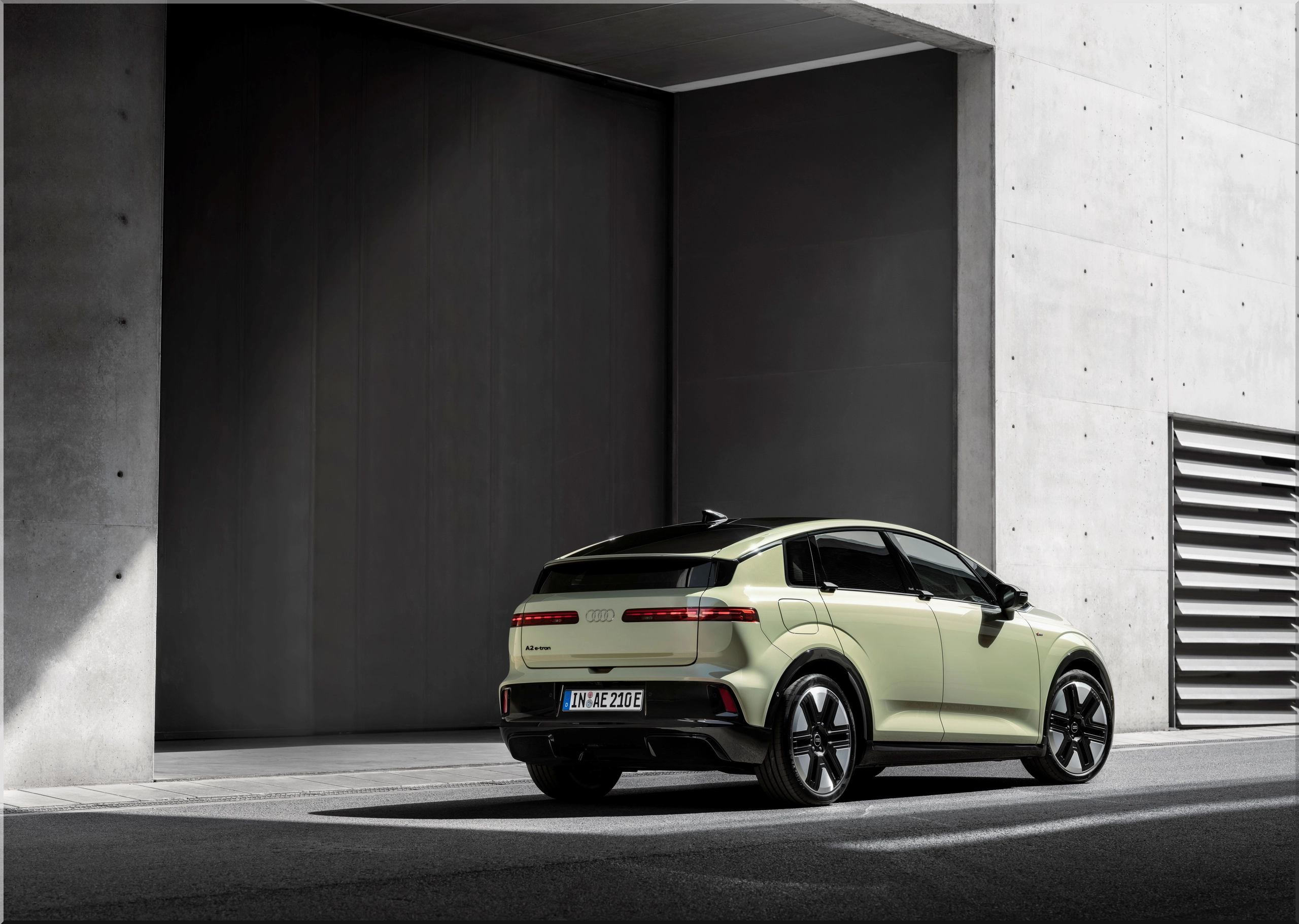
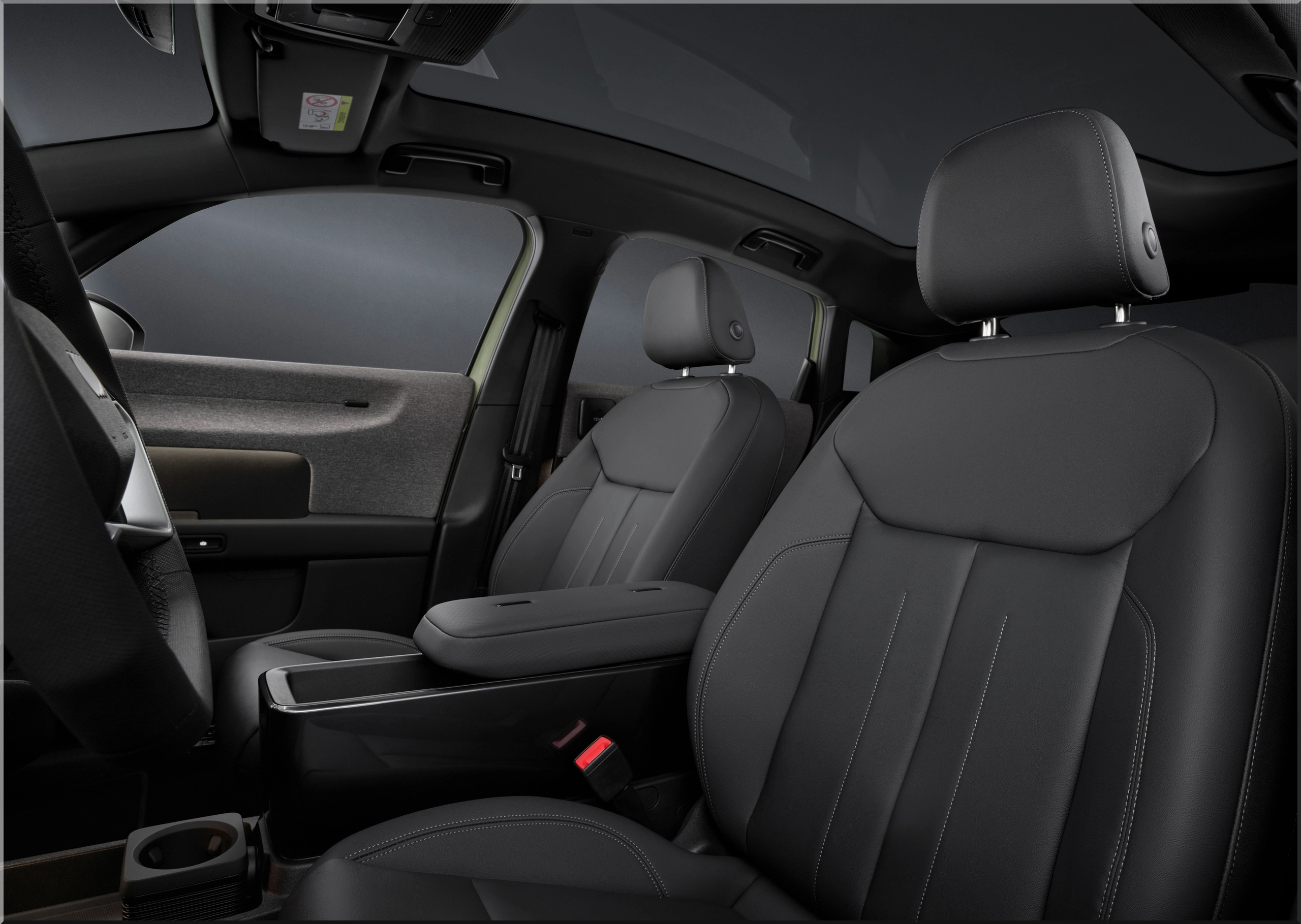
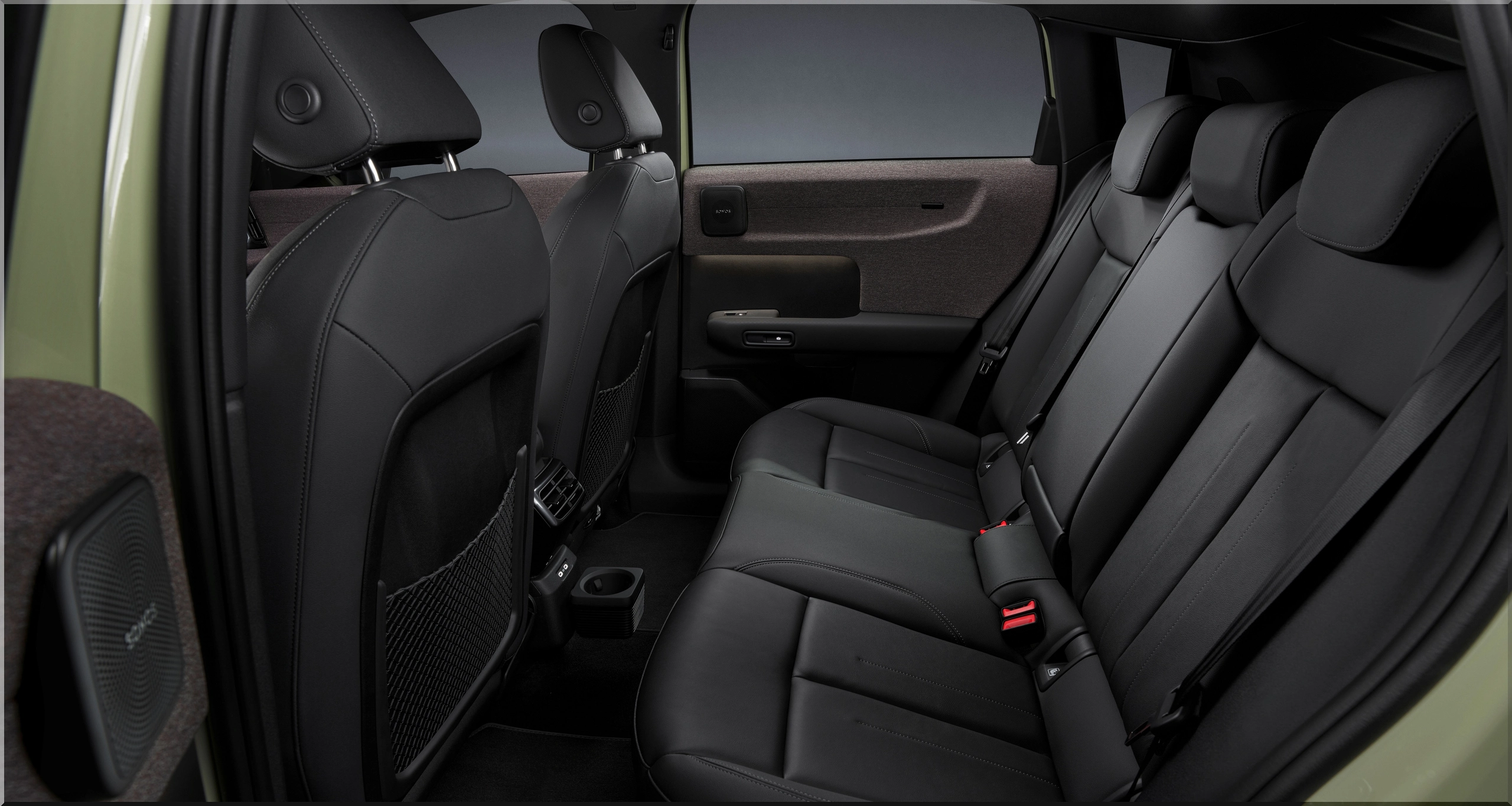
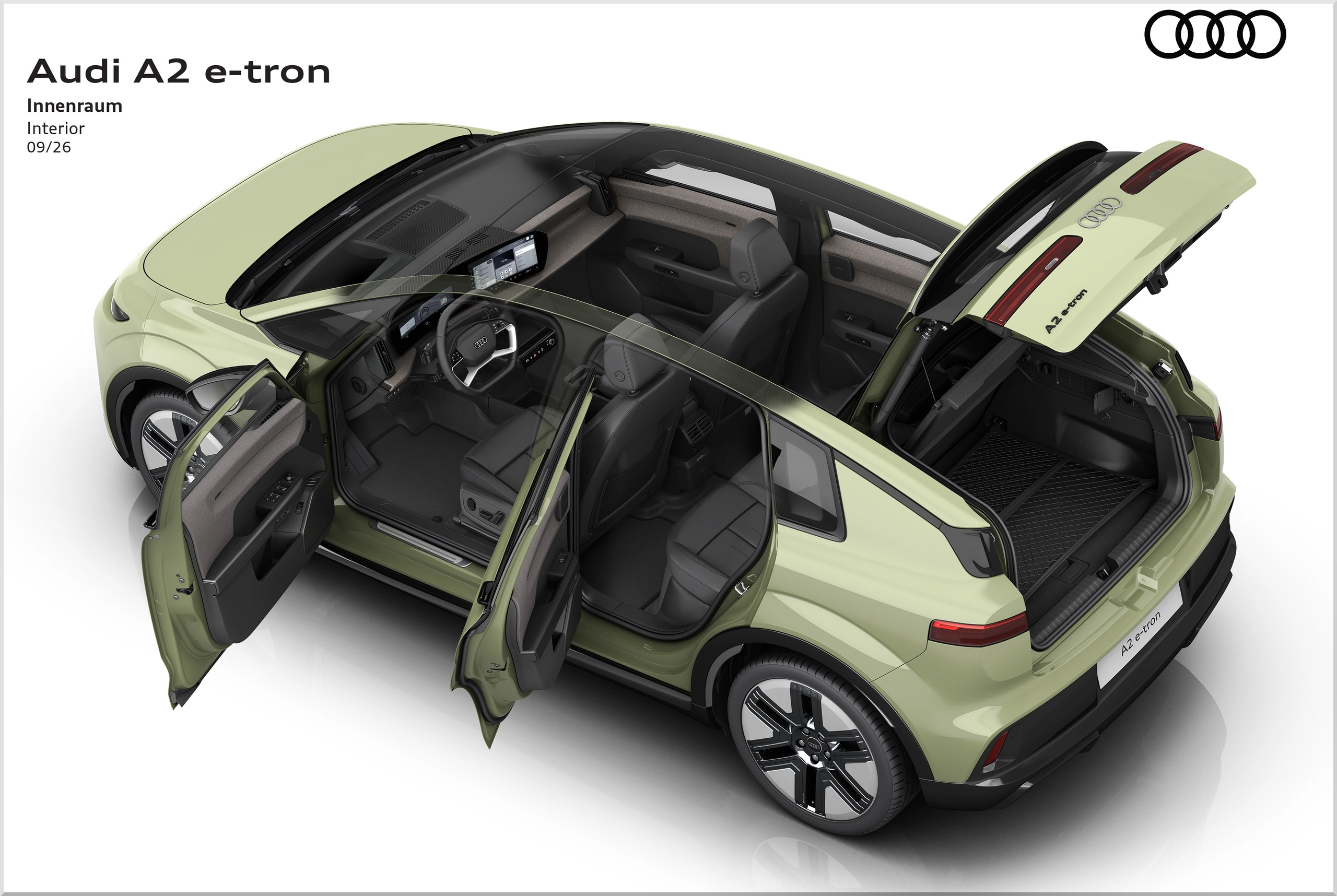
The new car measures about 170.2 inches long, 70.4 inches wide without mirrors, and 61.0 inches tall, with a 109.1-inch wheelbase. Those figures place it close to today's larger compact hatchbacks, rather than the tiny original A2. Short overhangs and a thin battery structure direct more of that length toward occupants.
Cargo capacity reaches 14.0 cubic feet behind the rear seats and 47.2 cubic feet with them folded. The optional glass roof covers about 17.2 square feet.
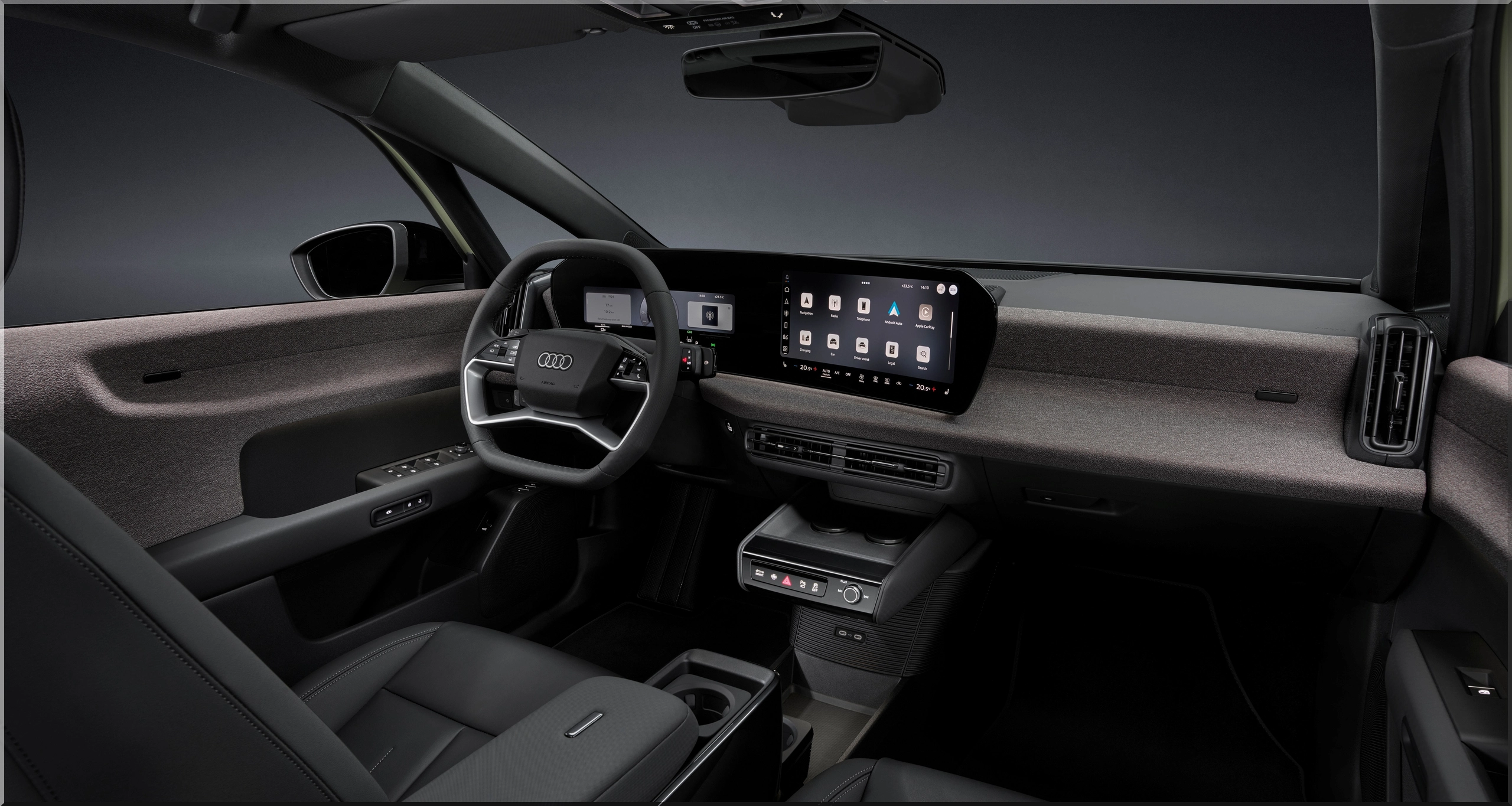
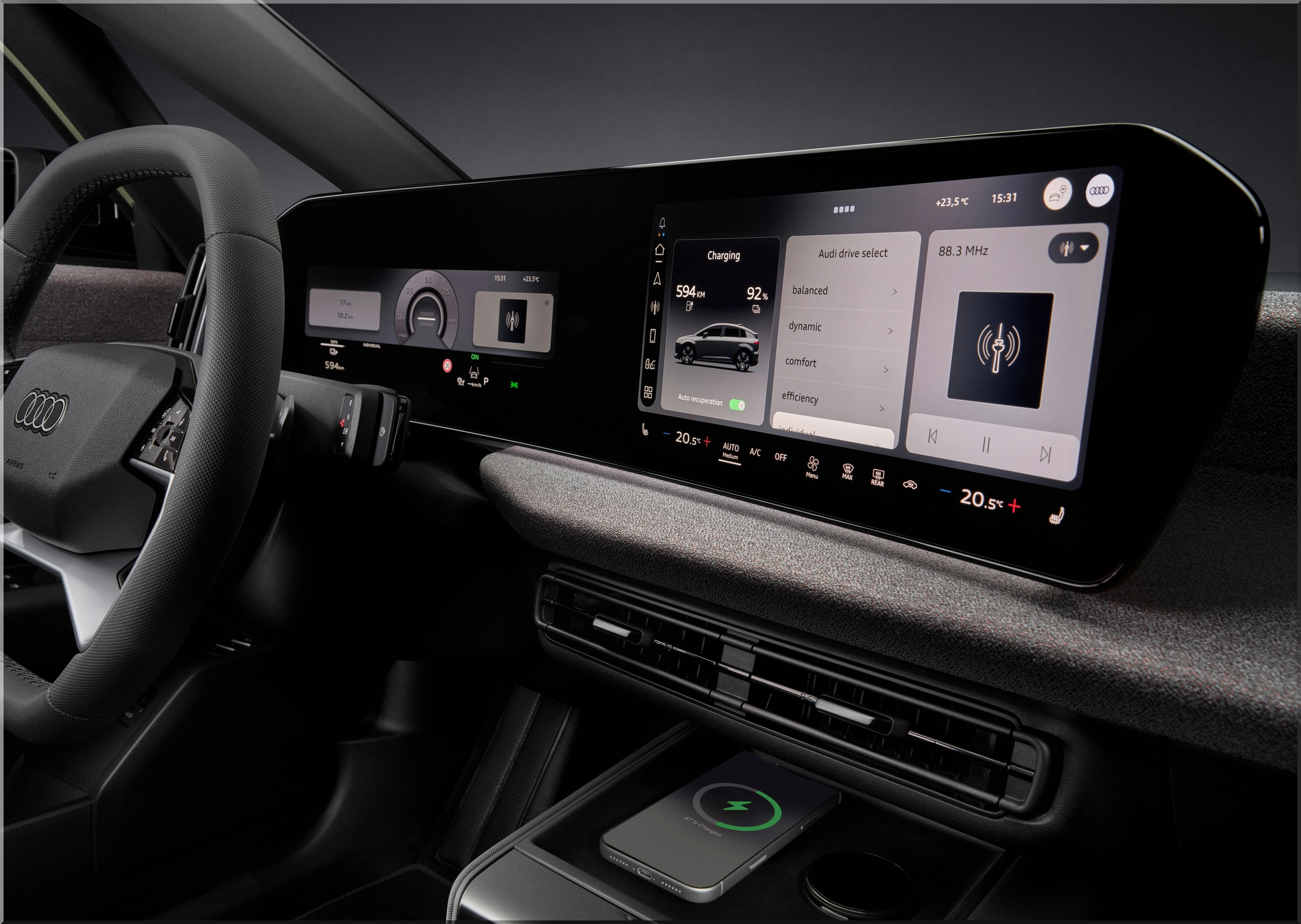
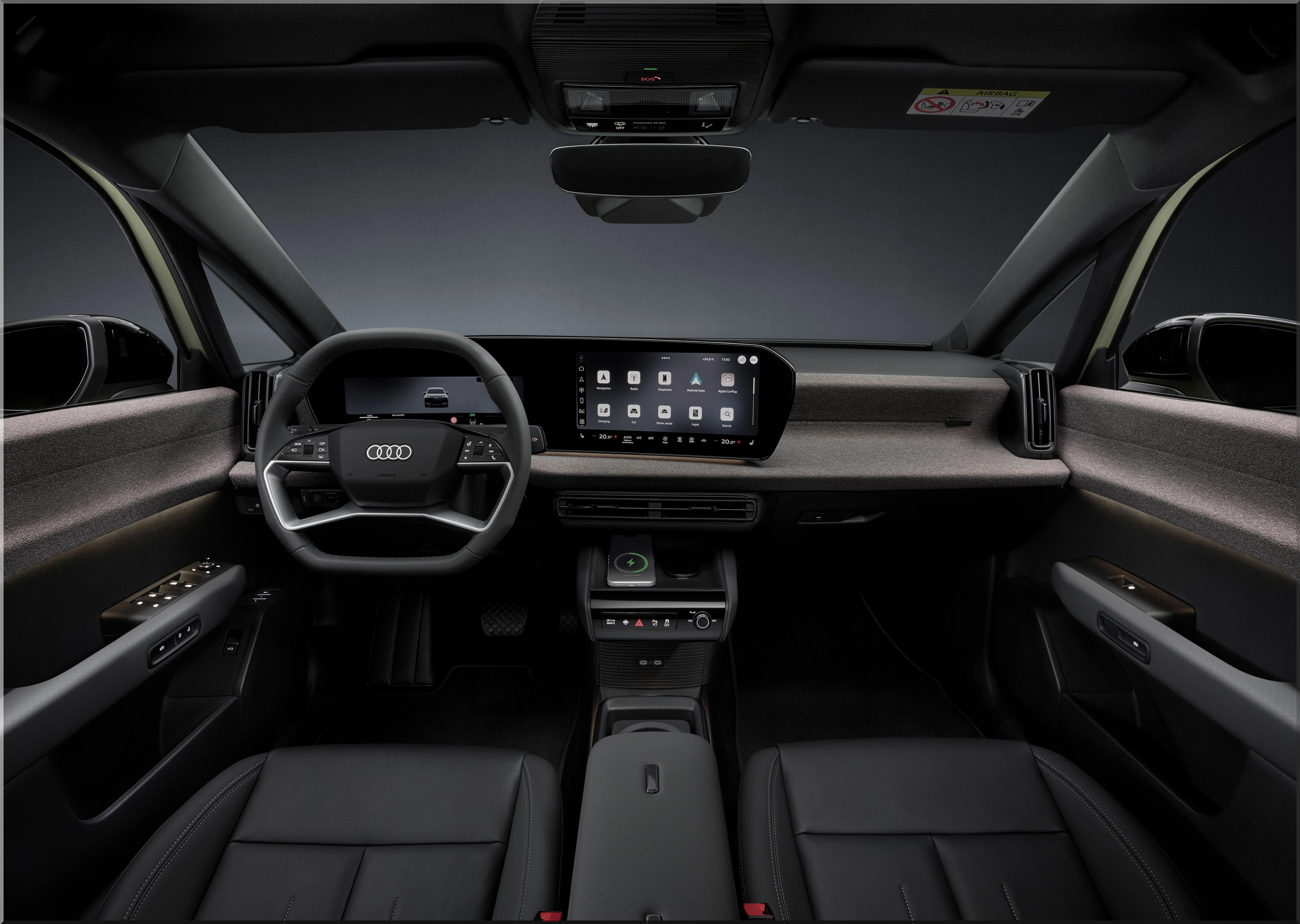
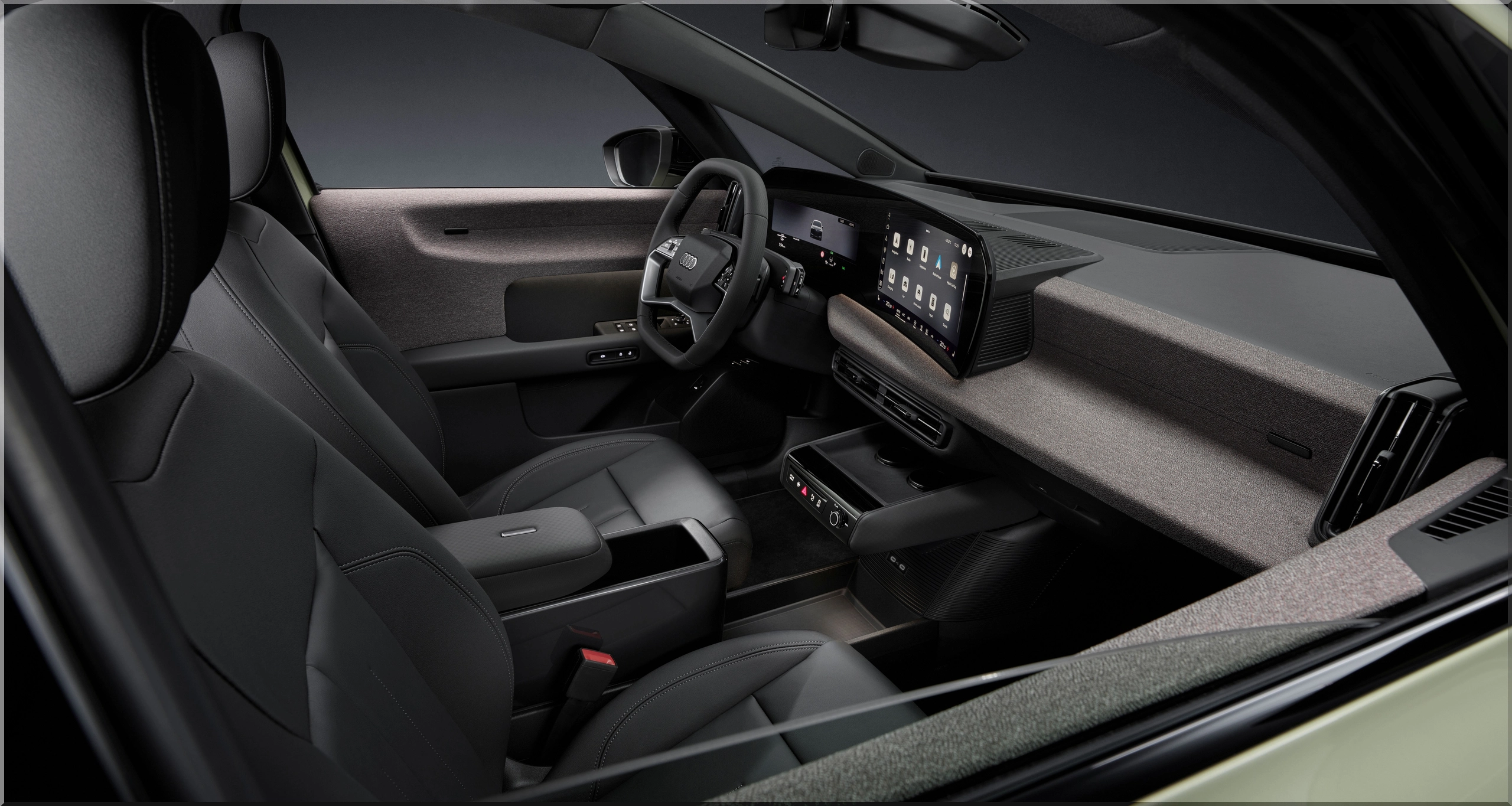
The cabin combines an 11.9-inch driver display with a curved 12.8-inch center touchscreen. Standard driver assistance includes adaptive cruise control, emergency braking, evasive steering support, attention monitoring, rear parking sensors, and a backup camera. Consequently, the base car avoids the stripped specification that can make an entry-luxury price feel misleading.
What will the Audi A2 e-tron cost, and will it reach North America?
German pricing starts at 38,200 euros, equal to about $44,275. That direct conversion includes German market pricing assumptions and does not predict a US sticker. Audi opens European orders in September 2026 and plans first deliveries in December.
Audi developed the car for Europe and has announced no North American sales plan. Its compact hatchback body faces weaker US demand than crossovers, while federal certification, local equipment, tariffs, and dealer economics could erase its price case. American buyers should view the A2 as a signal of Audi's next efficient EV hardware, not an imminent showroom arrival.
Why production efficiency affects buyers
Production efficiency means Audi uses fewer parts, less line-side storage, more existing equipment, and faster information systems to build each car. Lower factory cost can support sharper pricing, steadier margins, or added standard equipment. The buyer only benefits if Audi passes some of those savings through, and the $44,275 converted starting price leaves that question open.
Is the new Audi A2 e-tron competitive enough?
Yes, on energy use, range, cabin technology, and manufacturing discipline. The 140-kW version makes the cleanest efficiency case, while the 170-kW car offers the strongest road-trip package. Audi still asks buyers to accept modest peak charging, limited frunk space, and a premium over several mass-market compact EVs.
| Pros | Cons |
|---|---|
| Up to 401 miles WLTP | No North American launch announced |
| 12.8 kWh/100 km efficiency | Small or absent frunk |
| V2L and regional V2H capability | 105-kW limit on 61-kWh car |
The factory story matters. Audi reused expensive machinery, reduced part variety, and connected assembly through a central cloud. By comparison, a new plant would lock in far more capital before demand becomes clear.
That discipline gives the A2 e-tron a credible commercial shot. The original A2 chased low consumption with costly aluminum construction; the new one pursues the same goal through aerodynamics, battery choice, software-guided energy management, and leaner assembly. This time, Audi has paired engineering ambition with a much sharper cost strategy.
BYD officially transitions the Atto 3 from a competitive entry to a segment leader with the introduction of the BYD Atto 3 Evo. This mid-life cycle update replaces the previous front-wheel-drive configuration with a sophisticated rear… Continue reading
Volkswagen has turned the Polo into a battery-electric hatchback with real small-car logic: front-wheel drive, two battery chemistries, DC fast charging as standard, and up to 454 km / 282 miles of WLTP range… Continue reading

Audi has sharpened the Q4 e-tron electric SUV where owners feel it most: range, charging speed, cabin tech, towing strength, and home-energy use. The upgraded Q4 e-tron keeps its compact luxury SUV footprint but adds a more efficient… Continue reading

A Direct Step Toward Energy-Ready EV Ownership Volvo adds a new capability to the 2025 Volvo EX90 that shifts how drivers use electric vehicles at home. The SUV can now send power back to a residence through bi-directional charging… Continue reading