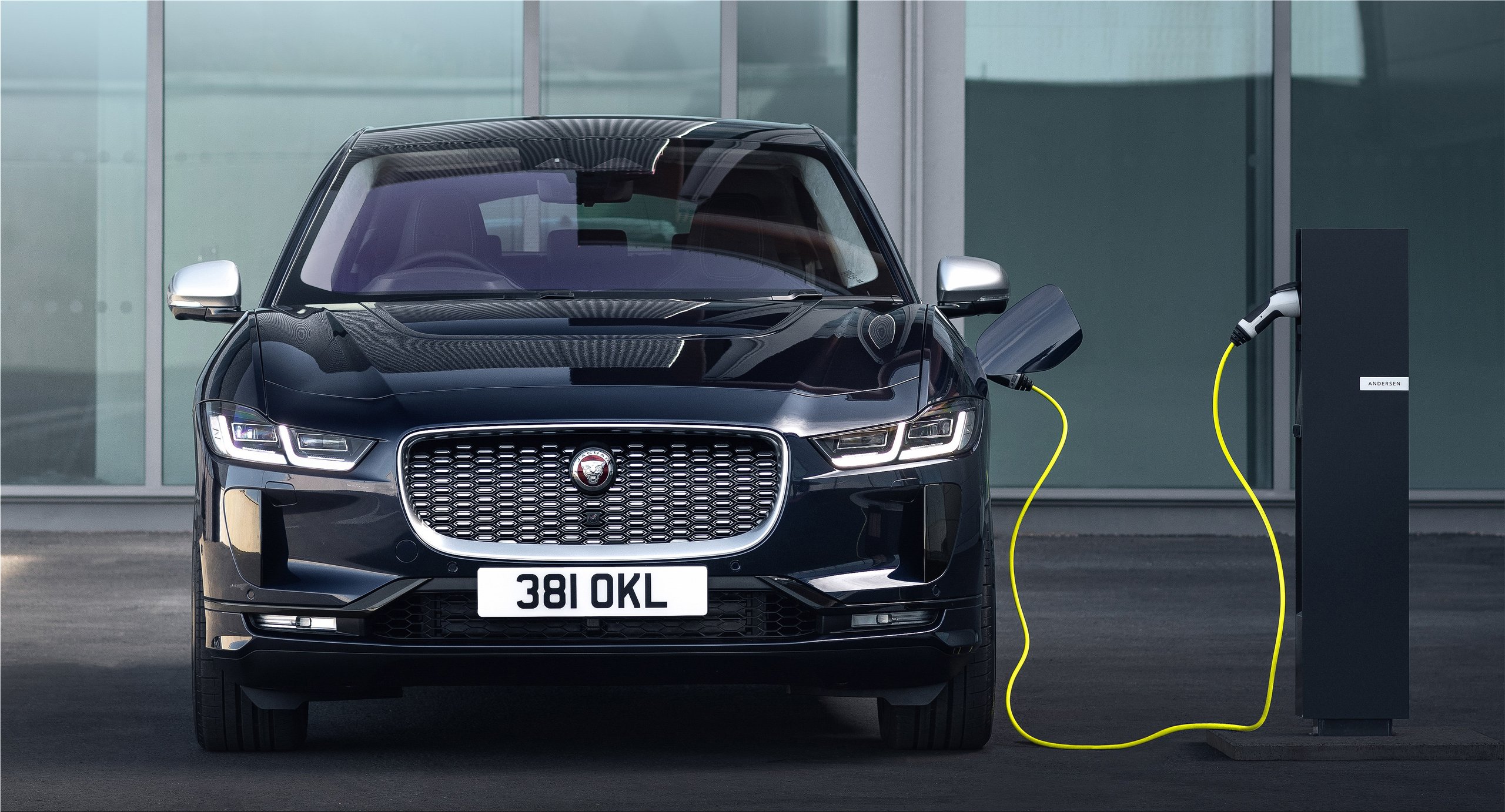
The Jaguar I-Pace receives a standard three-phase charger (significantly reduces the charging time at home). This means that the British electric car can be charged faster than before.
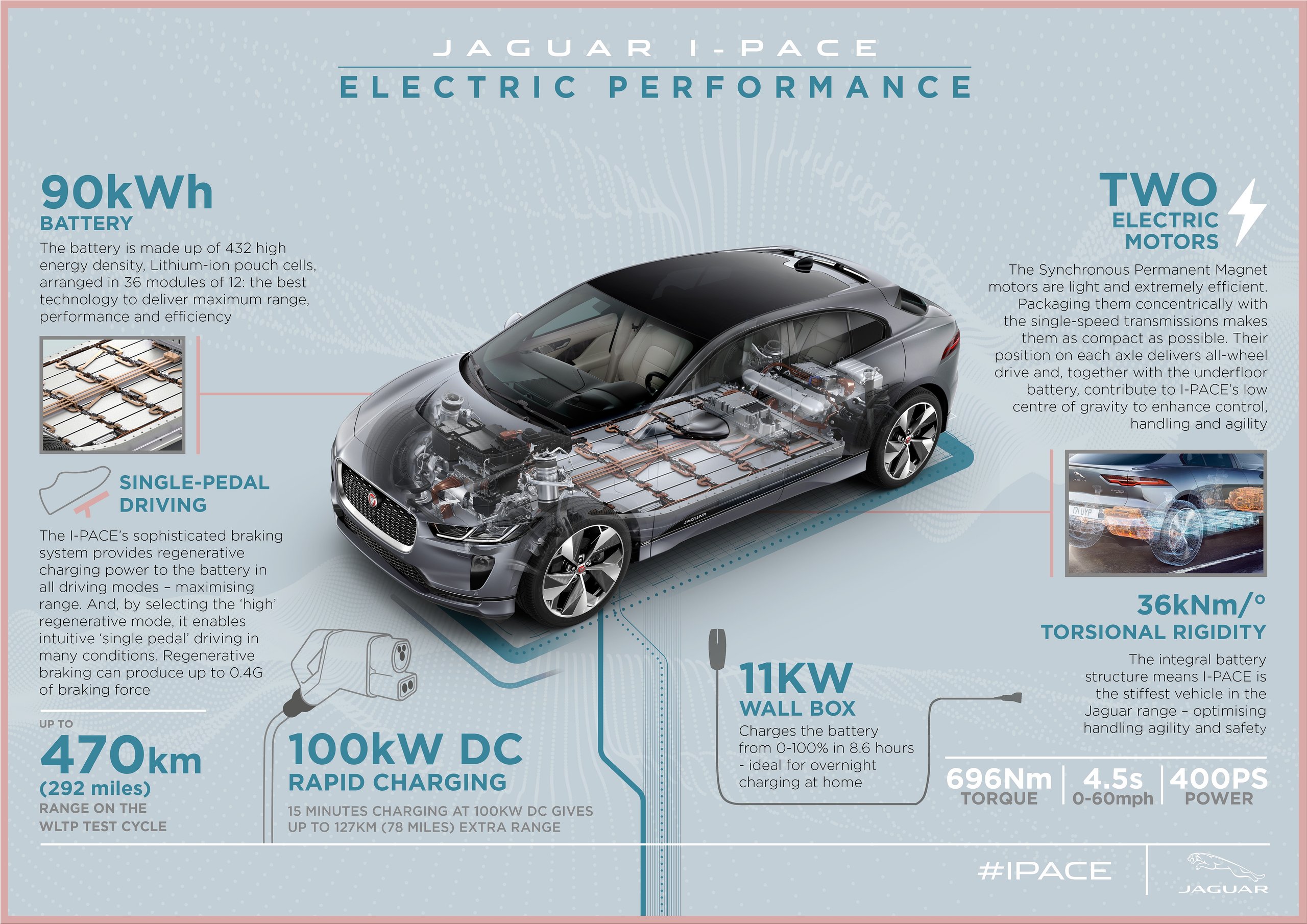
If you stop at a fast charger on a longer route, you can charge 63 kilometres on a 50 kW charging station in 15 minutes, and up to 127 kilometres on a 100 kW station in the same time.
When connected to an 11 kW wall charging station, 53 kilometres per hour can be charged. A full charge takes 8.6 hours. If the Jaguar I-Pace is connected to a 7 kW wall charging station, 35 kilometres per hour are possible. The full charge then takes around 13 hours.
Jaguar has not redesigned the electric drive of the I-Pace: With 294 kW (400 hp), it will continue to go from zero to one hundred in 4.8 seconds. The range that can be achieved with one charge remains at 470 kilometres (WLTP).
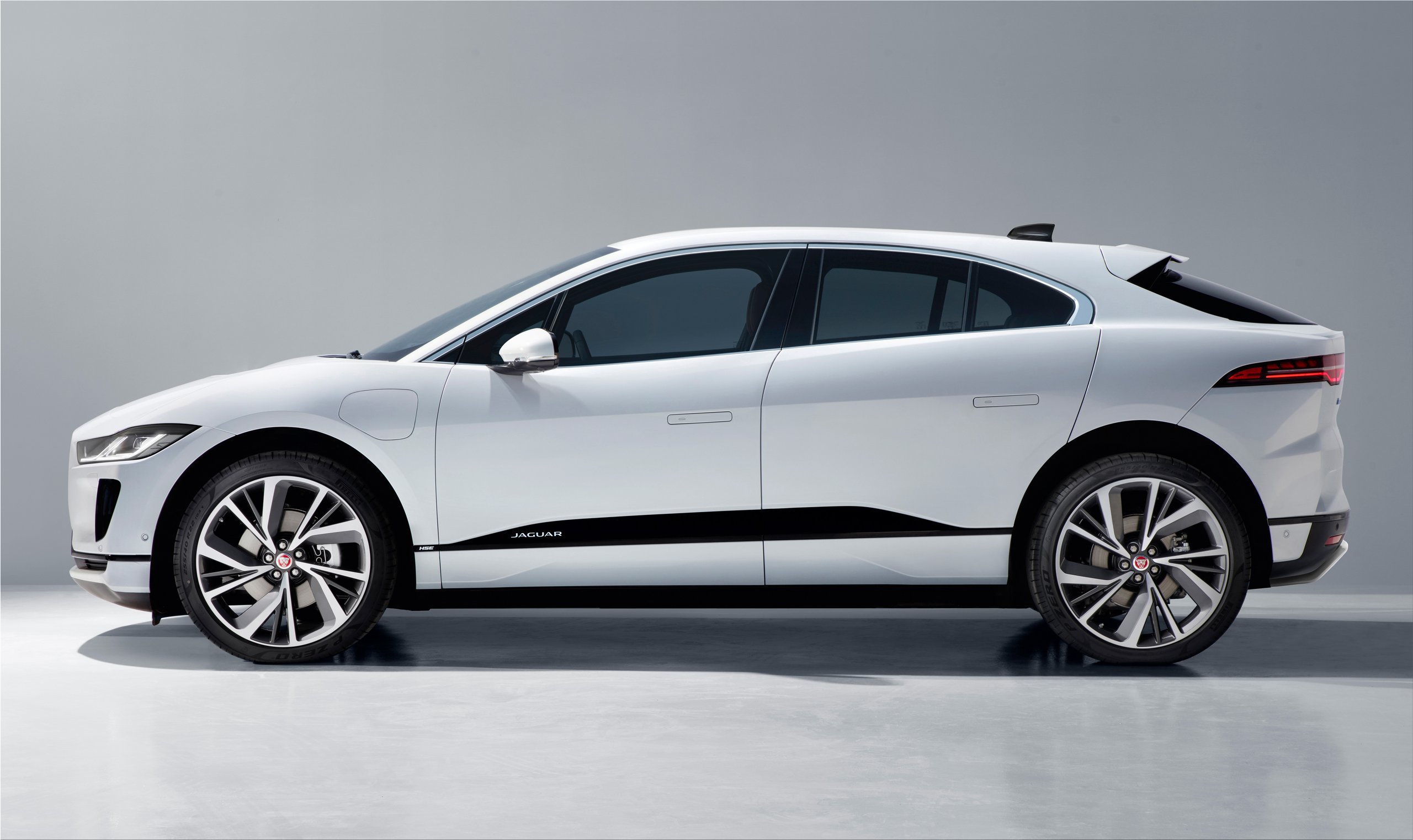
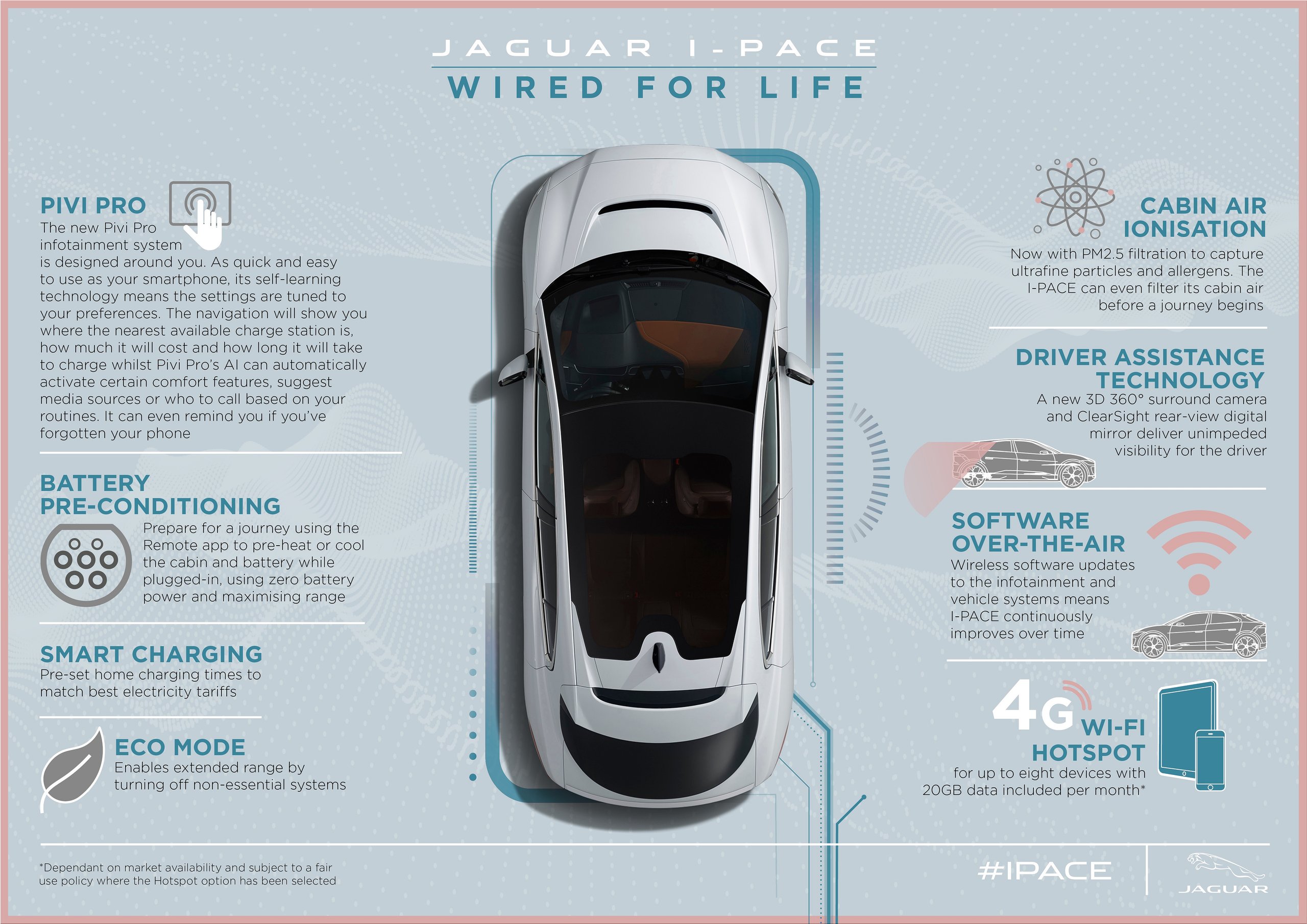
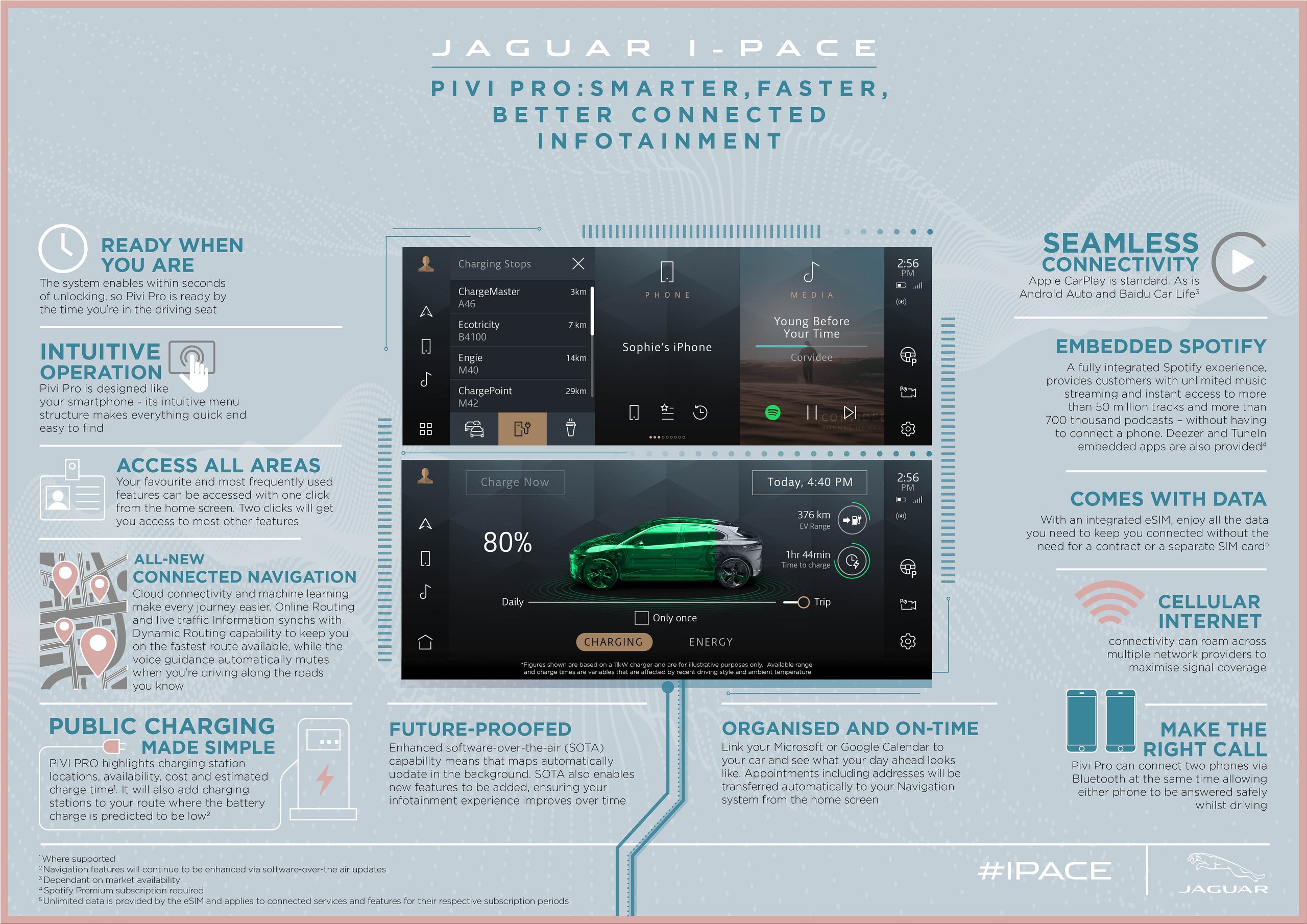
There are also a number of minor changes. For example, a new generation of Pivi Pro infotainment system is moving into the cockpit, which should be easier to use and easier to find charging stations. Pivi Pro is just as intuitive to use as a smartphone, it is operated via a 12.3-inch digital instrument cluster with touch functionality.
Thanks to the integrated 4G SIM card, software updates are now possible via radio. Signal amplification is included in inductive charging. It causes the signals from the phone to remain strong for a long time. A smartphone pack with Apple Car Play and Android Auto is installed as standard. A new sound system with 16 speakers and a subwoofer is available.
Inside of the Jaguar I-Pace electric car, the air is pre-cleaned. Thanks to a PM2.5 filter, even ultrafine particles and allergens should be able to be filtered out. This will please allergy victims in particular.
The new 3D surround camera system with a 360-degree all-round view provides more security when parking. In addition, there is the frameless interior rear-view mirror with an integrated HD display for a view of the rear area.
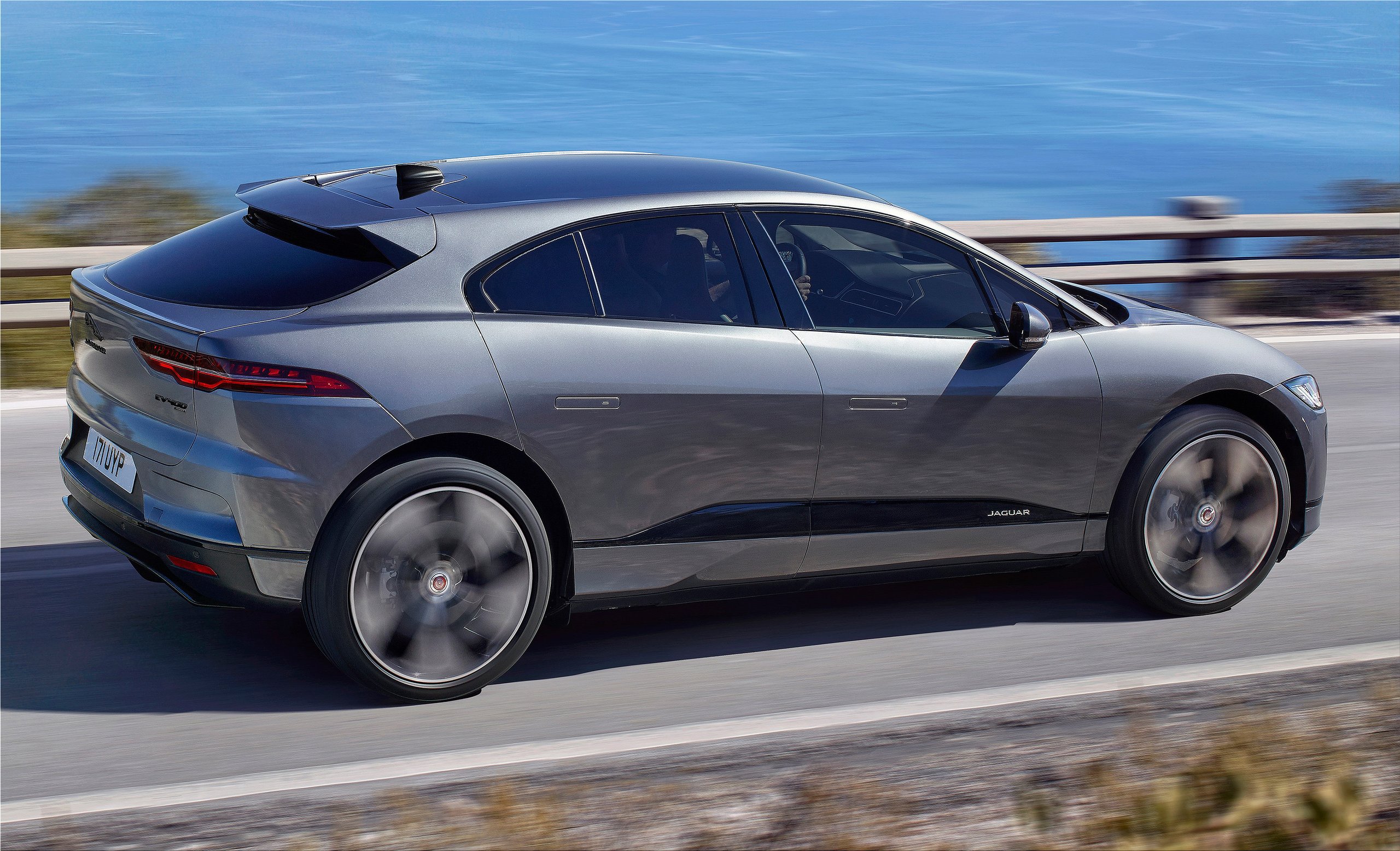
The prices of the world's first fully-electric SUV starts at 77,300 euros. This price includes all service costs for the first three years or 100,000 kilometres.
Hyundai accelerates the market introduction of electric utility vehicles such as e-vans, e-buses and e-trucks. According to "Business Korea", the South Koreans want to offer electric versions of the small truck Porter as well as the light… Continue reading
The Chinese electric car startup WM Motor has been able to generate nearly 400 million euros in a financing round led by Baidu. Other investors in the new round are Linear Venture and the Taihang Industrial Fund. The fresh capital should… Continue reading

Everyone knows that pollution is a problem that is affecting our planet and, fortunately, or unfortunately, the automotive industry has a lot to do with it. To remedy this, there are already many brands that are beginning to bet massively on alternatives to… Continue reading

The new electric and electrified cars, like the Tesla of Elon Musk and all the other EVs and plug-in hybrids on the market, are famous for their extreme quietness. These cars are too silent according to the EU, thus risking being dangerous. Electric vehicles… Continue reading