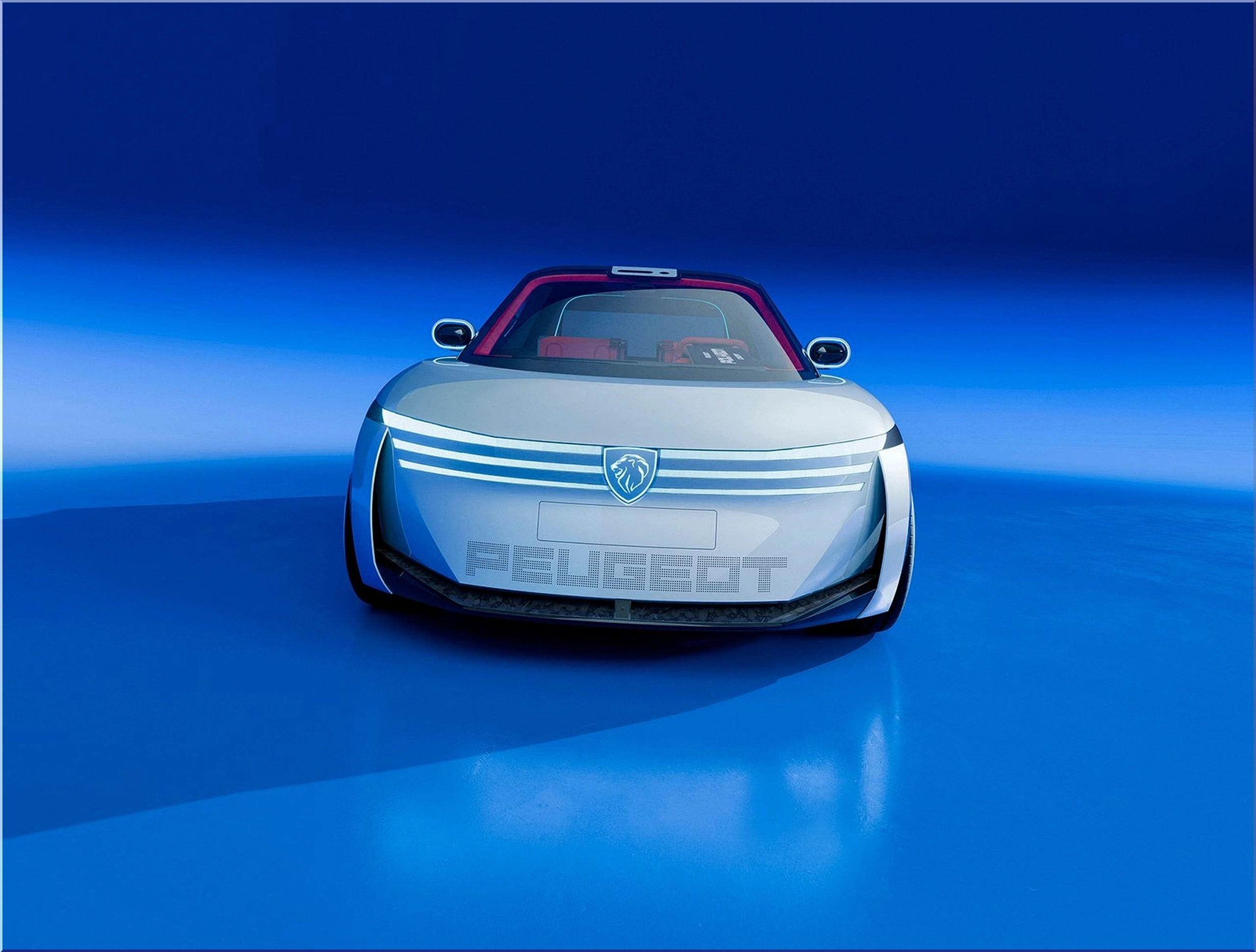
A Bold Vision for the Next Generation of Electric Mobility
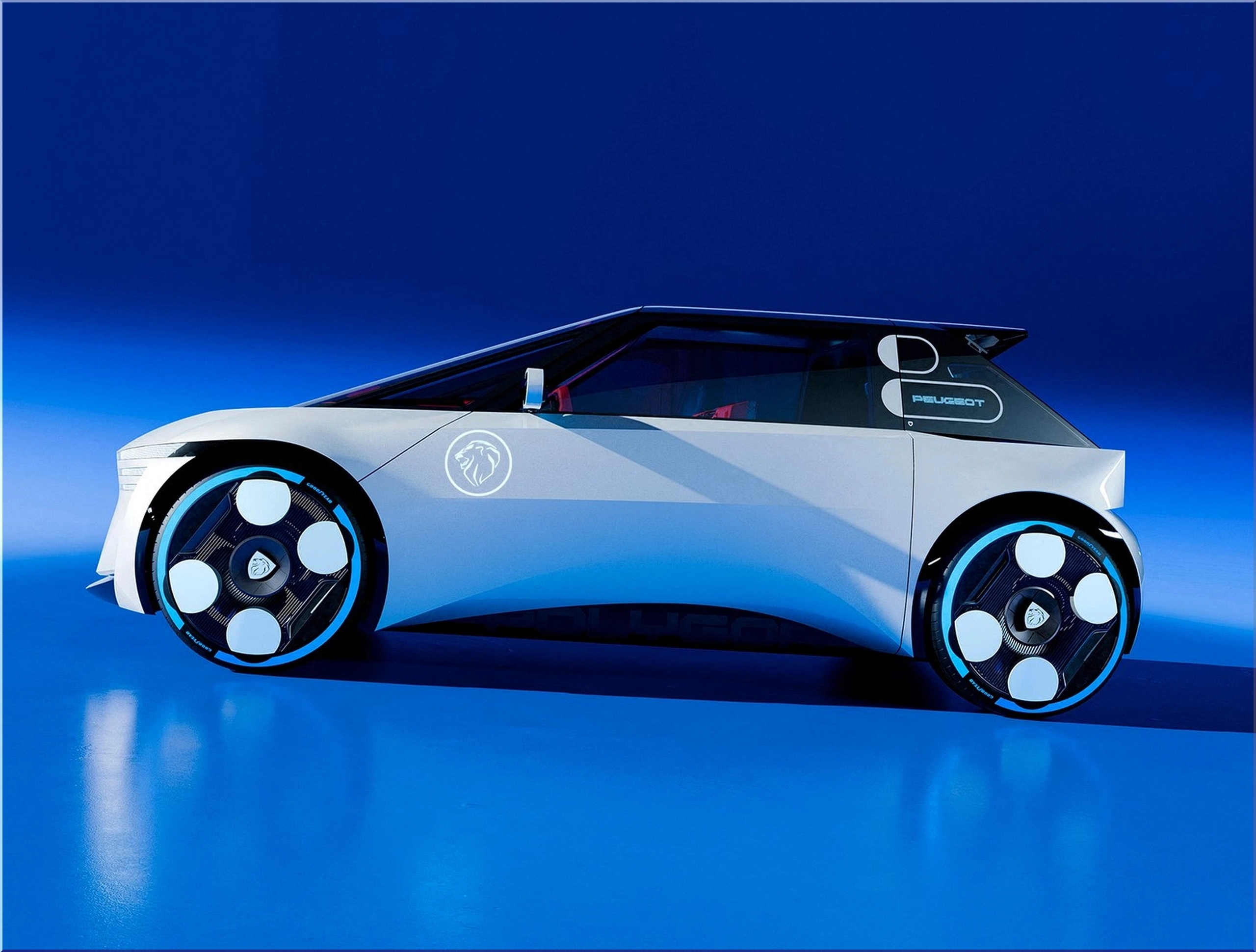
Peugeot has unveiled the Polygon Concept, a compact electric prototype that redefines how drivers interact with vehicles. Measuring under four meters, the Polygon Concept introduces Hypersquare steering with Steer-by-Wire technology, a system designed to deliver direct, precise control without mechanical linkage between the wheel and the tires.
The car serves as a dynamic test platform for Peugeot’s upcoming technologies, several of which are set to appear in production models by 2027. The concept aims to merge driving pleasure, digital immersion, and sustainable production—all under a single, efficient design philosophy.
Hypersquare Steering: A Radical Shift in Driver Control
For over a century, the steering wheel has remained largely unchanged. The Hypersquare replaces it with an electronically controlled steering interface, enabling quicker, smoother movements with less effort.
- Rotation range: just 170° in each direction (under one full turn).
- Adaptive ratio: automatically adjusts based on speed.
- Technology base: derived from aerospace applications.
At low speeds, parking and maneuvering become easier, requiring minimal movement. At higher speeds, tiny adjustments deliver immediate, predictable response. The Steer-by-Wire system filters unwanted vibration while maintaining precise road feedback—offering agility and safety beyond what a traditional system can deliver.
The technology is expected to debut in Peugeot production models by 2027, signaling a step toward the industry’s broader shift to software-defined vehicles.
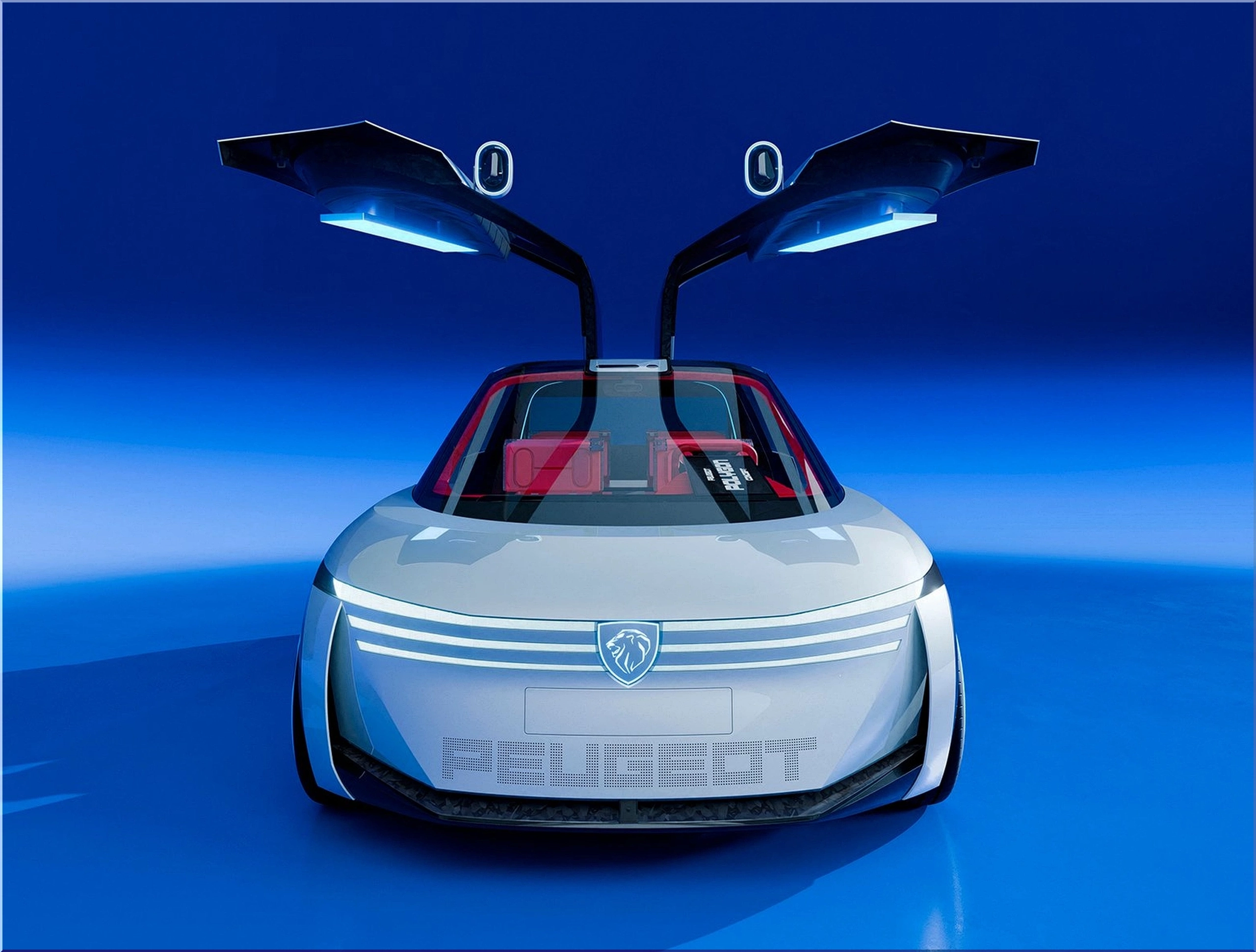
Immersive i-Cockpit Redefines the Cabin
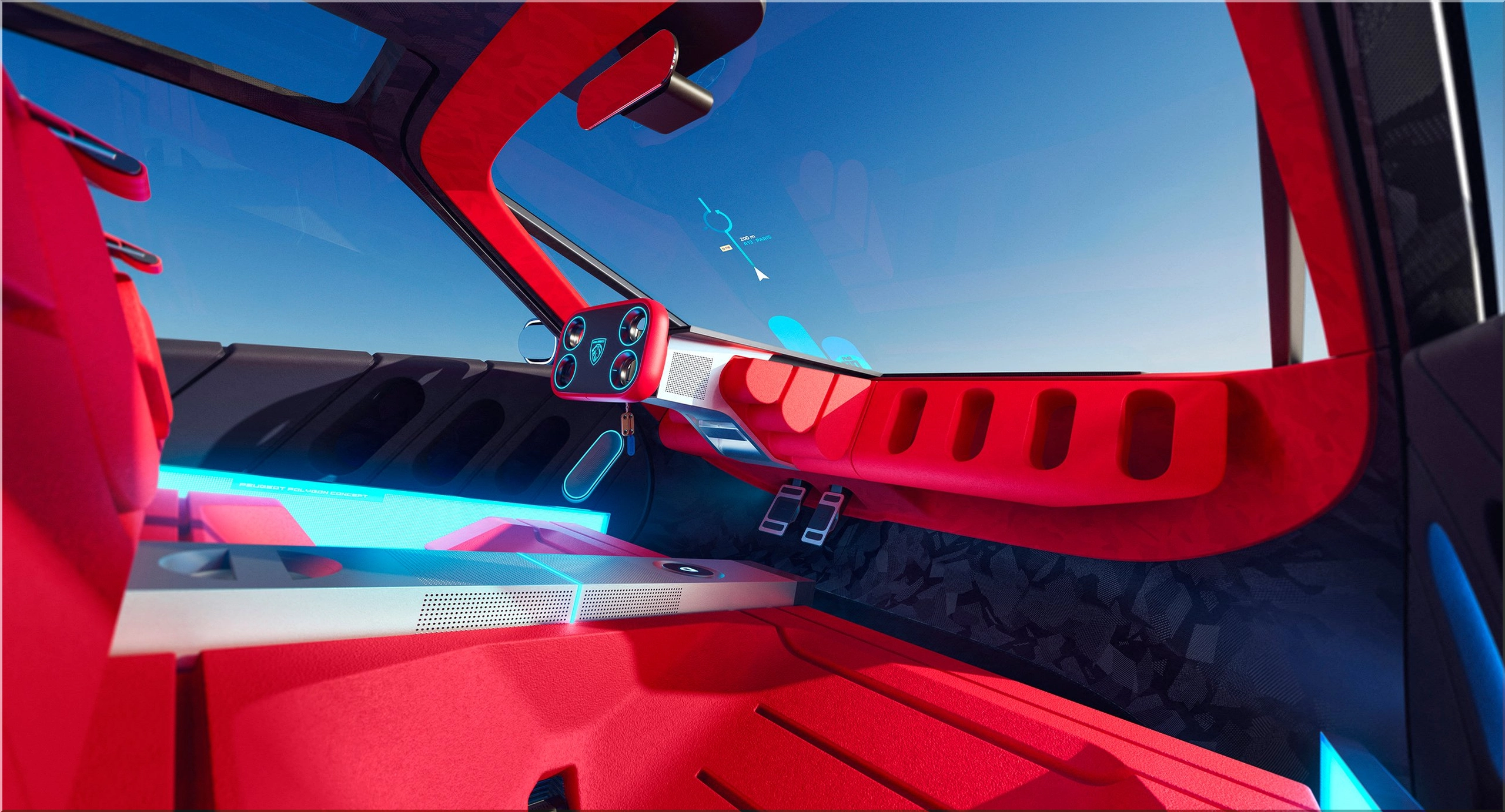
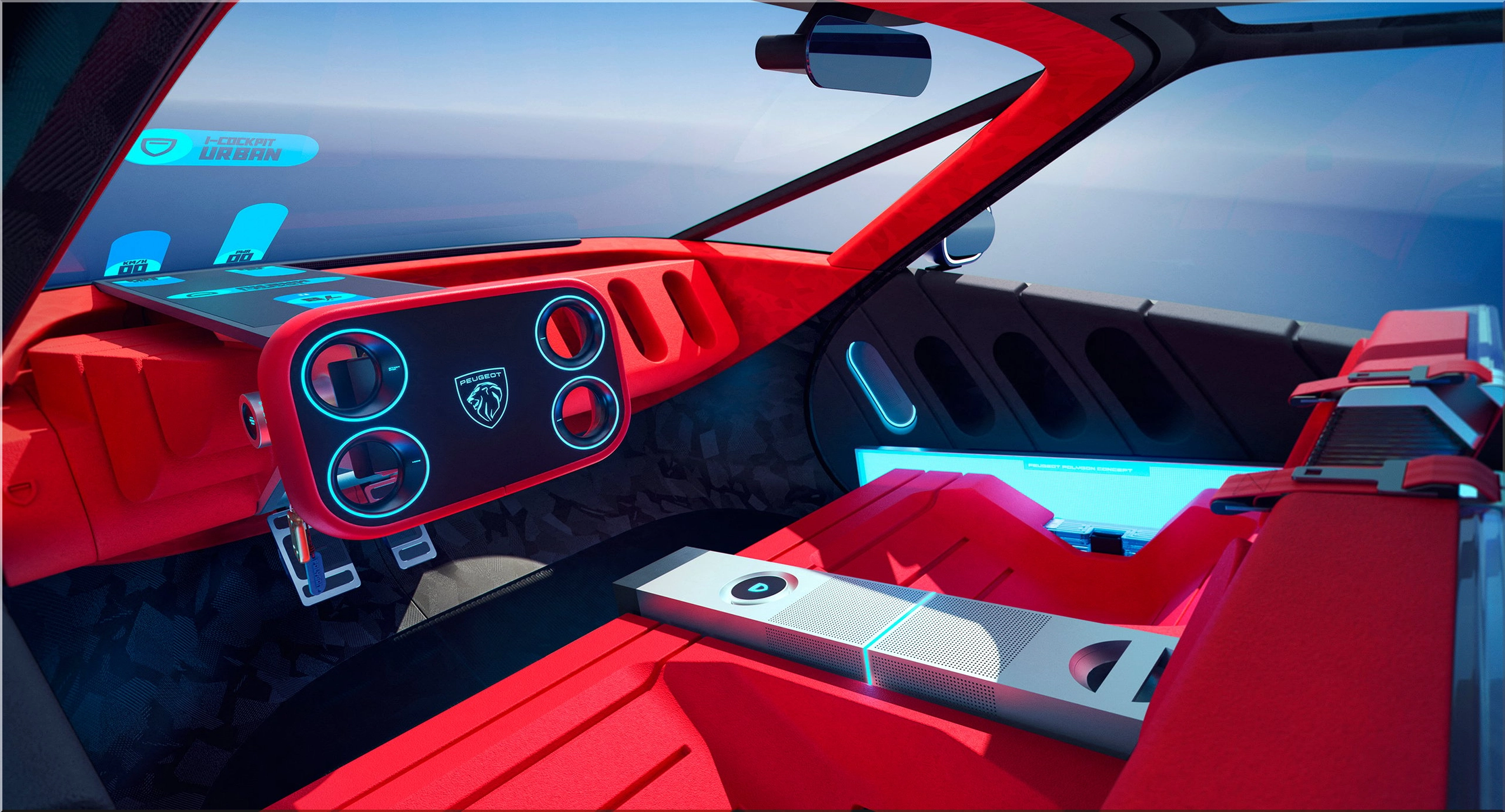
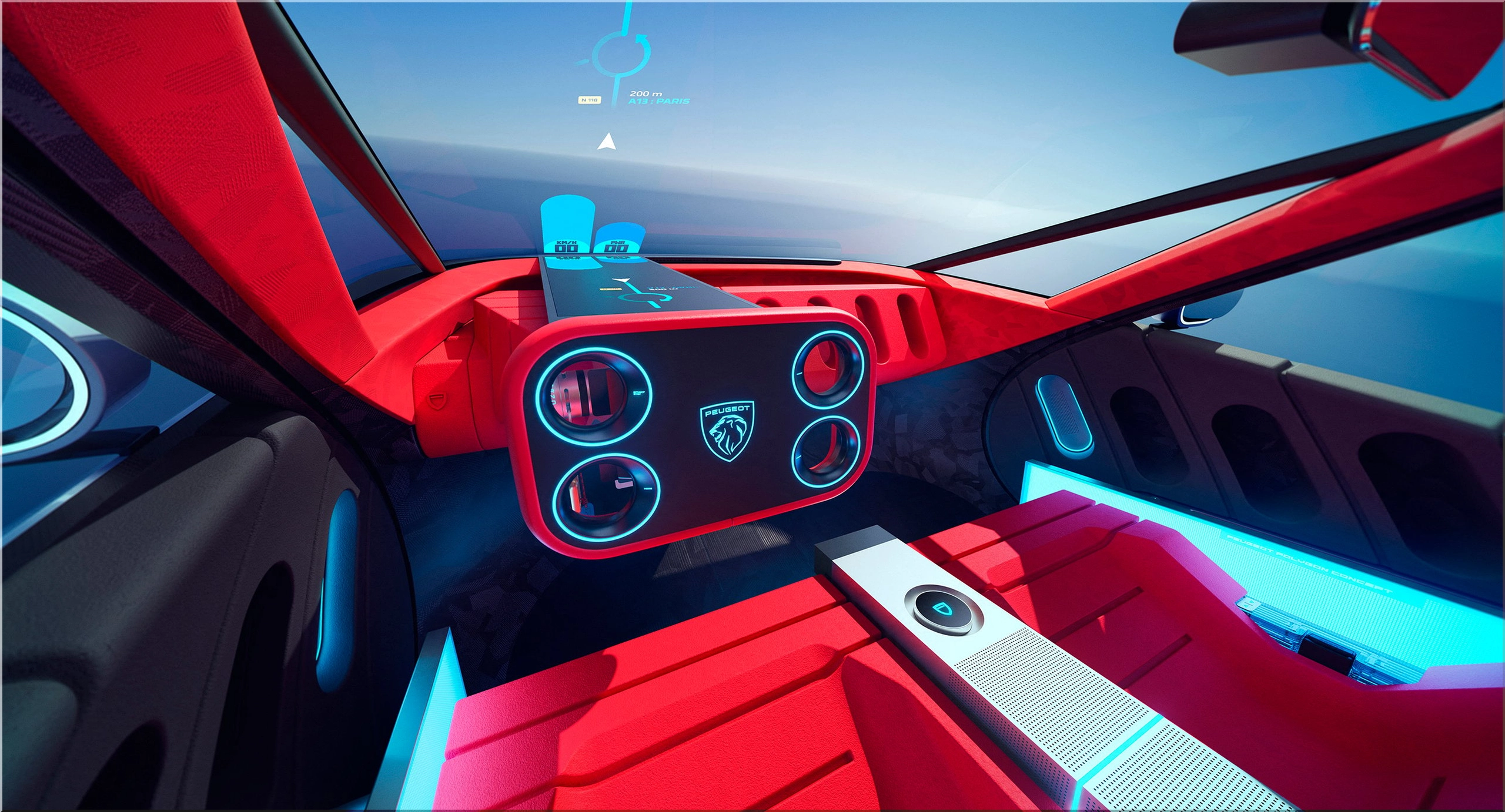
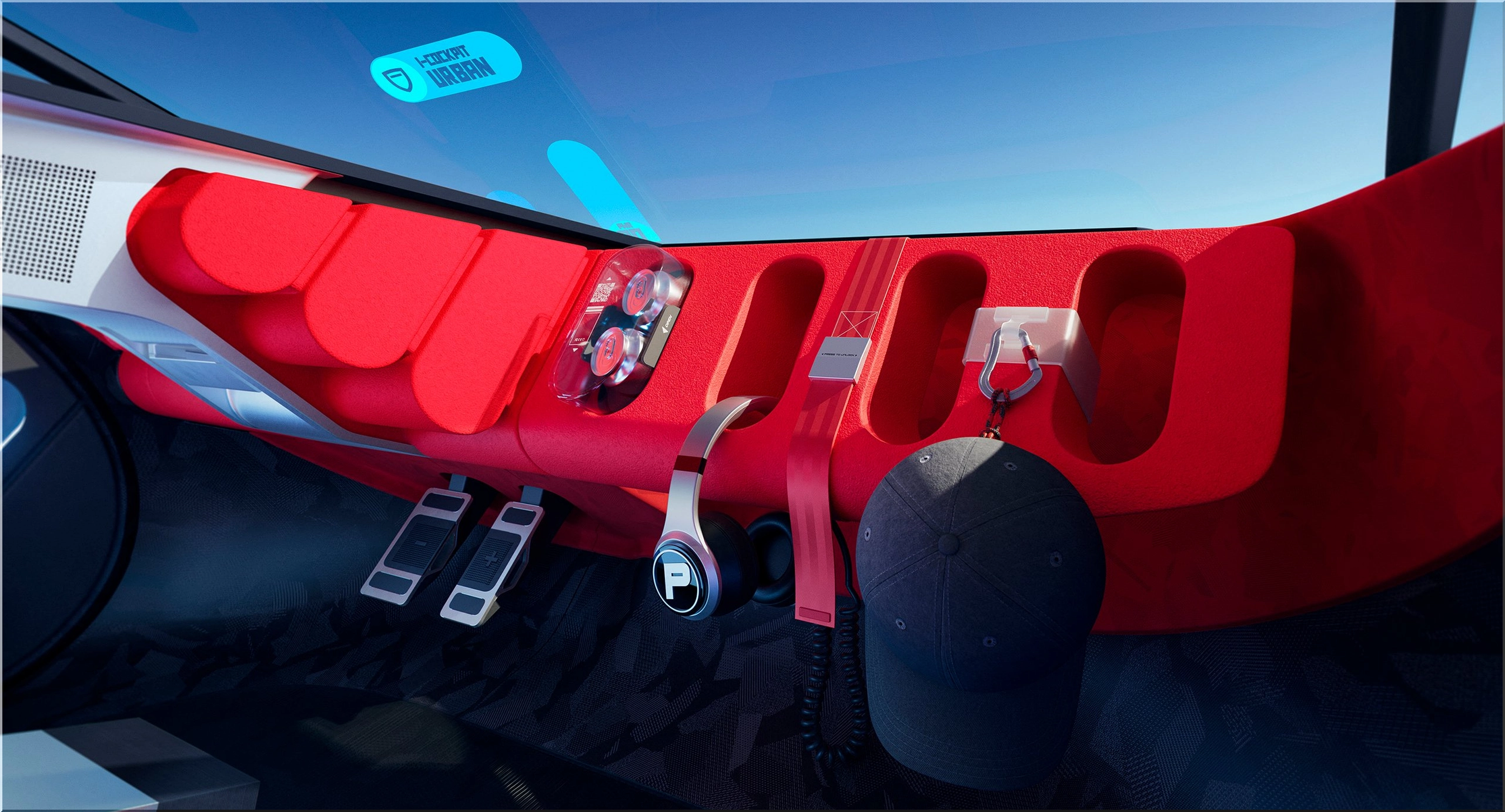
Inside the Peugeot Polygon Concept, the new-generation i-Cockpit integrates Hypersquare at its center. Key vehicle functions are accessible via four circular touch pods positioned at each corner, allowing the driver to keep hands on the control surface at all times.
The dashboard itself disappears—replaced by a Micro-LED projection system that transforms the windshield into a 31-inch reflective display (24 cm wide by 74 cm tall).
Three selectable driving modes modify both visual feedback and cabin lighting:
- Cruise – Focused on efficiency and comfort.
- Fun – Balanced for dynamic urban use.
- Hyper – Maximized for performance and responsiveness.
When stationary, the system projects exterior animations through the windshield, visible from outside the car. A rotary LED knob allows drivers to control lighting color, temperature display, and exterior ambience—creating a seamless visual link between interior and exterior environments.
A Distinct French Design with Micro-LED Precision
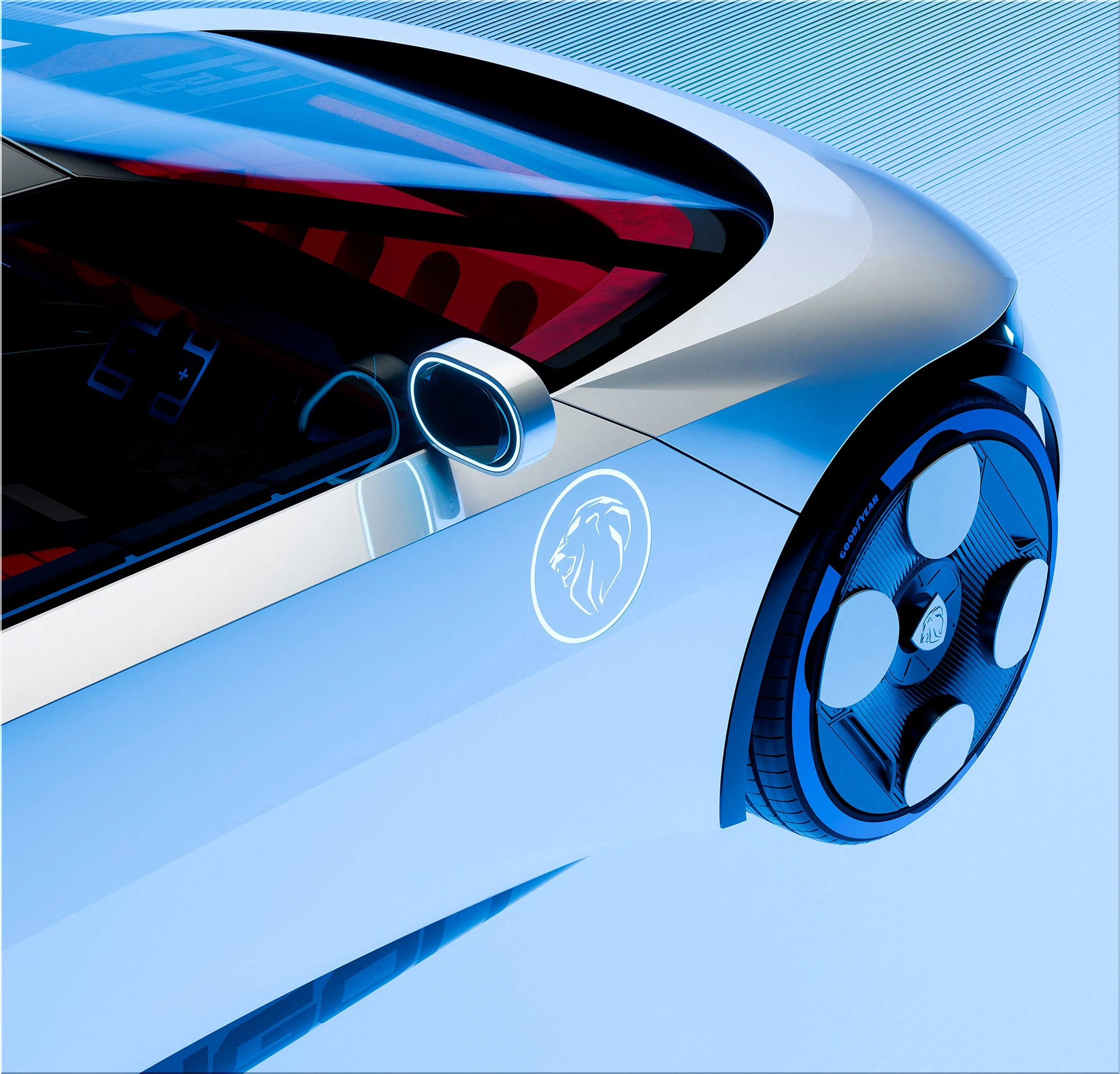
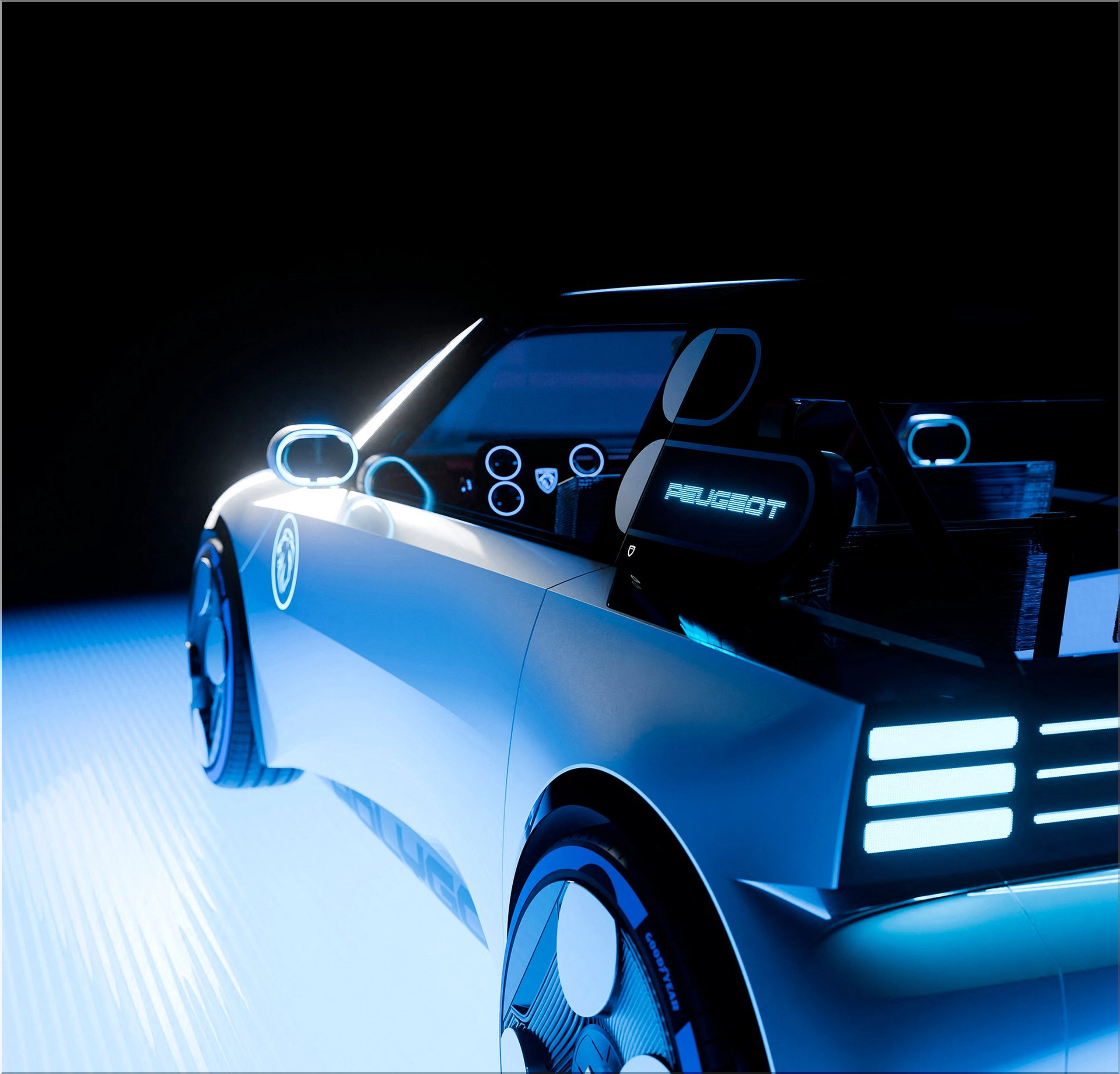
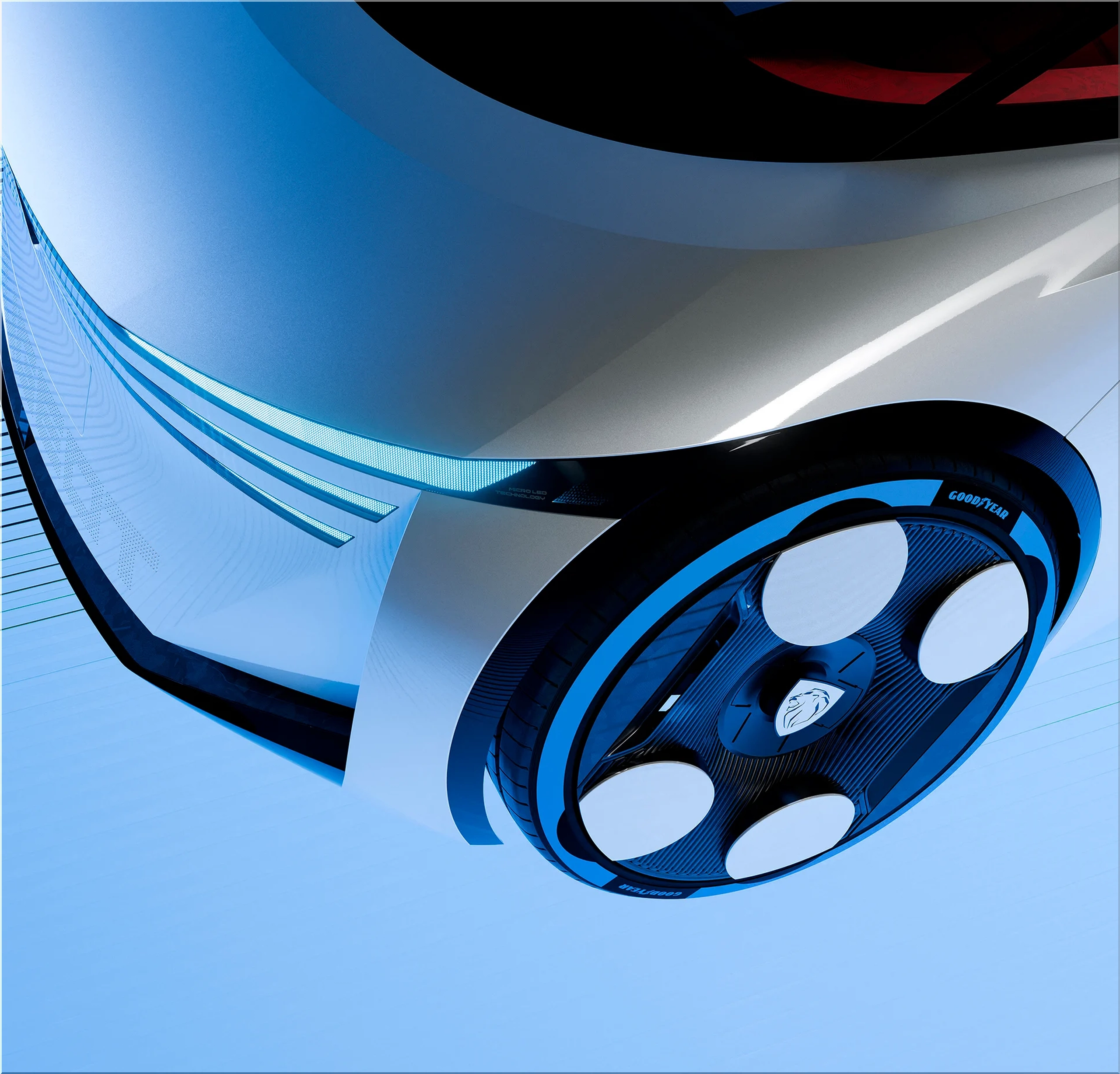
The Polygon Concept introduces Peugeot’s next-generation Micro-LED lighting signature, transforming the brand’s triple-claw motif into a horizontal layout. This design gives the vehicle a wider stance and a futuristic presence.
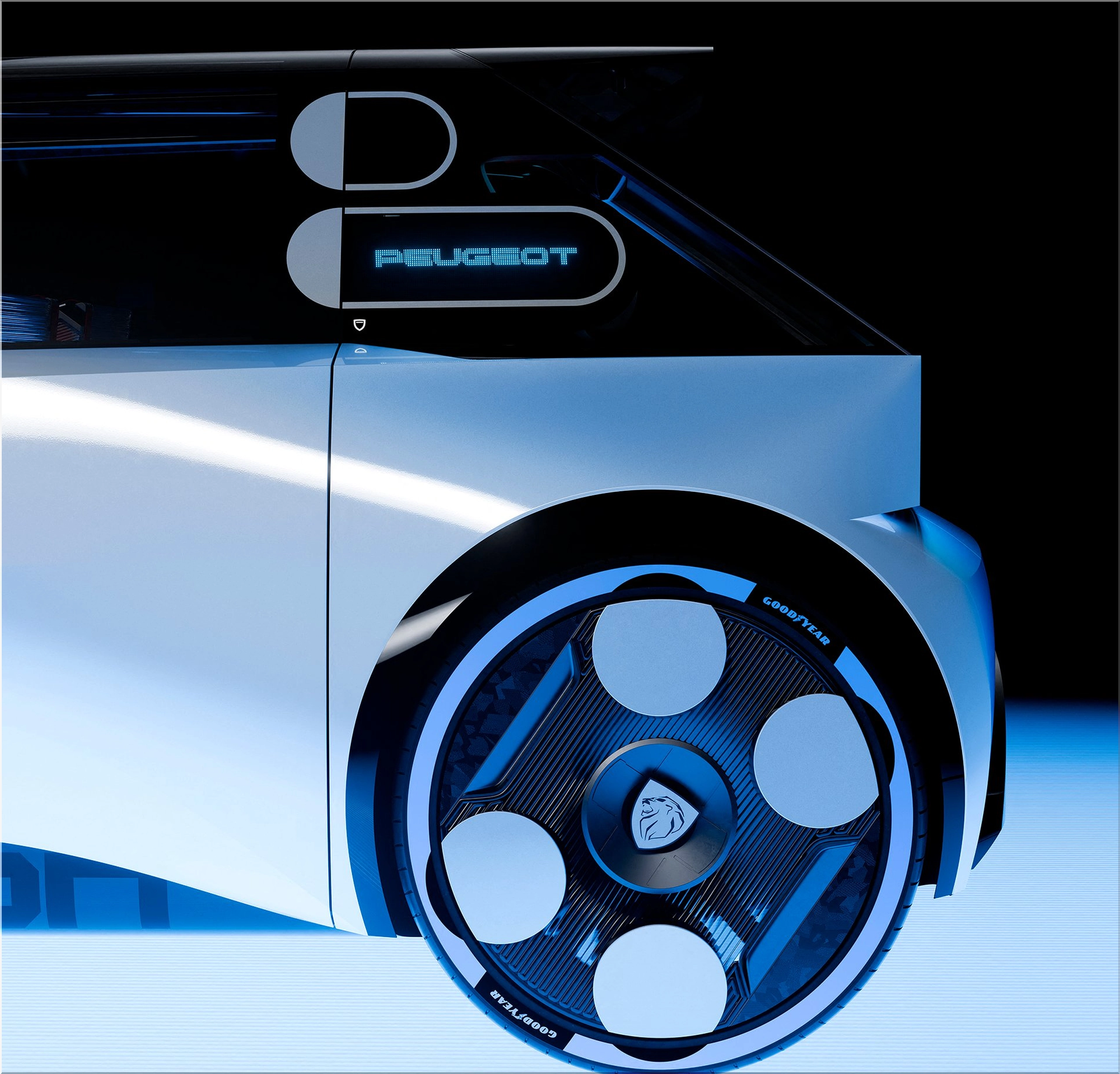
Front and rear light clusters feature animated sequences that respond to different modes and conditions. Additional Micro-LED panels on the C-pillars provide charging information without entering the vehicle.
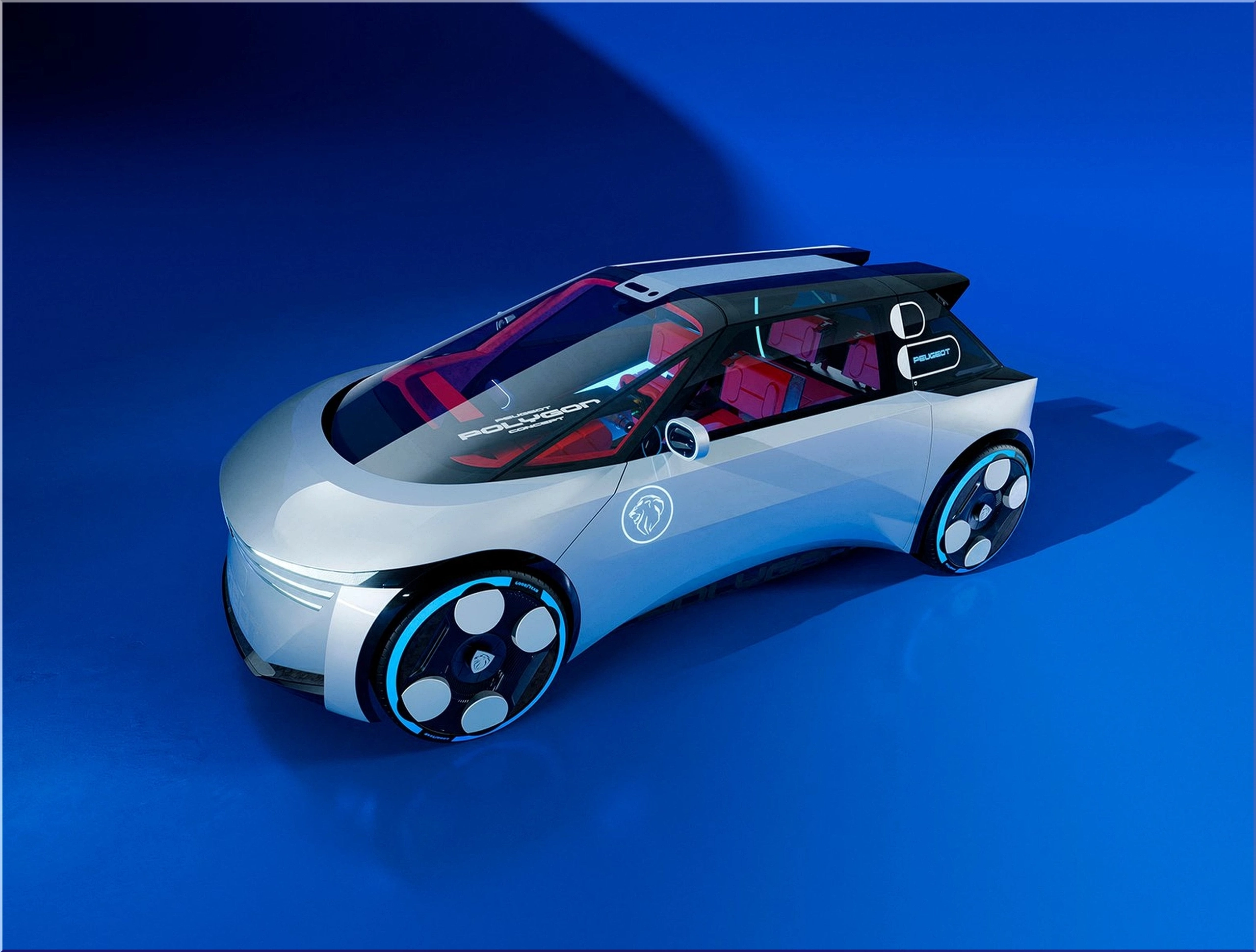
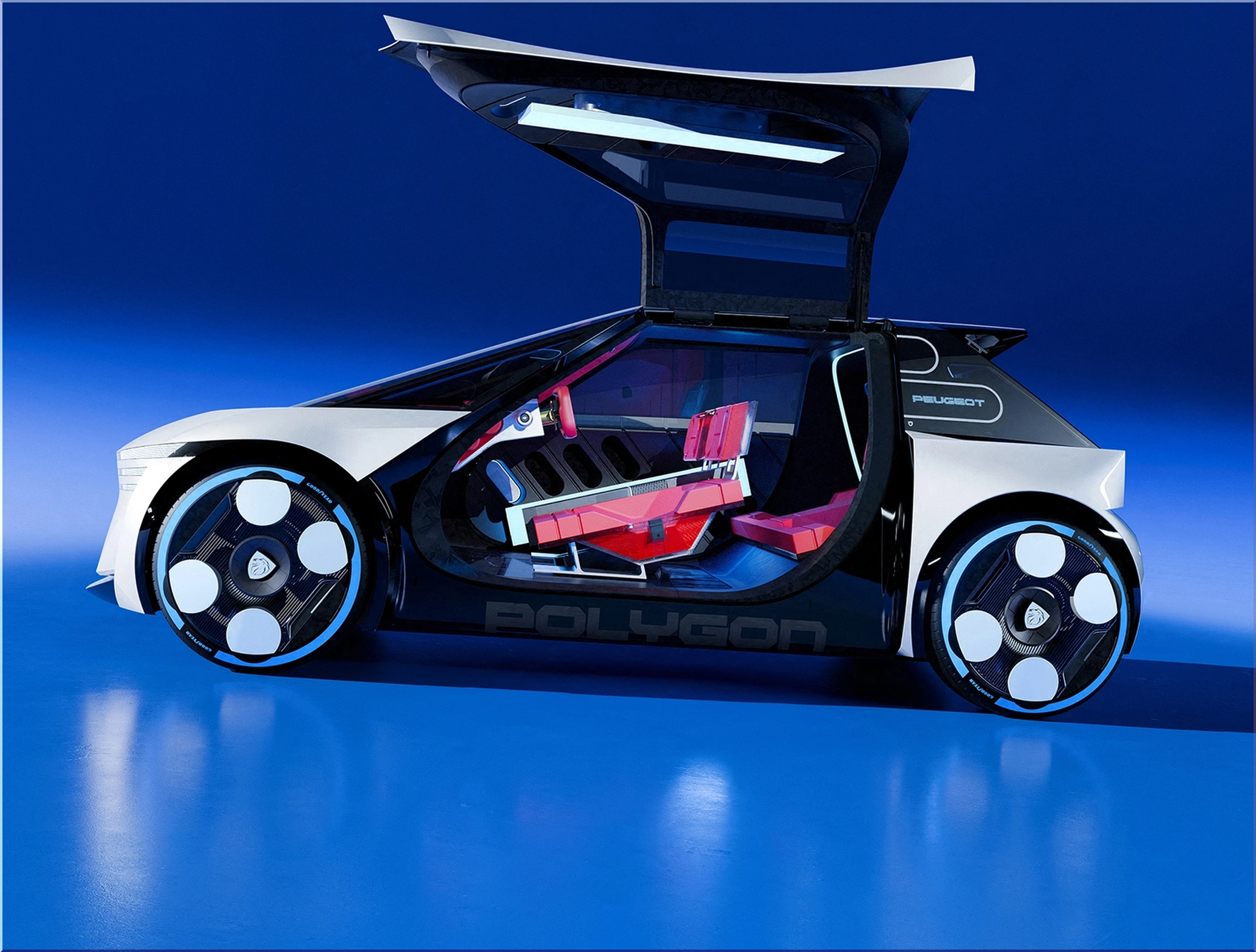
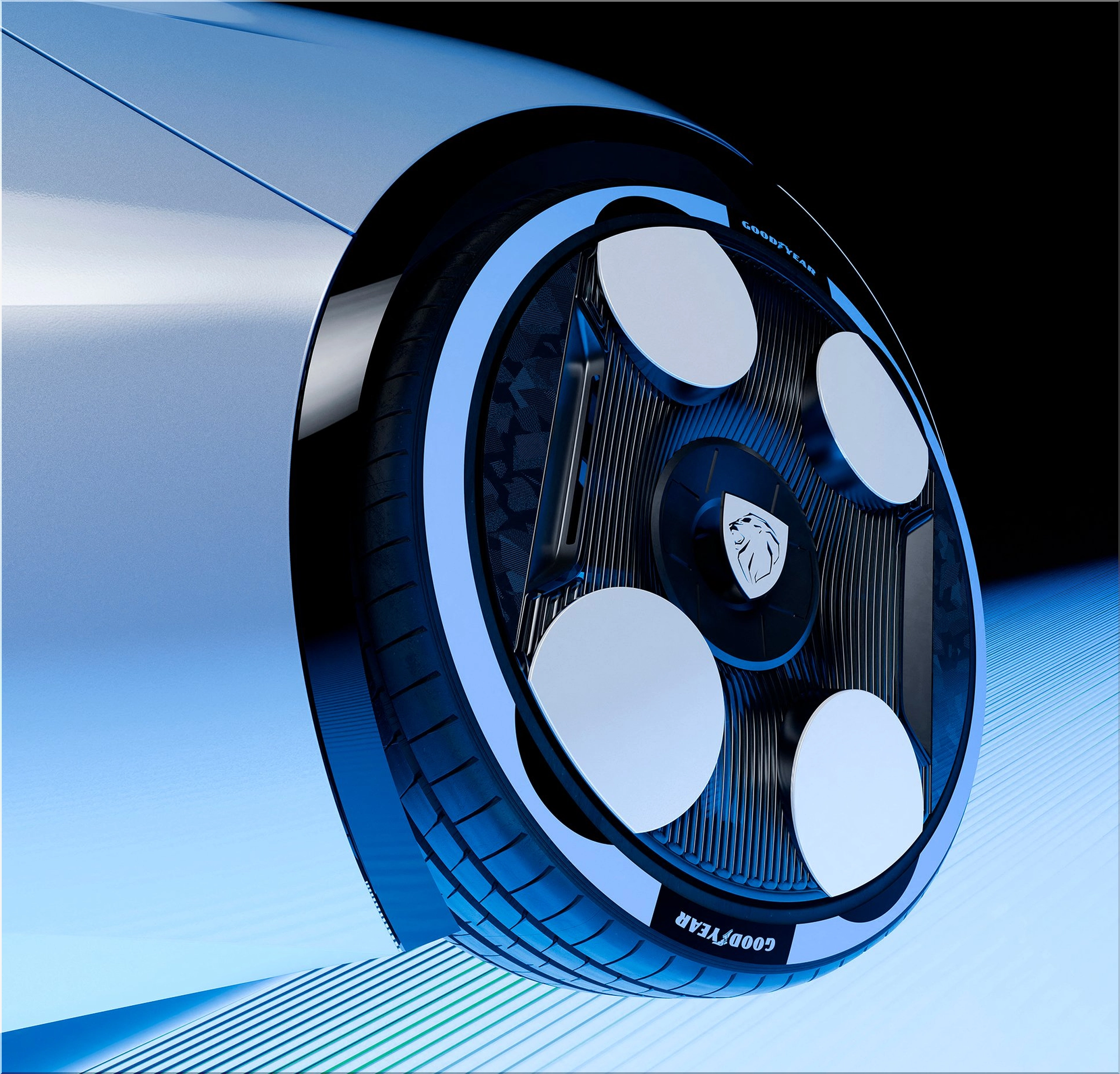
The car’s aesthetic follows clean geometric lines—a preview of Peugeot’s upcoming design direction. Its bright color accents, 3D-printed components, and custom laser-etched Goodyear tires make it visually distinct while emphasizing functional design minimalism.
Interior Innovation: Space, Comfort, and Flexibility
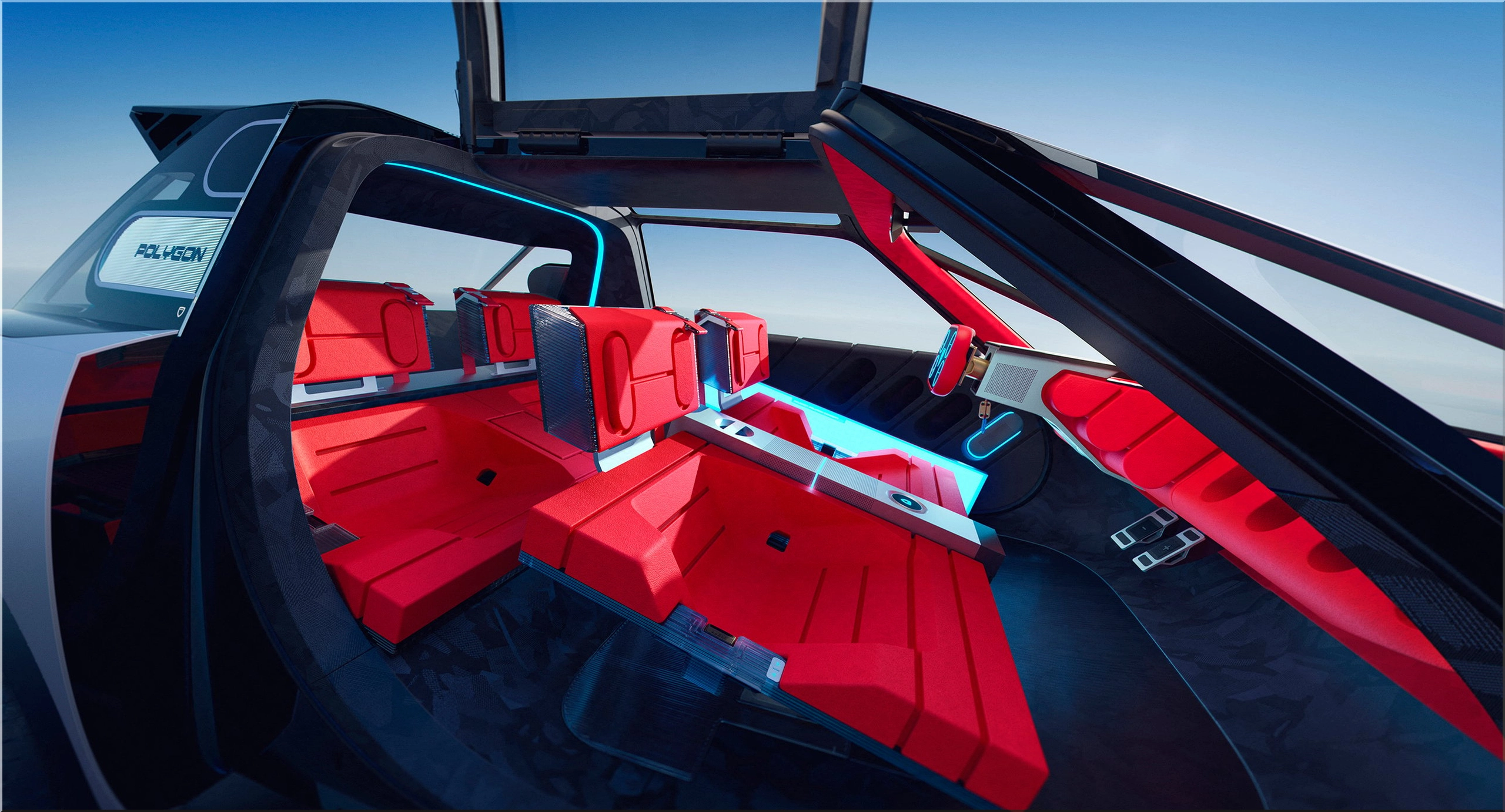
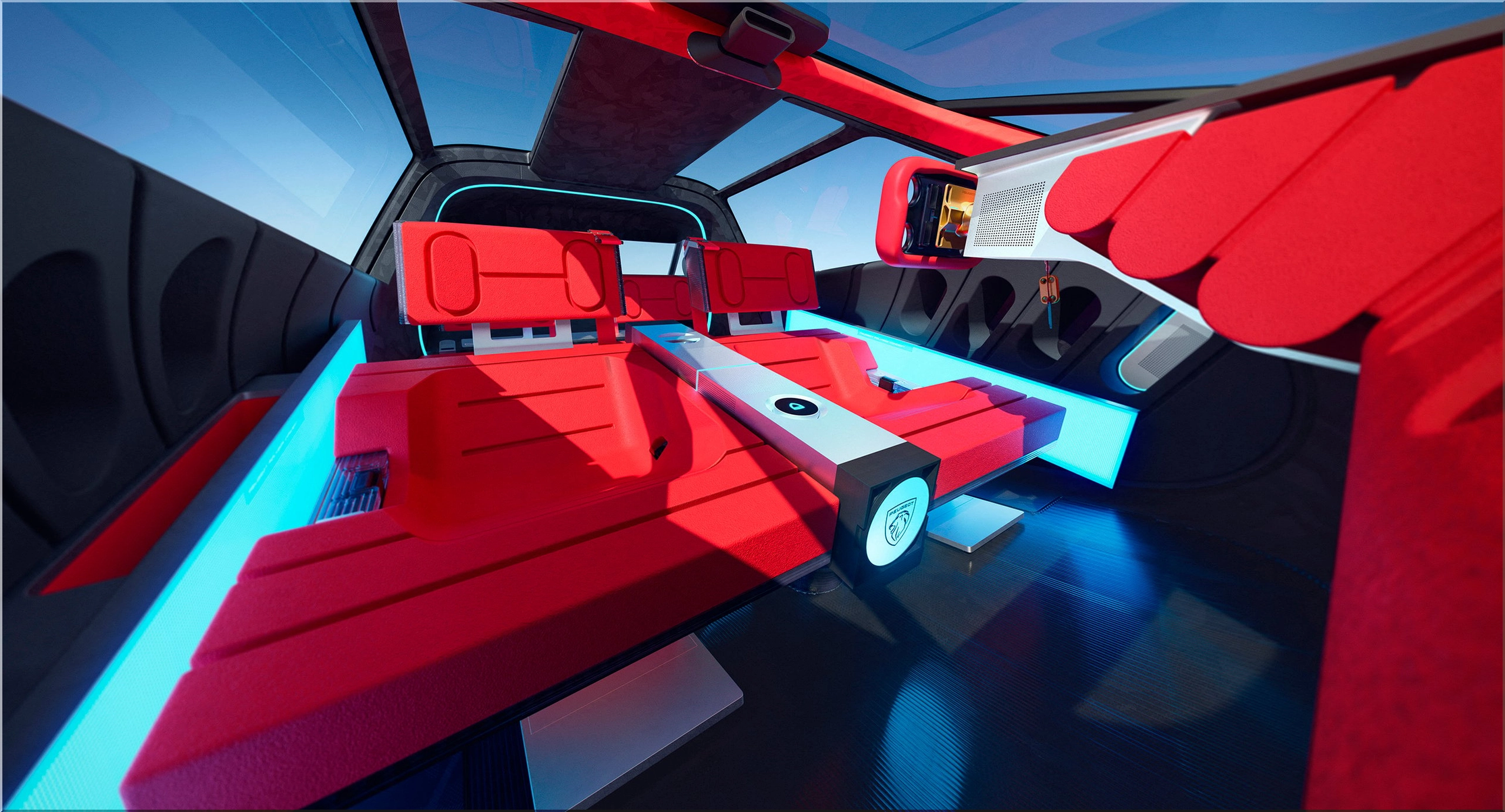
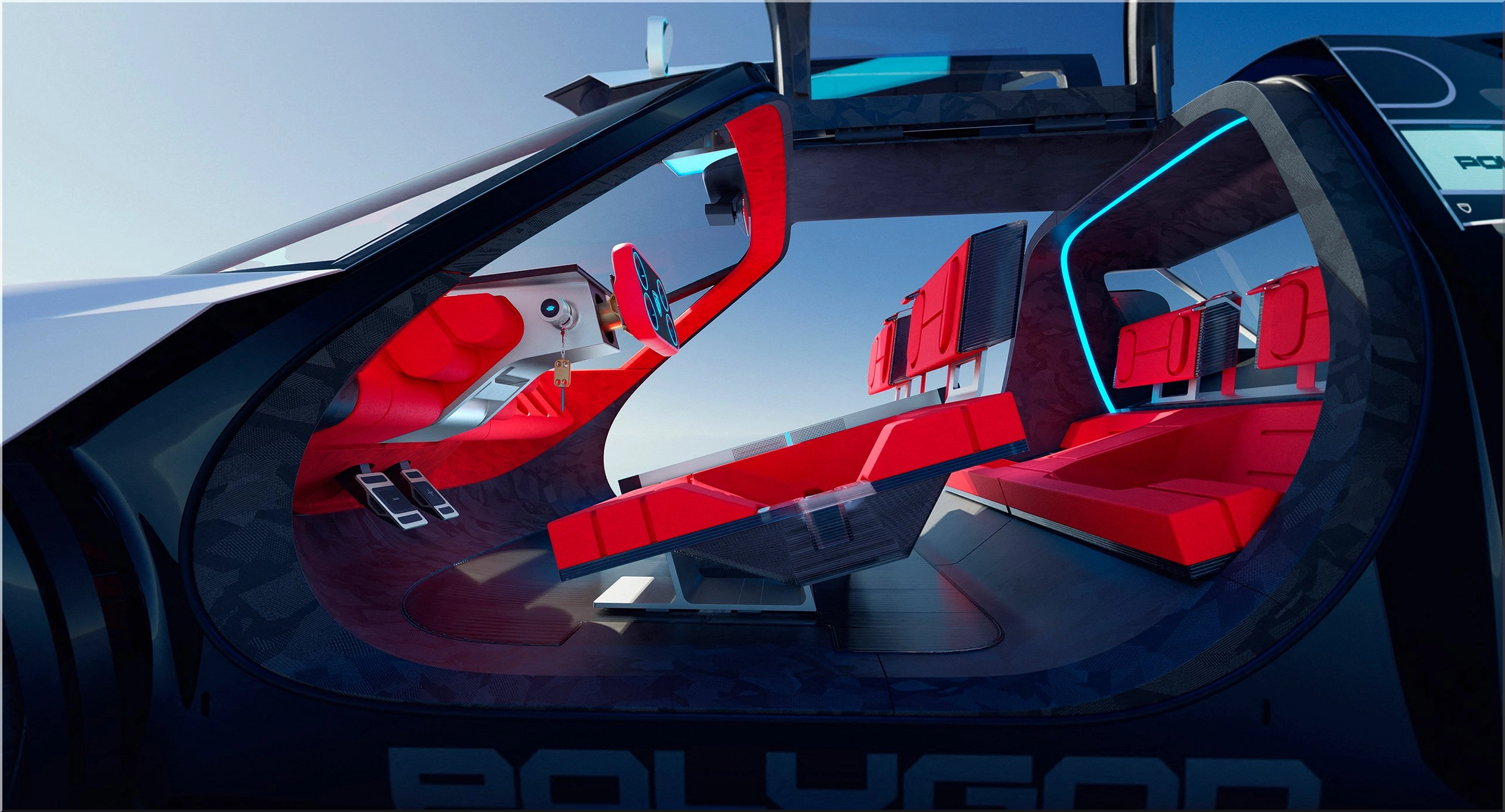
The cabin’s architecture has been rebuilt around compact electronics and modular design. With no steering column and fewer dashboard components, the front passenger area gains more space and improved comfort.
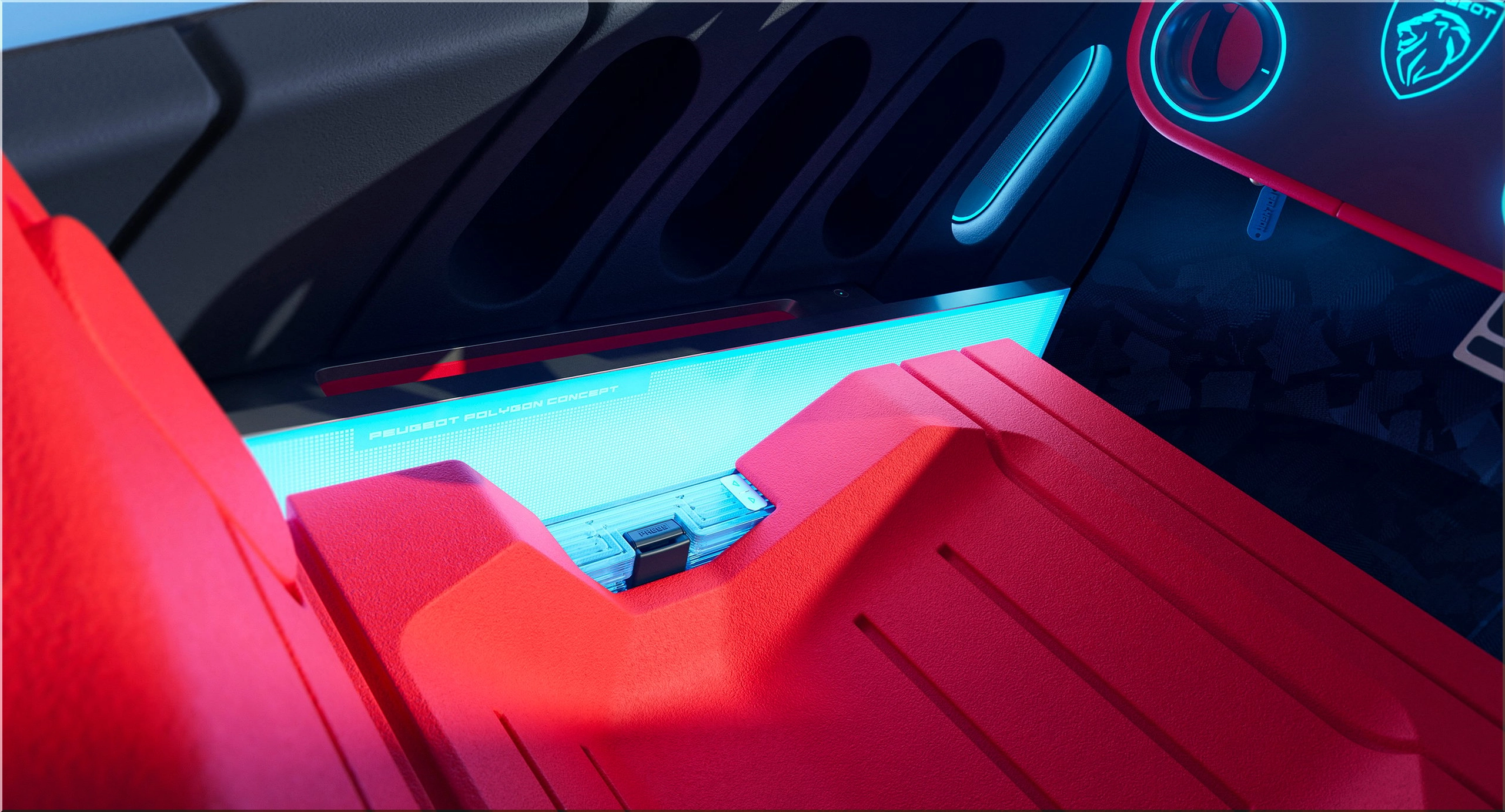
Peugeot’s engineers designed 3D-printed seat shells made from recycled R-PET plastic, covered in one-piece molded foam created in collaboration with Belgian manufacturer Sixinch. Each seat consists of only three main parts—reducing weight, complexity, and waste.
Interior surfaces use forged fabric crafted from recycled Peugeot seats, demonstrating the company’s push toward circular manufacturing. Even the interior lacquer includes pigments from recycled tires.
Infinite Customization and Smart Connectivity
Peugeot aims to make customization a core feature of the Polygon Concept. Many components—such as the Hypersquare controller, hubcaps, and interior panels—can be swapped in minutes.
Goodyear’s SightLine technology enhances safety and connectivity. Each tire monitors road conditions and relays data to the car’s display in real time. The system recognizes which tire is installed, adjusting performance data and visuals based on the selected driving mode.
This modular approach means owners can update the vehicle’s aesthetics or performance feel without replacing the entire car, extending the ownership lifecycle and lowering long-term costs.
Efficient Manufacturing
The Polygon Concept is designed with fewer components and simplified assembly, reducing production energy use and improving recyclability.
Key sustainability metrics include:
| Component | Innovation | Environmental Benefit |
|---|---|---|
| Seat Shells | 3D-printed R-PET | 100% recyclable structure |
| Cabin Materials | Forged recycled fabric | Circular use of old interiors |
| Paint | Recycled rubber-based lacquer | Reduced chemical waste |
| Doors | 2 large gullwing panels | Fewer mechanical parts |
By minimizing part count and optimizing assembly, Peugeot targets a lighter, more efficient vehicle while cutting emissions across the manufacturing process.


The Polygon Personality: Urban, Player, and Explorer
To illustrate its versatility, Peugeot showcased three distinct Polygon configurations, each representing a use case:
- Urban – Compact and sleek for city mobility.
- Player – Sport-oriented with bold exterior design.
- Explorer – Elevated stance with protective elements for rougher terrain.
These variations debuted within Polygon City, a virtual island inside Fortnite, underscoring Peugeot’s strategy to connect with a younger, tech-savvy audience through digital platforms.
Peugeot’s Broader Electrification Strategy
Peugeot currently offers 12 electric models, including 9 passenger cars and 3 commercial vehicles, supported by Peugeot Care—an 8-year or 160,000 km warranty covering the vehicle and battery.
The company sold nearly 1.1 million vehicles worldwide in 2024, with leadership in the European B-segment and light commercial markets. By introducing Polygon, Peugeot strengthens its position in the shift toward software-defined, sustainable mobility.




The Takeaway
The Peugeot Polygon Concept is more than a design exercise. It’s a working prototype that demonstrates future steering technology, modular sustainability, and next-generation driver interaction.
Expected production integration by 2027 marks a significant milestone for Peugeot and the Stellantis Group. If implemented successfully, the Hypersquare and Steer-by-Wire systems could redefine steering responsiveness and shape the next phase of electric driving innovation.
General Motors has presented at the 2018 Beijing Motor Show a new concept of electric vehicle with futuristic technology: the new Buick Enspire Concept. The Buick Enspire crossover is equipped with an eMotion… Continue reading

Honda has surprised at the Tokyo Motorcycle Show with the presentation of its first electric motorcycle prototype for motocross. This is the Honda CR Electric, a motorcycle designed for motocross that maintains the renowned name of CR, the… Continue reading
Skai Flying Car is the mobility solution from BMW and Alaka'i Technologies that differs from the rest of flying cars that we have seen to date by one feature: it is powered by hydrogen fuel cells . It is an aircraft equipped with six… Continue reading

Hyundai expands its production network for electric cars: It was recently reported that the Koreans want to build the Kona Elektro in Europe. Now the group plans to build an electric car plant in Karawang, Indonesia. The Hyundai… Continue reading