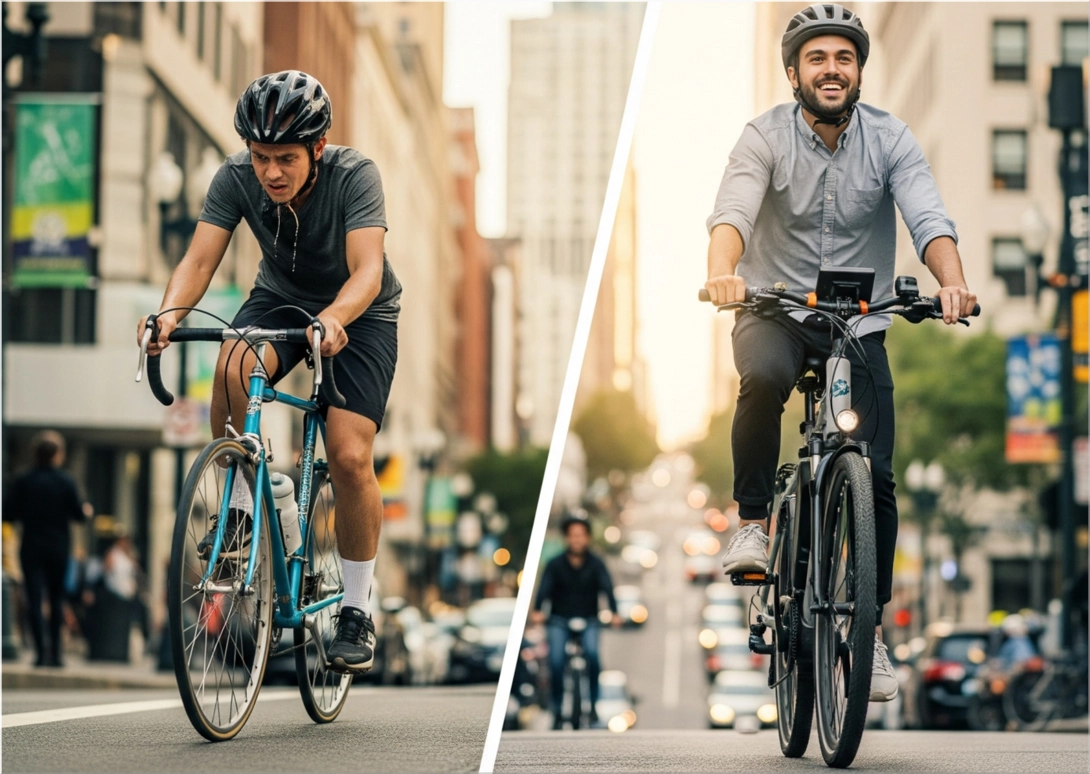
Electric bike rentals beat traditional bike rentals for most riders. Power assist turns steep climbs into simple rides. Range grows. Smiles last. Tourists cover more ground in less time. Locals swap short car trips for saddle time. Search demand for electronic bike rental keeps rising in major cities, because convenience wins.
The core reasons are clear. E-bikes add assist only when you pedal. You still ride. You simply ride farther, faster, and with less fatigue. Fleets now use swappable batteries and durable parts. Uptime stays high. Availability is broad. Shared systems set records for trips in 2023. That momentum continues through 2025.
How e-bike rentals deliver more fun per ride
Effortless climbs with real range
Hills stop many riders. E-bikes flatten them. Mid-drive motors add smooth torque when you press the pedals. Riders hold speed into headwinds and on grades. A common 500 Wh pack supports real travel. Expect roughly 20–70 miles per charge, based on support mode, rider weight, and terrain. That covers a full day’s urban touring for most riders.
More distance, less fatigue, more rides
Data backs the fun. Reviews of rider behavior show e-bike trips run longer than standard bike trips. Riders also ride more often. One review found e-cyclists travel farther each day than conventional cyclists. A recent 2024 study found e-bike riders travel about 13% farther per trip than riders on regular bikes. That extra distance turns a short loop into a full neighborhood tour.
Keep groups together across fitness levels
Mixed groups struggle on regular bikes. Fit riders surge ahead. Others drop. Electric bike rentals fix that gap. Assist lets everyone hold a steady pace. Step-through frames help shorter riders and those with limited mobility. Some share fleets now offer smaller wheels and lower standover heights. That widens access and reduces wobble at low speeds. These updates draw older riders and more women into the saddle.
See more of a city in the same time window
Tourists have tight schedules. E-bikes expand the map within a two-hour block. That means more landmarks and fewer taxi hops. Shared systems recorded 157 million bike and scooter share trips in 2023. E-bikes drove that growth inside many systems. Rentals extend routes without draining riders. That keeps the experience upbeat through the last mile.
Sample models before buying, with clear classes
Rentals act like a rolling demo floor. Try a city hybrid one day. Try a cargo model next. In the U.S., three e-bike classes guide access. Class 1 uses pedal assist to 20 mph. Class 2 adds a throttle, also to 20 mph. Class 3 uses pedal assist to 28 mph and includes a speedometer. When you rent, ask the class. Pick the class that fits local paths.
Start riding fast with low hassle
You skip transport and storage when you rent. Pick up a charged bike and go. Large operators now track bikes, swap batteries, and fix issues in the field. That logistics layer keeps more bikes ride-ready each morning. One global operator reported 156 million trips in 2023 and more than 500 million lifetime trips to date. Scale like that supports frequent swaps and rapid service. Riders benefit with fewer downtimes.
Cost: what a day of fun usually costs in USD
Prices vary by city and operator. The table shows realistic ranges from U.S. urban shops and large rental outfits. All values are USD.
| Time window | E-bike rental price | Traditional bike price | What you get |
|---|---|---|---|
| 1 hour | $25–$40 | $10–$20 | Helmet and lock in most shops |
| 3 hours | $55–$75 | $25–$40 | Good for parks and waterfronts |
| Full day | $60–$100 | $30–$55 | Ample time for cross-town routes |
| Week | $200–$400 | $120–$200 | Best for multi-day trips |
Examples: New York retail rentals list full-day e-bike rates around $69–$85. Some outlets advertise hourly e-bike rates starting at $40. Prices shift by season and location. Expect higher rates near major attractions.
The charging math favors e-bikes
Most renters never charge during the booking. Still, charging costs help show efficiency. A 500 Wh battery uses 0.5 kWh. The average U.S. residential rate sits near $0.17/kWh in 2025. A full charge therefore costs about $0.09. Even at higher rates, a charge stays under $0.20. That is pennies per ride. Shops handle charging. Riders focus on routes, not outlets.
Range, speed, and time on task
A day rental usually includes a battery with 400–500 Wh. Plan routes of 20–50 miles without stress. Keep assist in Eco or Tour to stretch range. Hold Turbo for short climbs or heavy cargo. The Class 1 and Class 2 assist caps at 20 mph help manage speed on shared paths. Class 3 suits on-street lanes and longer commutes. Ask the shop which class fits your route.
Health impact: you still get a workout
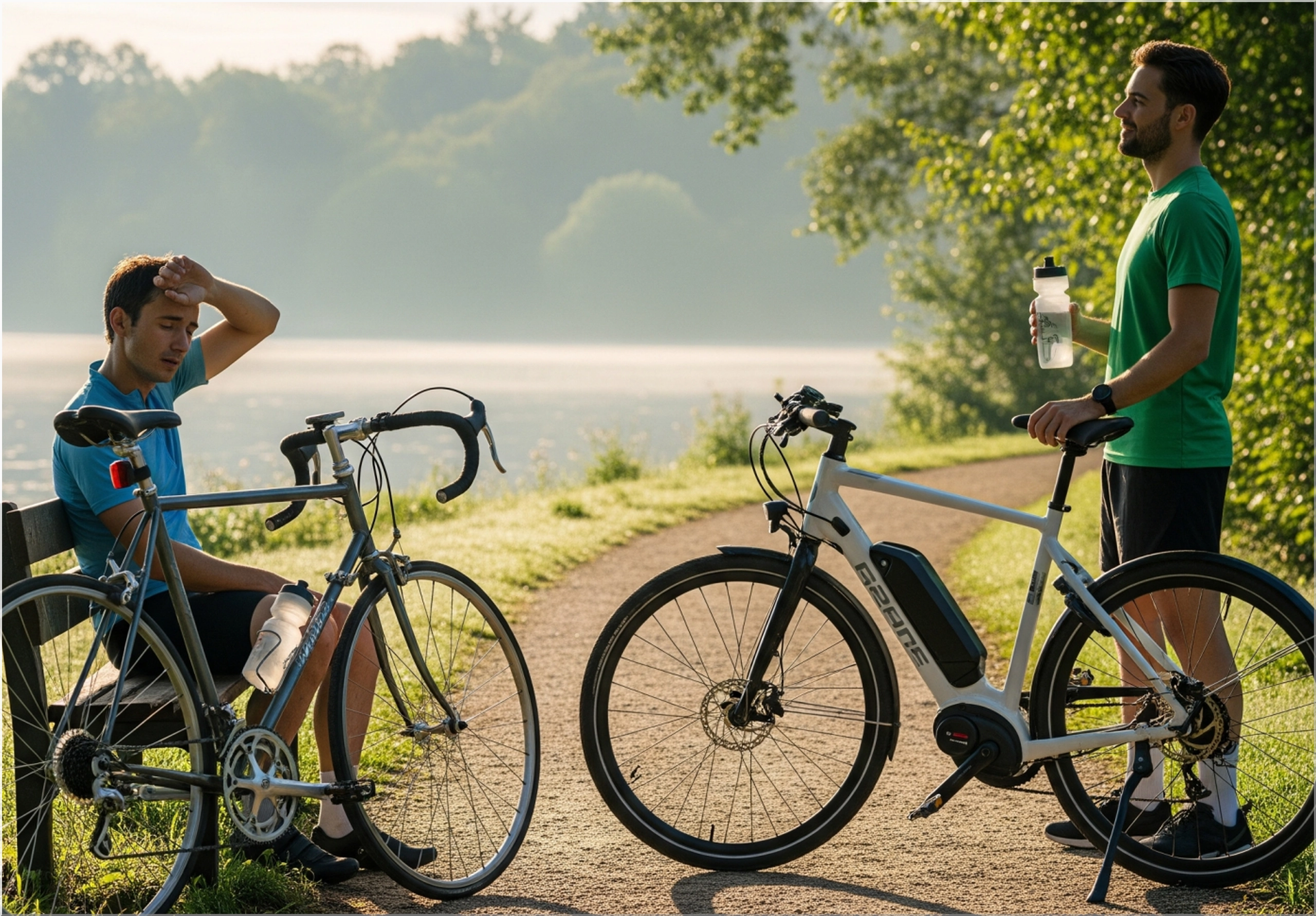
Riders often ask about health. Research shows e-cycling produces moderate-intensity physical activity. Riders spend long periods in that zone because trips run longer. That yields real cardio benefits. Another analysis found intensity sits lower than on regular bikes. Yet total time and distance rise. That means weekly activity can match or beat traditional cycling for many riders. For renters, that balance means fun without overexertion on vacation.
Safety and rules: keep rides smooth
Know your class. Class 1 and Class 2 cap assist at 20 mph. Class 3 caps at 28 mph and adds a speedometer. Laws vary by state and city. Many shared paths allow Class 1. Some restrict throttles or Class 3. Wear a helmet. Use lights day and night. Brake early on descents. Keep right and pass with care. If you ride in a share program, park in a marked zone. Some operators now use AI or photo checks to confirm parking and reduce sidewalk clutter.
Side-by-side: traditional bike rentals vs electric bike rentals
| Category | Traditional bike rentals | Electric bike rentals |
|---|---|---|
| Hill climbing | Demands fitness | Assist handles grades |
| Average range, day use | 10–25 miles | 20–50+ miles |
| Pace control in groups | Hard to match | Groups stay together |
| Sightseeing radius | Limited | Larger radius |
| Trip frequency | Lower for many riders | Higher due to reduced fatigue |
| Cargo and kids | Limited | Cargo and child seats available |
| On-the-spot smiles | Good | Great |
Environmental angle: small energy, large impact
Cars emit hundreds of grams of CO2 per mile on average. Replacing a short car trip with an e-bike trip cuts emissions sharply. Life-cycle studies put e-bike emissions near 22 g CO2e/km. That sits far below even efficient cars. The grid matters. Yet the gap remains wide in most regions. For short urban trips, e-bikes carry a clear advantage.
Practical tips for a better e-bike rental
- Pick the right class for your route.
- Ask for battery Wh and expected range.
- Check brakes. Hydraulic discs stop well with added weight.
- Confirm frame size or step-through geometry.
- Inspect tires for cuts before you roll.
- Make sure a lock and helmet are included.
- Ask about theft policy and any deposit.
- Request a spare charger for multi-day bookings.
- Learn the assist modes before traffic riding.
- Keep a pace that matches the slowest rider.
Deeper dive: what powers the fun
E-bike motors add torque at low cadence. That helps starts and short ramps. Mid-drive units read pedal pressure and cadence many times per second. Assistance stays predictable. Batteries range from 400 to 725 Wh in many fleets. Larger packs add weight but cut range anxiety. Fleets favor modular packs for fast swaps. That speeds turnaround and keeps bikes on the street. The result: more bookings and fewer wait times.
Why electric bike rentals win on the metrics that matter
- Time: More landmarks in the same hour block.
- Distance: Longer routes with steady effort.
- Group fit: Mixed abilities ride together.
- Cost: Daily rates are reasonable for urban travel. Charging costs are tiny.
- Health: Moderate intensity with longer duration.
- Impact: Lower emissions than short car trips.
- Access: Classes help match bikes to paths.
- Operations: Swaps and field service keep fleets available.
What to ask the shop, fast
- What class is this e-bike?
- What is the battery capacity in Wh?
- What range should I expect on Eco and Tour?
- Are helmet and lock included in the price?
- What is the late fee and after-hours return policy?
- Do you offer cargo setups or child seats?
- Can I swap to a fresh battery mid-day?
- Do you provide puncture kits or roadside help?
- Is theft covered, and what is the deposit?
- Which routes avoid heavy car traffic?
Final take
Electric bike rentals deliver clear gains over traditional bike rentals. They shrink hills. They expand range. They cut trip time. They turn a two-hour window into a full tour. Prices remain accessible in many cities. Health benefits hold up, backed by independent studies. Cities and operators keep improving fleets and rules. For riders, the outcome is simple. You get more ride, more sights, and more smiles per hour.

- Add new comment
- 149 views