For years, the biggest psychological barrier to embracing electric vehicles (EVs) hasn’t been price or performance's range anxiety. That lingering fear of running out of juice in the middle of nowhere has kept many drivers clinging to combustion engines. But now, a new technological leap is on the horizon: solid state batteries. These aren’t just incremental improvements over today’s lithium ion cells, they're the kind of breakthrough that could make range anxiety feel like a quaint relic of the early EV days. And just like how you might create collage to capture different moments into one powerful picture, solidstate batteries bring together durability, efficiency, and safety into a single transformative package.
What Makes SolidState Batteries Different?
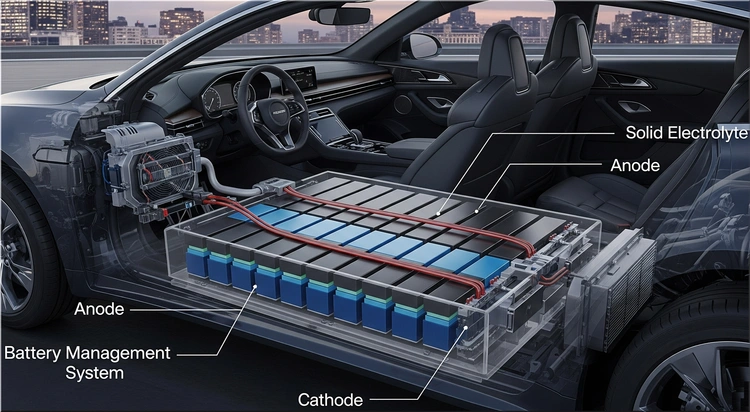
Today’s lithium ion batteries use a liquid or gel electrolyte to transfer ions between the anode and cathode. This works well but comes with compromises: flammability risk, slower charging at low temperatures, and gradual degradation over time.
Solidstate batteries swap that liquid electrolyte for a solid one, often made of ceramic, glass, or other solid compounds. This seemingly small change unlocks major advantages:
- Higher energy density, more miles per charge without increasing battery size.
- Better safety, less risk of fire or thermal runaway.
- Longer lifespan reduced degradation means the battery retains capacity for more years.
- Faster charging potentially slashing wait times at charging stations.
In short, it’s the EV equivalent of moving from bulky desktop computers to sleek laptopsa foundational shift that changes what’s possible.
How SolidState Batteries Could Eliminate Range Anxiety
Range anxiety stems from two main fears: not having enough range to reach your destination and not being able to recharge quickly. Solidstate technology tackles both.
With higher energy density, automakers can pack more miles into the same space. Imagine a compact EV capable of 600 miles on a single charge longer than many gasoline cars.
Then there’s charging time. In lab tests, some prototypes have reached 80% charge in under 15 minutes. That’s close to the time it takes to grab a coffee on a road trip.
If those numbers make it to mass production, the EV ownership experience will start to feel more like owning a smartphone, plug it in briefly and get back to your day.
The Industry Race to Commercialization
Major automakers and startups are in a high stakes race to make solid state batteries commercially viable. Toyota has been teasing prototypes for years and claims it’s on track for production in the late 2020s. Volkswagen, through its investment in QuantumScape, has shown promising performance data, though scaling production remains the challenge.
BMW and Ford are also backing research efforts, while smaller innovators like Solid Power are exploring unique manufacturing methods to cut costs.
The challenge isn’t the science, it's mass producing these batteries reliably and affordably. Solid electrolytes are more expensive and harder to work with than liquid ones, and scaling from lab samples to millions of car ready units is no small feat.
Beyond Cars: Other Applications of SolidState Batteries
While EVs are the headline act, solidstate batteries could revolutionize other industries, too:
- Consumer electronics lighter, safer, and longer lasting smartphones and laptops.
- Aerospace more efficient energy storage for electric aircraft and satellites.
- Grid storage stabilizes renewable energy supply by storing solar and wind power more effectively.
Imagine drones that can fly for hours instead of minutes, or medical devices with batteries that last for years without replacement.
Environmental Impact: Cleaner and Greener
Solidstate batteries could also improve the sustainability profile of EVs. Their longer lifespan means fewer battery replacements, reducing resource extraction and waste. Plus, they may use less cobalt material linked to environmental and ethical mining concerns.
And because they operate safely at higher temperatures, solidstate packs could work more efficiently in hot climates without requiring heavy cooling systems, further reducing energy consumption.
Challenges That Still Need Solving
Despite the promise, several hurdles remain:
- Manufacturing Cost Right now, producing a solid state battery can cost several times more than a lithium ion equivalent.
- Material Availability Some solid electrolytes rely on rare or expensive materials.
- Durability at Scale Early prototypes work well in controlled settings, but performance can degrade when scaled up.
Until these challenges are addressed, solid state batteries will remain a premium technology, likely appearing first in high end EVs before trickling down.
When Will They Be in Your Driveway?
Industry insiders predict we’ll see the first commercial solid state EVs on the road between 2027 and 2030. Toyota, Nissan, and BMW are all targeting late decade launches, while Tesla has been quieter about its plans but is likely working on its own solutions behind closed doors.
If history is any guide, adoption will be gradual. Early models will carry a premium price tag, but as production scales and costs drop, solidstate batteries could become the industry standard just as lithium ion did two decades ago.
How to Prepare for the SolidState Future
If you’re an EV enthusiast or a cautious first time buyer, here’s how you can get ready:
- Stay informed Follow updates from major automakers and battery startups.
- Consider leasing If you’re buying an EV in the next few years, leasing could give you flexibility to upgrade when solid state models hit the market.
- Longterm Solidstate batteries may redefine vehicle lifespans, making an EV purchase even more cost effective over time.
The bottom line? The future of electric mobility is looking a lot more… solid.
Final Thought: Solidstate batteries aren’t just about squeezing in more miles or shaving minutes off charging time they're about reshaping the EV experience from the ground up. Once the technology matures, range anxiety could become as outdated as the sound of a dialup modem. And for drivers everywhere, that’s a future worth waiting for.


The Toyota Prius has long been the poster child for hybrid cars but was never known for being exciting or stylish. That changed with the 2023 model year, when the Prius and its plug-in hybrid variant, the Prius Prime, underwent a… Continue reading

Stellantis, the world’s fourth-largest automaker, has announced that it will start producing electric vans at its Luton plant in the UK from 2025. The move is part of the company’s strategy to expand its presence in the UK market and to meet the… Continue reading
Texas may be all about going big, but when it comes to electric vehicles (EVs), there's a whole new kind of bigness to consider. Kia's recently unveiled EV9, a three-row, all-electric SUV, has just been named the "Electric Vehicle of Texas"… Continue reading

The world of electric trucks is rapidly evolving, and the Freightliner eCascadia is at the forefront, setting new benchmarks in both performance and safety. As more fleets transition to electric vehicles, safety becomes a… Continue reading