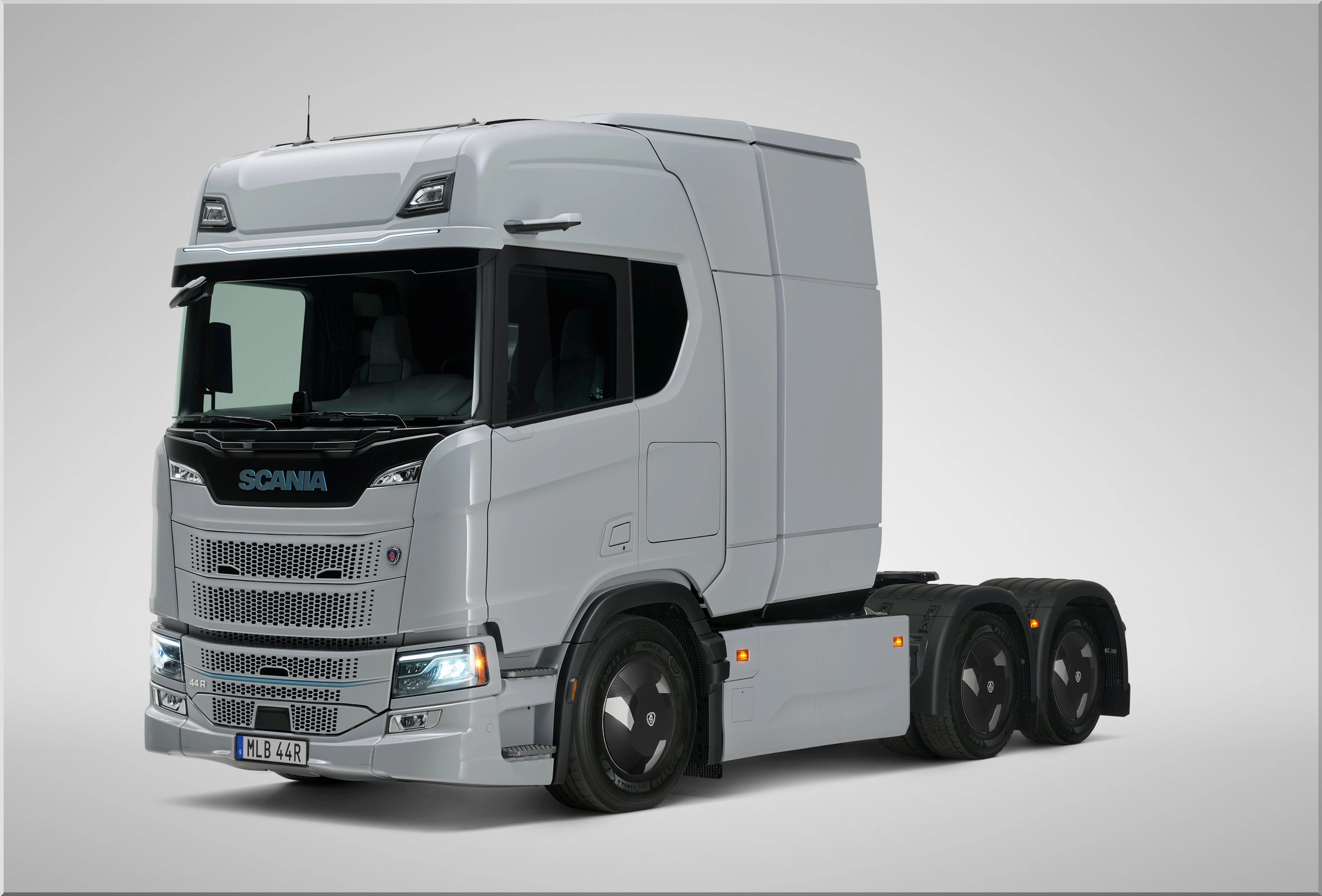
Scania's electric long-haul truck configuration targets up to 720 km (447 miles) with 720 kWh of usable battery energy. Extra batteries behind the cab expand capacity, while high-power charging supports longer routes. Scania's current product specifications list early 2027 availability for the 720 kWh option; operating weight changes its range substantially.
How does Scania reach 720 km of electric range?
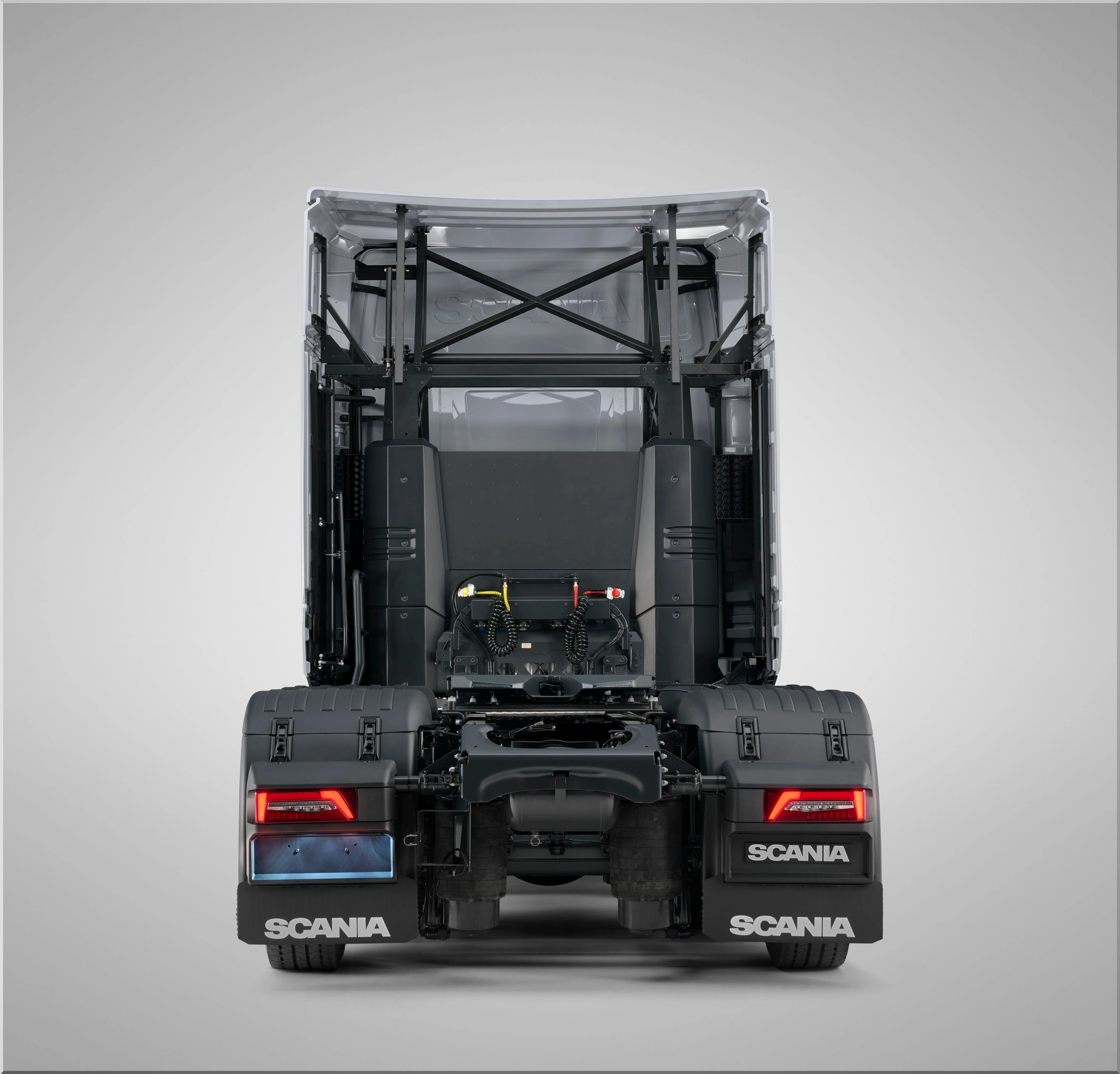
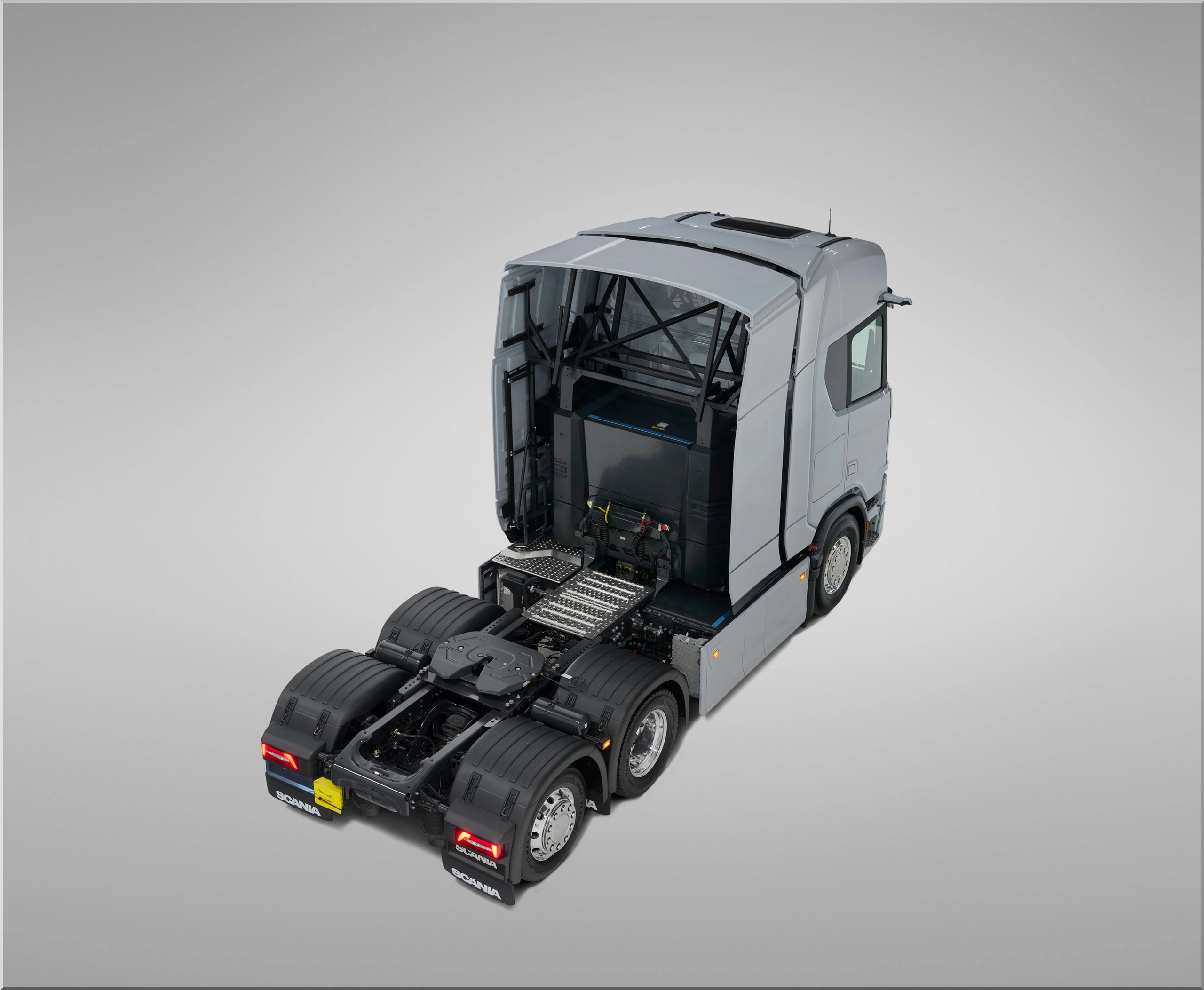
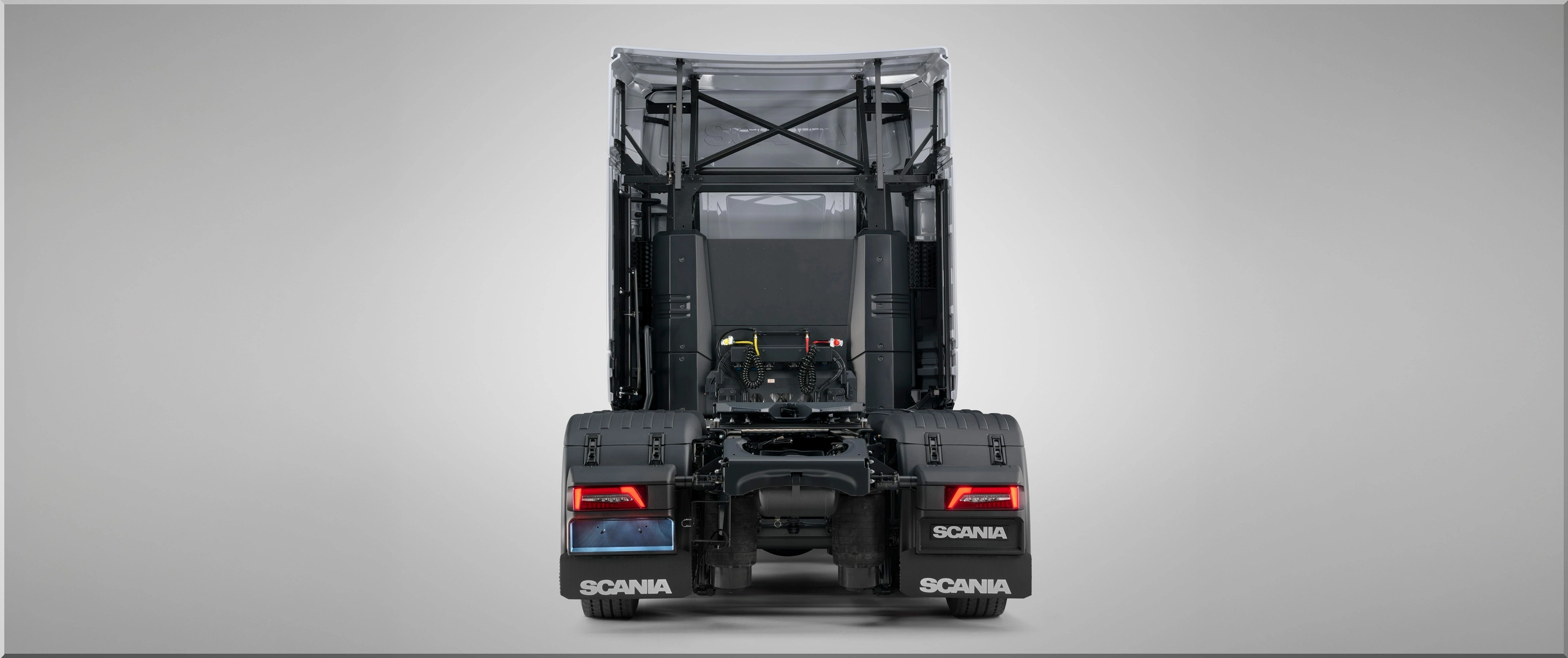
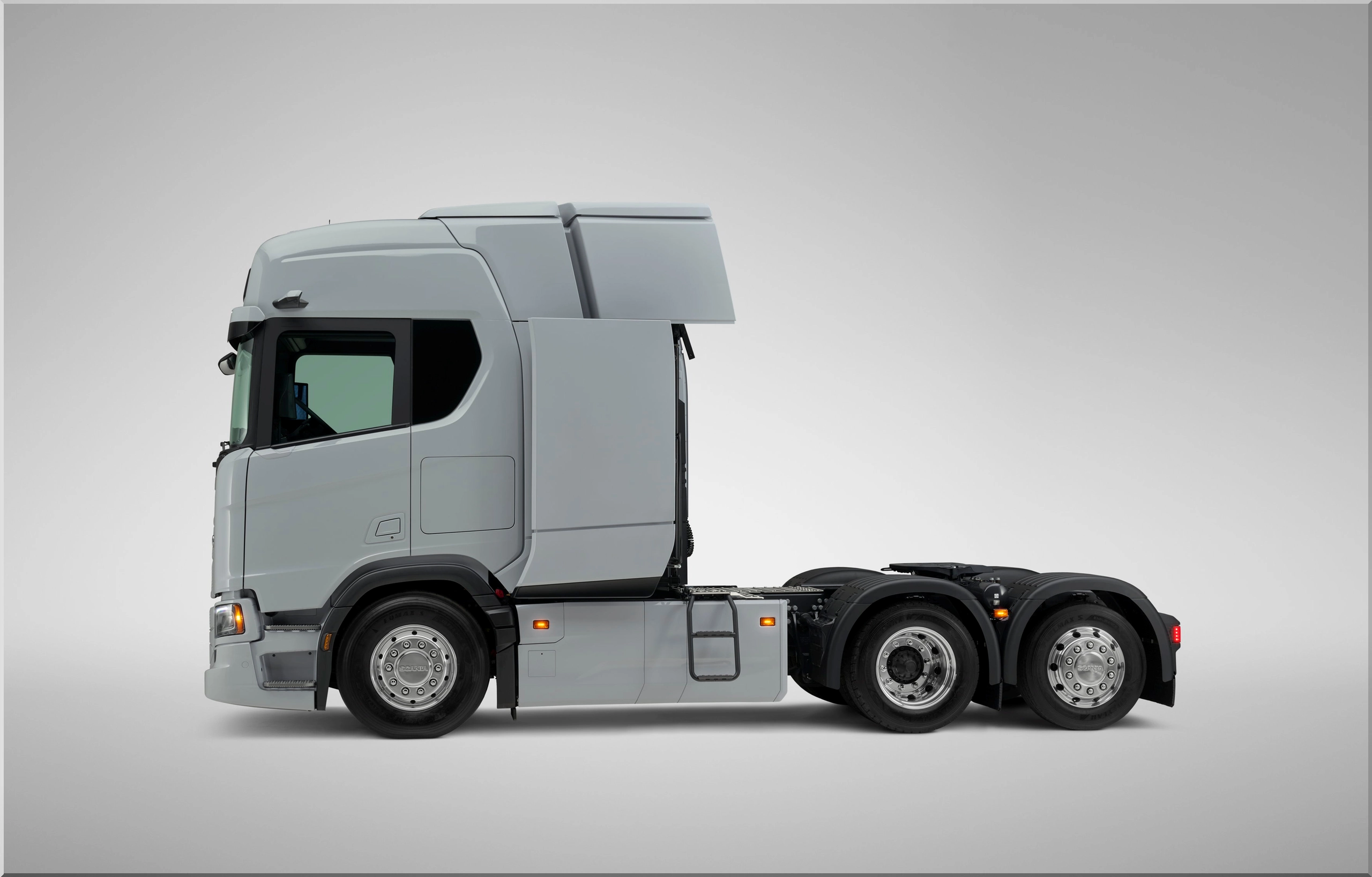
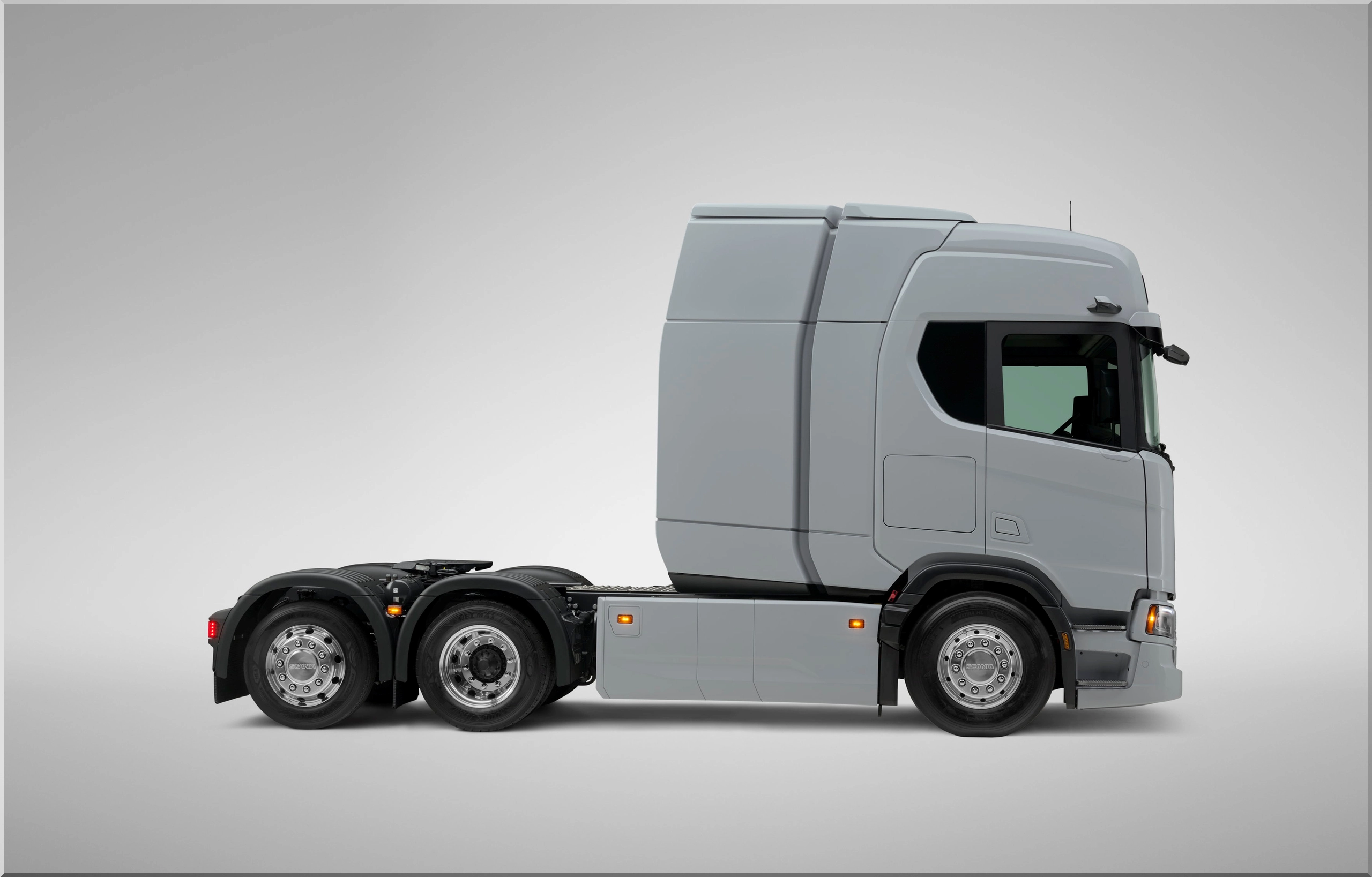
Two MP20 battery packs behind the cab add 320 kWh of usable energy to batteries on the frame and under the cab. This packaging supports selected 6x2*4 tractors with standard European trailers. Scania pairs it with its Increased Vehicle Dimension front, which can cut energy consumption by up to 3%, depending on operation.
Specifically, the revised front reduces aerodynamic losses. That helps a highway truck spend less battery energy pushing air aside.
| Operating condition | 42 metric tons combined weight | 64 metric tons combined weight |
|---|---|---|
| Usable battery energy | 720 kWh | 720 kWh |
| Scania's maximum range claim | 720 km / 447 miles | 450 km / 280 miles |
| Weight in pounds | Approximately 92,594 lb | Approximately 141,096 lb |
| Energy per mile implied by capacity and range | Approximately 1.61 kWh | Approximately 2.57 kWh |
Gross train weight counts the truck, trailer, and load together. It does not describe payload alone.
The heavier case cuts claimed range by 37.5%. These figures describe Scania's stated operating scenarios; they do not provide independent winter or mountain-route test results.
How quickly can the 720 kWh battery charge?
Scania lists Megawatt Charging System (MCS) capability at 750 kW and CCS2 charging at 375 kW. For the 720 kWh option, its published 10%-80% charging times reach 45 and 90 minutes, respectively. Those figures require suitable charging equipment and operating conditions; peak power alone does not determine stop length.
| Charging system | Maximum power/current | Published 10%-80% time | Pros | Cons |
|---|---|---|---|---|
| MCS | 750 kW / 1,000 A | 45 minutes | Halves the stated stop time versus CCS2 | Requires access to compatible MCS hardware |
| CCS2 | 375 kW / 500 A | 90 minutes | Provides another charging option | Adds 45 minutes for the same stated battery window |
That battery window represents approximately 504 kWh. Consequently, the stated times imply average battery replenishment rates of roughly 672 kW for MCS and 336 kW for CCS2, rather than constant peak charging.
These European connector specifications do not establish compatibility with North American NACS or CCS1 equipment.
Image gallery:
Should a fleet choose the largest battery?
Choose capacity around route demand, charging access, and revenue-generating payload. My take from the specifications: a dependable charging stop can make a smaller battery the stronger business choice. The largest pack offers flexibility, but operators still need route-specific energy estimates and a complete total cost of ownership comparison.
Pro-Tips:
- Test route projections with full loads, winter temperatures, elevation changes, and an arrival reserve.
- Confirm truck access, charger availability, and backup charging before committing to a corridor.
- Compare financing, insurance, charger installation, maintenance, and depreciation alongside energy costs.
For a transparent planning example, 1.61 kWh per mile at an assumed $0.15/kWh produces approximately $0.24 per mile in battery-energy cost. Charging losses and demand charges increase that figure. Scania supplies no purchase price in the cited material, so operators need a vehicle quote before estimating payback.
- Add new comment
- 9 views