Geotab has prepared a joint study with AEGFA, Spanish Association of Fleet Managers and Mobility (Asociación Española de Gestores de Flotas de Automóviles), to analyze the state of electrification of fleets in Spain. The study is based on a survey of more than 90 managers of medium and large fleets in Spain and among its main conclusions highlights that the vast majority is planning to increase the adoption of electric vehicles.
In fact, only 1% of companies surveyed maintain that no change would encourage them to electrify their fleet. In addition, 24% believe that electric vehicles will have a dominant role in their fleet between the next 1 and 5 years and 43% within 5 and 10 years. This implies that electric vehicles will be dominant for 67% of Spanish fleets before 10 years. In this regard, we must bear in mind that, currently, 3 out of 4 fleets are composed of diesel vehicles and restrictions on this category such as the announcement of the ban on fossil fuel vehicles in 2050 are an incentive for the adoption of 0 emission vehicles.
However, the survey also reveals that fleet managers face barriers that hinder the adoption of electric vehicles. Among the most mentioned are the low autonomy of vehicles (mentioned by 66% of the managers), the high cost of rent or acquisition (62%) and the lack of public recharging infrastructure (41%). In addition, these barriers coincide exactly with the main reasons that would encourage them to electrify their fleet: improvements in autonomy (main reason for 27% of respondents), improvement of the recharging infrastructure (22%) and improvement of the acquisition price (19%).
In any case, the managers, in general, recognize the benefits that the electrification would bring to their fleets.
Now this study by Geotab and AEGFA also proves that companies want to bet on the benefits of sustainability, efficiency, and savings that electric vehicles can bring for their organizations.

Toyota will launch its first 100% electric car in 2020. The Japanese company believes it is time to move on to the next act: electric mobility. We talk about mobility, and not just cars, since the electrification of the Toyota range will be… Continue reading

The renewable energy vehicle (REV) project at the University of Western Australia has partnered with technology partner Electro.Aero to develop the first hydrofoil watercraft, named WaveFlyer. The WaveFlyer looks like a conventional jet… Continue reading
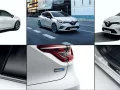
Renault has introduced the new Clio E-Tech, the hybrid version of its popular Clio, at Brussels Motor Show. The new Renault Clio E-Tech has as its main engine a 1.6 petrol engine, which is combined with two other electric motors.… Continue reading

Xiaomi finances the launch of a new contender for the title of the smallest folding electric bike. It is claimed that a model called HIMO H1 is smaller than any existing counterpart. It is a perfect solution for those who… Continue reading