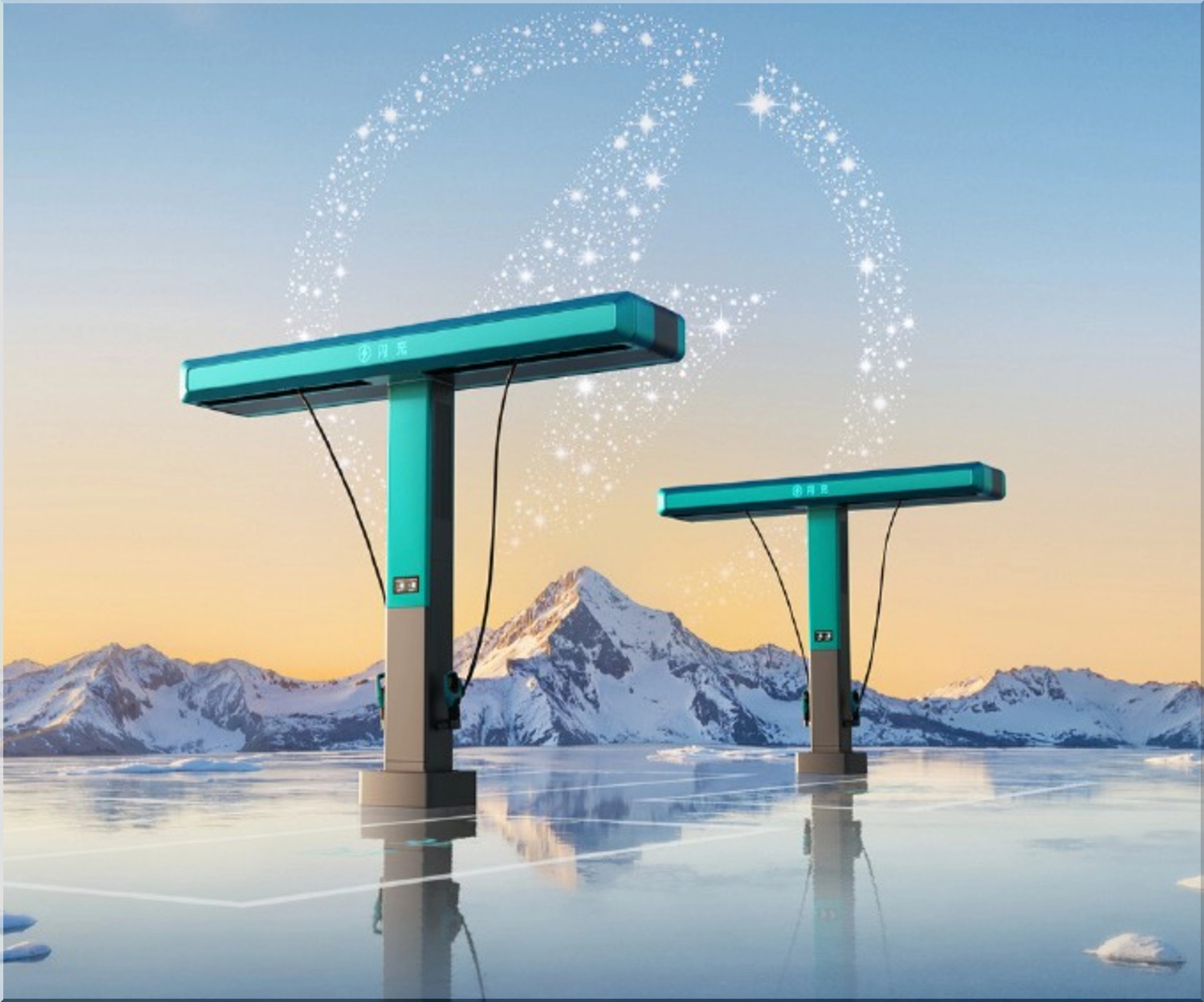
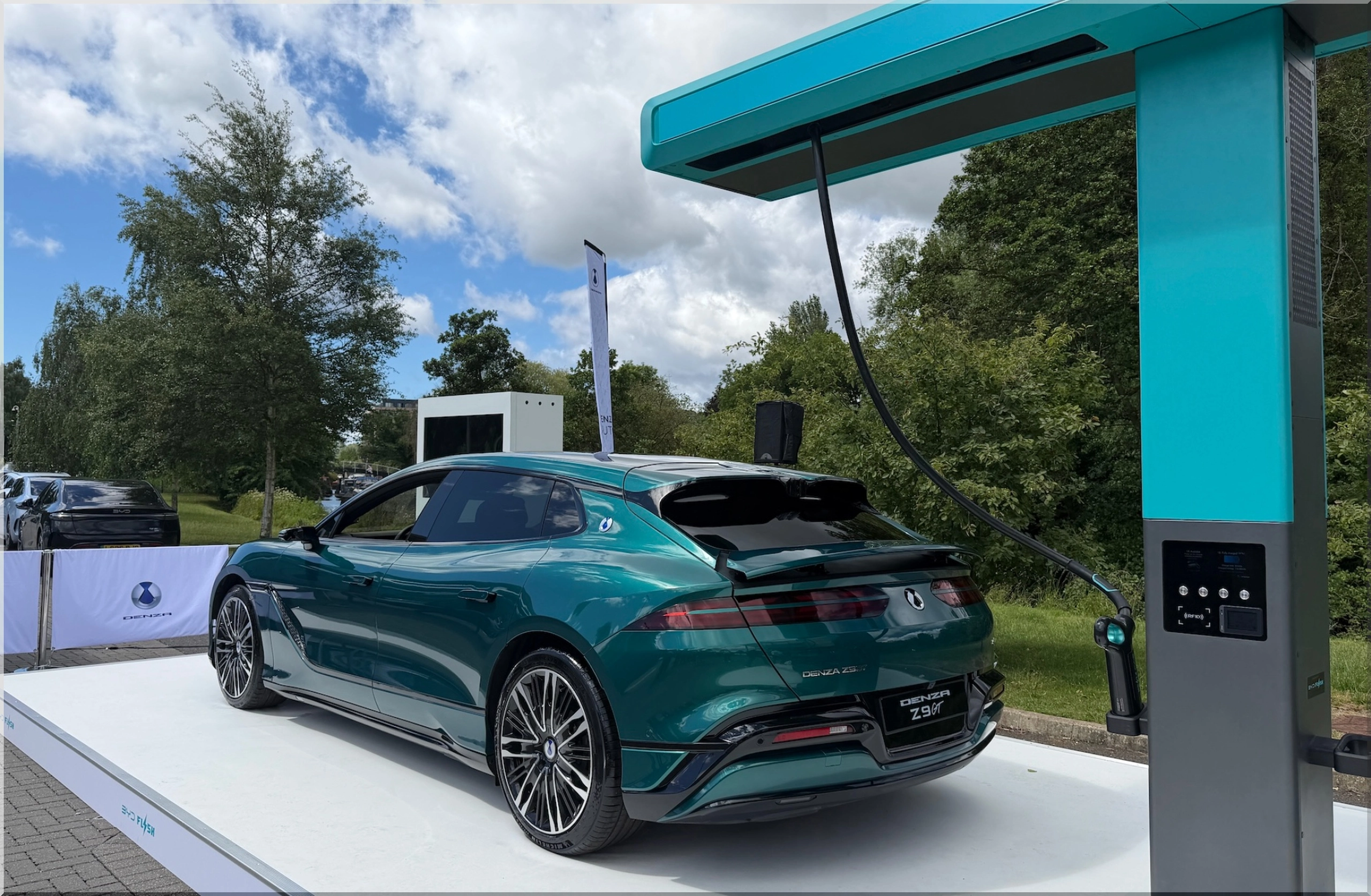
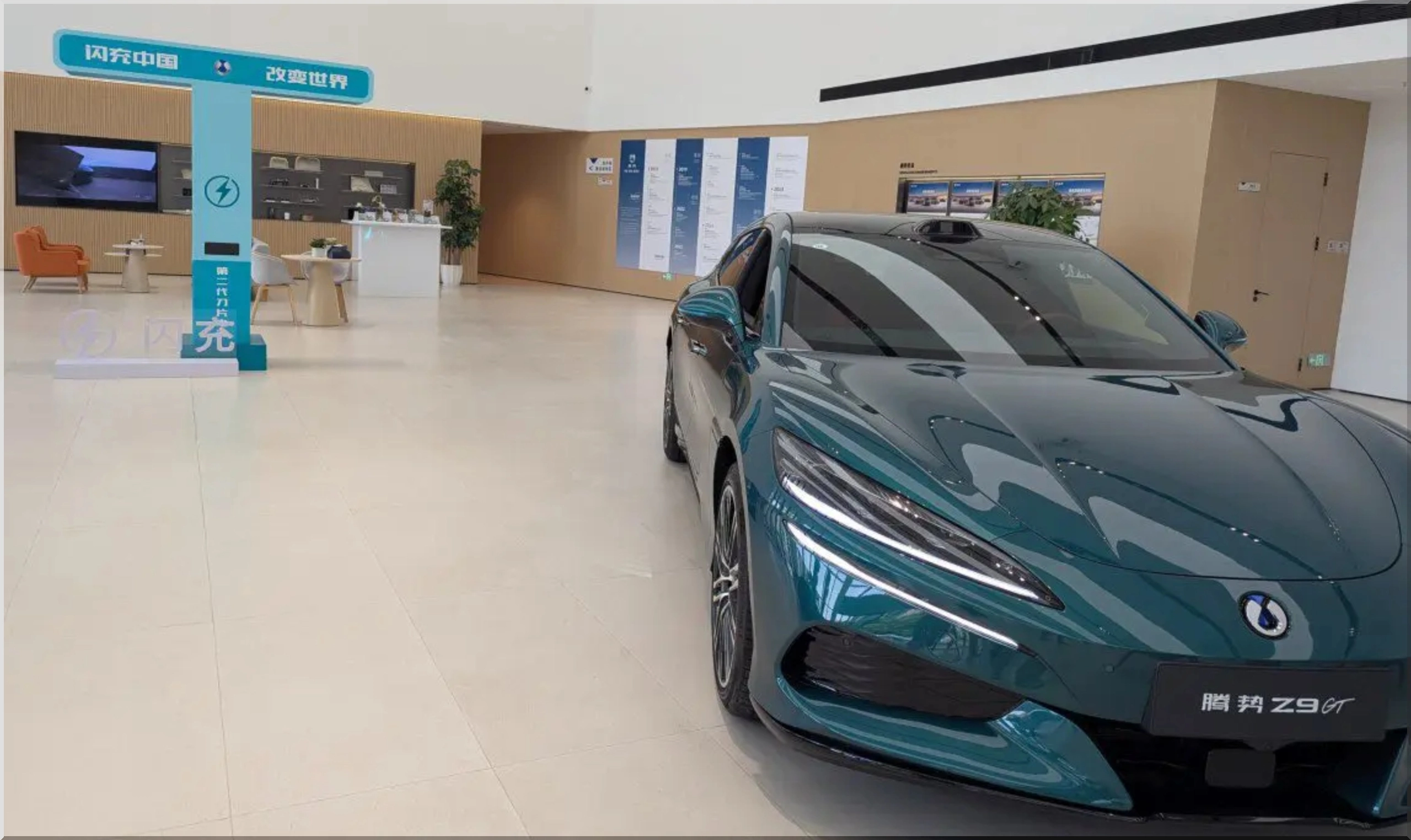
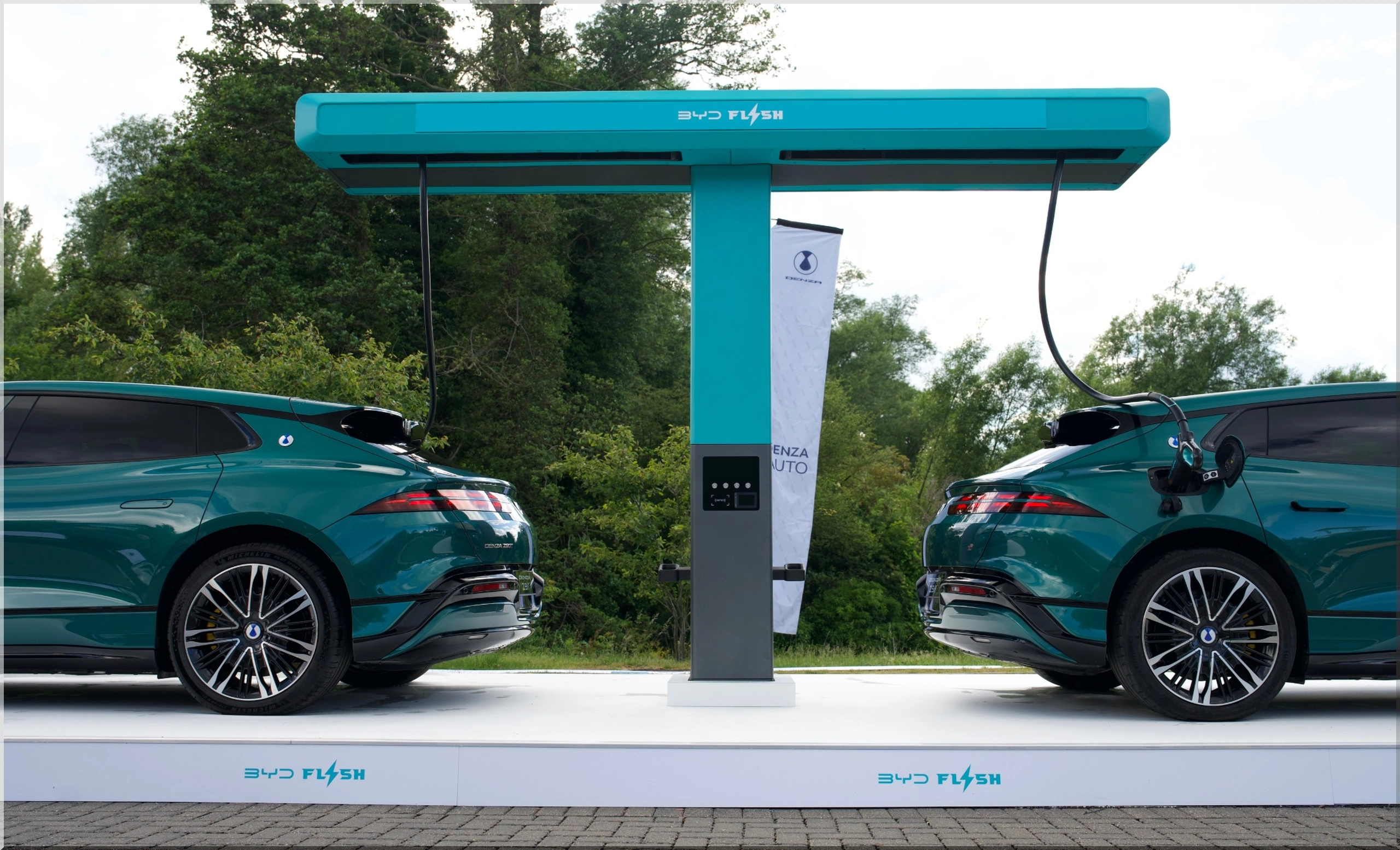
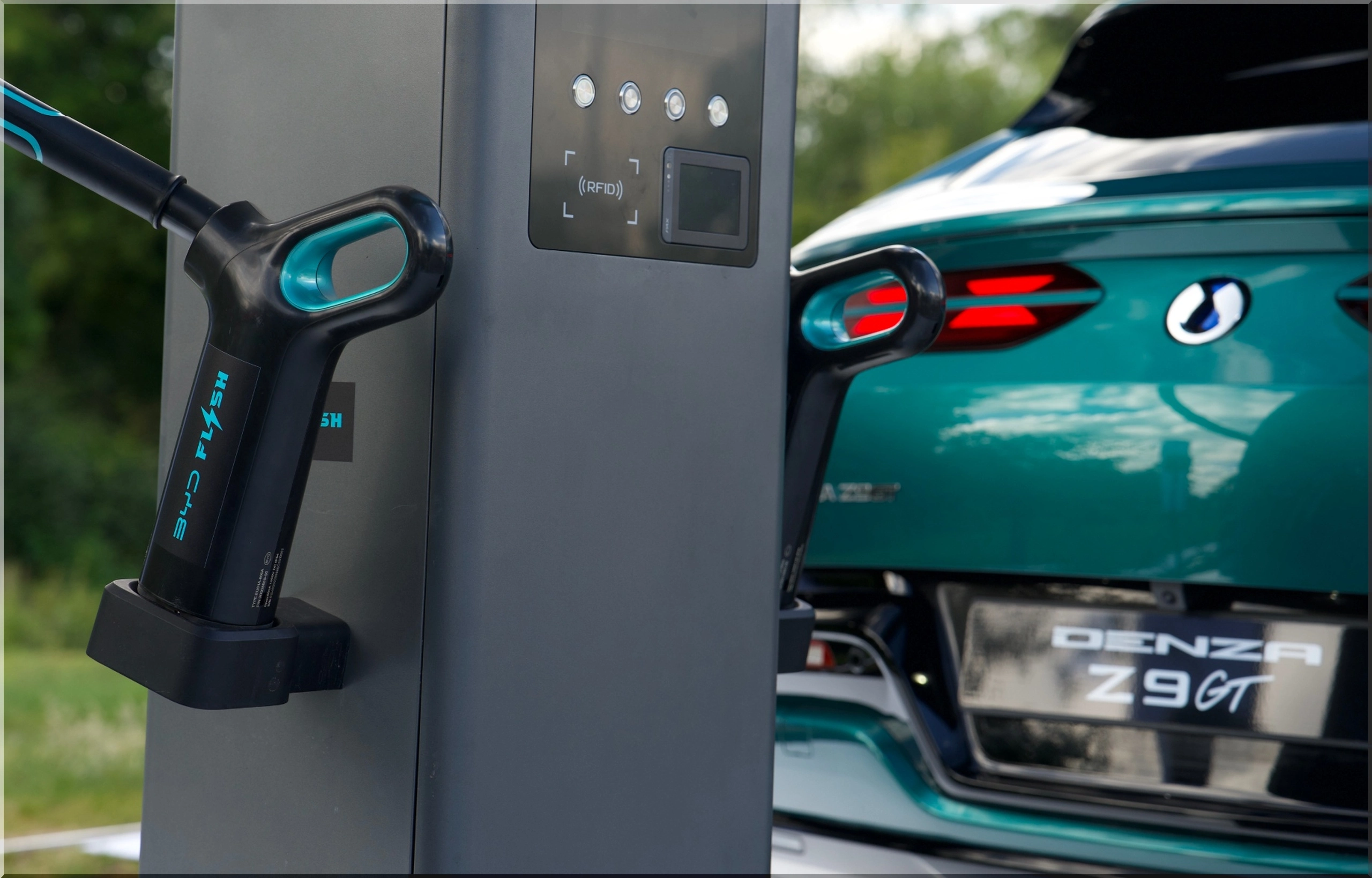
BYD now pushes EV charging into gasoline-refill territory. Its Flash Charging system gives compatible electric vehicles up to 1,500 kW, while its Super e-Platform uses a full-domain 1,000V architecture, 1,000A current, and 10C battery charging. The hardware race now shifts from peak charging claims to network scale, battery chemistry, and real public access.
Why Does BYD Flash Charging Matter for EV Buyers?
BYD wants to kill the slow-road-trip complaint. Specifically, the company says its megawatt Flash Charging setup can add 400 km, or about 249 miles, in five minutes on compatible models. That moves charging from a meal stop to a fuel-stop routine, at least on paper.
The engineering logic starts with voltage. A 1,000V system can move more power with less current stress than a lower-voltage setup, which helps reduce heat in cables, electronics, and battery pathways. BYD pairs that architecture with a Flash Charging Battery that cuts internal resistance by 50 percent and accepts 1,000A.
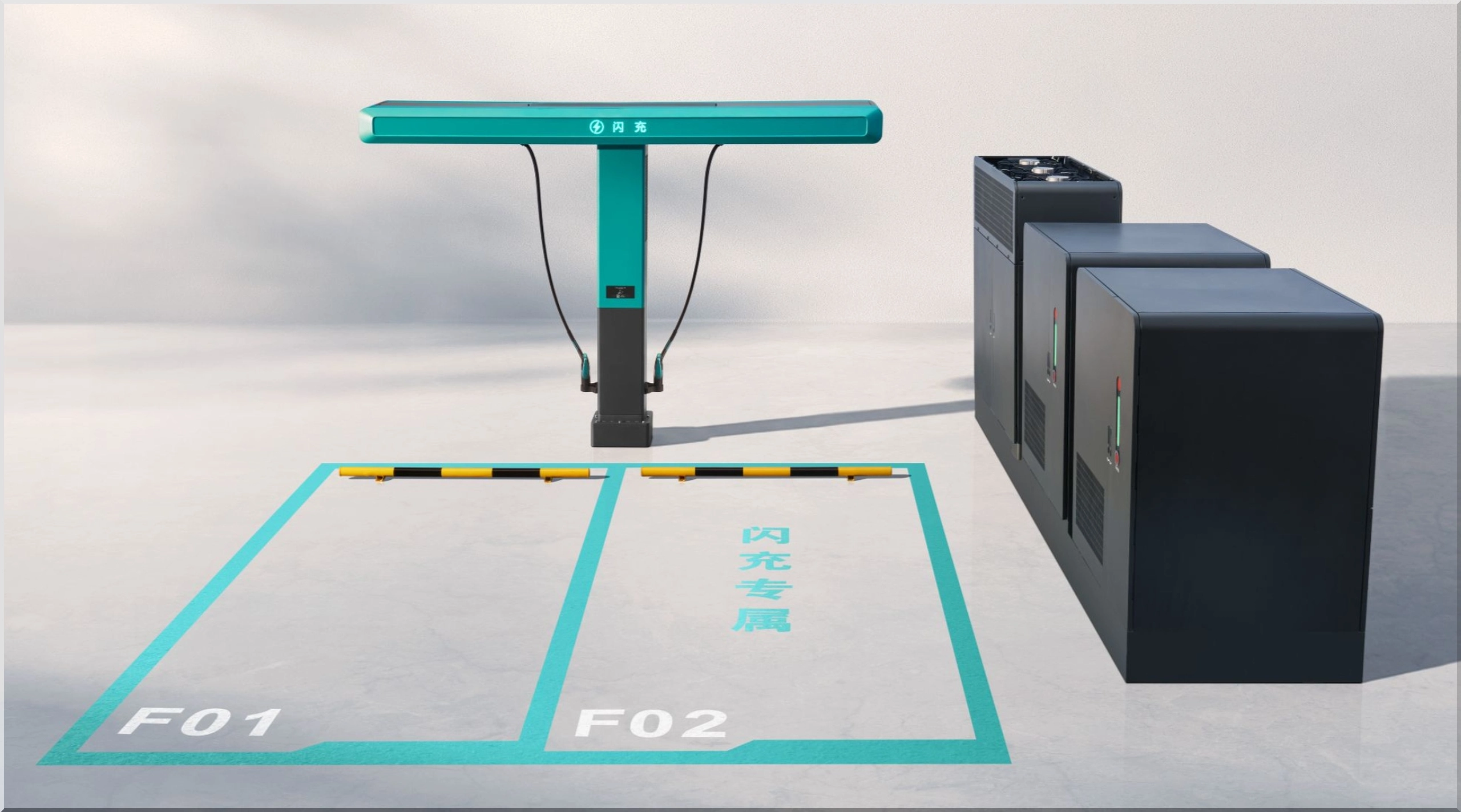
BYD Flash Charging Technical Specs
| Data point | BYD Flash Charging claim | Why it counts |
|---|---|---|
| Peak public charger output | 1,500 kW | Triple Tesla V4 passenger peak rating |
| Platform voltage | 1,000V | Supports high power with lower thermal load |
| Charging current | 1,000A | Allows megawatt-class battery input |
| Battery charging rate | 10C | Very high-rate charging for passenger EVs |
| Fast-charge result | 10-70 percent in 5 minutes | Practical road-trip refill zone |
| Near-full result | 10-97 percent in 9 minutes | Useful for long-distance highway legs |
| Cold-weather claim | 20-97 percent in 12 minutes at -30 C | Adds only 3 minutes in severe cold |
Definition: 10C charging means a battery can accept power at ten times its rated capacity rate. A 100 kWh pack at 10C would theoretically accept about 1,000 kW before tapering, thermal limits, or pack protection cut the curve.
How Does BYD Compare With Tesla Charging?
Looking at the data, BYD now attacks Tesla from two sides: power and pace. Tesla still owns the more proven global network, better route-planning integration, and wider driver trust. BYD counters with brute-force charger output and a rollout speed that no legacy charging network currently matches.
| Charging network metric | BYD Flash Charging | Tesla V4 Supercharger |
|---|---|---|
| Passenger peak output | Up to 1,500 kW | Up to 500 kW |
| Voltage support | 1,000V vehicle platform | Up to 1,000V DC |
| Public charger focus | BYD-compatible peak, CCS access in Europe | Tesla-first integration, wider open access |
| Reported China scale | 6,000+ sites by May 2026 | Smaller Asia-Pacific site base |
| Europe target | 3,000 sites by end of 2027 | 20,000+ European chargers already installed |
| Best current advantage | Maximum charging power | Network reliability and coverage |
By comparison, Tesla still wins the daily usability test for many drivers. A charger that always works beats a faster charger that your car cannot fully use. Consequently, BYD needs uptime, pricing clarity, and navigation integration, not only giant kW numbers.
Why Is BYD Deploying Charging Power So Quickly?
BYD controls more of the stack than most automakers. It builds batteries, cars, power electronics, and now high-output charging infrastructure. In addition, its Blade Battery chemistry uses LFP, which gives BYD cost and durability advantages when it designs packs for repeated fast-charge cycles.
The first overseas 1,500 kW Flash Charger marks the real signal. BYD no longer wants to sell EVs and wait for third-party networks to catch up. It wants the charger, the battery, and the vehicle to act as one system.
From an expert perspective, this strategy mirrors Tesla's early infrastructure play, but with far higher peak power and a more China-led industrial supply chain. BYD also uses battery-backed charging sites, which can refill storage during cheaper off-peak grid periods and then push high power to cars during peak driver demand.
Should You Wait for BYD Flash Charging Before Buying an EV?
Do not buy an EV today only because a 1,500 kW charger exists somewhere else. Buy based on the charging your real routes support now. Most EVs on sale cannot accept anything near 1,500 kW, and many 400V models still peak near 150-250 kW.
Pro-Tips
- Choose an EV with 800V or 1,000V architecture if highway charging speed sits near the top of your list.
- Check the full charging curve, not only the peak kW figure.
- Treat five-minute charging claims as best-case numbers for compatible vehicles under controlled conditions.
- Watch BYD's European charger pricing, because low per-kWh rates could pressure Tesla and other networks.
The Take
BYD Flash Charging changes the EV infrastructure fight from stall count to power deployment. Tesla still owns the trust advantage. BYD now owns the shock factor.
The bigger test comes next. If BYD can pair 1,500 kW Flash Chargers with affordable compatible EVs, real uptime, and fair pricing, it will force every fast-charging network to move faster. That helps drivers. That also ends the idea that Tesla has no serious charging rival.

The Renault 5 Turbo 3E has stepped out of the concept stage and onto the tarmac of the Historic Tour de Corse Rally. This modern reinterpretation of Renault’s 1980s rally icon delivers 555 horsepower,… Continue reading
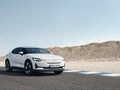
The 2027 Polestar 2 returns to Canada as a single Long range Dual motor fastback with 421 hp, all-wheel drive, 447 km of EPA-rated range, and a price near $50,400 USD. Polestar bundles Pilot, Plus, and Climate packs as… Continue reading
The German brand Porsche announces that it will double its investment in the development of electric vehicles from this time until the year 2022: it will exceed 6,000 million euros. The move to all-electric cars seems necessary for any car manufacturer… Continue reading
Volkswagen is preparing to launch the ID family of 100% electric vehicles. However, it also intends to offer new propulsion options by combining traditional gasoline or diesel engines with electricity and natural gas, offering hybrid versions… Continue reading