The Farizon V7E targets urban delivery operators that need an electric van with useful payload, credible range, and a lower entry price than legacy-brand rivals. It brings up to 204 miles of WLTP combined range, almost 7 m3 of cargo space, and pricing that will force fleet buyers to run the numbers.
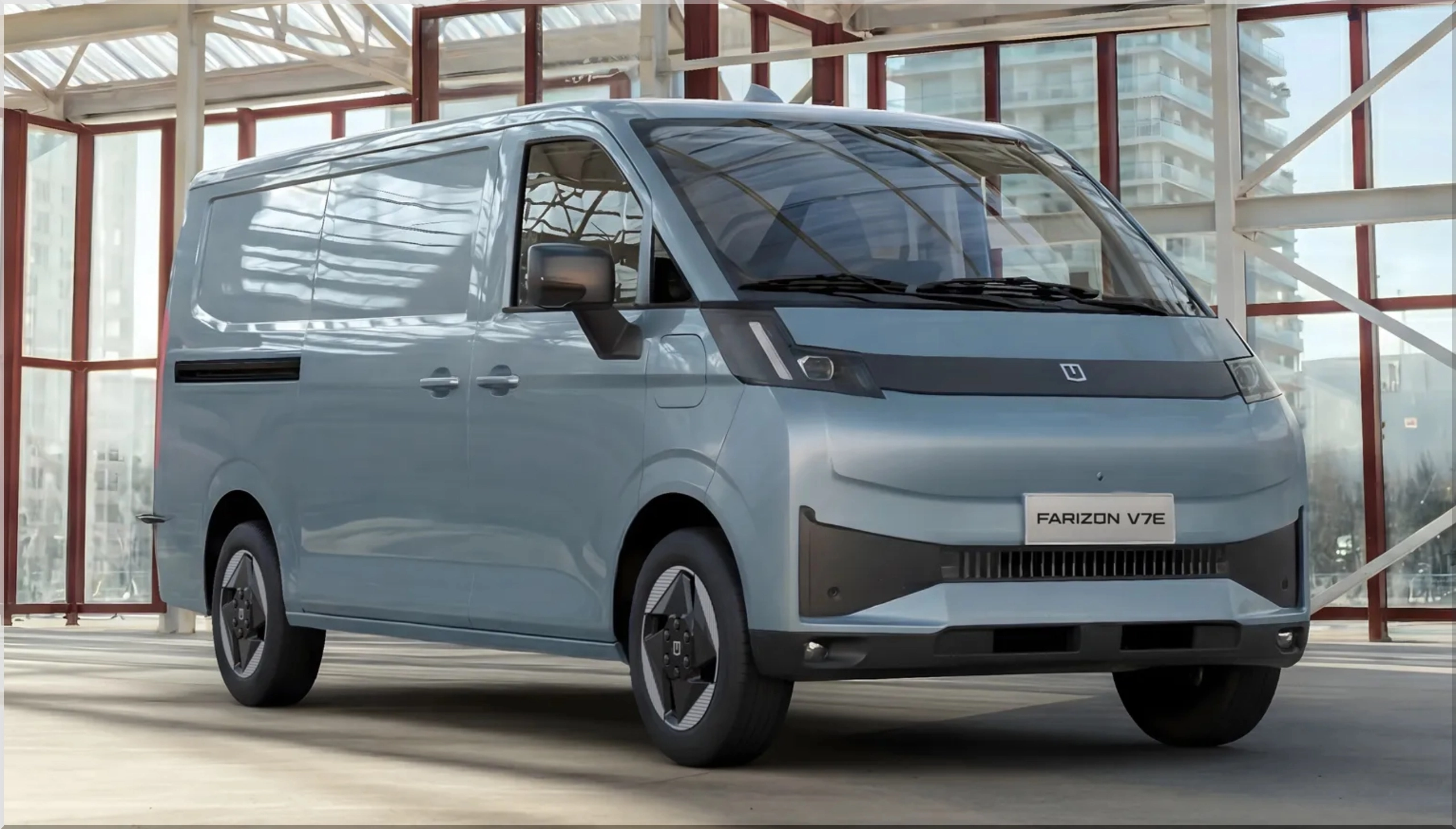
What Is The Farizon V7E?
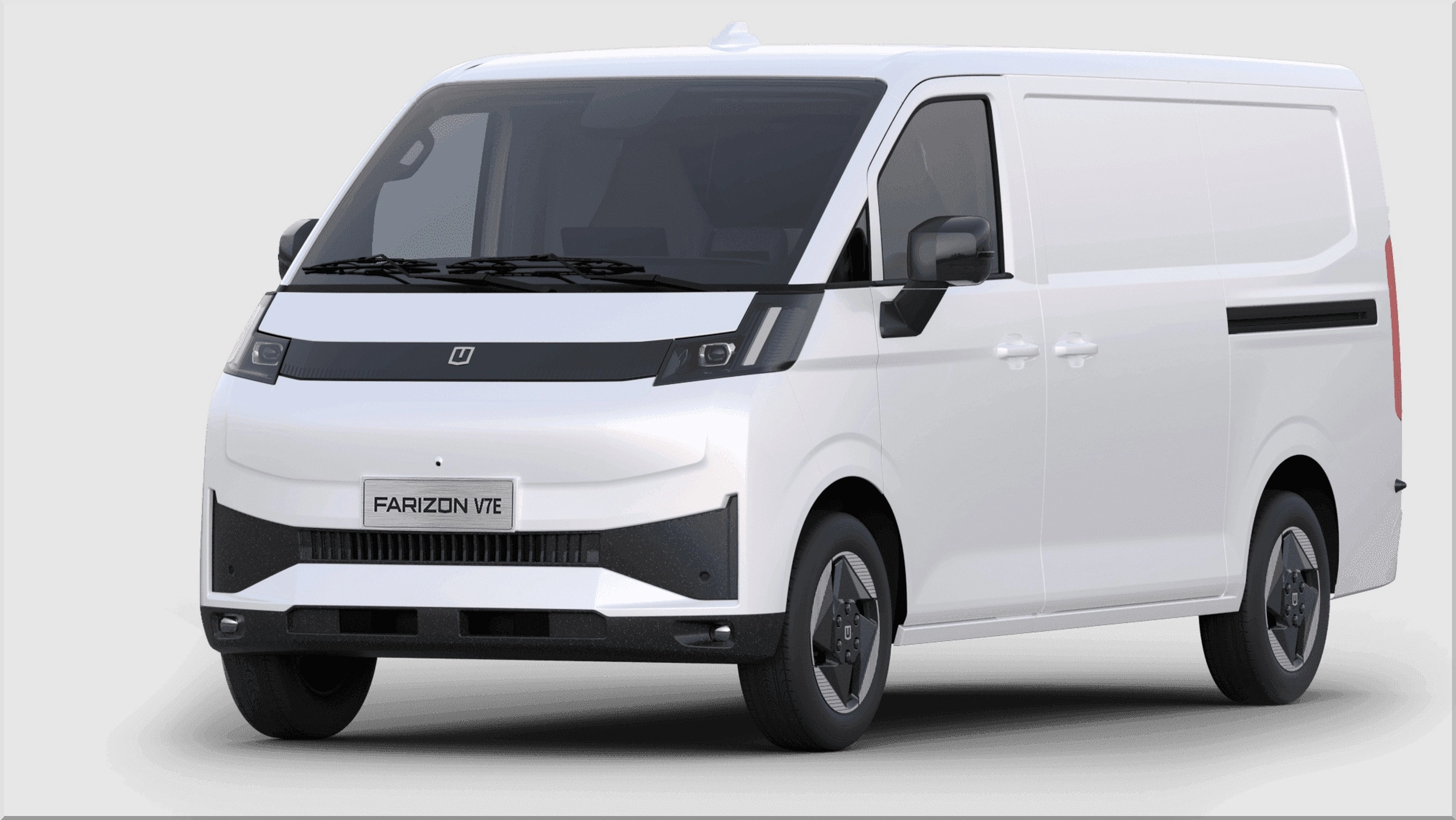
The Farizon V7E is a medium-size, fully electric panel van from Farizon Auto, the commercial-vehicle arm of Geely. That parent-company link gives the van credibility because Geely also owns Volvo, Polestar, Lotus, Lynk & Co, and Zeekr, but the V7E still reaches Europe as a challenger brand product.
Farizon does not pitch the V7E as a lifestyle van. Good. Fleets need uptime, low energy cost, service access, and space for parcels or tools. In addition, Farizon keeps the range simple: one body size, one main equipment path, and two battery packs.
How Big Is The Farizon V7E?
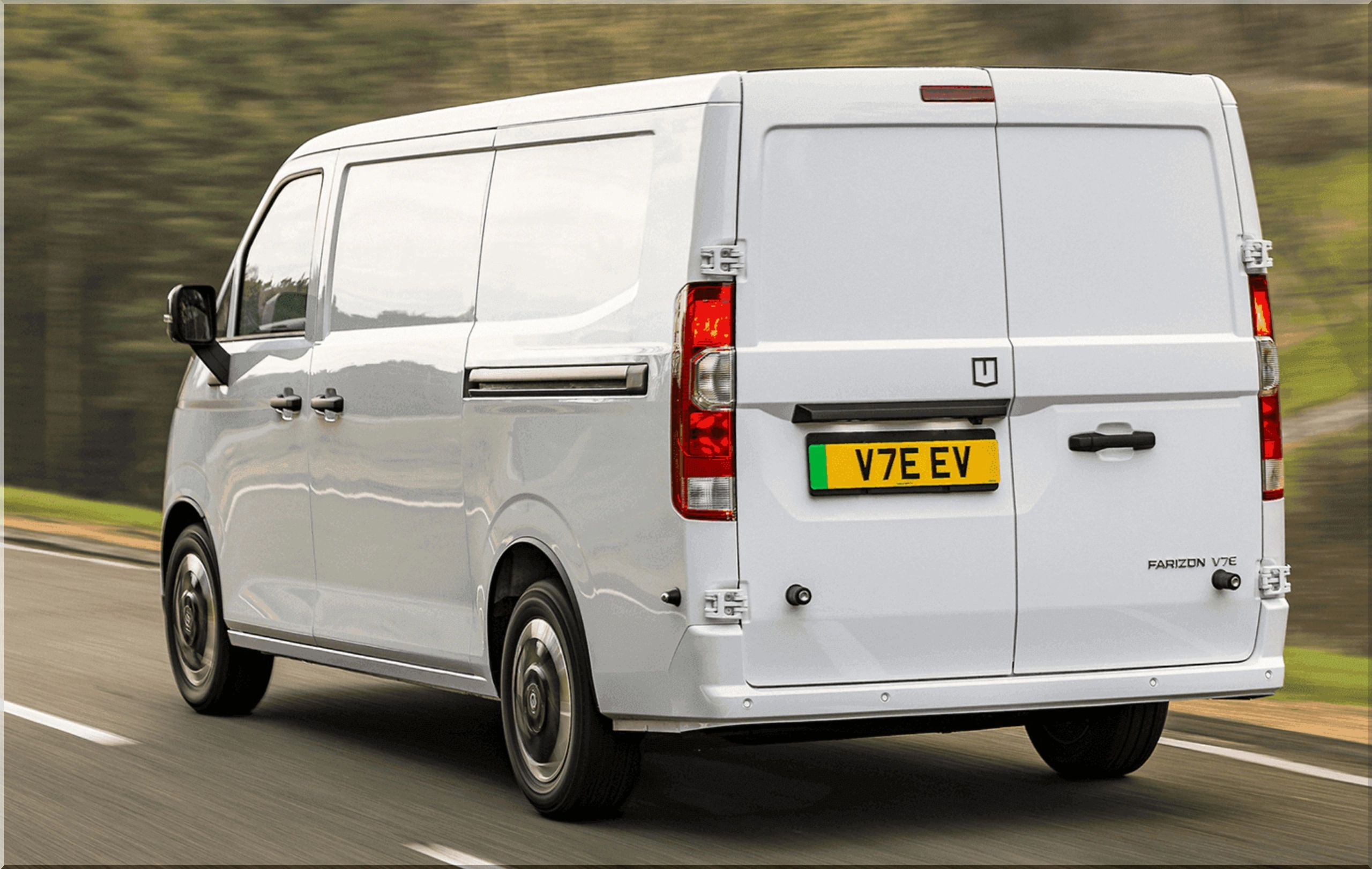
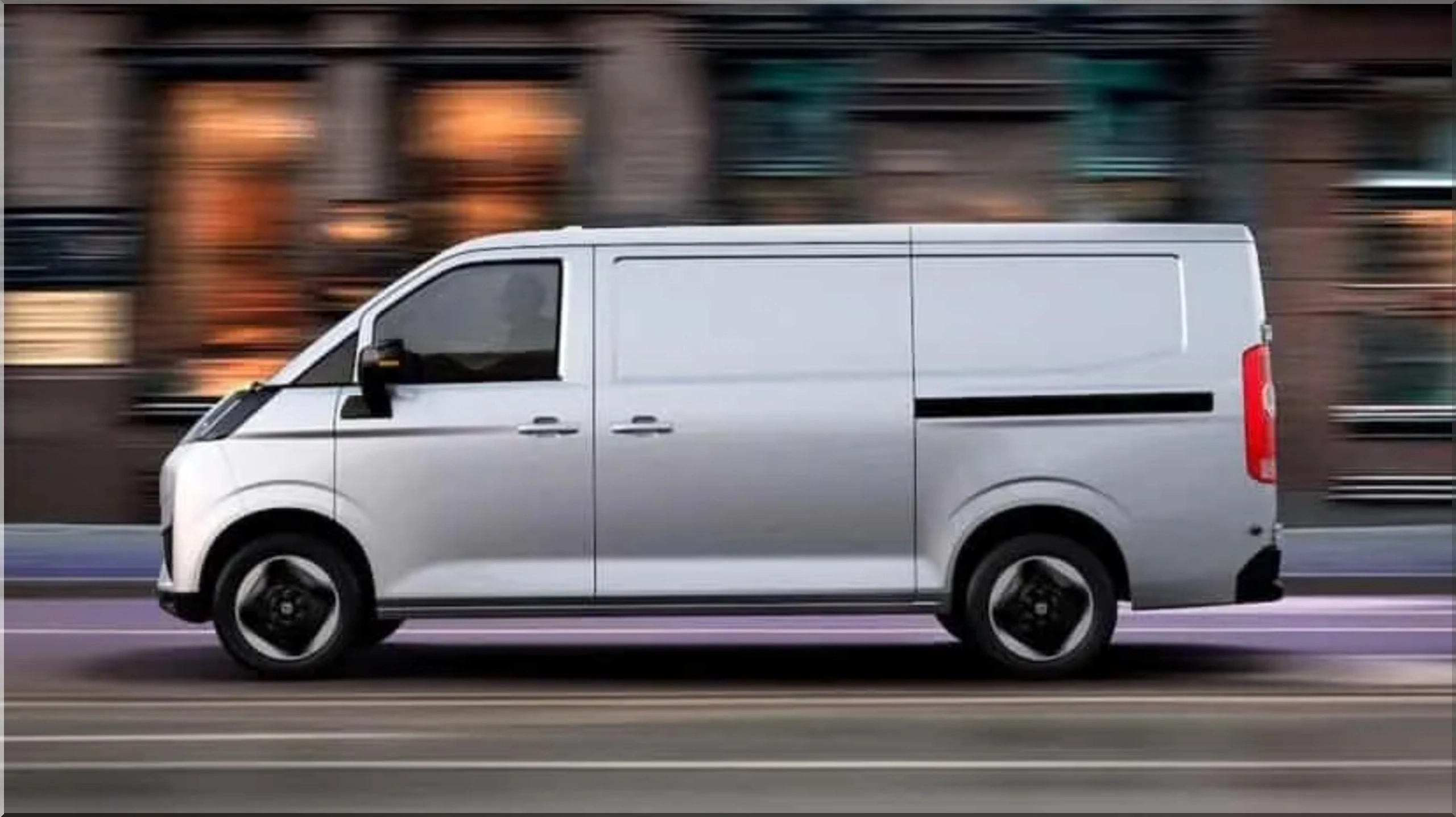
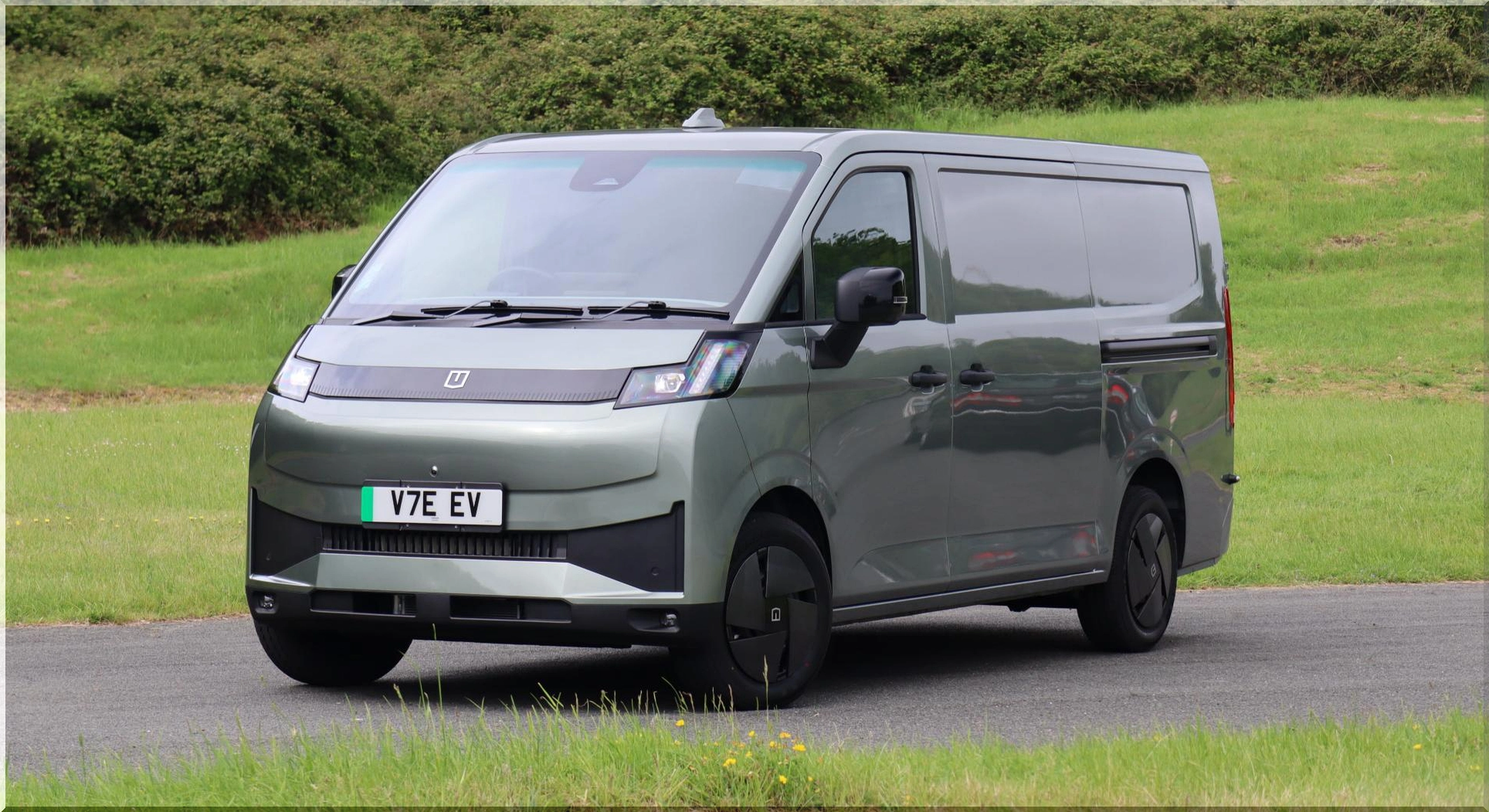
The V7E measures 4,995 mm long, 1,820 mm wide, and 1,985 mm tall, equal to about 196.7 inches long, 71.7 inches wide, and 78.1 inches tall. That footprint gives operators a useful cargo bay without large-van bulk.
Specifically, the 3,200 mm wheelbase, or 126.0 inches, gives the van a stable stance. The 12-meter turning circle helps in alleys, loading bays, and old city centers. Ground clearance sits at 135 mm, or 5.3 inches.
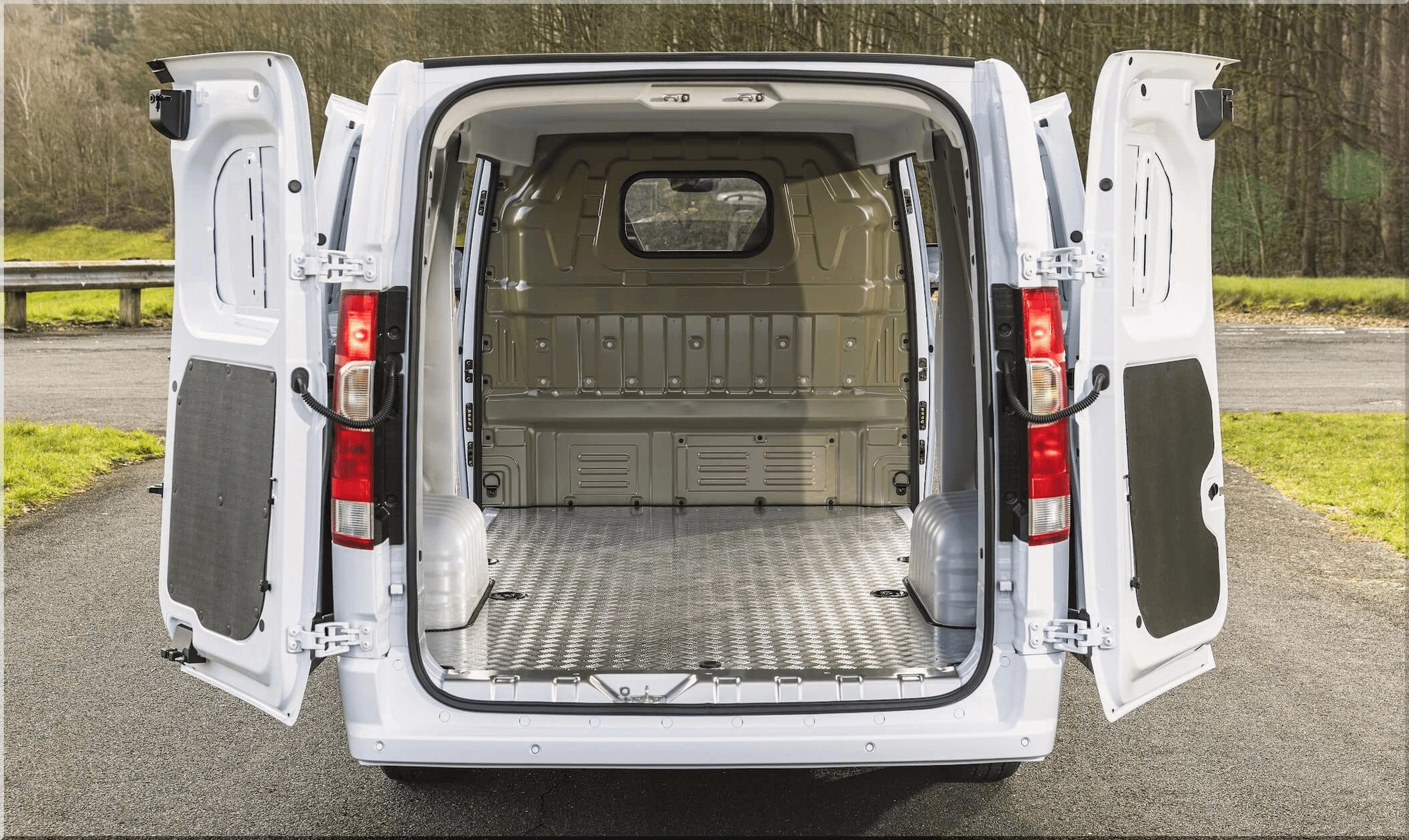
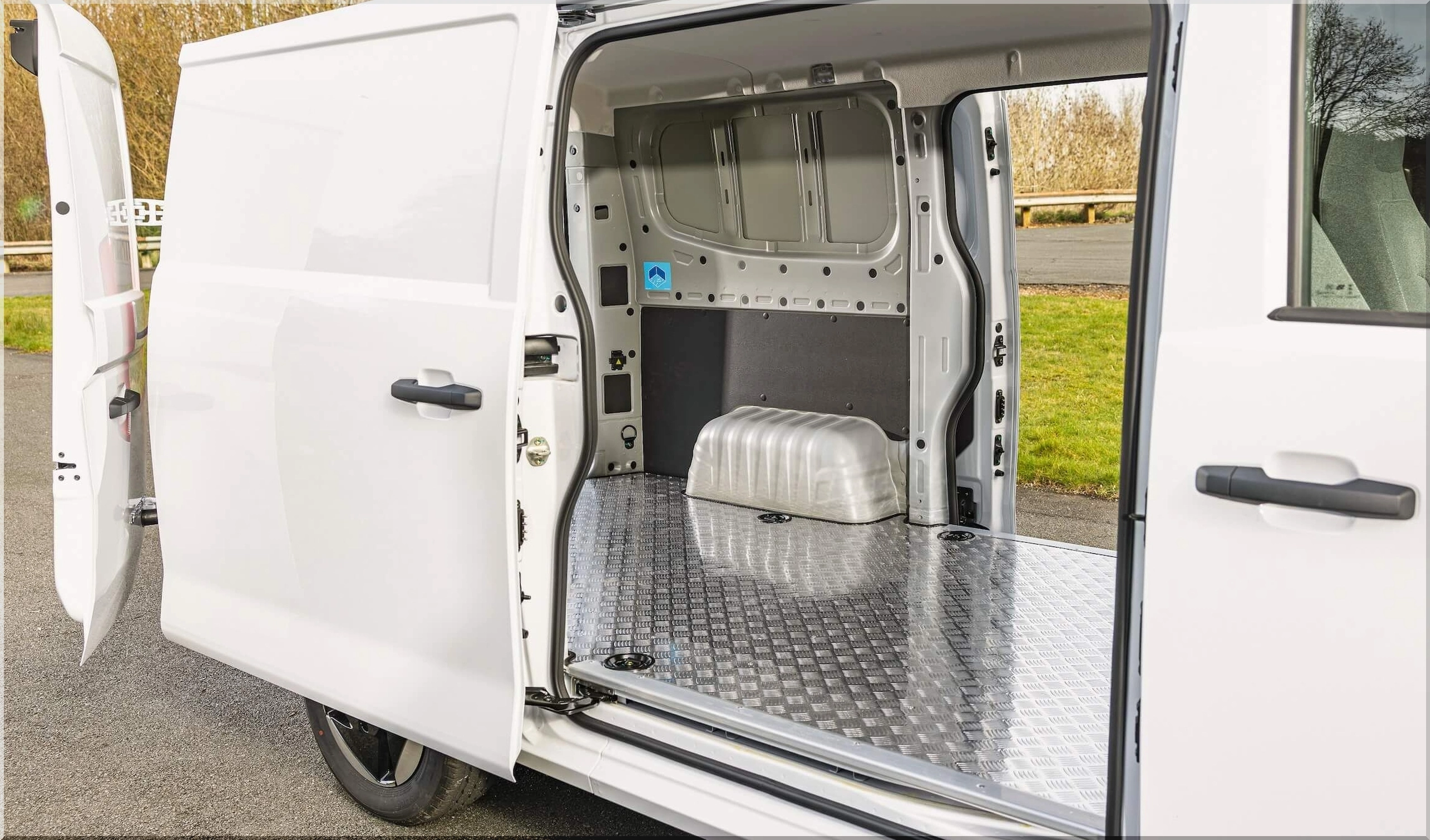
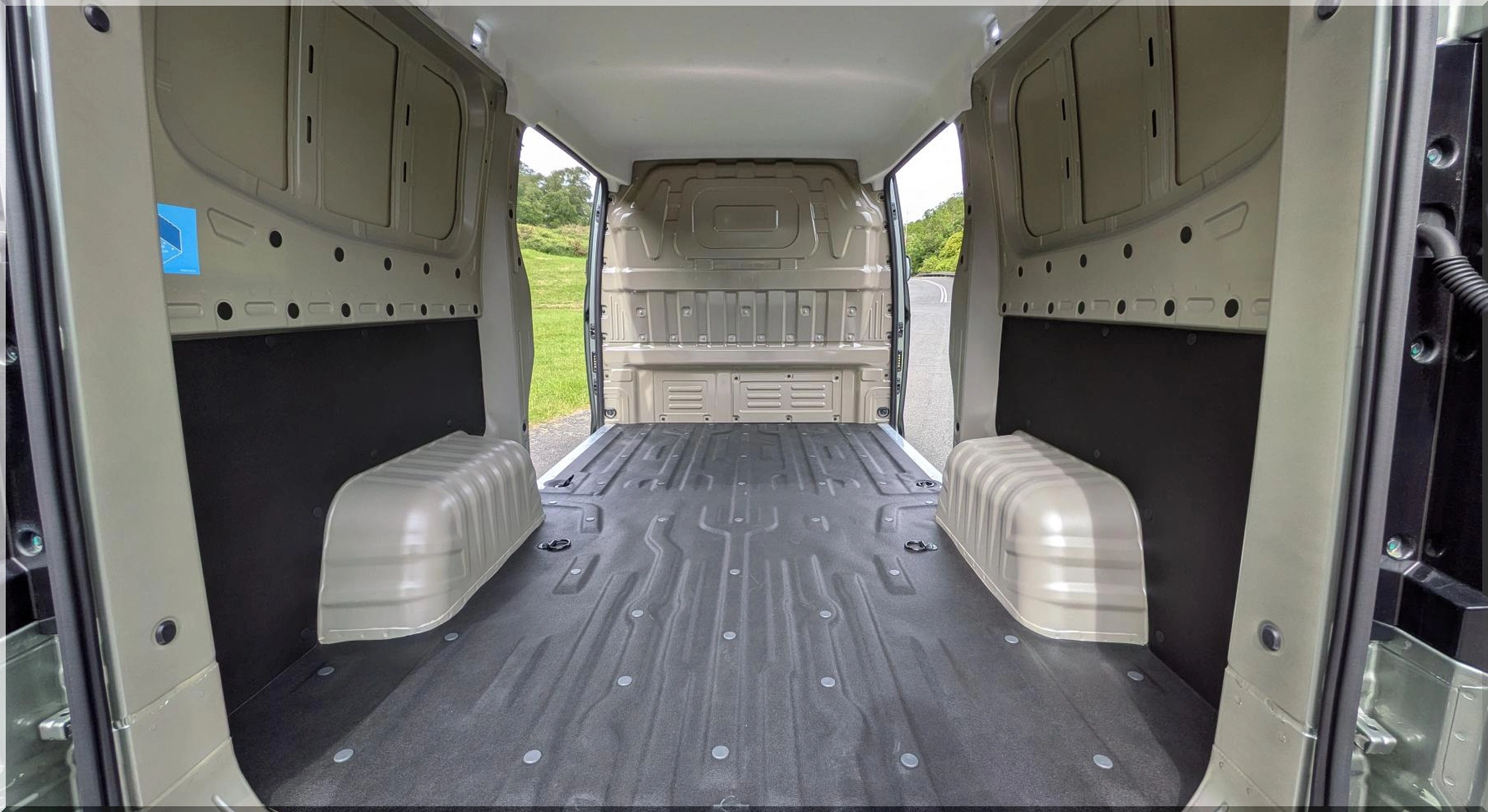
The cargo bay measures 2,865 mm long, 1,690 mm wide, and 1,435 mm tall, or about 112.8 by 66.5 by 56.5 inches. Cargo volume reaches 6.95 m3, equal to about 245.4 cubic feet. Farizon quotes a 510 mm load floor, while UK material gives a 490 mm side-loading height.
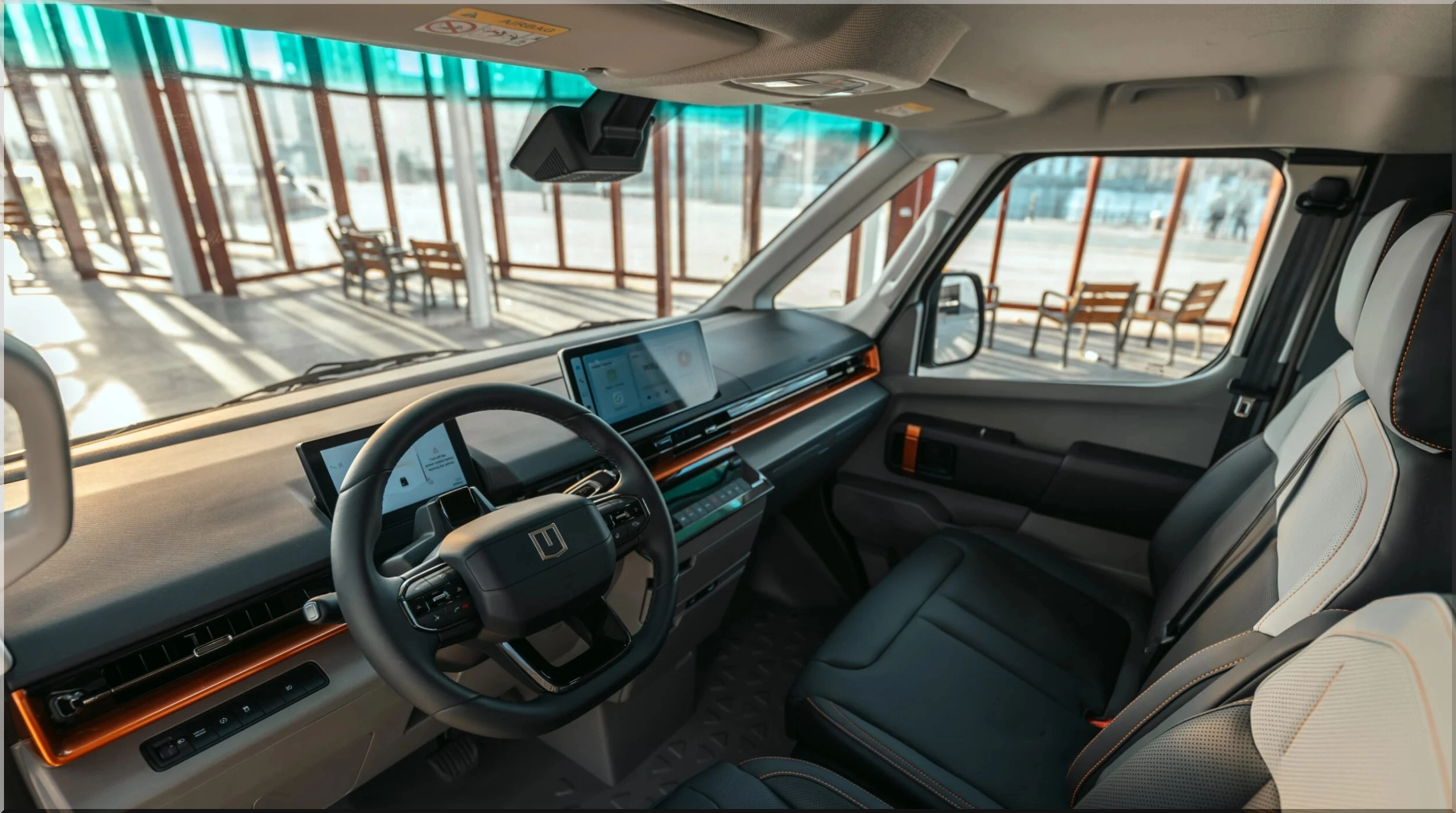
Farizon V7E Dimensions And Load Specs
| Data point | Farizon V7E figure | Practical meaning |
|---|---|---|
| Length | 4,995 mm / 196.7 in | Compact enough for dense city routes |
| Width | 1,820 mm / 71.7 in | Narrow for a 7 m3 van |
| Height | 1,985 mm / 78.1 in | Works for many urban parking sites |
| Cargo length | 2,865 mm / 112.8 in | Takes long shelving and tools |
| Cargo volume | 6.95 m3 / 245.4 cu ft | Strong volume for a 5-meter van |
| Load floor height | 510 mm / 20.1 in | Easier hand loading all day |
Which Battery Pack Makes Sense?
The V7E offers a 50 kWh LFP battery and a larger 66 kWh or 67 kWh LFP battery, depending on market wording. The smaller pack suits depot-based city work. The larger pack suits mixed urban and suburban routes that need more reserve after detours, cold weather, and full-payload driving.
Looking at the data, the 50 kWh version returns up to 240 km, or 149 miles, on the WLTP combined cycle. The larger pack returns up to 329 km, or 204 miles. Dutch material also quotes up to 475 km WLTP city range for urban use because regeneration helps most in stop-and-go driving.
Definition: LFP Battery
An LFP battery uses lithium iron phosphate chemistry. It often brings strong durability, lower fire risk, and better cost control. For a delivery van, that trade makes sense because operators care about cycle life and predictable running cost more than peak speed.
Farizon V7E Battery, Charging, And Performance
| Specification | 50 kWh Standard Range | 66/67 kWh Extended Range |
|---|---|---|
| Battery chemistry | CATL LFP | CATL LFP |
| Voltage | 400V | 400V |
| WLTP combined range | 240 km / 149 miles | 329 km / 204 miles |
| AC charging | 11 kW | 11 kW |
| DC charging | Up to 100 kW | Up to 97 kW |
| DC charge time, 20-80 percent | 26 minutes on spec sheet | 33 minutes on spec sheet |
| Motor output | 110 kW / 150 PS | 110 kW / 150 PS |
| Torque | 230 Nm / 170 lb-ft | 230 Nm / 170 lb-ft |
| Top speed | 120 km/h / 75 mph | 120 km/h / 75 mph |
One detail needs a hard look. Farizon's UK page promotes rapid charging from 20 to 80 percent in as little as 18 minutes, while the detailed specification sheet lists 26 minutes for the 50 kWh van and 33 minutes for the larger battery. From an expert perspective, fleet planners should build schedules around the longer figures until they validate the faster number with the exact market model and charger hardware.
How Does The Farizon V7E Drive?
The Farizon V7E electric van uses a front-mounted permanent-magnet synchronous motor with front-wheel drive. Maximum output reaches 110 kW, or 150 PS, and peak torque reaches 230 Nm. That output gives a loaded delivery van the instant step-off response that diesel automatics often lack in traffic.
Farizon sets rated output at 55 kW and rated torque at 100 Nm, then allows higher peak figures when the driver needs acceleration. This helps battery life and heat control because commercial vans spend most of their time at partial load. By comparison, the 120 km/h top speed marks the V7E as a city and regional work van.
Can The Farizon V7E Carry Real Workloads?
The V7E can carry serious weight for its size. The official brochure lists 1,338 kg payload for the 50 kWh version and 1,208 kg for the larger battery version. Dutch reporting shows a local payload band of 1,243 kg to 1,373 kg, likely due to homologation, pack naming, and equipment differences.
Consequently, buyers should check the VIN-specific plate before they sign the order. The smaller battery gives the best payload because it weighs less. The larger battery gives better route security because it stores more energy. The V7E also offers 750 kg unbraked towing and 1,000 kg braked towing, but towing will cut range fast.
What The Payload Numbers Mean For Work
| Use case | Best V7E choice | Why it fits |
|---|---|---|
| Parcel delivery inside one city | 50 kWh | Higher payload and enough daily range |
| Service engineer with tools and parts | 50 kWh | Lower price and strong usable load |
| Regional courier routes | 66/67 kWh | More reserve for detours and cold weather |
| Trade work with occasional towing | 66/67 kWh | More battery buffer under load |
What About Interior, Safety, And Daily Use?
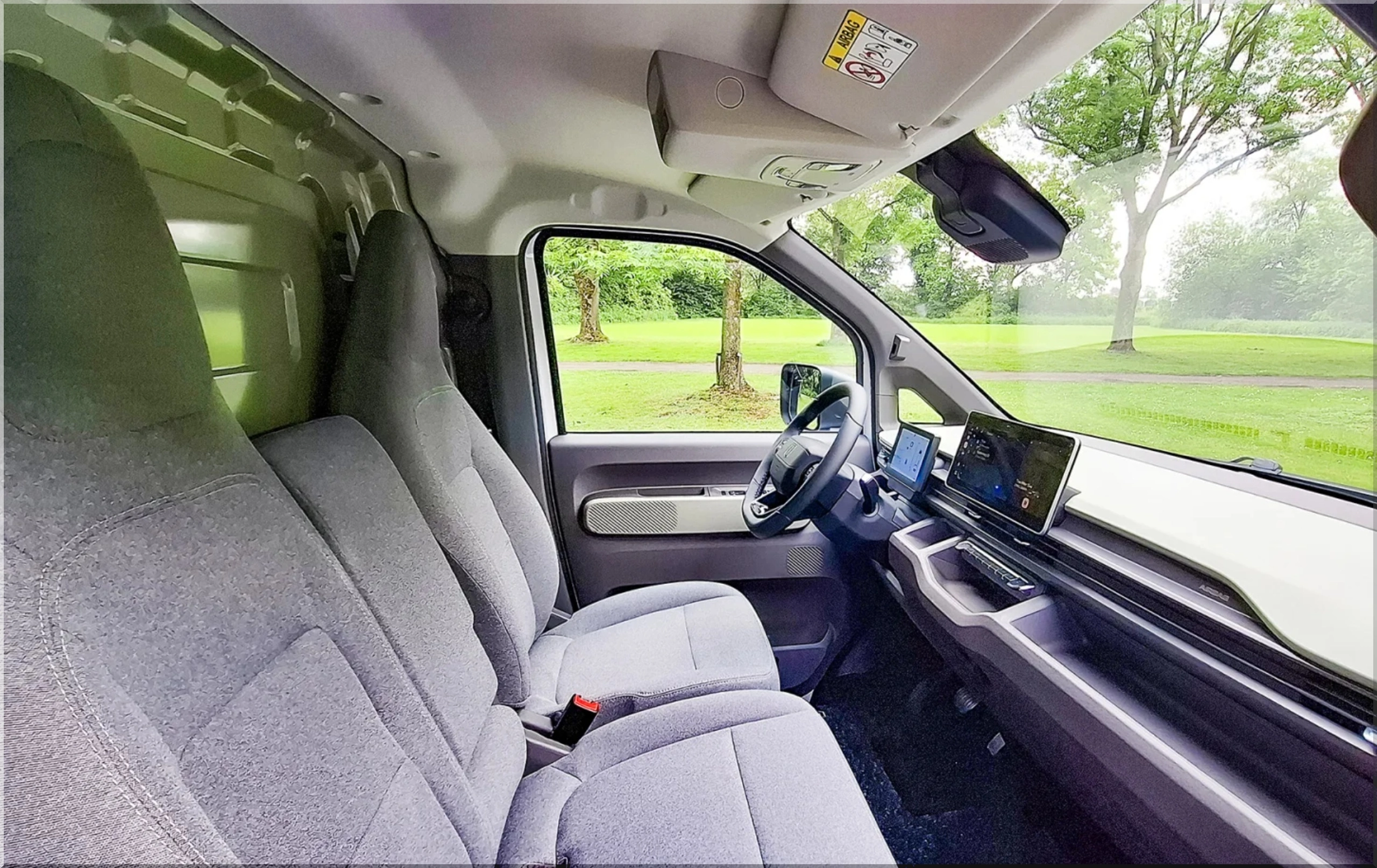
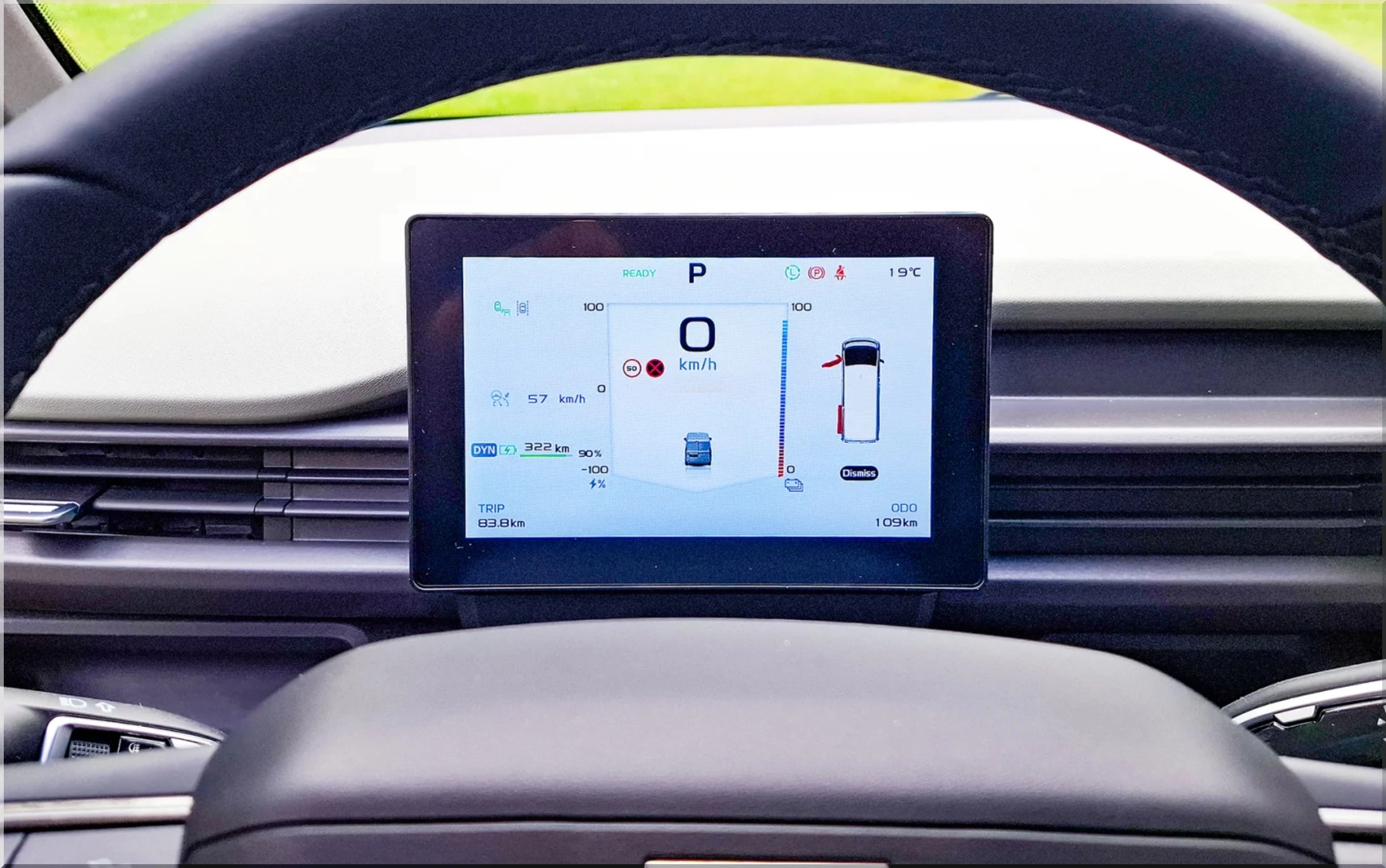
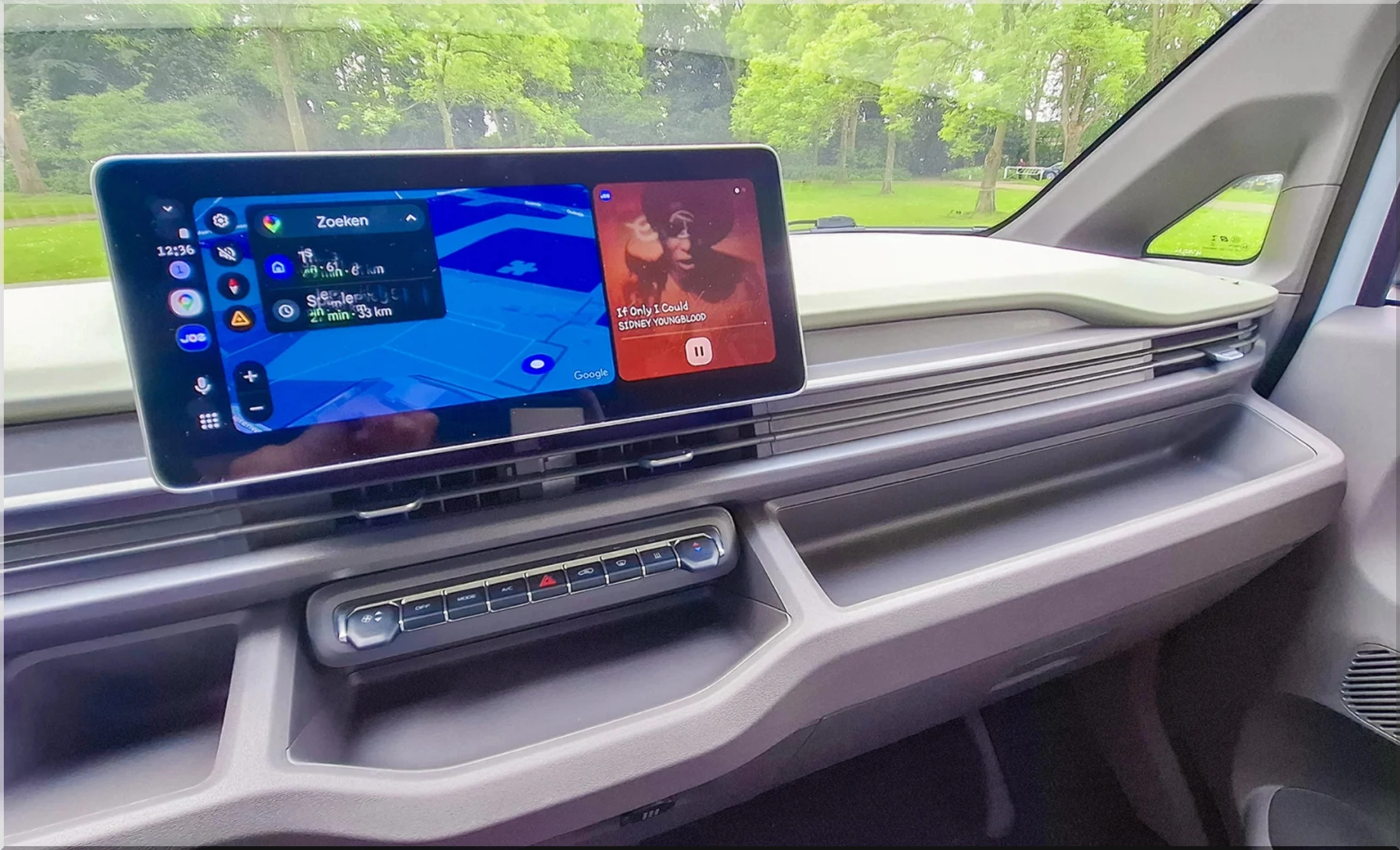
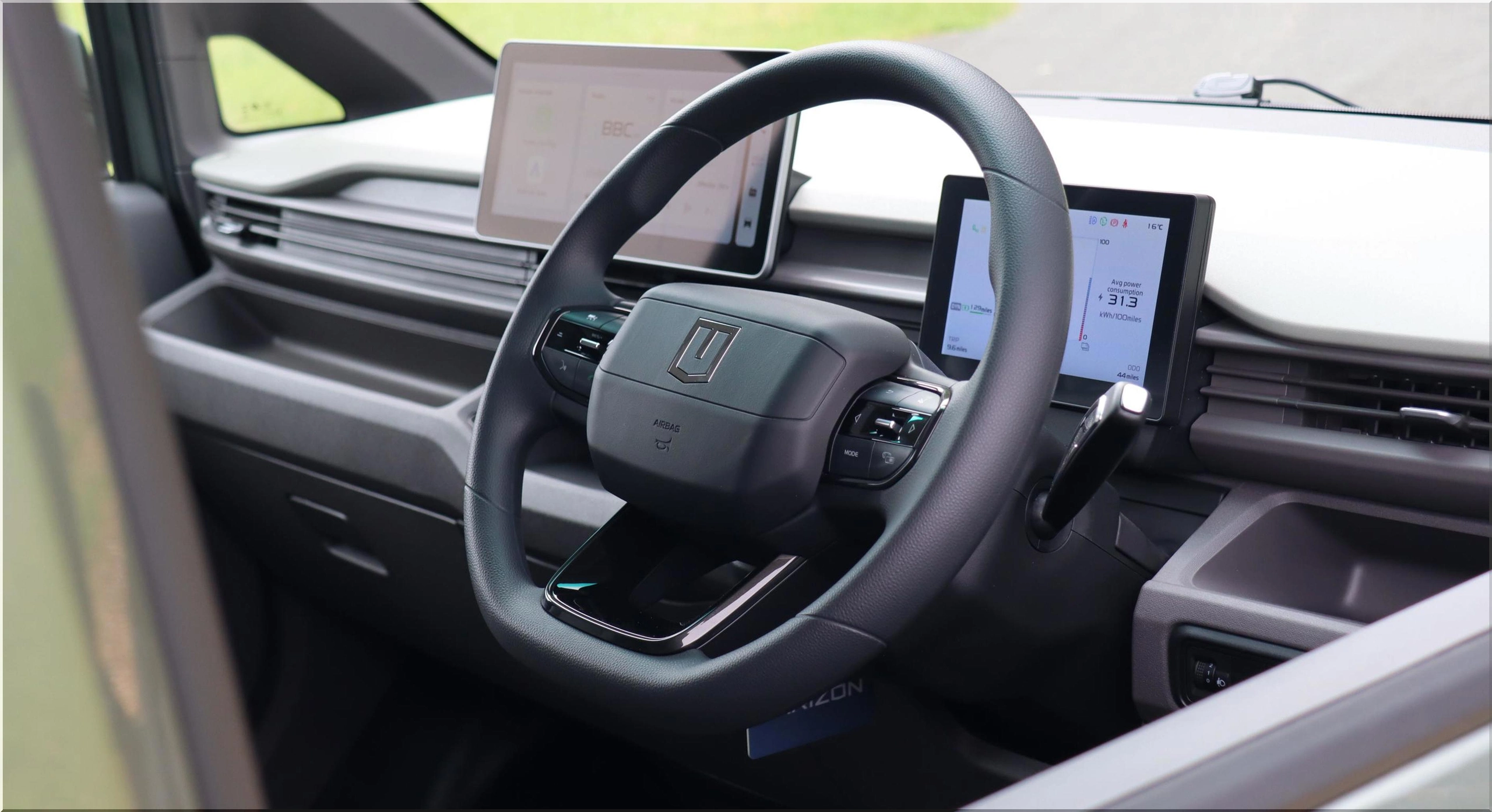
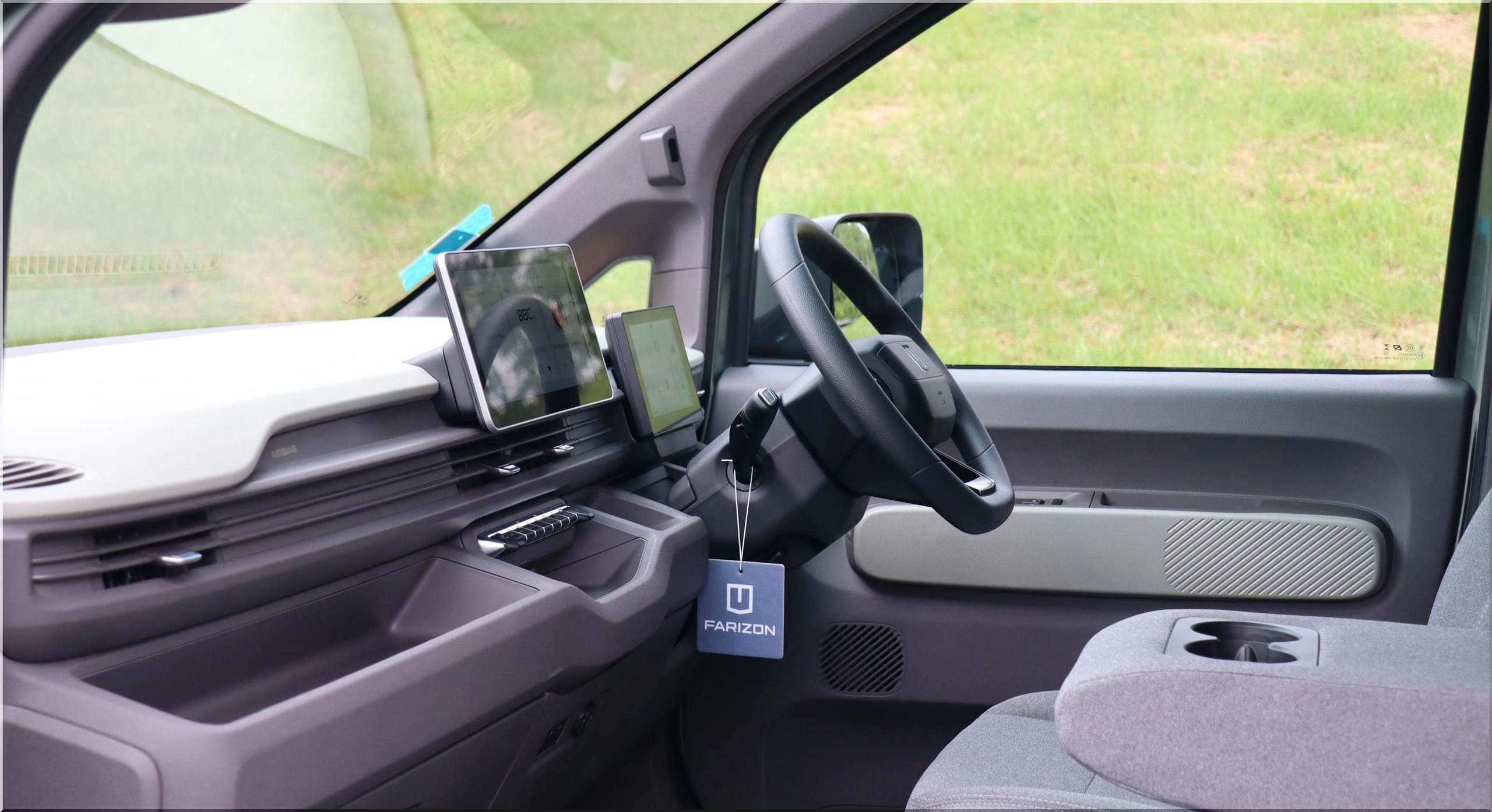
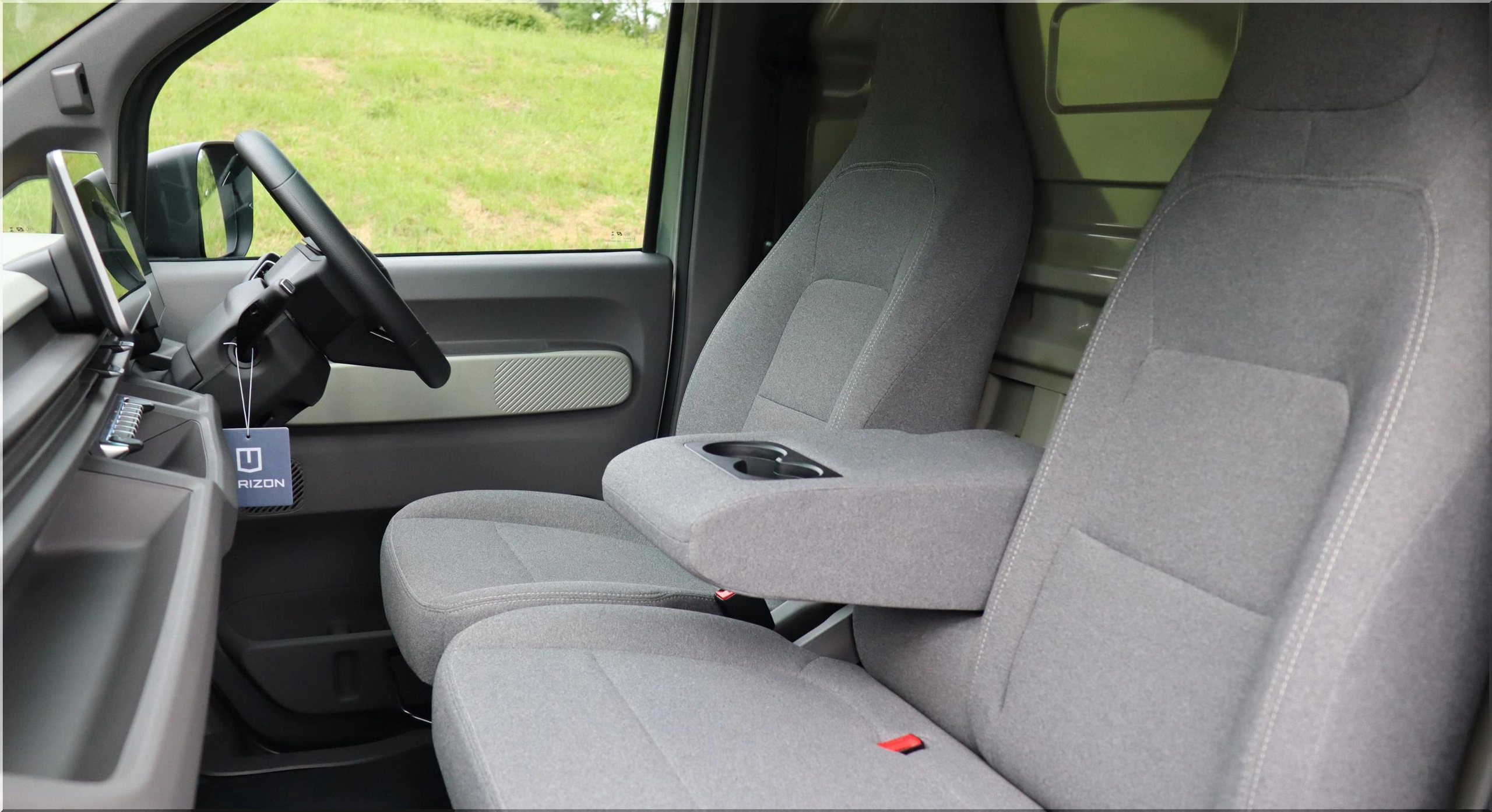
Farizon keeps the cabin functional. The V7E gets a 12.3-inch central screen, a 7-inch digital dashboard, Apple CarPlay, Android Auto, USB Type-A and Type-C ports, a 12V outlet, keyless start, air conditioning, fabric seats, and a heated multifunction steering wheel.
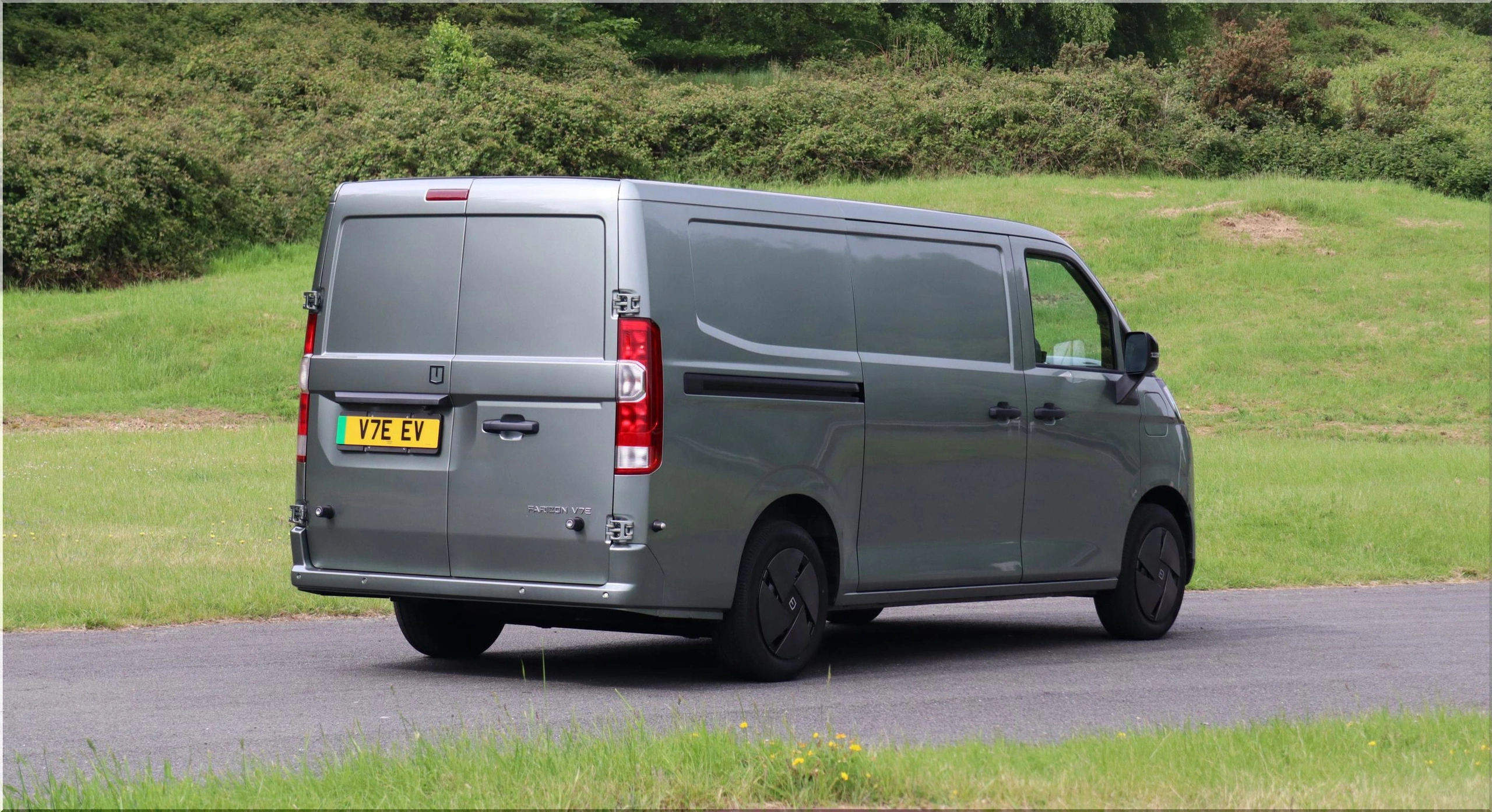
The cargo bay gets a partition, two ceiling lights, pre-installed anchor points, wide side access, and 270-degree rear doors. In addition, V2L comes as standard through a 240V socket, so a technician can run phones, laptops, diagnostic tools, small power tools, or site lighting from the van battery.
Safety equipment includes adaptive cruise control, forward collision warning, lane departure warning, lane change assist, intelligent speed assist, autonomous emergency braking, lane keeping assist, rear cross-traffic alert, blind-spot detection, parking sensors, and a 360-degree camera system.


Is The Farizon V7E Good Value?
The value case looks aggressive. In the UK, Farizon lists V7E pricing from about £28,000 excluding VAT, delivery, and on-the-road costs. In the Netherlands, pricing starts at €29,780 excluding VAT for the 50 kWh version and €31,980 excluding VAT for the larger-battery version, with a temporary €26,980 entry offer tied to the 50 kWh model.
Use a simple depot-charging example. At €0.25 per kWh, the 66 kWh pack costs €16.50 from empty to full before losses. Based on the 329 km WLTP figure, energy alone lands near €5.00 per 100 km. A diesel van using 7.0 L/100 km at €1.75 per liter costs €12.25 per 100 km before maintenance, AdBlue, and urban access fees.
Pro-Tips For Fleet Buyers
- Choose the 50 kWh V7E if the van returns to base nightly and runs predictable city routes under 120 miles per day.
- Choose the 66/67 kWh V7E if drivers face winter range loss, regional routes, towing, or unplanned detours.
- Ask for real payload on the order sheet, because local equipment and homologation can change the usable figure.
- Plan charging around 26 to 33 minutes, not only the fastest marketing claim.
- Test the driver's route with full load, because range numbers always look friendlier without cargo, traffic, heat, and rain.
Farizon V7E Pros And Cons
| Pros | Cons |
|---|---|
| Strong payload for its compact size | Newer brand with less European service history |
| Almost 7 m3 cargo volume in a 5-meter van | Larger battery reduces payload |
| Low entry price in the Netherlands and UK | Fast-charge claims vary by source |
| V2L socket adds real job-site utility | Residual values still need proof |
Verdict: Should You Buy The Farizon V7E?
The Farizon V7E deserves attention because it attacks the two problems that slow electric van adoption: price and payload. It skips premium trim theater and gives operators a compact body, a large cargo bay, LFP battery chemistry, proper safety equipment, and a price that should make established van brands uncomfortable.
From an expert perspective, the V7E makes the strongest case as a city-delivery, service, and small-trade vehicle. The 50 kWh model looks like the value pick for depot fleets with known routes. The 66/67 kWh model suits operators that need more range buffer and accept a lower payload.
The catch sits outside the spec sheet. Farizon still needs to prove dealer coverage, parts supply, uptime, and residual value in Europe. If the network supports the metal, the V7E could become one of the smartest low-cost electric vans on sale.
The Renault Estafette Concept is a glimpse into the future of urban delivery vehicles. This electric van, built on the innovative FlexEVan platform, is designed to… Continue reading
Ford has added a new piece to its commercial EV lineup, and the brief feels brutally clear. The new Ford Transit City electric van targets dense urban delivery routes, zero-emission zones, and operators who care more about uptime and cost per… Continue reading
Renault is continuing the success story of the small van with the new Renault Kangoo Van E-TECH Electric. The new electric van will be on sale in spring 2022, with an economic propulsion package that includes a 45 kWh lithium-ion… Continue reading
Fleet managers face a never-ending battle. Rising fuel costs, maintenance headaches, environmental regulations, and drivers who treat company vehicles like personal demolition derby cars. It’s enough to make anyone consider a career change—perhaps something… Continue reading