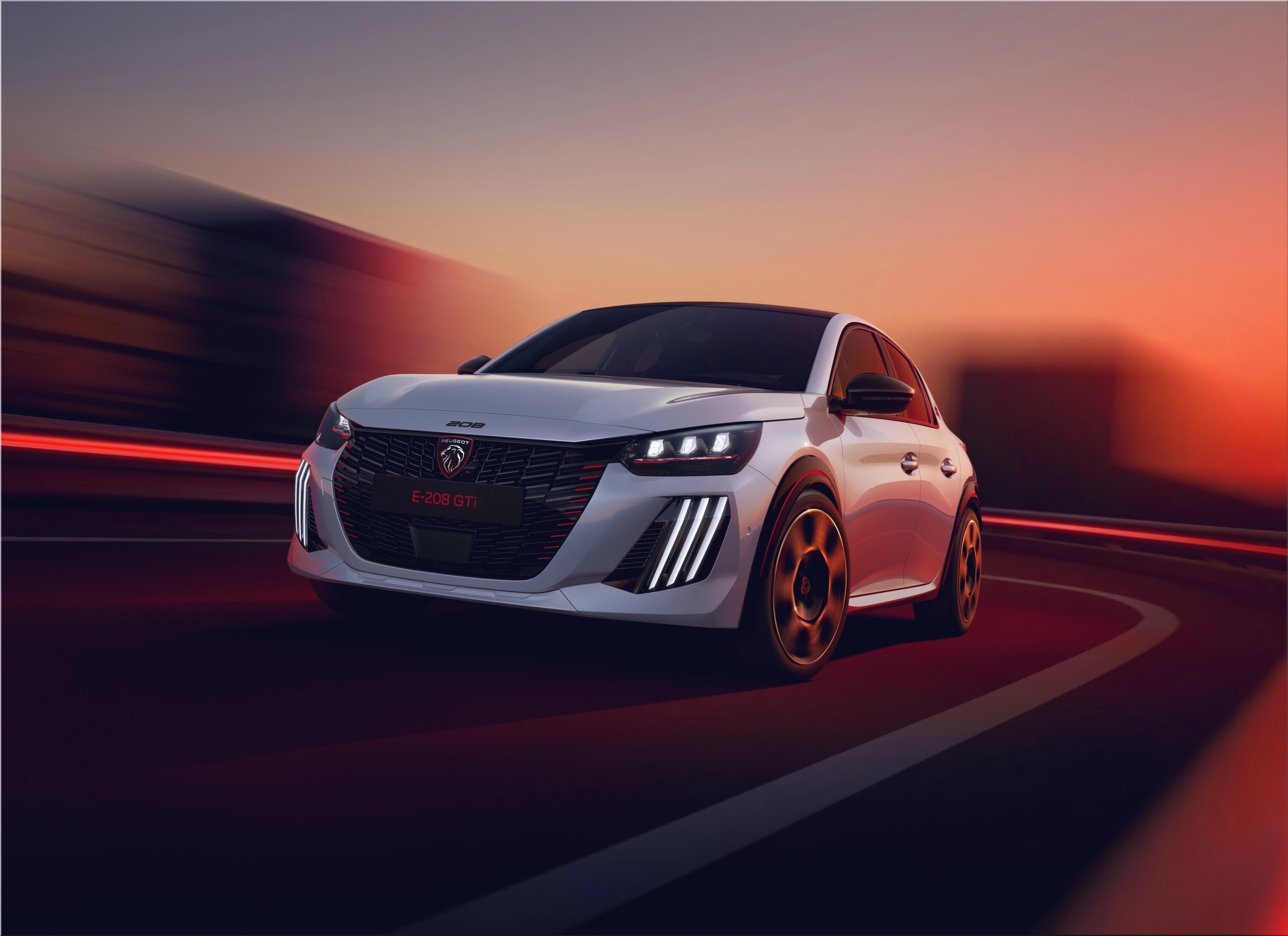
Peugeot has brought the Peugeot E-208 GTi back to Le Mans with a clear mission: make the GTi badge work in the electric age without diluting the small-car attitude that made the 205 GTi famous. The result packs 280 hp, 345 Nm, front-wheel drive, a limited-slip differential, and a 0-100 km/h time of 5.7 seconds into the compact Peugeot 208 shell.
That number carries less weight than the package behind it. In a class full of quick EVs with numb steering and tyre-shredding torque delivery, Peugeot Sport has focused on traction, brake feel, thermal control, and repeatable pace. From an expert perspective, this looks less like badge marketing and more like a French answer to a problem every electric hot hatch must solve: turning instant torque into clean corner exits.
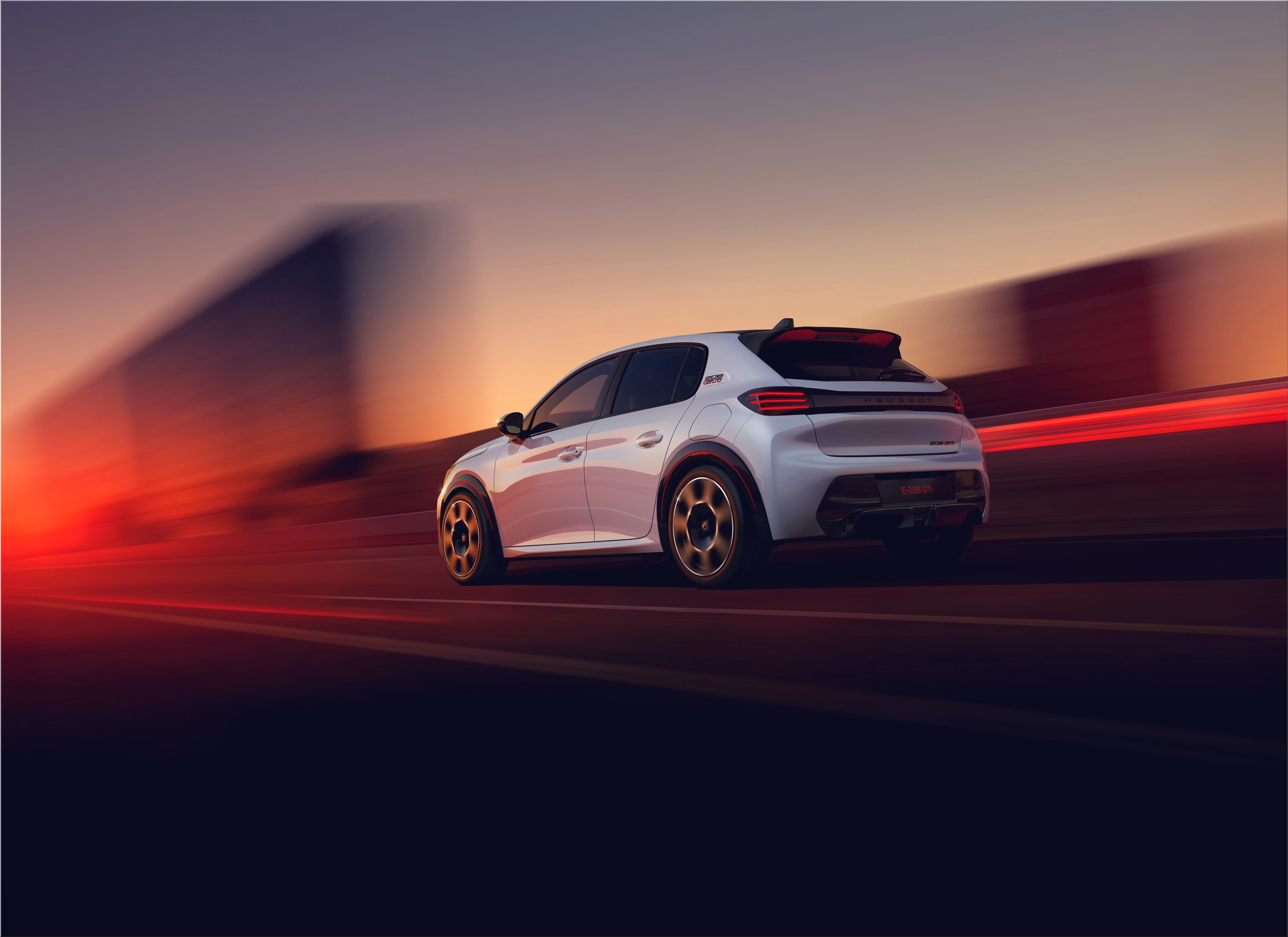
Peugeot E-208 GTi Specs: Power, Torque, Range, Charging
The Peugeot E-208 GTi uses an M4+ electric motor rated at 206 kW, or 280 hp. Torque reaches 345 Nm, and Peugeot quotes a 180 km/h top speed. The battery has a 54 kWh gross capacity, a WLTP driving range of up to 350 km, and a dedicated cooling setup for hard use.
Specifically, the charging figures keep the GTi usable away from a circuit. A 7.4 kW Wallbox charge takes 4 hours and 40 minutes, while a 100 kW DC charger moves the battery from 20% to 80% in under 30 minutes. In addition, the car supports V2L, so the high-voltage battery can power accessories through an adapter.
| Data point | Peugeot E-208 GTi | Standard Peugeot E-208 | Peugeot 208 GTi 30th |
|---|---|---|---|
| Power | 280 hp / 206 kW | 156 hp / 115 kW | 208 hp |
| Torque | 345 Nm | 260 Nm | 300 Nm |
| 0-100 km/h | 5.7 seconds | about 8.2 seconds | 6.5 seconds |
| Drive hardware | FWD, integrated limited-slip differential | FWD | FWD, Torsen differential |
Why The Chassis Changes Count
Peugeot did not stop at extra power. The front track grows by 56 mm, the rear track grows by 27 mm, and the body sits 30 mm lower. Those changes widen the footprint, drop the centre of gravity, and give the tyres a better chance to manage 345 Nm from a standstill.
Looking at the data, the chassis tells the real story. Peugeot fits 18-inch wheels with Michelin Pilot Sport Cup 2 tyres in 215/40 R18 size, plus 355 mm front discs and fixed four-piston callipers. The rear callipers stay close to the standard E-208 layout, which shows sound engineering logic: put brake budget and cooling where a nose-heavy electric hatch needs them most.
| Engineering area | E-208 GTi hardware | Why it counts |
|---|---|---|
| Front track | +56 mm | Adds front-end grip and helps torque delivery |
| Ride height | -30 mm | Cuts roll and sharpens turn-in |
| Tyres | Michelin Pilot Sport Cup 2, 215/40 R18 | Raises grip and heat resistance |
| Brakes | 355 mm front discs, four-piston fixed callipers | Improves pedal consistency |
Design: 205 GTi Cues, Electric Packaging
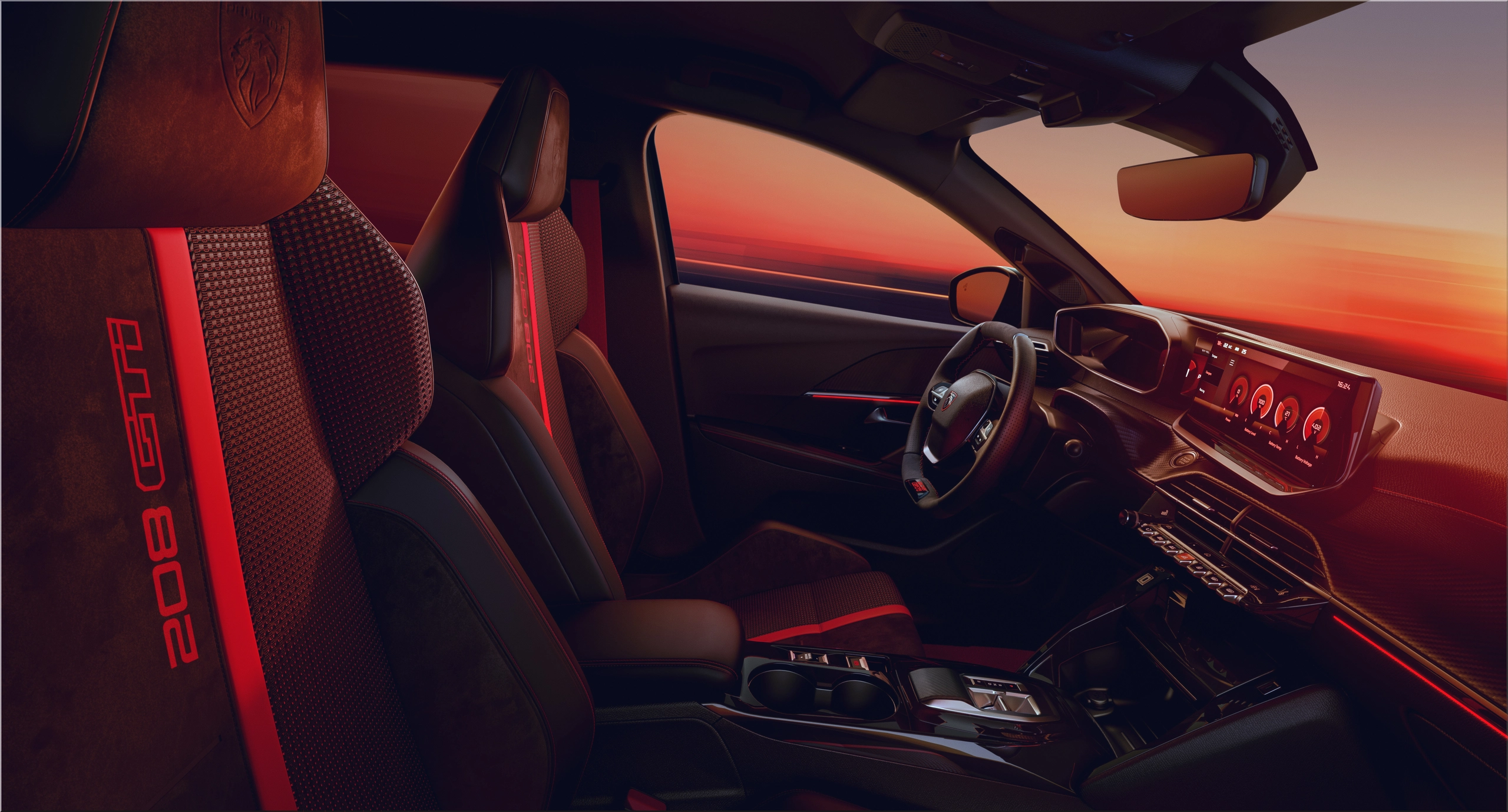
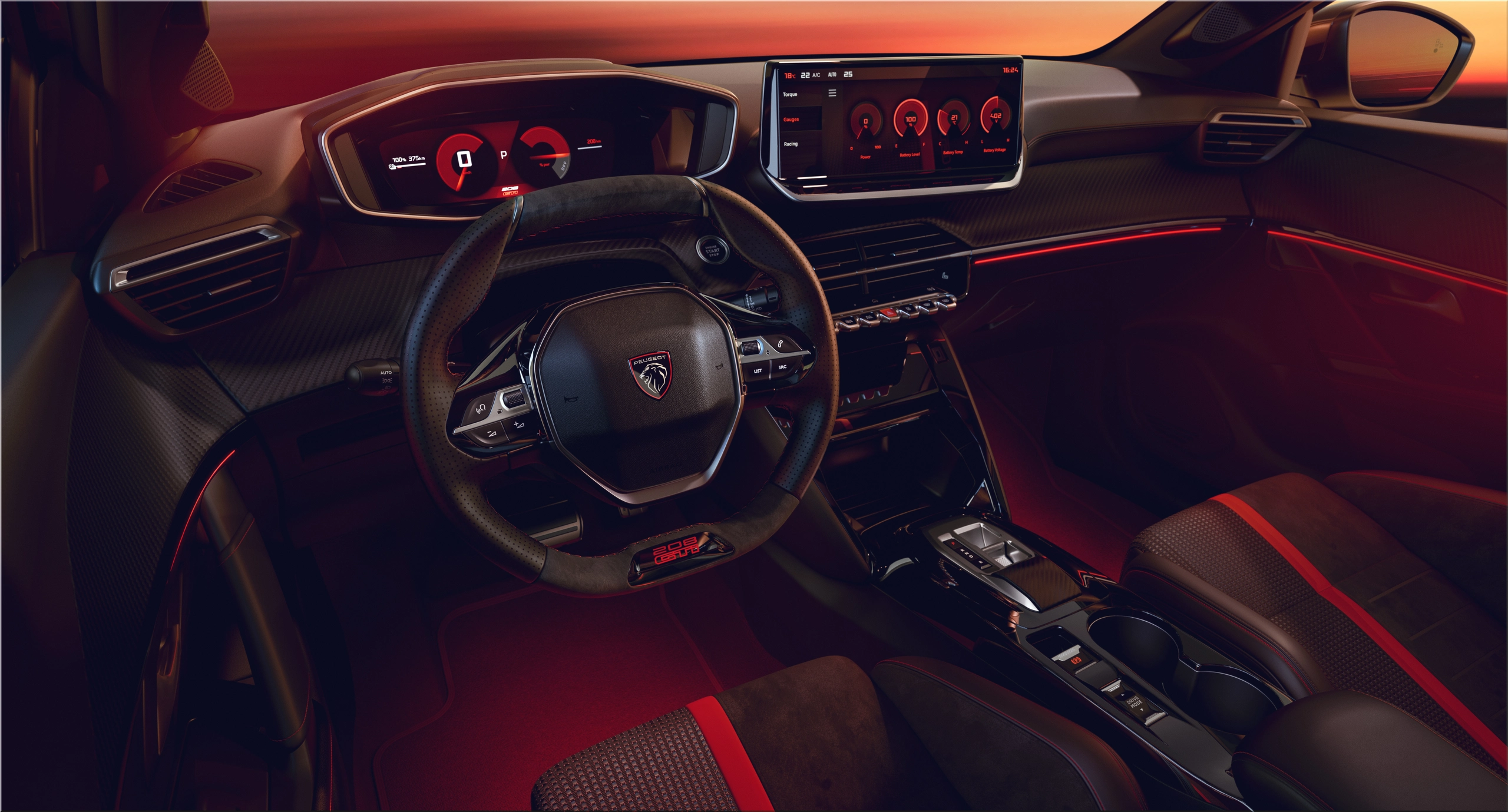
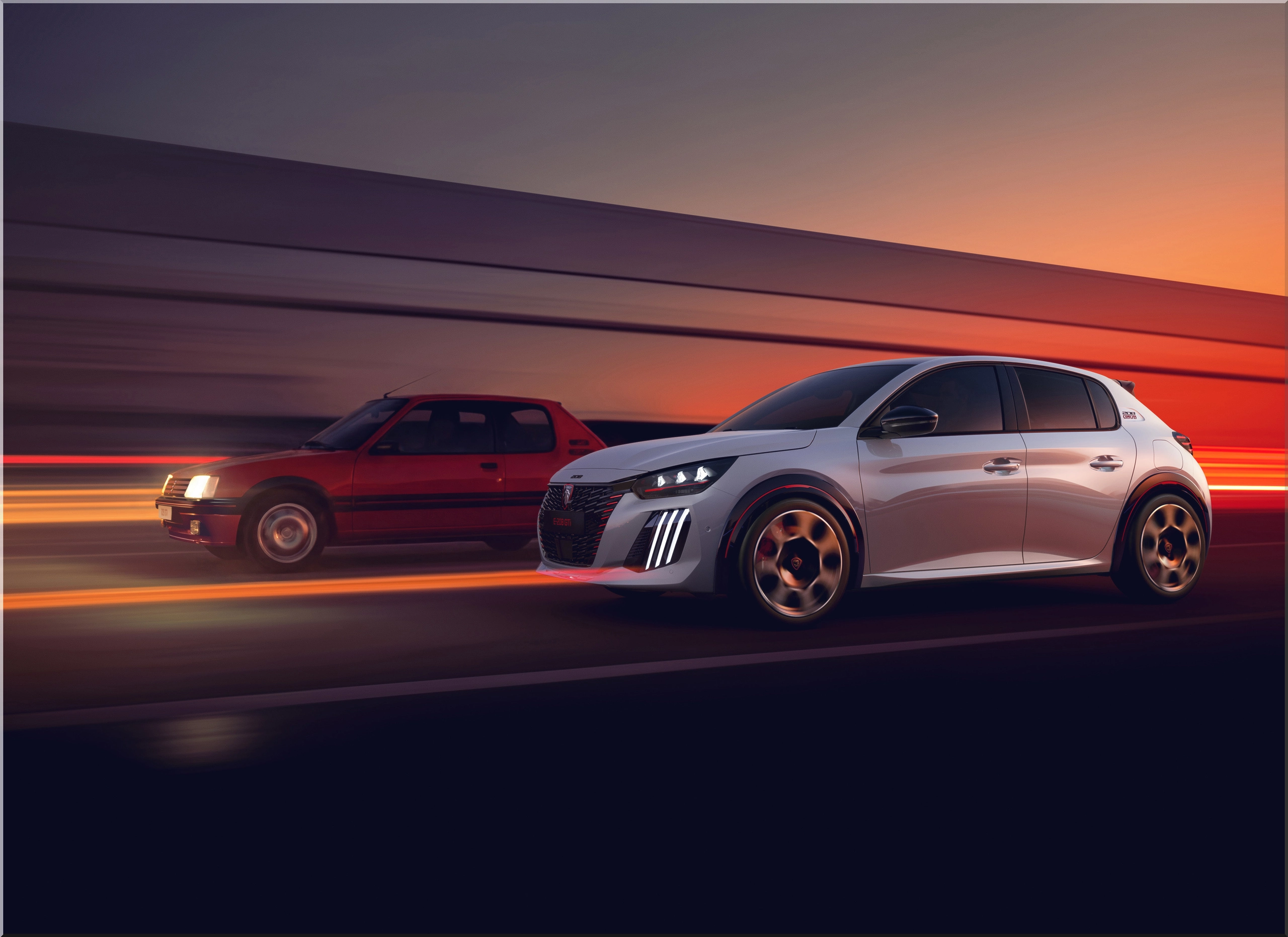
The new electric GTi does not copy the 205 GTi like a retro toy. It pulls the useful signals. Red exterior details, a wider stance, red cabin trim, integrated-headrest sport seats, a compact steering wheel with Alcantara and perforated leather, and GTi-specific display graphics all create a faster visual rhythm.
Consequently, the design supports the engineering. The perforated 18-inch wheel design nods to the classic 205 GTi 'hole' wheels, but the openings also aid brake cooling. The wider wheel arches cover the broader tracks, while the gloss-black rear diffuser and added front spoiler clean up the stance.
Pro-Tips: Should You Wait For The Peugeot E-208 GTi?
Wait for the Peugeot E-208 GTi if you want an electric supermini with genuine chassis hardware rather than a simple power bump. The limited-slip differential, Cup 2 tyres, lowered setup, and 355 mm brakes create the kind of spec sheet that rewards drivers who understand front axle control.
Skip it if you need maximum range per euro. The standard Peugeot E-208 will suit daily commuting better for most drivers, and its lower rolling resistance tyres should return calmer energy use in town. By comparison, the GTi spends some efficiency on grip, cooling, braking, and pace.
Best Buyer Fit
- Drivers who want a small electric hot hatch with track-day credibility.
- Former Peugeot 208 GTi or 205 GTi fans ready to go electric.
- Urban European buyers who want performance without tailpipe CO2.
- Commuters with home charging who still want weekend back-road pace.
Peugeot E-208 GTi Verdict
The Peugeot E-208 GTi marks Peugeot's smartest performance move in years. It keeps the size right, sends power to the front wheels, adds proper grip hardware, and uses electric torque to beat the old petrol GTi on acceleration.
The key win comes from restraint. Peugeot Sport has not chased silly power. It has built a 280 hp electric hatchback around steering response, axle control, brake cooling, and thermal management. That gives the GTi badge a credible electric future - and gives Europe one of its most interesting small performance EVs.
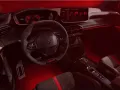
Peugeot revives its iconic GTi badge for the electric era with the new Peugeot E‑208 GTi, combining proven motorsport engineering with a zero-emissions powertrain. Developed by Peugeot Sport,… Continue reading
The MG4 electric hatchback has been one of the most popular and affordable EVs in Europe since its launch in 2023. The car has won several awards for its design, performance, and technology and has attracted many customers who are looking for a practical and… Continue reading
Volkswagen has opened German orders for the 2026 Volkswagen ID. Polo EV with a 37 kWh usable LFP battery and a starting price near $29,000. The five-door hatchback delivers up to 207 miles on the WLTP cycle, offers two power… Continue reading
The Volkswagen ID. Polo GTI moves one of VW's most recognizable performance badges into the electric era without abandoning the core GTI recipe. It uses a 166 kW front-mounted electric motor, a 52 kWh net battery… Continue reading