Home

Electric Hunter

Main navigation

  • 100% EVs
  • News
  • Wheelers
  • Commercial
  • Hybrid
User account menu
  • Contact

Breadcrumb

  1. Home
  2. E.V. News
  3. Porsche Turns Old EV Batteries Into New Battery Cells

Porsche Turns Old EV Batteries Into New Battery Cells


Porsche Turns Old EV Batteries Into New Battery Cells

Brand

  • Porsche

On September 17, 2026, Porsche and German recycler cylib announced test cells whose cathode active material comes entirely from recycled Porsche batteries. That is a real technical step, but it is still a pilot. No customer car uses these cells yet, and Porsche has not promised lower prices, longer range, or a production date.

What did Porsche achieve with recycled EV batteries?

Porsche recovered lithium, nickel, cobalt, and manganese from end-of-life high-voltage batteries, processed those metals into fresh cathode active material, and used it in new test cells. The recycled feedstock replaced newly mined versions of those four cathode ingredients. Porsche now tests the cells under operating conditions before it considers series production.

The wording deserves care. Porsche did not announce a battery pack made wholly from old packs. It announced cells whose cathode active material uses 100% recycled raw materials. That narrower claim still counts. Cathode material sets much of a cell's energy capacity, power behavior, cost, and resource demand.

The cells have reached a working-test phase, not a showroom. Porsche says early results support technical feasibility, with further findings due in the second half of 2026. The company has not released capacity retention, fast-charging, cycle-life, cold-weather, safety, or cost data.

That missing data is the line between an encouraging lab result and a bankable production process. Making one good batch proves chemistry. Making thousands of consistent batches at a competitive cost proves a business.

What is cathode active material?

Cathode active material stores and releases lithium ions on one side of a lithium-ion cell. In nickel-rich chemistry, it commonly contains lithium, nickel, cobalt, and manganese. Think of it as the chemically busy powder on the positive electrode, not the complete electrode, cell, module, or battery pack.

A cell also contains an anode, electrolyte, separator, copper and aluminum current collectors, binders, conductive additives, tabs, and a casing. A finished pack adds cooling hardware, wiring, sensors, controls, structural parts, and crash protection. Porsche's 100% figure does not cover all of those pieces.

How does Porsche's closed-loop battery process work?

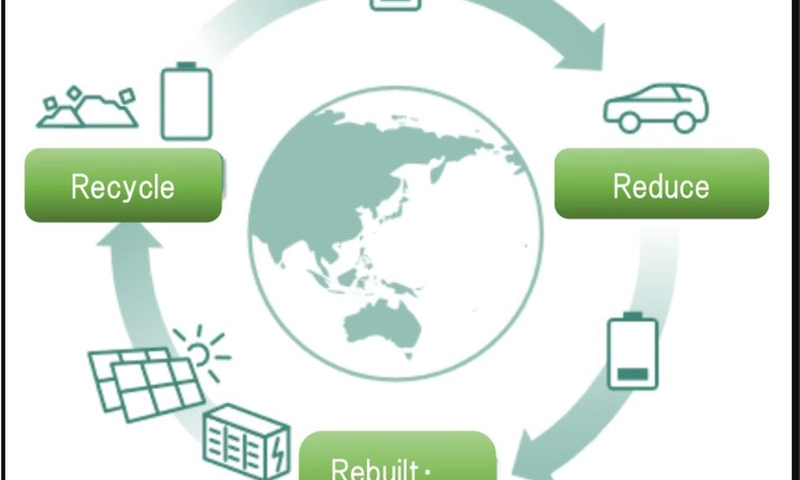
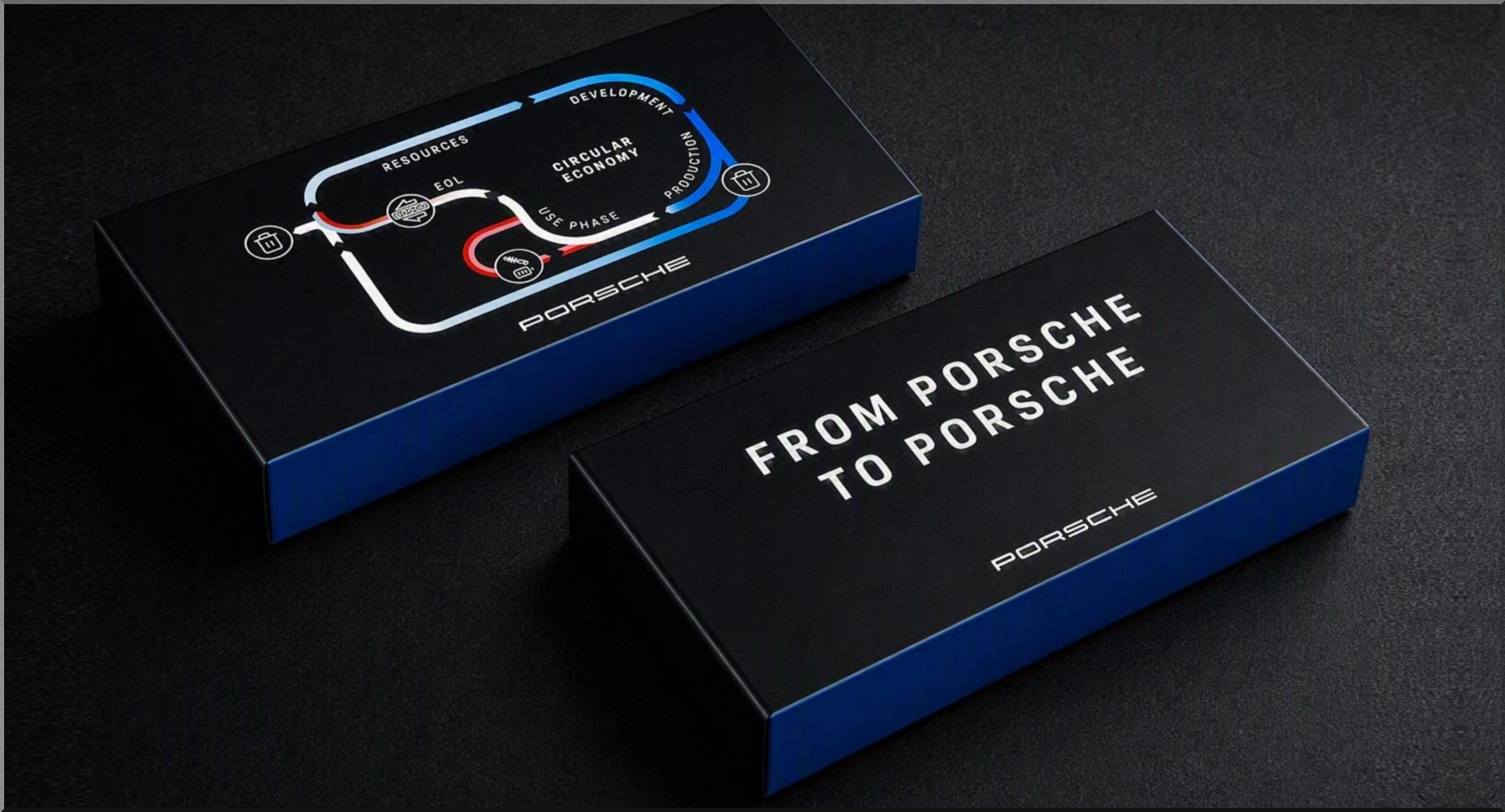
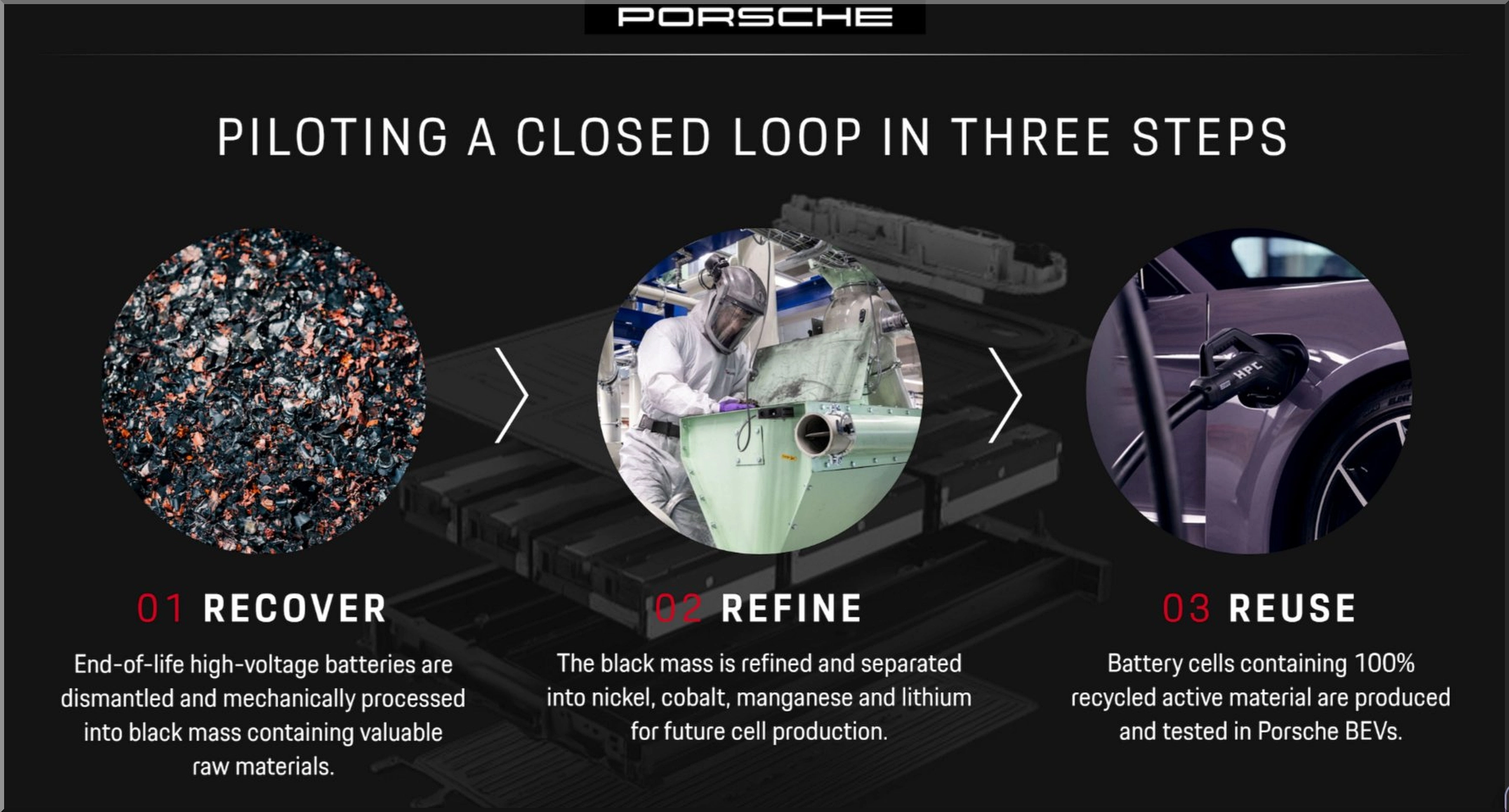
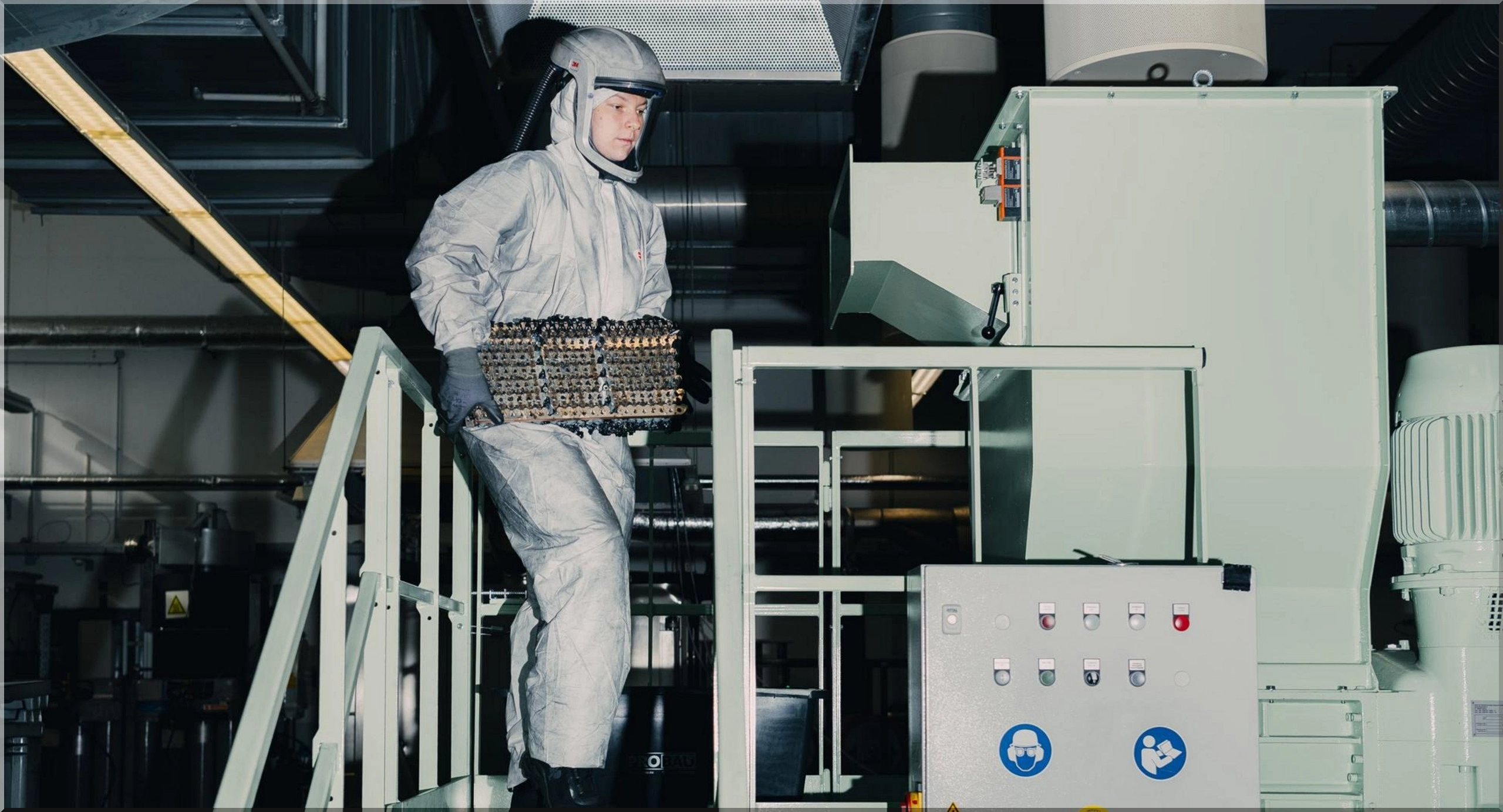
The pilot follows a six-stage loop: collect depleted Porsche packs, make them electrically safe, dismantle them, shred selected parts, recover metals from the resulting black mass, and rebuild those metals into cathode material for fresh cells. Each stage must protect purity, safety, traceability, and usable material yield.

  1. Collection: End-of-life high-voltage batteries enter the program through Porsche Centers in Germany.
  2. Discharging: Technicians remove stored electrical energy so crews can handle the pack safely.
  3. Dismantling: Workers separate pack hardware and isolate the cell material destined for processing.
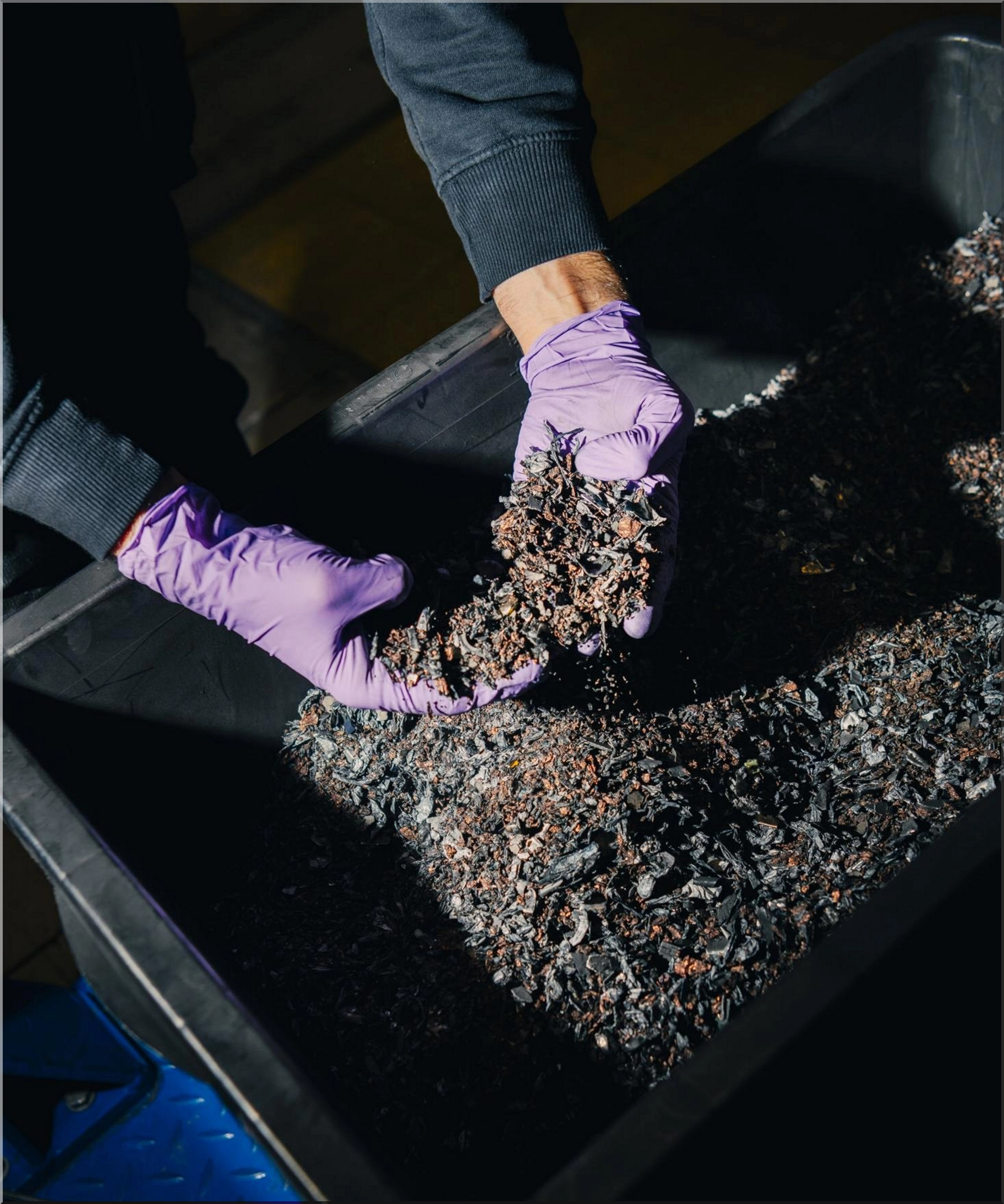
  4. Mechanical processing: Equipment shreds the battery material and produces a concentrated powder called black mass.
  5. Water-based recovery: cylib separates and refines lithium, nickel, cobalt, and manganese through its proprietary process.
  6. Cell production: Partners turn the recovered metals into new cathode active material and build test cells.

Black mass is not ready-to-use battery material. It is a mixed intermediate that still needs chemical separation, purification, and precise reprocessing. Tiny contaminants can hurt cell life, charging behavior, or safety. Battery-grade purity is where the clever recycling video meets the unforgiving factory specification.

cylib says its full process reaches 90% recycling efficiency and cuts the carbon footprint of recovered material by 80% versus primary extraction. It also says its operations use renewable electricity. Those figures describe cylib's process claims, not verified results for a future mass-produced Porsche pack.

Since May 2026, the partners have applied the recycling route to batteries collected through Porsche's German service network. A dedicated material account tracks the recovered resources. Porsche expects those credited materials to become available to the company and selected partners for battery-cell production from 2028.

What are the strongest pros and cons?

The main gain is technical: Porsche has shown that metals from its own retired batteries can return to new cathode material. The main limit is scale: the company has not published output, cost, yield by metal, or full test results. A closed loop only earns that name when it runs repeatedly at industrial volume.

Area Pro Con
Raw materials Recovers lithium, nickel, cobalt, and manganese Porsche has not disclosed metal-by-metal yield
Cell quality New test cells are working Full durability and safety results remain private
Carbon impact cylib reports lower emissions than primary extraction Porsche has not published a pack-level life-cycle study
Supply security Keeps valuable feedstock within Europe The present collection network covers Germany
Buyer cost Recovered metals may reduce exposure to commodity swings Porsche announced no vehicle-price saving

Our read is simple: this pilot solves a technical question, not the commercial one. Porsche and cylib have shown that recovered cathode metals can go back into a high-performance cell. They still need to prove repeatability, throughput, quality control, and cost when the incoming packs vary in age, chemistry, damage, and state of charge.

Image
Battery Cells

Will recycled cathode material make Porsche EVs cheaper?

Not soon, based on the information Porsche released. Recycling may cut exposure to imported raw materials and unstable commodity prices, but collection, hazardous-goods transport, disassembly, purification, cathode synthesis, testing, and certification all cost money. A pilot cell does not translate into a lower Porsche Taycan or Macan Electric sticker price.

For total cost of ownership, the near-term effect is close to zero. The project does not change charging costs, insurance, maintenance, range, repair pricing, depreciation, or warranty terms for current owners. A mature recycling market could support residual values by giving damaged or retired packs a clearer recovery value, but Porsche has published no buyer-facing estimate.

The smarter consumer question is not, 'Will this make my next Porsche cheap?' It is, 'Can this reduce supply risk and embedded emissions without weakening battery life or raising cost?' Porsche has answered only the first technical piece.

Why does this pilot carry weight in Europe?

Europe wants more battery materials recovered and reused inside its own industrial network. EU rules set minimum recycled-content shares for EV battery active materials from August 2031: 16% for cobalt, 6% for lithium, and 6% for nickel. Higher targets arrive in 2036, alongside tighter material-recovery goals.

Porsche's test cell goes much further within its cathode boundary, but readers should not compare the figures as if they measure the same thing. The EU targets apply by battery model, year, and manufacturing plant. Porsche's 100% figure describes the source of specific cathode ingredients in pilot cells. It does not prove future regulatory compliance.

For North American buyers, this remains a European project. Porsche identified German collection sites, European processing, and material availability from 2028. It announced no US battery-return program, US recycling partner, or North American vehicle application. That may change later, but the current facts stop at Europe's door.

Should an old EV battery go straight to recycling?

No. A battery that no longer suits a high-performance car may still serve in stationary storage. Repair, module reuse, and second-life use can preserve its remaining capacity before material recovery. Recycling should close the loop after useful service ends, not cut short a safe second life.

Porsche already offers a good example at its Leipzig plant. The company took 4,400 used Taycan modules from pre-series and test vehicles and built a 10-megawatt-hour storage system. It can deliver 5 megawatts, supports factory power management, and Porsche designed it for more than ten additional years of use.

That sequence makes practical sense:

  • Repair a pack when safe, economical work can return it to vehicle duty.
  • Reuse sound modules when the full pack no longer meets vehicle demands.
  • Repurpose capable modules for stationary storage with less punishing power needs.
  • Recycle the remaining material when another useful service no longer makes sense.

This order preserves the energy and labor already invested in the battery. It also delays shredding until the pack has delivered as much useful work as safety and economics allow.
Battery Cells

What should EV buyers watch next?

Buyers should watch for public test data, a production decision, annual processing capacity, actual recovery yield, and a named vehicle program. Those details will show if Porsche has built a scalable supply route or a polished pilot. Until then, read the announcement as credible progress with several hard gates still ahead.

Look for five proof points:

  • Cycle life: Do recycled-material cells retain capacity as well as cells made with primary metals?
  • Fast charging: Can they accept Porsche-level charging power without faster degradation?
  • Consistency: Can every batch meet tight purity and particle specifications?
  • Economics: Does the closed loop compete after transport, processing, and quality checks?
  • Scale: How many packs and gigawatt-hours can the network handle each year?

Pro-Tip: Read every recycling percentage carefully

Ask what the percentage measures. It may describe pack weight, process efficiency, recovery of one metal, or recycled content in one cell component. These figures answer different questions. A trustworthy claim names the boundary, chemistry, input source, test method, output purity, and production scale.

Image gallery:
Battery Cells

What is the practical verdict?

Porsche and cylib have cleared a meaningful technical gate: retired Porsche battery metals have returned to working cells as fully recycled cathode feedstock. The result deserves attention, not confetti. Production volume, durability, economics, and North American availability remain open. The next useful move is simple: publish the test data and name the first production program.

For shoppers, nothing changes today. Keep judging an EV by purchase price, insurance, real charging access, battery warranty, cold-weather range, repairability, and expected depreciation. For the industry, keep watching Porsche's 2028 material timeline. If the loop runs at scale, old packs may become useful supply assets instead of an expensive end-of-life problem.

Category

  • E.V. News

Tags

  • Battery recycling
  • Porsche battery recycling
  • Porsche recycled battery cells
  • Recycled battery cells
  • Battery cells
  • 100% recycled cathode material
  • EV battery recycling process
  • EV battery recycling
  • EV battery life
  • End-of-life EV batteries
  • Recycled lithium battery materials
  • recycled materials
  • EV battery raw material recovery
  • Material recovery
  • Battery technology
  • Add new comment
  • 203 views

Profile picture for user Electric Hunter
By Electric Hunter, 18 September, 2026

Similar news
2027 Porsche Cayenne Electric Adds 105 Colors and Powered Doors

2027 Porsche Cayenne Electric Adds 105 Colors and Powered Doors

2027 Porsche Cayenne Electric
  • Porsche

  • Porsche Cayenne Electric

The 2027 Porsche Cayenne Electric gains optional powered doors, upgraded massage seats with 4D audio, expanded interior trim, and 92 Paint to Sample finishes. Porsche keeps US base prices unchanged, from $109,000 for the...

Wireless Charging Arrives: Porsche Pushes Inductive Tech Forward in the Cayenne Electric

Wireless Charging Arrives: Porsche Pushes Inductive Tech Forward in the Cayenne Electric

Wireless charging technology
  • Porsche

  • Wireless charging technology

The Shift Toward Contactless Charging

Porsche moves fast when efficiency produces real gains. The Cayenne Electric adds wireless inductive charging to its options list. The system removes cables, cuts setup steps, and turns...

Toyota and Mazda Test Energy Storage Using EV Batteries

Toyota and Mazda Test Energy Storage Using EV Batteries

Toyota energy storage system
  • Toyota

  • Mazda

  • Energy storage

Building a Battery Ecosystem

Toyota and Mazda have begun field tests of an energy storage system that uses batteries from electrified vehicles. The trials take place at Mazda’s...

How to Charge Your EV Faster: Insider Advice from Porsche Taycan Engineer

How to Charge Your EV Faster: Insider Advice from Porsche Taycan Engineer

Porsche Taycan Engineer
  • Porsche

  • Porsche Taycan

Charging an electric vehicle (EV) is as much about smart habits as it is about advanced technology. According to Kevin Giek, Vice President of the Taycan model line at Porsche,...

Porsche Leipzig Builds Two Special Anniversary Cars for Australia

Porsche Leipzig Builds Two Special Anniversary Cars for Australia

Porsche
  • Porsche

  • Porsche Australia

Porsche did not mark 75 years in Australia with stickers and a press photo. It built two anniversary vehicles in Leipzig and used them to make a much harder point: one factory can now assemble combustion, hybrid, and fully electric Porsche models...

Vauxhall-Opel and Leapmotor Seal Deal for a 2028 Electric SUV

Vauxhall-Opel and Leapmotor Seal Deal for a 2028 Electric SUV

Leapmotor
  • Leapmotor

  • Opel

  • Opel Leapmotor €100 million contract

The Vauxhall-Opel and Leapmotor cooperation agreement sets out plans for a new compact electric SUV, with sales expected in 2028. The companies signed on November, 2026, and chose Zaragoza, Spain, for production. Leapmotor...

Volkswagen e-Crafter

Volkswagen e-Crafter - the electric van with 170 km of autonomy

Volkswagen e-Crafter
  • Volkswagen

  • Volkswagen e-Crafter

Volkswagen Commercial Vehicles has started its transition towards electric mobility. The German manufacturer has very ambitious plans for the coming years. The first one is already here. This is the new Volkswagen e-Crafter, the all-...

New Alpine A390: AWD Electric Fastback Hits 470 HP

New Alpine A390: AWD Electric Fastback Hits 470 HP with Track-Ready Precision

Alpine A390
  • Alpine

  • Alpine A390

The 2025 Alpine A390 is a sharp turn away from typical European EVs. It’s not just compact and sporty—it’s designed to deliver repeatable, track-ready acceleration, a 5-seat layout, and a three-motor AWD setup tuned for control, not just...

Peugeot Polygon Unveils Hypersquare Steering for Future EVs

Peugeot Polygon Unveils Hypersquare Steering for Future EVs

Peugeot Polygon
  • Peugeot

  • Peugeot Polygon

A Bold Vision for the Next Generation of Electric Mobility

Peugeot has unveiled the Polygon Concept, a compact electric prototype that redefines how drivers interact with vehicles. Measuring under four...

Rivian R2 electric SUV

Rivian R2 Price Confirmed: Electric SUV Starts at $57,990

Rivian R2 electric SUV
  • Rivian

  • Rivian R2

Rivian finally put hard numbers behind the Rivian R2 electric SUV. That matters because the R2 has carried one big promise since its debut: deliver Rivian design, software, and utility at a far lower price than the R1S and R1T. Now buyers...

2027 Tesla Model Y L Premium

2027 Tesla Model Y L Premium Brings Six Seats to America for $61,990

2027 Tesla Model Y L Premium
  • Tesla

  • Tesla Model Y L Premium

Tesla has opened U.S. orders for the 2027 Tesla Model Y L Premium Launch Series at $61,990. The stretched electric SUV adds a 2+2+2 cabin, a 325-mile estimated range, dual-motor all-wheel drive, and useful third-row space...

Hyundai Nexo

Hyundai Nexo has a price: 69,000 euros

Hyundai Nexo
  • Hyundai

  • Hyundai Nexo

Hyundai has announced the price of its second fuel cell production model. The Hyundai Nexo can be ordered in Germany for 69,000 euros. As with its predecessor ix35 Fuel Cell, both private and corporate customers can order the new Nexo from...

How much is the cheapest Tesla and when it comes to Europe?

How much is the cheapest Tesla and when it comes to Europe?

Tesla Model 3
  • Tesla

  • Tesla Model 3

Tesla Model 3 is now available in the most accessible version. The car will reach Europe in the second part of this year. The starting price will be around 40,000 euros, similar to the estimated price for the new Polestar 2.

In...

Peugeot e-208

Peugeot e-208 Sets New Benchmark with 433 km Electric Range

Peugeot e-208
  • Peugeot

  • Peugeot e-208

Peugeot has officially extended the driving range of its e-208 to 433 kilometers (269 miles) on the WLTP cycle. That’s the best range in its class, outpacing rivals in the B-...

Mercedes-Benz VLE electric minivan

Mercedes-Benz VLE Hits Triple Efficiency Targets Ahead of 2026 Launch

Mercedes-Benz VLE electric minivan
  • Mercedes-Benz

  • Mercedes-Benz VLE

Electric Van Enters Final Testing Phase with Strong Results

Mercedes-Benz is preparing to launch its next-generation electric van in 2026. Internally called the VLE, this prototype has completed key development milestones....

New Nissan LEAF: Key Insights From 28 Billion Kilometers of Driver Data

New Nissan LEAF: Key Insights From 28 Billion Kilometers of Driver Data

2026 Nissan LEAF
  • Nissan

  • Nissan Leaf

Nissan Built the Third-Generation LEAF Around Real Usage Patterns

Nissan created the new Nissan LEAF with a planning model guided by hard data rather than assumptions. Product teams tracked 28 billion kilometers...

New Audi Q4 e-tron 2027 Gets 368-Mile Range and V2H Charging

New Audi Q4 e-tron 2027 Gets 368-Mile Range and V2H Charging

Audi Q4 e-tron
  • Audi

  • Audi Q4 e-tron upgrade

Audi has sharpened the Q4 e-tron electric SUV where owners feel it most: range, charging speed, cabin tech, towing strength, and home-energy use. The upgraded Q4 e-tron keeps its compact luxury SUV footprint but adds a more...

2027 Kia PV7 Targets 286 Miles With 800-Volt Charging

2027 Kia PV7 Targets 286 Miles With 800-Volt Charging

Kia PV7 Cargo
  • Kia

  • Kia PV7

Kia plans to launch the 2027 Kia PV7 in Korea and Europe during the second half of 2027. The larger electric van pairs two NCM battery choices with up to 200 kW, an 800-volt charging system, and a preliminary WLTP target...

Skoda Superb

Skoda Superb plug-in hybrid: up to 70 km electric range

Skoda Superb
  • Skoda

  • Volkswagen Passat

Skoda launches the Superb PHEV (plug-in hybrid) in 2019. The propulsion system will be taken over from the Volkswagen Passat GTE and it will offer 218 horsepower. Skoda Superb plug-in hybrid autonomy would be up to 70 kilometers, about 20...

e.GO Life

e.GO Life is a crossbreed between Mini-Cooper and Smart

E-go Life
  • e.GO Mobile

  • e.Go Life

e.GO Mobile AG revealed the e.GO Life Concept Sport at the 2019 Geneva International Motor Show. In addition, for the first time, the company is showing the production model of the e.GO...

Porsche eBike Sport 2025
Porsche eBike Sport 2025: High-Performance Electric Bicycle with Cutting-Edge Tech
The new Porsche Taycan Sport Turismo from 86,400 euros
Porsche Taycan, the new 100% electric super sports car

Like us!

ElectricHunter.com


Latest news

Mercedes-Benz VLE 300 Electric Van

Mercedes-Benz VLE 300 Electric Van Brings 435-Mile Luxury Range
2027 Subaru Solterra

2027 Subaru Solterra Price Stays Under $40,000 After Major EV Upgrade

BMW i3 50 xDrive First Edition

BMW i3 First Edition Brings 469 HP and 400 kW Charging

BYD Flash Charging Brings 1,500 kW EV Charging: 249 Miles in 5 Minutes

BYD Flash Charging Brings 1,500 kW EV Charging: 249 Miles in 5 Minutes

Mercedes GLC 300 4MATIC

Mercedes-Benz GLC Electric Adds Cheaper Variants With 800V Charging

Kia EV2 Standard Range

Kia EV2 Delivers 202-Mile Real-World Range In NAF Test

Farizon V7E electric van

Farizon V7E Brings 204-Mile Range To Low-Cost Electric Vans

Peugeot E-208 GTi

New Peugeot E-208 GTi Brings 280 HP To Small EVs

Mercedes-Benz eActros Lowliner

Mercedes eActros Lowliner Targets High-Volume Freight

2027 Polestar 2 Returns to Canada

New Polestar 2 Returns to Canada With 421 HP From $50,400

Pagination

  • Previous page
  • 6
  • Next page

Friends

»Spare Wheel  »Panorica  »Contact Us

Popular news

The 2025 Skoda Elroq: Specs, Features, and Pricing

The 2025 Skoda Elroq: Specs, Features, and Pricing

Xiaomi Himo H1 Electric Bike

Smallest e-bike: Xiaomi HIMO H1 Smart Folding Electric Bike

Mercedes-Benz eSprinter electric van

The eSprinter van marks the next milestone for Mercedes-Benz

2023 Citroen e-C4 X is a stylish hatchback with the versatility of an SUV

2023 Citroen e-C4 X is a stylish hatchback with the versatility of an SUV

Volvo C40 Recharge Pure Electric

The new Volvo C40 Recharge Pure Electric is available for 57,800 euros.

Mobilize Duo and Bento: Transforming Urban Mobility with Compact Electric Vehicles

Mobilize Duo and Bento: Transforming Urban Mobility with Compact Electric Vehicles

Peugeot Inception Concept has an electric range of 800 km

Peugeot Inception Concept has an electric range of 800 km

Fiat E-Ulysse

Fiat E-Doblo and Fiat E-Ulysse: the ultimate electric vehicles for families and businesses

2024 Citroen e-SpaceTourer

The New Citroen e-SpaceTourer: A Comfortable, Stylish, and Electric MPV

Citroën ë-SpaceTourer 100% ëlectric van

Compact, modern, polyvalent and 100% electric: Citroën ë-SpaceTourer

Pagination

  • Previous page
  • 6
  • Next page
RSS feed
Askoll eS3 Evolution electric scooter
Fiat Ducato MY2020 commercial car 2020
Mack Electric LR 100% electric garbage truck
Xiaomi Himo H1 Electric Bike
de Havilland Canada DHC-2 Beaver seaplane
Volkswagen e-Delivery
ECR25 Electric and L25 Electric
Harley-Davidson Livewire
Blacksmith B2 electric motorcycle
CityQ - electric bike
BYD Atto 3 Evo 2027
Audi eMTB 2.0 by Fantic: Price, Specs, Range: Electric Mountain Bike Review

· electrichunter.com · 2026 · Contact· Privacy Policy· Powered by Drupal