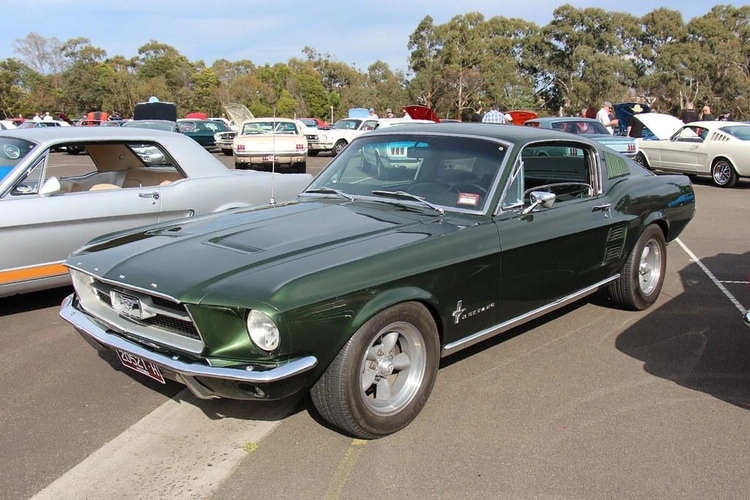
Few automotive nameplates carry the weight of legacy quite like the Ford Mustang. Since its introduction in the 1960s, it has consistently evolved while maintaining a recognizable identity. What makes the Mustang particularly compelling is not just its longevity, but its ability to bridge eras—connecting raw, analog performance with the precision and technology of modern engineering.
This balance between heritage and innovation has become increasingly important as the automotive industry undergoes rapid transformation. While electric drivetrains and digital systems dominate current development, the influence of classic muscle cars remains deeply embedded in how performance vehicles are designed and experienced.
The Lasting Blueprint of Muscle Car Engineering
The original muscle car formula was deceptively simple: powerful engines, lightweight bodies, and an emphasis on straight-line performance. Cars like the late-1960s Mustang embodied this approach, delivering a driving experience that felt immediate and unfiltered.
Modern performance cars have become far more complex, incorporating advanced electronics, adaptive systems, and refined aerodynamics. Yet, the foundational philosophy hasn’t disappeared. Engineers still prioritize driver engagement, acceleration, and a sense of connection to the road—principles that trace directly back to the muscle car era.
Even as technology advances, there’s a clear effort to preserve these core elements. The challenge lies in translating them into a modern context without losing the essence that made them so appealing in the first place.
When Classic Design Meets Contemporary Expectations
Styling That Transcends Generations
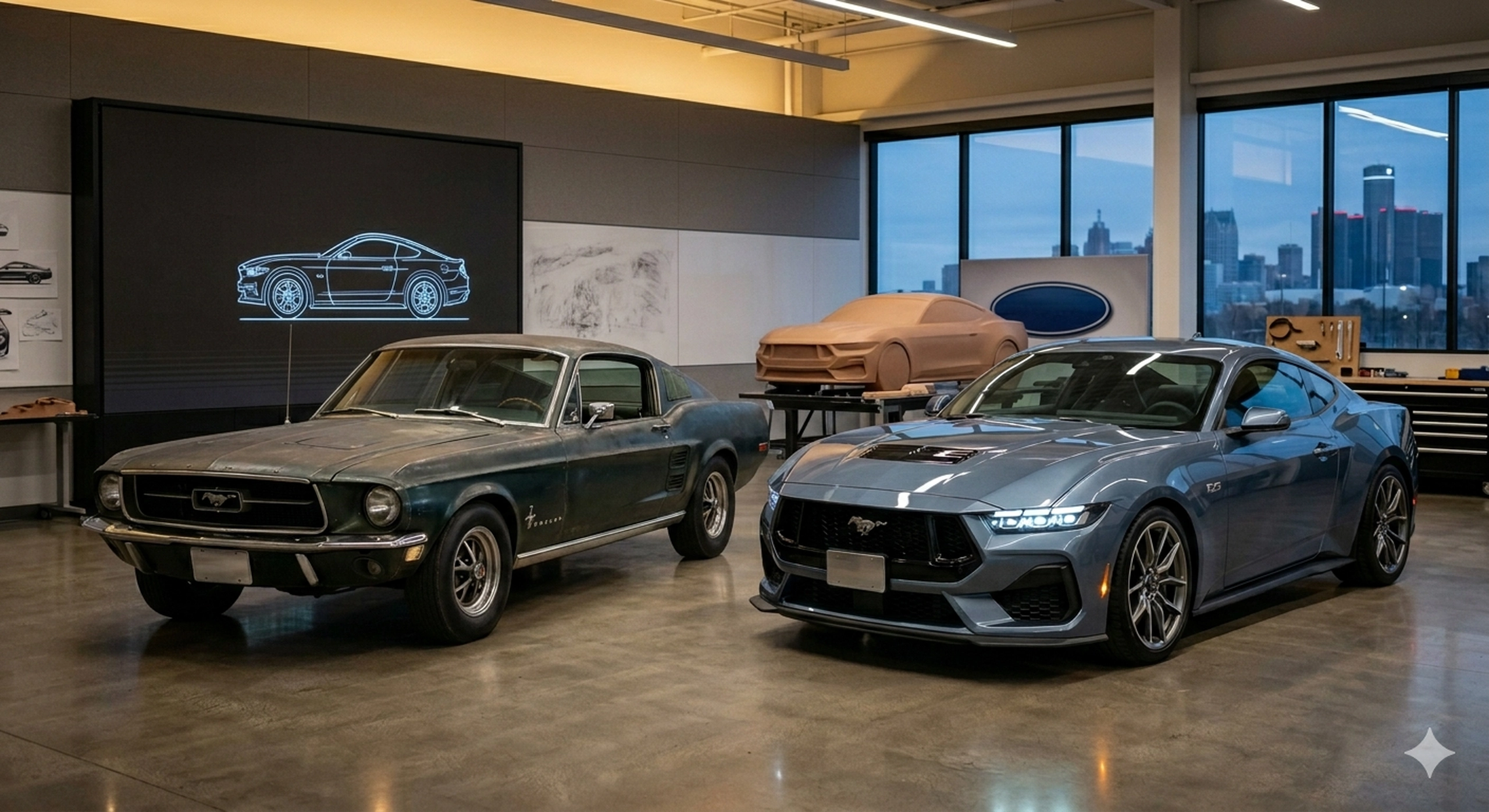
Design plays a crucial role in maintaining continuity across decades. The long hood, aggressive stance, and unmistakable front grille of classic Mustangs continue to influence current models. These visual cues are more than stylistic choices—they serve as a direct link to the brand’s heritage.
Automakers understand that familiarity can be powerful. A design that echoes the past creates an immediate emotional connection, even for those who may not have experienced the original cars firsthand. This is why modern Mustangs retain elements that make them instantly recognizable, despite incorporating entirely new technologies.
The Shift Toward Hybrid Identity
Today’s performance cars often exist in a hybrid space, blending traditional mechanical components with digital enhancements. This evolution allows manufacturers to improve efficiency and safety while still delivering the kind of driving experience enthusiasts expect.
The Mustang’s journey into electrification is a prime example. Insights from this look at an all-electric Mustang Cobra Jet highlight how performance is being redefined without abandoning the core identity that made the car iconic.
Reimagining the Boss 429 for a New Era
Among Mustang variants, the 1969 Boss 429 stands out as a symbol of uncompromising performance. Originally built to satisfy racing homologation requirements, it quickly became one of the most respected muscle cars of its time. Its rarity and engineering significance continue to make it highly sought after by collectors.
What’s particularly interesting today is how this legacy is being carried forward. Enthusiasts no longer have to rely solely on original models to experience the Boss 429’s appeal. Opportunities now exist to explore a modern 1969 Boss 429 Mustang that combines classic styling with updated engineering. These vehicles maintain the visual and emotional essence of the original while addressing the limitations associated with older mechanical systems.
This approach reflects a broader shift within the industry—one that prioritizes usability alongside authenticity. It allows drivers to engage with history in a way that feels relevant rather than purely nostalgic.
The Role of Innovation in Preserving Legacy
Technology as an Enabler, Not a Replacement
There’s often a misconception that modern technology dilutes the driving experience. In reality, when applied thoughtfully, it can enhance it. Features like improved suspension systems, advanced braking technology, and refined power delivery can make a car more enjoyable without altering its fundamental character.
The key lies in integration. Technology should support the driving experience rather than dominate it. This philosophy is increasingly evident in modern interpretations of classic vehicles, where upgrades are designed to complement, not overshadow, the original design.
Learning from Modern Performance Models
Contemporary Mustangs demonstrate how this balance can be achieved. Analysis from this overview of the Mustang GT’s evolution shows how newer models incorporate advanced engineering while still retaining the characteristics that define the brand.
These developments influence how enthusiasts and builders approach classic cars. By studying modern performance techniques, they can apply similar principles to vintage designs, resulting in vehicles that feel both authentic and refined.
Why the Connection Still Matters
At its core, the appeal of the Mustang—and muscle cars in general—extends beyond performance metrics. It’s about the experience of driving something that feels alive, responsive, and distinctly personal. This emotional connection is difficult to quantify, yet it plays a significant role in the enduring popularity of these vehicles.
As cars become increasingly automated, this connection becomes even more valuable. Drivers are seeking experiences that feel intentional and engaging, rather than purely functional. Classic-inspired vehicles, particularly those that integrate modern enhancements, are uniquely positioned to meet this demand.
This is why the influence of models like the Boss 429 continues to resonate. They represent a time when driving was less about convenience and more about engagement—a quality that remains highly relevant today.
Conclusion
The evolution of the Mustang illustrates how the automotive industry can move forward without losing sight of its roots. By blending classic design with modern engineering, manufacturers and builders alike are creating vehicles that honor the past while embracing the future.
The continued relevance of models like the Boss 429 demonstrates that great automotive design transcends time. As technology reshapes the driving landscape, the principles established during the muscle car era will continue to guide how performance vehicles are built and experienced for years to come.

Porsche has officially unveiled a new version of the Taycan electric model called the 4S. Officially launched in September, the new Taycan electric car initially debuted in the most powerful versions called Turbo and Turbo S. Now it's time for the first… Continue reading

In the second half of 2020, Peugeot will launch a fully electric version of the Traveller van on the European market. The novelty received the name e-Traveller and is an electric minivan adapted to the needs of commercial carriers, as well as private… Continue reading

The Fiat 500e is one of the freshest and most easy-to-drive electric cars, but that does not mean it is perfect. The new 500e is eight inches longer and wider than the original, and the wheelbase is four inches longer. So there… Continue reading

Lexus has introduced its second fully-electric vehicle. Unlike the tiny Lexus UX 300e SUV delivered last year, the new Lexus RZ 450e is built from the ground up as a battery-electric car using the e-TNGA platform. Toyota's… Continue reading