The lithium-ion battery has been the dominant force in portable electronics for decades, but its reign might be nearing its end. Enter solid-state batteries, a new technology with the potential to revolutionize the way we power our devices, from smartphones and laptops to electric vehicles (EVs) and even entire power grids.
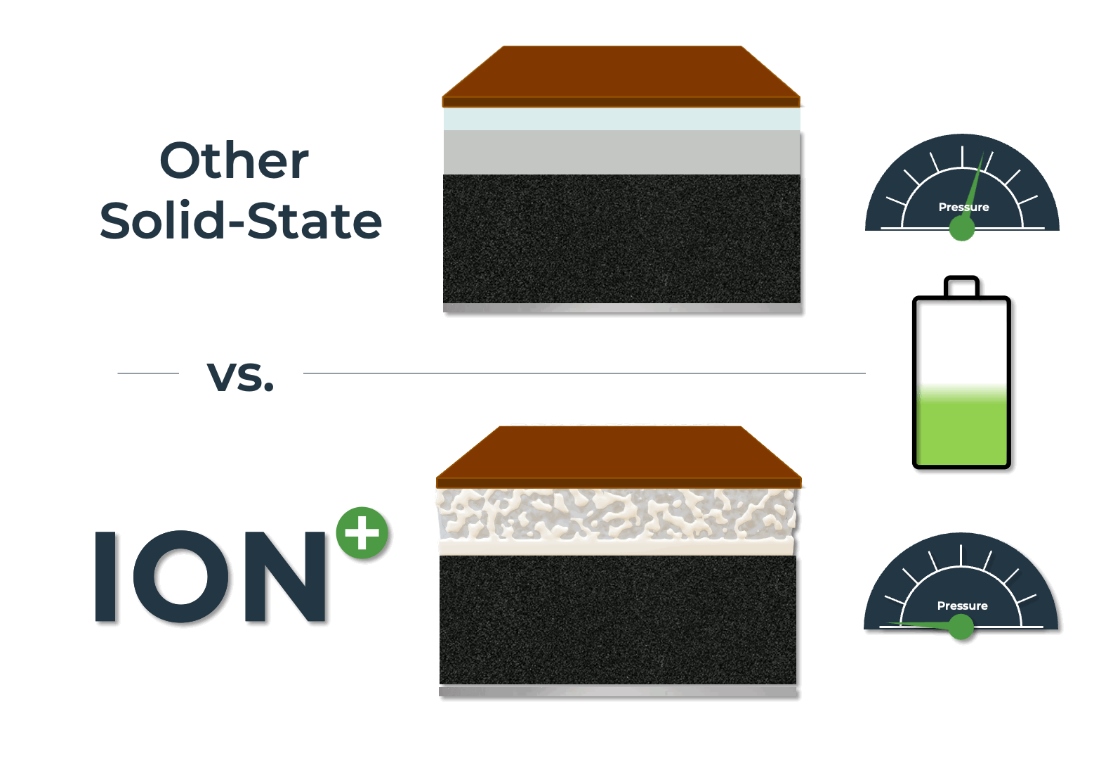
One company at the forefront of this revolution is ION Storage Systems, a Maryland-based manufacturer that has developed a particularly promising solid-state battery design. Their innovation? An anodeless, compressionless solid-state battery that they believe could be the next big thing in energy storage.
What Makes This Solid-State Battery Different?
Traditional lithium-ion batteries rely on a liquid electrolyte to shuttle ions between the anode and cathode, the two electrodes that generate electricity. This liquid electrolyte is flammable and can pose safety risks, especially in case of damage to the battery. Solid-state batteries, on the other hand, use a solid electrolyte material, which is inherently safer and can offer other advantages such as faster charging times and higher energy density.
ION Storage's anodeless, compressionless design addresses two key challenges that have plagued solid-state battery development:
- Compression: Many solid-state battery designs require compression during manufacturing to maintain good contact between the electrodes and the electrolyte. This compression can put stress on the battery and limit its lifespan.
- Anodes: Traditional lithium-ion batteries use a graphite anode, but graphite is not compatible with some solid electrolytes. ION's anodeless design eliminates the need for a separate anode altogether, simplifying manufacturing and potentially improving performance.
The Potential Benefits of ION's Anodeless, Compressionless Battery
By eliminating compression and the graphite anode, ION's battery design offers several potential benefits:
- Improved Safety: The solid electrolyte and lack of compression can contribute to a safer battery that is less prone to overheating or fires.
- Longer Lifespan: Without the stress of compression, the battery may experience slower degradation and a longer lifespan.
- Faster Charging: Solid-state batteries in general can offer faster charging times than traditional lithium-ion batteries, and ION's design may further improve this capability.
- Higher Energy Density: Solid-state batteries can potentially pack more energy into a smaller space than lithium-ion batteries, which could lead to longer range for EVs and smaller, lighter devices.
- Lower Cost: While still under development, ION's design has the potential to be more cost-effective to manufacture than some other solid-state battery technologies.

The Road to Commercialization
ION Storage Systems has already achieved some impressive milestones with its anodeless, compressionless battery. Their batteries have successfully undergone testing by the US Army Research Laboratory and have demonstrated long cycle life and good performance at extreme temperatures. The company has also secured funding from the US Department of Energy to further develop and commercialize its technology.
A Brighter Future for Energy Storage
The development of ION Storage Systems' anodeless, compressionless solid-state battery is a significant step forward for the future of energy storage. This technology has the potential to address many of the limitations of traditional lithium-ion batteries and pave the way for a new era of safer, more efficient, and more powerful batteries for a wide range of applications.
While ION Storage Systems' battery is not yet commercially available, its progress suggests that a future powered by solid-state batteries is closer than ever.
@via ION Storage Systems.

Suppose you are looking for a new and exciting way to learn how to drive an electric car. In that case, you should check out the driving school program offered by Citroen, the French automaker known for its innovative and unconventional… Continue reading

Renault, one of the leading manufacturers of electric vehicles in Europe, has recently unveiled its new electric Renault Master, a large van that offers a remarkable driving range of 410 km (254 miles) on a… Continue reading

The much-anticipated Mercedes-Maybach EQS SUV has finally set its wheels on European soil, marking a significant milestone in the brand's journey towards electric mobility. This opulent SUV embodies the essence… Continue reading

In the ever-evolving landscape of commercial vehicles, the demand for sustainable and efficient solutions is reaching a fever pitch. Businesses are recognizing the economic and environmental benefits of… Continue reading