
They look a bit like modern street lamps or even oversized fountain pens that someone has stuck in the ground - but are supposed to produce energy: The Spanish company Vortex Bladeless wants to generate wind power by swinging instead of turning.
Conventional wind turbines are not conceivable in the middle of residential areas: they generate a background noise, cast shadows on surrounding houses, and - at least according to a frequently applied criticism - do not look very nice. However, the solution from the Spanish company Vortex Bladeless is supposed to do everything differently because it does not require any rotor blades or turbines at all.

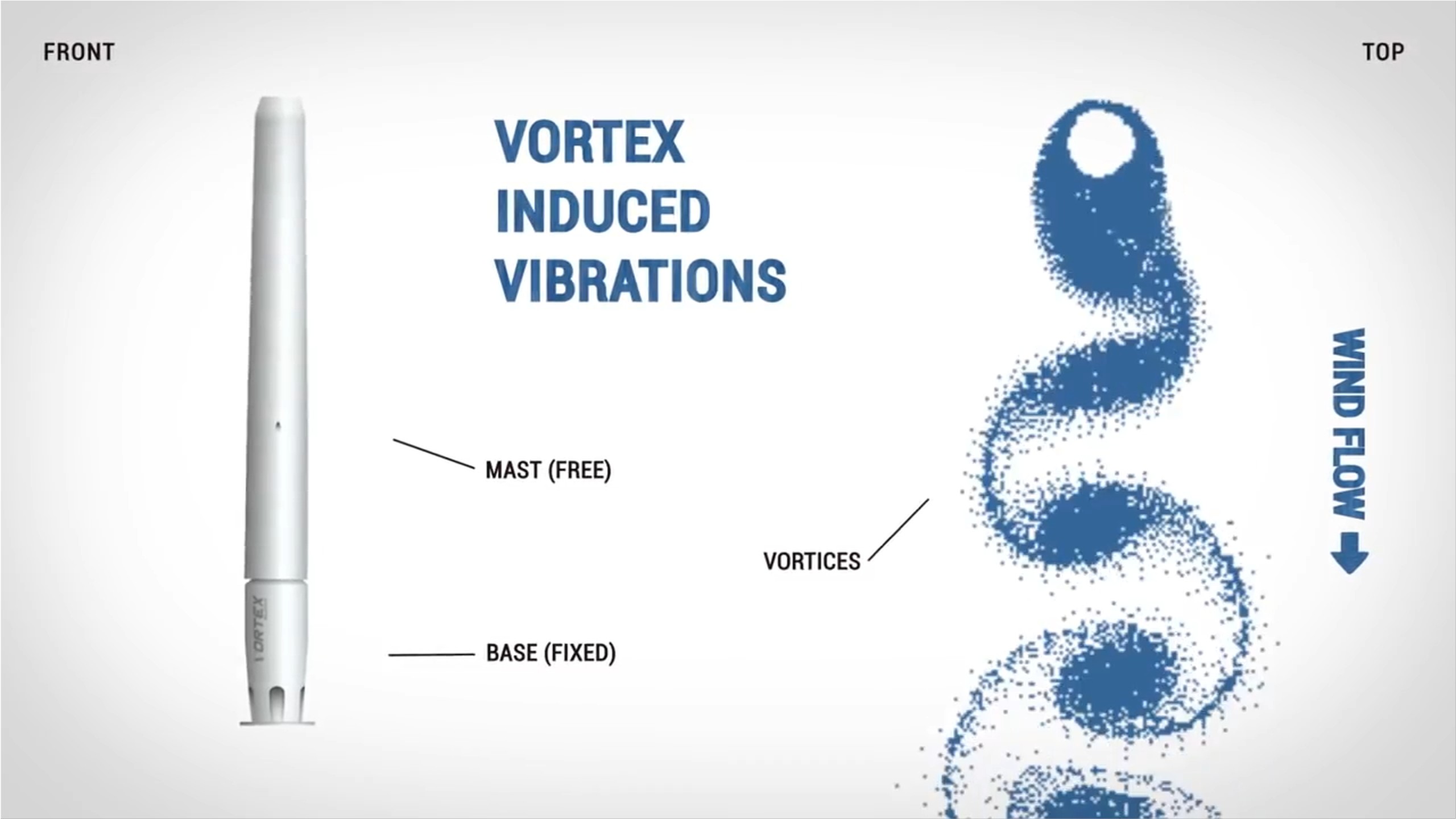
Vortex wind turbines are elongated, lantern- or antenna-like structures designed to generate energy through vibration. Aeroelastic resonance is the name of the principle that engineer and co-founder David Yáñez was made aware of by a catastrophe of all things. David Yáñez saw footage of the collapse of the Tacoma Narrows Bridge in 1940 when the bridge was vibrating so severely due to the wind that it finally collapsed.
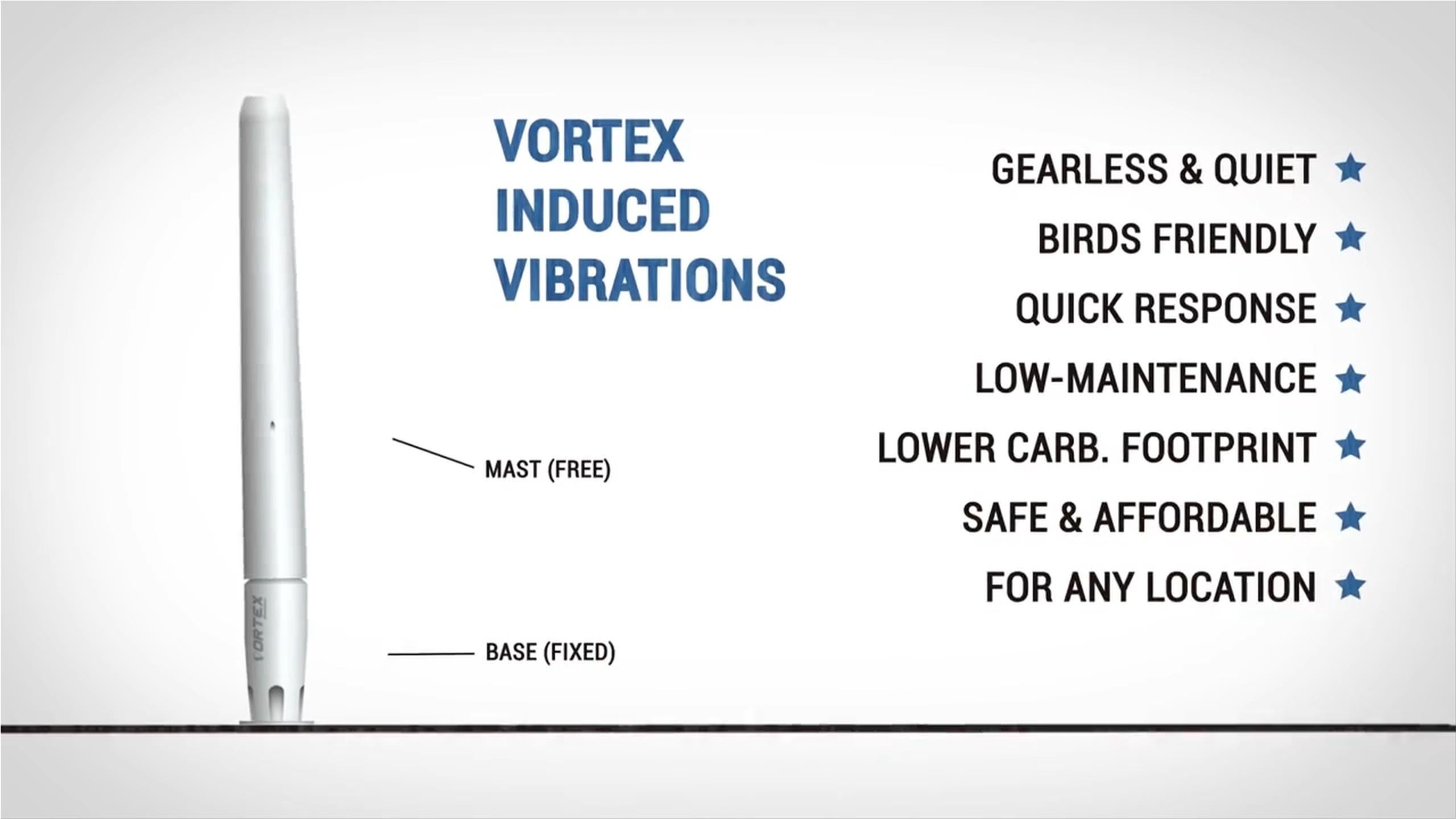
The Spanish company's solution works according to a very similar principle. A generator converted the resulting vibrations into electricity when the wind swayed back and forth. According to the manufacturer, the wind power posts should be very environmentally friendly, produce no noise, require no lubricants, and pose no danger to birds or other animals.
The Vortex Bladeless company has been working on the technology for years. In 2015, the Spaniards wanted to offer the system in two different sizes: the smaller, twelve-meter high version should generate four kilowatts of power, a larger version even one megawatt. However, these values are still a long way off: With the help of subsidies, including from EU subsidy programs, the company has built a pilot plant that is only 2.75 meters high.
Initially, the Vortex Bladeless company wanted to focus on the consumer market and launch a working mini version of the system as part of a beta test campaign. The Vortex Bladeless Nano is said to be just 85 centimeters high and generate enough power to charge a USB device "like a wind-powered power bank." End customers can also participate as part of these tests, feedback accepted, and the system optimized.
Image gallery:


It remains questionable whether the system in its final version, several meters high, can compete with traditional wind turbines in terms of price or generation capacity. However, the solution is also intended for places where no typical wind turbine could be put in place - for example, along motorways to generate electricity from the headwind.
Especially for opponents of wind power, wind turbines and their effects on nature, species protection, and quality of life are a constant stumbling block. Then, again, there is talk of infrasound and its harmful effects on the human organism. So, is a low-frequency sound truly dangerous?
@via Vortex Bladeless.
- Add new comment
- 397 views