On September 17, 2026, Porsche and German recycler cylib announced test cells whose cathode active material comes entirely from recycled Porsche batteries. That is a real technical step, but it is still a pilot. No customer car uses these cells yet, and Porsche has not promised lower prices, longer range, or a production date.
What did Porsche achieve with recycled EV batteries?
Porsche recovered lithium, nickel, cobalt, and manganese from end-of-life high-voltage batteries, processed those metals into fresh cathode active material, and used it in new test cells. The recycled feedstock replaced newly mined versions of those four cathode ingredients. Porsche now tests the cells under operating conditions before it considers series production.
The wording deserves care. Porsche did not announce a battery pack made wholly from old packs. It announced cells whose cathode active material uses 100% recycled raw materials. That narrower claim still counts. Cathode material sets much of a cell's energy capacity, power behavior, cost, and resource demand.
The cells have reached a working-test phase, not a showroom. Porsche says early results support technical feasibility, with further findings due in the second half of 2026. The company has not released capacity retention, fast-charging, cycle-life, cold-weather, safety, or cost data.
That missing data is the line between an encouraging lab result and a bankable production process. Making one good batch proves chemistry. Making thousands of consistent batches at a competitive cost proves a business.
What is cathode active material?
Cathode active material stores and releases lithium ions on one side of a lithium-ion cell. In nickel-rich chemistry, it commonly contains lithium, nickel, cobalt, and manganese. Think of it as the chemically busy powder on the positive electrode, not the complete electrode, cell, module, or battery pack.
A cell also contains an anode, electrolyte, separator, copper and aluminum current collectors, binders, conductive additives, tabs, and a casing. A finished pack adds cooling hardware, wiring, sensors, controls, structural parts, and crash protection. Porsche's 100% figure does not cover all of those pieces.
How does Porsche's closed-loop battery process work?
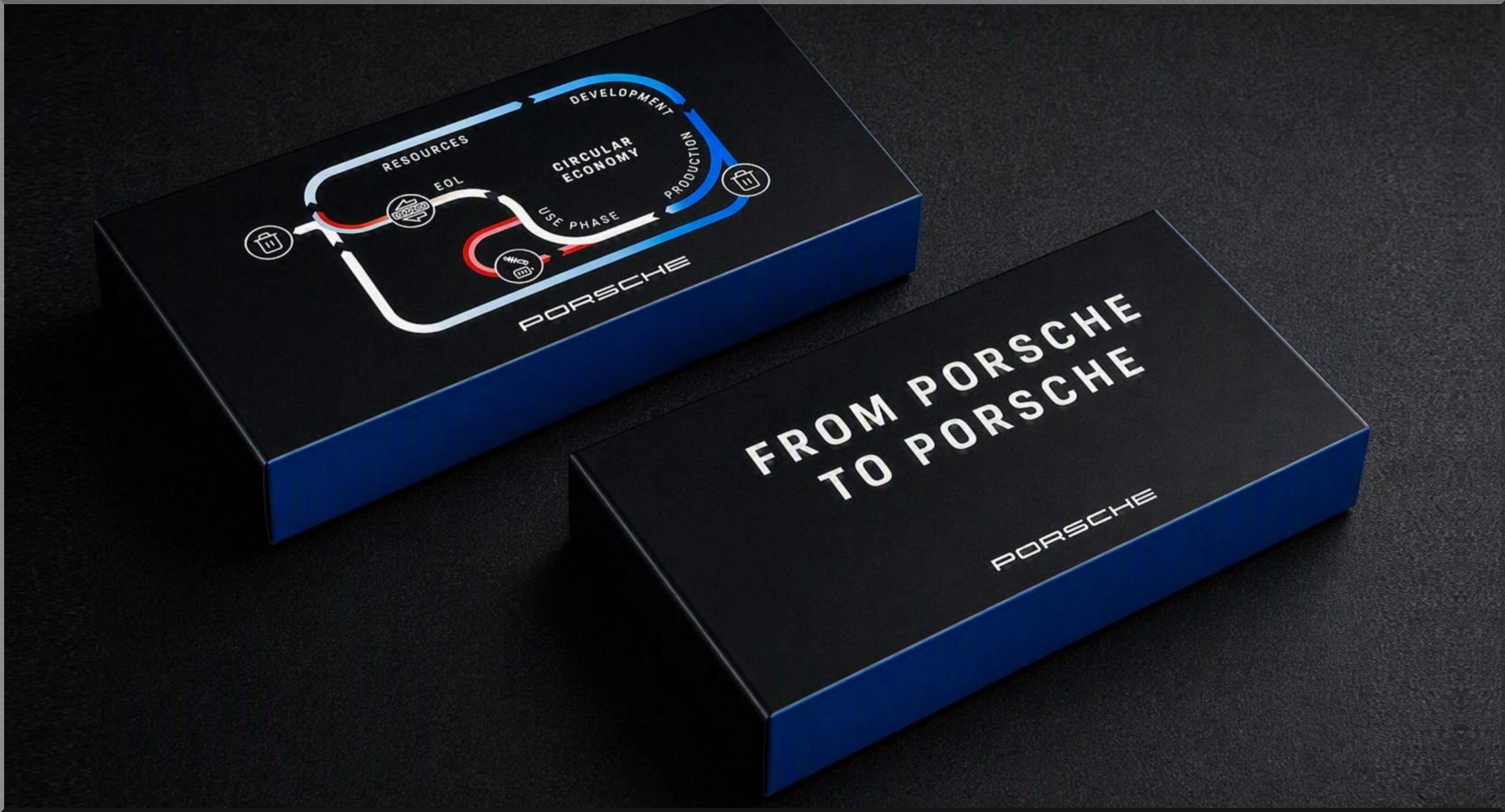
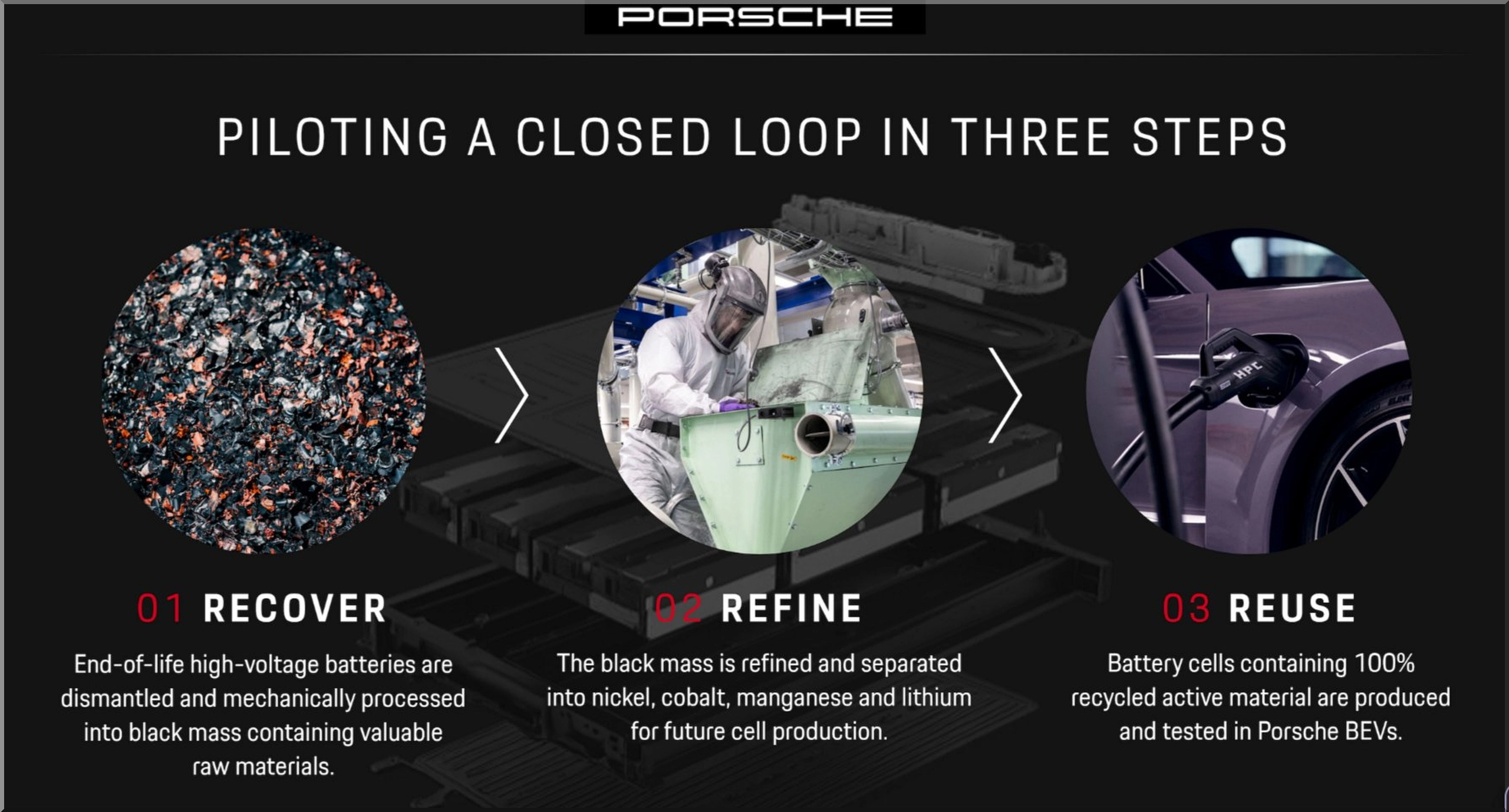
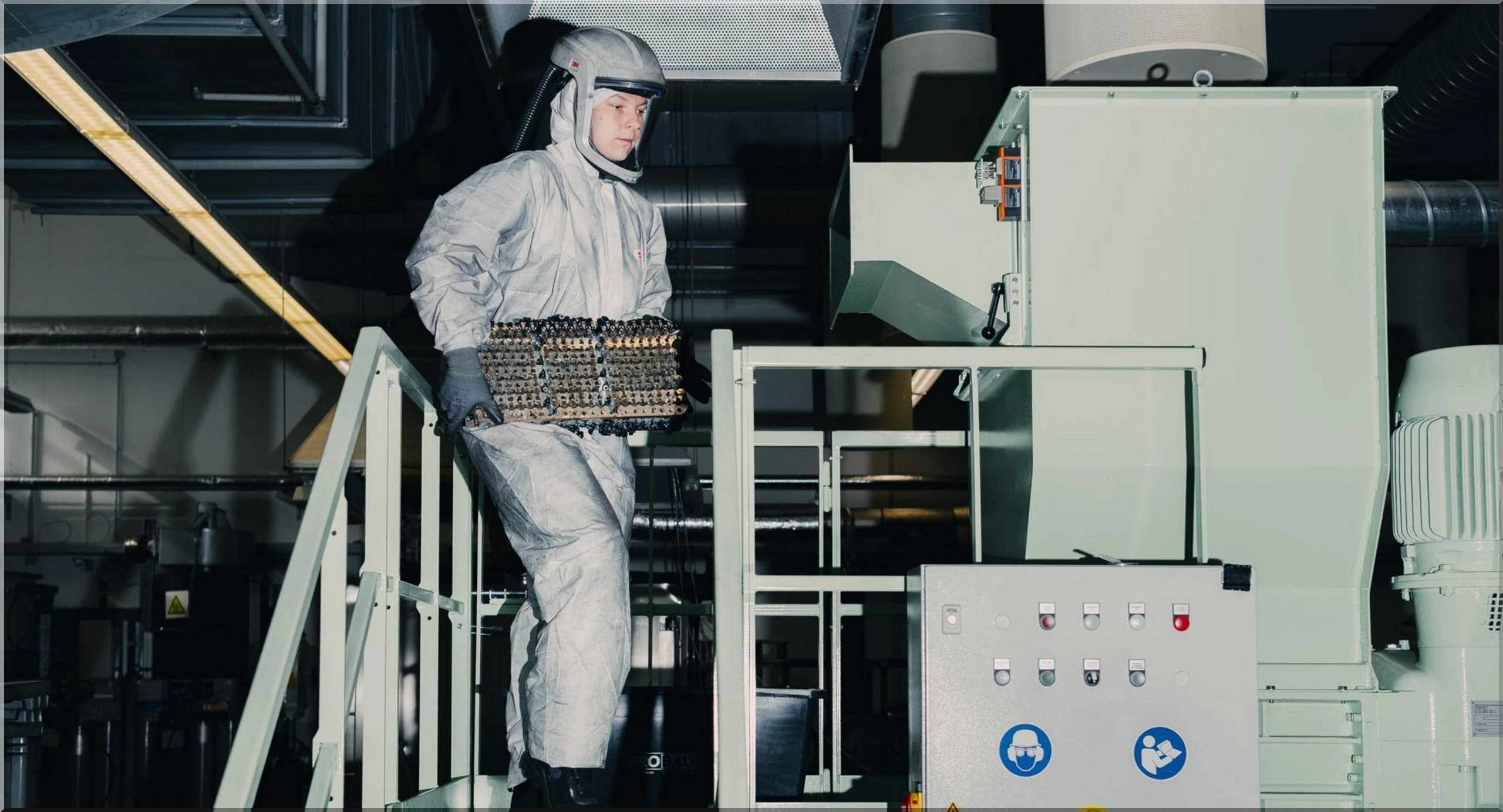
The pilot follows a six-stage loop: collect depleted Porsche packs, make them electrically safe, dismantle them, shred selected parts, recover metals from the resulting black mass, and rebuild those metals into cathode material for fresh cells. Each stage must protect purity, safety, traceability, and usable material yield.
- Collection: End-of-life high-voltage batteries enter the program through Porsche Centers in Germany.
- Discharging: Technicians remove stored electrical energy so crews can handle the pack safely.
- Dismantling: Workers separate pack hardware and isolate the cell material destined for processing.
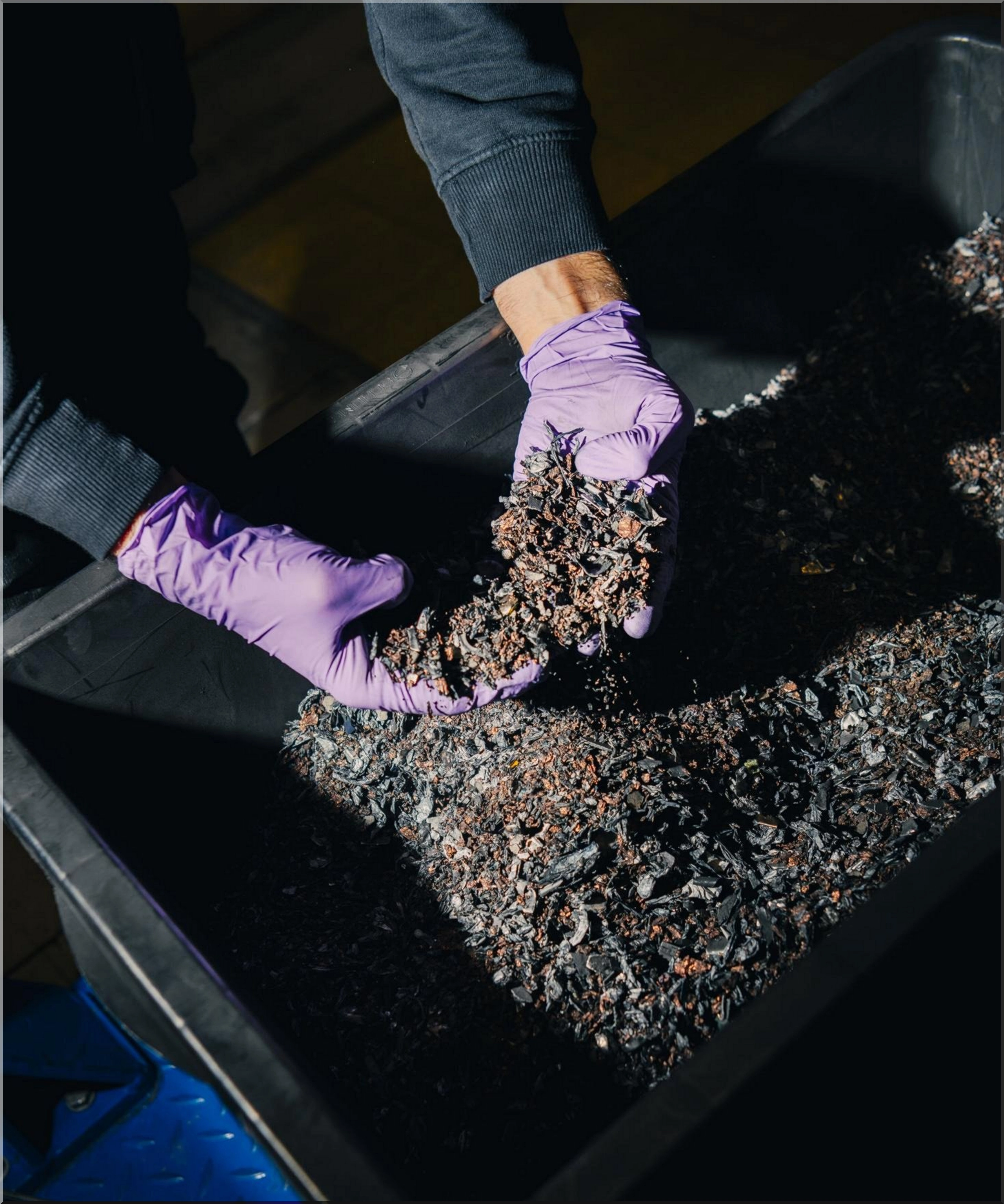
- Mechanical processing: Equipment shreds the battery material and produces a concentrated powder called black mass.
- Water-based recovery: cylib separates and refines lithium, nickel, cobalt, and manganese through its proprietary process.
- Cell production: Partners turn the recovered metals into new cathode active material and build test cells.
Black mass is not ready-to-use battery material. It is a mixed intermediate that still needs chemical separation, purification, and precise reprocessing. Tiny contaminants can hurt cell life, charging behavior, or safety. Battery-grade purity is where the clever recycling video meets the unforgiving factory specification.
cylib says its full process reaches 90% recycling efficiency and cuts the carbon footprint of recovered material by 80% versus primary extraction. It also says its operations use renewable electricity. Those figures describe cylib's process claims, not verified results for a future mass-produced Porsche pack.
Since May 2026, the partners have applied the recycling route to batteries collected through Porsche's German service network. A dedicated material account tracks the recovered resources. Porsche expects those credited materials to become available to the company and selected partners for battery-cell production from 2028.
What are the strongest pros and cons?
The main gain is technical: Porsche has shown that metals from its own retired batteries can return to new cathode material. The main limit is scale: the company has not published output, cost, yield by metal, or full test results. A closed loop only earns that name when it runs repeatedly at industrial volume.
| Area | Pro | Con |
|---|---|---|
| Raw materials | Recovers lithium, nickel, cobalt, and manganese | Porsche has not disclosed metal-by-metal yield |
| Cell quality | New test cells are working | Full durability and safety results remain private |
| Carbon impact | cylib reports lower emissions than primary extraction | Porsche has not published a pack-level life-cycle study |
| Supply security | Keeps valuable feedstock within Europe | The present collection network covers Germany |
| Buyer cost | Recovered metals may reduce exposure to commodity swings | Porsche announced no vehicle-price saving |
Our read is simple: this pilot solves a technical question, not the commercial one. Porsche and cylib have shown that recovered cathode metals can go back into a high-performance cell. They still need to prove repeatability, throughput, quality control, and cost when the incoming packs vary in age, chemistry, damage, and state of charge.
Will recycled cathode material make Porsche EVs cheaper?
Not soon, based on the information Porsche released. Recycling may cut exposure to imported raw materials and unstable commodity prices, but collection, hazardous-goods transport, disassembly, purification, cathode synthesis, testing, and certification all cost money. A pilot cell does not translate into a lower Porsche Taycan or Macan Electric sticker price.
For total cost of ownership, the near-term effect is close to zero. The project does not change charging costs, insurance, maintenance, range, repair pricing, depreciation, or warranty terms for current owners. A mature recycling market could support residual values by giving damaged or retired packs a clearer recovery value, but Porsche has published no buyer-facing estimate.
The smarter consumer question is not, 'Will this make my next Porsche cheap?' It is, 'Can this reduce supply risk and embedded emissions without weakening battery life or raising cost?' Porsche has answered only the first technical piece.
Why does this pilot carry weight in Europe?
Europe wants more battery materials recovered and reused inside its own industrial network. EU rules set minimum recycled-content shares for EV battery active materials from August 2031: 16% for cobalt, 6% for lithium, and 6% for nickel. Higher targets arrive in 2036, alongside tighter material-recovery goals.
Porsche's test cell goes much further within its cathode boundary, but readers should not compare the figures as if they measure the same thing. The EU targets apply by battery model, year, and manufacturing plant. Porsche's 100% figure describes the source of specific cathode ingredients in pilot cells. It does not prove future regulatory compliance.
For North American buyers, this remains a European project. Porsche identified German collection sites, European processing, and material availability from 2028. It announced no US battery-return program, US recycling partner, or North American vehicle application. That may change later, but the current facts stop at Europe's door.
Should an old EV battery go straight to recycling?
No. A battery that no longer suits a high-performance car may still serve in stationary storage. Repair, module reuse, and second-life use can preserve its remaining capacity before material recovery. Recycling should close the loop after useful service ends, not cut short a safe second life.
Porsche already offers a good example at its Leipzig plant. The company took 4,400 used Taycan modules from pre-series and test vehicles and built a 10-megawatt-hour storage system. It can deliver 5 megawatts, supports factory power management, and Porsche designed it for more than ten additional years of use.
That sequence makes practical sense:
- Repair a pack when safe, economical work can return it to vehicle duty.
- Reuse sound modules when the full pack no longer meets vehicle demands.
- Repurpose capable modules for stationary storage with less punishing power needs.
- Recycle the remaining material when another useful service no longer makes sense.
This order preserves the energy and labor already invested in the battery. It also delays shredding until the pack has delivered as much useful work as safety and economics allow.
What should EV buyers watch next?
Buyers should watch for public test data, a production decision, annual processing capacity, actual recovery yield, and a named vehicle program. Those details will show if Porsche has built a scalable supply route or a polished pilot. Until then, read the announcement as credible progress with several hard gates still ahead.
Look for five proof points:
- Cycle life: Do recycled-material cells retain capacity as well as cells made with primary metals?
- Fast charging: Can they accept Porsche-level charging power without faster degradation?
- Consistency: Can every batch meet tight purity and particle specifications?
- Economics: Does the closed loop compete after transport, processing, and quality checks?
- Scale: How many packs and gigawatt-hours can the network handle each year?
Pro-Tip: Read every recycling percentage carefully
Ask what the percentage measures. It may describe pack weight, process efficiency, recovery of one metal, or recycled content in one cell component. These figures answer different questions. A trustworthy claim names the boundary, chemistry, input source, test method, output purity, and production scale.
What is the practical verdict?
Porsche and cylib have cleared a meaningful technical gate: retired Porsche battery metals have returned to working cells as fully recycled cathode feedstock. The result deserves attention, not confetti. Production volume, durability, economics, and North American availability remain open. The next useful move is simple: publish the test data and name the first production program.
For shoppers, nothing changes today. Keep judging an EV by purchase price, insurance, real charging access, battery warranty, cold-weather range, repairability, and expected depreciation. For the industry, keep watching Porsche's 2028 material timeline. If the loop runs at scale, old packs may become useful supply assets instead of an expensive end-of-life problem.

Mercedes-Benz has taken a major step towards creating a sustainable future by announcing its new battery recycling factory in Kuppenheim, Germany. The symbolic foundation stone for the factory was laid in early March, marking the beginning of… Continue reading

The German brand Porsche announces that it will double its investment in the development of electric vehicles from this time until the year 2022: it will exceed 6,000 million euros. The move to all-electric cars seems necessary for any car manufacturer… Continue reading

Volkswagen is preparing to launch the ID family of 100% electric vehicles. However, it also intends to offer new propulsion options by combining traditional gasoline or diesel engines with electricity and natural gas, offering hybrid versions… Continue reading

The charging station register of the Federal Association of the Energy and Water Industries (BDEW) has currently around 17,400 public charging locations in Germany. From these, about twelve percent are fast-charging. More than three-quarters of the… Continue reading