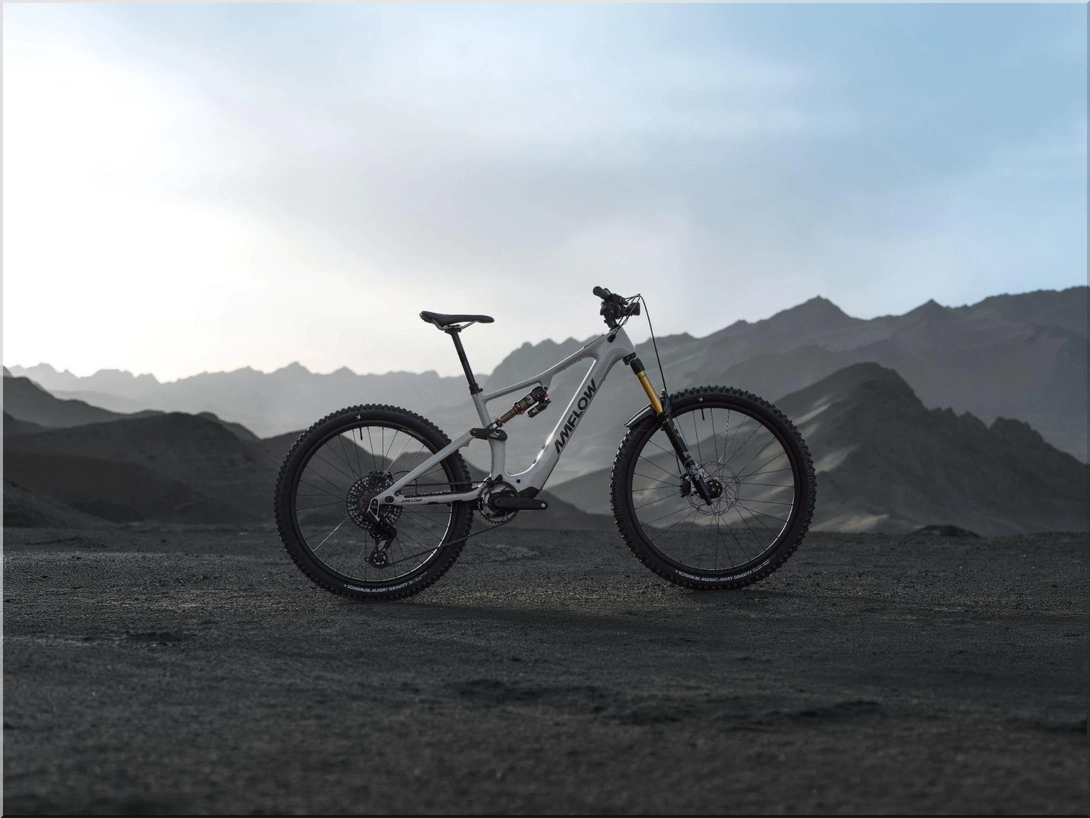
The Amflow PX Carbon Pro is a full-power eMTB built around a clear idea: combine strong motor support with a relatively light carbon chassis, long-travel suspension, and enough geometry adjustment to adapt the bike to different trail conditions.
Its Avinox M2S drive unit delivers 130 N·m of nominal torque and up to 150 N·m of peak torque, while the integrated 700Wh battery powers a 160mm front and 150mm rear suspension platform. The stock 29-inch front and 27.5-inch rear wheel setup adds another layer of trail-focused tuning.
The most important part of the PX Carbon Pro is not any single number. It is how the motor, suspension, wheel setup, and adjustable geometry work together across climbs, technical terrain, and descents.
Amflow PX Carbon Pro Review: The Short Answer
The PX Carbon Pro is designed for technical trail and all-mountain riding where climbing support, chassis control, and descending capability all matter.
| Area | PX Carbon Pro Character |
|---|---|
| Climbing | Strong motor support with geometry suited to steep terrain |
| Handling | Responsive, with substantial geometry adjustment |
| Descending | 160/150mm suspension and trail-oriented chassis setup |
| Motor | 130 N·m nominal torque, up to 150 N·m peak torque |
| Battery | 700Wh integrated battery |
| Wheels | 29-inch front and 27.5-inch rear |
| Best suited to | Technical trail and aggressive all-mountain riding |
This is not an eMTB that needs to run at maximum output all the time. Its broader strength is that the rider has substantial power available when the terrain demands it, while the chassis and geometry provide several ways to tune how the bike behaves.
PX Carbon Pro Key Specs
| Specification | Amflow PX Carbon Pro |
|---|---|
| Drive unit | Avinox M2S |
| Torque | 130 N·m nominal, up to 150 N·m peak |
| Peak power | Up to 1,500W |
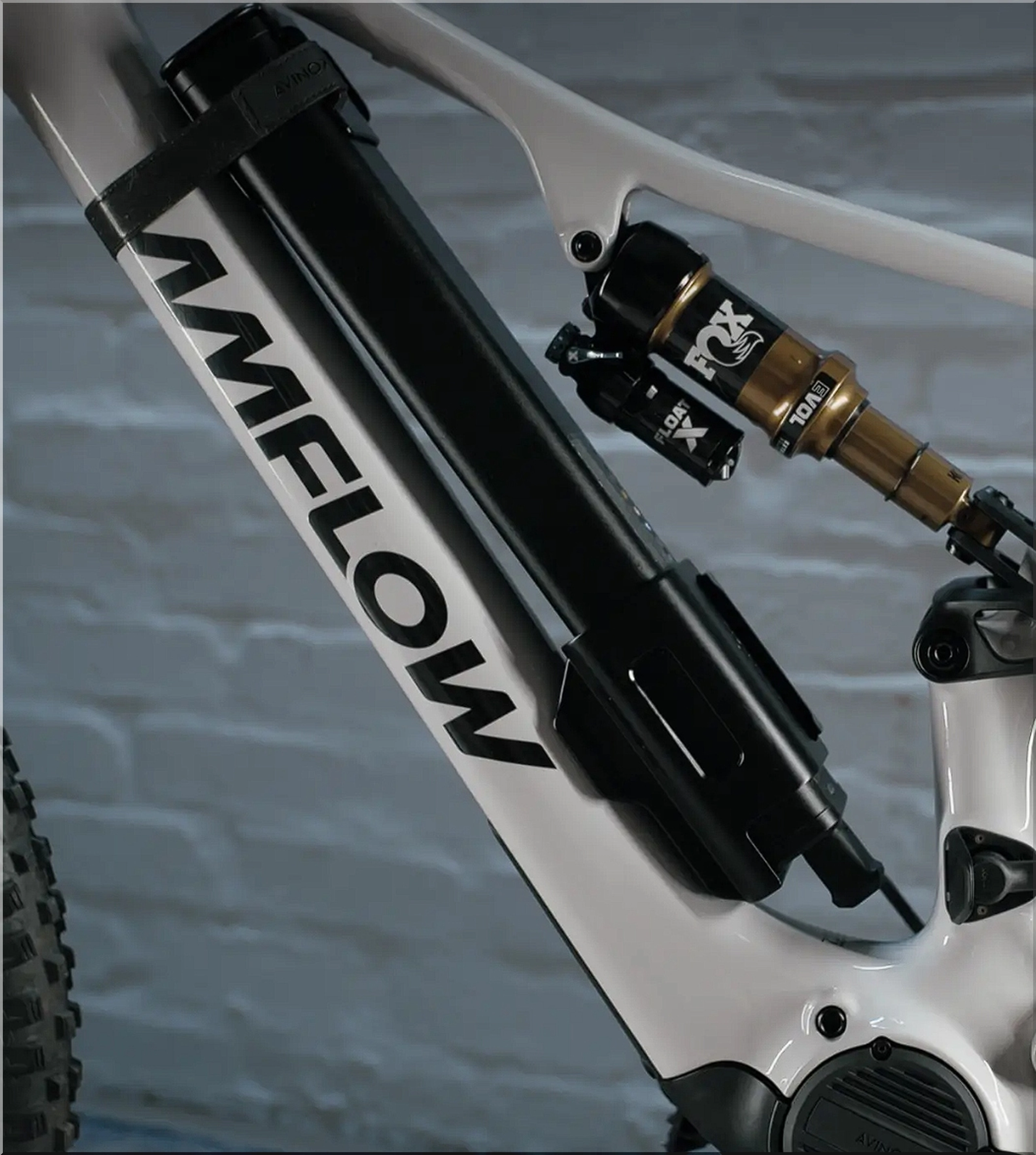
| Battery | Avinox Integrated Battery, 700Wh |
| Charger | Avinox Fast Charger, 12A / 508W |
| Fork | FOX 36 Factory, 160mm |
| Rear shock | FOX Float X Factory, 210×55mm |
| Rear travel | 150mm |
| Wheel setup | 29-inch front / 27.5-inch rear |
| Brakes | Magura Gustav Pro, four-piston |
| Rotors | 203mm, 2.5mm |
| Drivetrain | SRAM X0 Eagle Transmission |
| Display | 2-inch OLED Control Display |
| Stock head angle | 64.2° |
| Effective seat angle | 78° on M, L, and XL; 77.7° on XXL |
| Chainstay length | 438 / 451mm, with four available settings |
Climbing Performance: Power With Control
The PX Carbon Pro has substantial climbing power, but torque alone does not determine how well an eMTB handles technical ascents.
On steep or uneven terrain, the rider also needs traction, a stable climbing position, enough pedal clearance, and predictable chassis behavior.
That is why the PX Carbon Pro's geometry matters just as much as the headline motor figures.
Strong Output for Steep Terrain
The Avinox M2S produces 130 N·m of nominal torque and can reach 150 N·m of peak torque. Peak power reaches 1,500W.
Boost mode can maintain its maximum-output state for up to 60 seconds before the system returns to the previously selected mode.
That makes Boost better suited to short, demanding sections than continuous riding. Steep ramps, difficult starts, and short technical features are the situations where having additional output in reserve makes the most sense.
For a longer climb, using less than maximum assistance also reduces the rate at which the battery is depleted.
Geometry Matters on Technical Climbs
The PX Carbon Pro uses a 78° effective seat tube angle on sizes M through XL, with XXL at 77.7°.
A relatively steep seated position places the rider farther forward over the drivetrain, which is useful when climbing steeper grades.
Crank length also varies by size. M and L use 155mm cranks, while XL and XXL use 160mm cranks.
Shorter cranks can provide more clearance through uneven terrain, particularly where rocks or roots make pedal strikes a concern.
The key point is that the PX Carbon Pro approaches climbing as a complete system. Motor output supplies assistance, while geometry and component dimensions help determine how usable that assistance is on the trail.
Handling: Responsive and Highly Adjustable
The PX Carbon Pro is not designed around one fixed handling character.
Its frame provides five head-angle settings, two bottom-bracket-height settings, and four chainstay-length settings. In theory, those adjustment points can create up to 40 geometry combinations.
That does not mean riders need to experiment with all 40.
The practical value is that the bike can be shifted toward quicker steering, greater high-speed stability, additional pedal clearance, or a different front-to-rear balance depending on terrain and riding preference.
The stock mixed-wheel setup also contributes to the bike's handling.
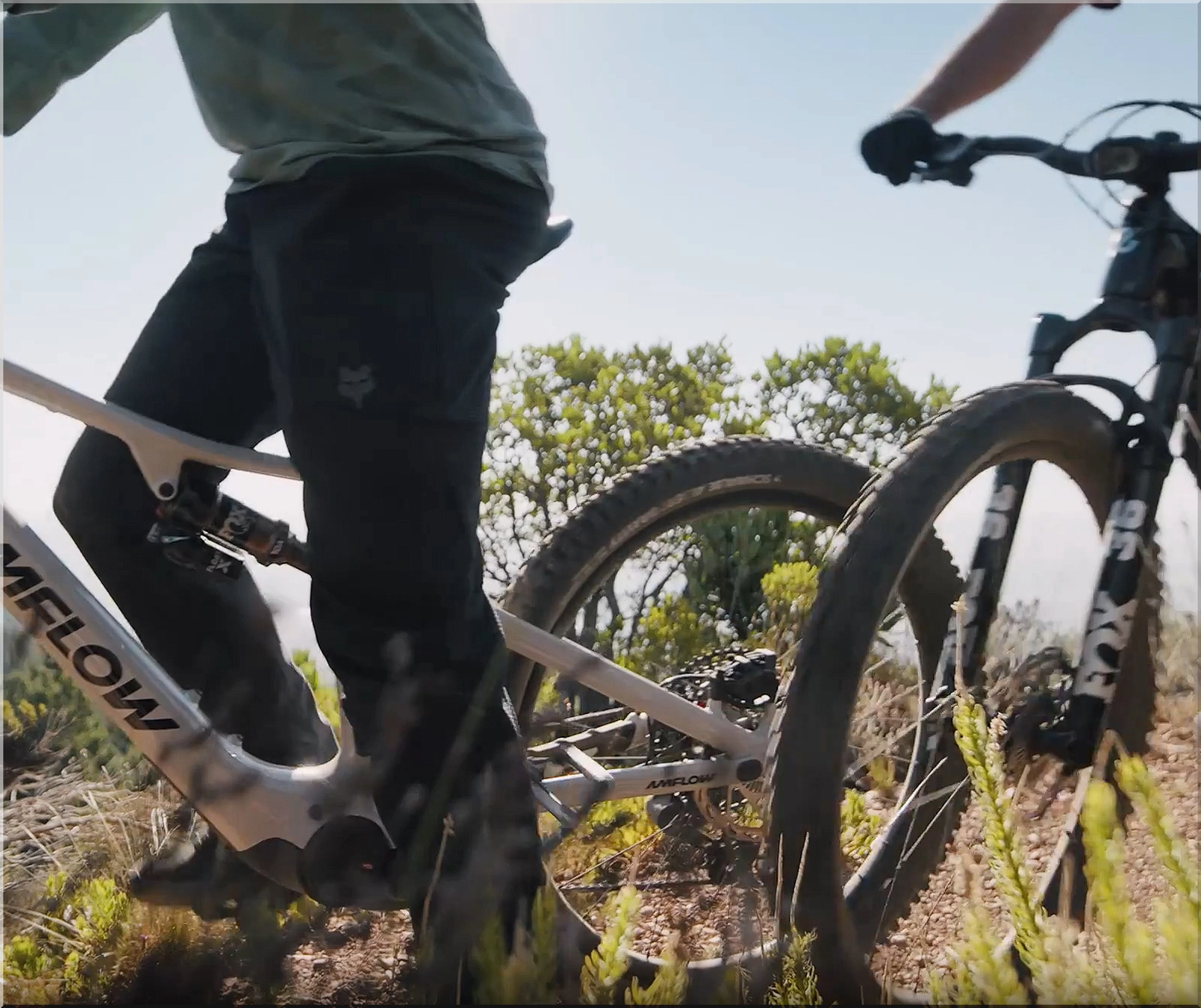
A 29-inch front wheel is useful for maintaining rollover through rough terrain, while the 27.5-inch rear wheel keeps the back of the bike more compact and maneuverable.
Together, those choices give the PX Carbon Pro a trail-oriented balance between stability and responsiveness.
Descending Performance: Built Around Support and Control
The PX Carbon Pro pairs a 160mm FOX 36 Factory fork with a FOX Float X Factory rear shock and 150mm of rear travel.
That amount of suspension places the bike firmly in technical trail and all-mountain territory.
FOX Factory Suspension
The FOX 36 Factory uses a GRIP X2 damper with high- and low-speed compression and rebound adjustment.
At the rear, the FOX Float X Factory includes a custom tune, a two-position lever, and low-speed compression and rebound adjustment.
That gives riders meaningful suspension tuning rather than a simple fixed setup.
The goal is not only to absorb impacts. Suspension settings also influence support under braking, cornering, and repeated compressions.
Braking Hardware
The PX Carbon Pro uses Magura Gustav Pro hydraulic disc brakes with four-piston calipers.
Both ends use 203mm Magura Sensor Rotors with a 2.5mm thickness.
That hardware is appropriately specified for an eMTB intended for steeper and more demanding terrain, where bike mass, speed, and repeated braking place greater loads on the braking system.
Actual braking feel still depends on setup, pad condition, rotor condition, rider weight, and trail conditions.
Mullet Setup: 29 Front and 27.5 Rear
The PX Carbon Pro comes with an Amflow XMC-30 mullet wheelset.
That means:
- 29-inch front wheel
- 27.5-inch rear wheel
The larger front wheel favors rollover and front-end stability across rough terrain.
The smaller rear wheel keeps the rear end more compact and can make it easier to reposition the bike in tighter sections.
Amflow also states that the PX frame is compatible with both 27.5-inch and 29-inch rear wheels.
That gives riders another meaningful setup option.
The stock mullet configuration emphasizes a combination of front-wheel stability and rear-wheel maneuverability, while a 29-inch rear wheel changes the overall geometry and ride characteristics.
Any wheel-size change should therefore be considered together with the bike's geometry settings rather than treated as an isolated modification.
Geometry Adjustability: What the Settings Actually Change
The PX Carbon platform offers three main areas of chassis adjustment.
Head Tube Angle
The stock head angle is 64.2°.
Adjustable headset cups provide five settings:
- -1°
- -0.5°
- 0°
- +0.5°
- +1°
A slacker setting increases trail and shifts the bike toward greater stability at speed.
A steeper setting makes the steering quicker and can better suit tighter terrain and climbing.
This is one of the most useful adjustments because it changes front-end behavior without requiring a different fork.
Chainstay Length
The PX offers four chainstay settings across a range that runs from 438mm to 451mm.
A shorter rear center generally favors maneuverability.
A longer setting shifts the balance toward additional stability and changes how rider weight is distributed between the wheels.
Which setting works best depends on rider size, terrain, and riding style.
Bottom Bracket Height
The PX also offers two bottom-bracket-height settings.
Changing bottom bracket height affects both pedal clearance and how low the rider sits relative to the wheels.
A higher position provides more clearance through rocks and technical terrain.
A lower position shifts the rider's center of gravity downward, which changes cornering and overall chassis feel.
The important point is not the theoretical total of 40 combinations. It is that the major geometry variables can be adjusted independently enough to make meaningful changes to the ride.
Avinox M2S: More Than Peak Torque
The Avinox M2S is one of the defining parts of the PX Carbon Pro.
Official specifications list:
- 130 N·m nominal torque
- 150 N·m peak torque
- 250W rated power
- up to 1,500W peak power
Those figures describe different aspects of the system and should not be treated as interchangeable.
For trail riding, the useful question is not simply how high the peak number is. It is how much power is available when needed and how that power fits into the rest of the bike.
Peak output is most relevant in short sections where the rider needs additional assistance quickly.
For longer rides, using lower assistance levels helps manage both traction and battery consumption.
The PX Carbon Pro therefore has a wide performance window rather than requiring the rider to use its maximum output on every climb.
Range: What the 700Wh Battery Really Means
The PX Carbon Pro uses a 700Wh integrated battery.
Amflow publishes a maximum test range of 144 km, but that figure comes from a very specific test:
- flat paved road
- 80kg rider
- Eco assistance mode
- 65rpm cadence
- 21km/h riding speed
- default assistance settings
That is useful as a controlled reference point, but it should not be treated as expected mountain-bike range.
Real eMTB range changes with:
- elevation gain
- rider weight
- assist level
- terrain
- temperature
- wind
- speed
- tire setup
- riding style
Technical trail riding with repeated climbing and higher assistance will use considerably more energy than a flat-road Eco test.
For mountain riding, elevation gain and assist usage are often more useful planning variables than mileage alone.
The practical takeaway is simple: the PX Carbon Pro has a 700Wh battery, but the amount of usable trail distance depends heavily on how much of the M2S system's available performance the rider chooses to use.
Charging and Long-Ride Planning
The PX Carbon Pro includes an Avinox 12A / 508W fast charger.
Amflow's laboratory comparison states that charging the FP700 battery from 0% to 80% with the 508W charger is approximately three times faster than using the 168W charger.
That is a relative laboratory comparison, not a universal statement about charging under every condition.
For longer rides, the PX platform also supports the separately sold Avinox RS600 battery.
Compatibility is currently size-dependent. Amflow states that the RS600 is available for PX models in sizes L, XL, and XXL due to frame-space constraints.
That detail matters when planning longer-range setups.
Suspension and Chassis Setup
The PX Carbon Pro's suspension package is designed to be adjustable rather than fixed around one type of trail.
The FOX 36 Factory fork gives the front end 160mm of travel, while the FOX Float X Factory controls the 150mm rear suspension.
The frame also combines this suspension platform with adjustable head angle, bottom bracket height, and chainstay length.
That means suspension setup and geometry should be considered together.
For example, a rider setting the bike up for steeper terrain may want a different head angle, suspension balance, and rear-center setting than someone riding slower, tighter technical trails.
The benefit of the PX platform is not that one configuration works everywhere. It is that several major variables can be tuned around the terrain.
Controls and On-Bike Information
A 2-inch full-color OLED touchscreen is integrated into the frame.
It displays riding metrics and estimated range and allows settings to be adjusted directly from the bike.
Wireless controllers are positioned on both the left and right sides of the handlebar.
Amflow also supports route-file import in GPX, FIT, and TCX formats.
Offline navigation is currently limited to displaying the route track without a map, which is an important distinction for riders planning to use the system for backcountry navigation.
The technology is most useful when it reduces the need to stop and use a phone during a ride.
Who Is the Amflow PX Carbon Pro For?
The PX Carbon Pro is best suited to riders who will make use of its combination of motor output, suspension travel, and chassis adjustability.
It is especially relevant for:
- technical trail riders
- riders who regularly climb steep terrain
- all-mountain riders
- riders who want substantial geometry adjustment
- riders who prefer a mullet setup
- riders who actively tune suspension and bike setup for different terrain
It may offer more adjustment and performance than necessary for riders who mainly use smooth, low-gradient trails or prefer a simple set-it-and-forget-it eMTB.
The PX Carbon Pro rewards riders who understand how geometry, suspension, wheel setup, and assist level affect the way a bike behaves.
Final Verdict
The Amflow PX Carbon Pro is best understood as a highly adjustable full-power eMTB rather than simply a bike built around large motor numbers.
Its Avinox M2S drive unit provides substantial output, but the rest of the platform is equally important.
The 160/150mm FOX Factory suspension gives it the travel needed for technical terrain. The stock mullet wheel setup combines a 29-inch front with a more compact 27.5-inch rear. Five head-angle settings, two bottom-bracket positions, and four chainstay settings give riders meaningful control over chassis behavior.
The 700Wh battery supports the system, but real trail range depends heavily on terrain, elevation, rider weight, and assist use. The published 144 km figure should be understood only within Amflow's stated flat-road Eco test conditions.
Taken as a complete platform, the PX Carbon Pro is built for riders who want strong motor support, technical trail capability, and unusually broad setup flexibility in one eMTB.

- Add new comment
- 7 views